The Myth of Er

Can argument be presented in the form of myth? What more does myth offer that simple argument is unable to provide? What lies between the simple spoken words of myth that is conveyed as a whole through its telling? And what might be lost in using such a form of argument? Plato ends the ten books of the Republic with what has been referred to as the Myth of Er. After much dialogue in Book X around the ills of poetic imitation, Socrates nonetheless concludes the long dialogue with a narrative of such poetic grace that it seems almost to upset the very balance of the entire dialogue. Only six pages in length, the Myth of Er somehow tips the scales of the Republic, as much of the dialogue must now be reinterpreted through the multifaceted lens of Er’s tale.

Socrates implies that he knew this myth even before the dialogue began. Yet it is only through the unfolding of the dialogue that the myth becomes an appropriate ending. How differently the Republic would read if it were to begin, rather than end, with the Myth of Er. Socrates also does not present this myth as a likely story, begun with such a disclaimer as “This is what I’ve heard” as he does in the Phaedrus, or other dialogues.[1] Throughout the myth Socrates emphasizes that Er was chosen to be the messenger to humanity about what he sees take place between death and new birth. This intentionality gives the impression that this knowledge is not given by accident, or abducted by the cleverness of humanity, but rather is a gift from the gods, an account meant to be shared and known.[2] Is Er’s tale really then a myth, or is it being presented as an empirical report? Or is Socrates creating this story in the moment, a narrative weaving of all the threads of argument that have come forward in some way or other in the previous ten books?

Spindle of Necessity

The theme of the Republic is justice, and until this final book the focus has been on how to know justice in the world of the living. The Myth of Er shows the other side of that coin, which perhaps explains why it carries so much weight in the balance of the dialogue. What roles do justice and injustice play once a life has ended? Socrates presents an account of this in which fate is intermingled with free choice, and seems to conclude that it is only the philosopher who truly remains free.

On his journey beyond the bounds of death, Er first encounters the judges seated at the entrances and exits of heaven and hell. Once a life has ended these judges determine whether a soul has led a just or unjust life, and send the soul accordingly towards its punishments or rewards. Socrates says that

For each in turn of the unjust things they had done and for each in turn of the people they had wronged, they paid the penalty ten times over, once in every century of their journey. . . But if they had done good deeds and had become just and pious, they were rewarded according to the same scale.[3]

In this judgment of the just from the unjust, it is interesting to note that there is no intermediate place for a soul to go; one’s life is either deemed to fall under one or another category, even though most lives would all seem to contain a mixture of just and unjust actions. The quality of life determines the nature of the rewards or punishments, but the location in which these are bestowed is limited.

Most unjust souls it seems are cleansed by their punishments and sufferings below the Earth, but when Socrates comes to speak of the tyrant Ardiaeus, it is said, “He hasn’t arrived here yet and never will.”[4] Is it possible, within this mythology, that there are “incurably wicked people,”[5] those who will never be given the opportunity to redeem themselves or to end their suffering? When we arrive at the part of the narrative in which their next lives are chosen by souls, I cannot help but wonder what the choosing may have been like for those who never again resurface from the tortures of hell.

The theme of fate and free will is carried strongly by the images of the spindle of Necessity that holds together the whorls of the planetary spheres. Sirens sing the harmony of the spheres, while the three Fates interweave their own melodies with those of the Sirens.[6] As the Fates help spin the planets along their various orbits we are shown how Past, Present, and Future guide the motions of the planets. That the choice of lives takes place within this setting gives a strong indication of the role astrology played in the ancient Greek world view although, as can be seen by the manner in which the lives are chosen, free choice is still an integral part of how one’s fate is woven. The order in which the souls choose a new life is cast by lot—randomly assigned—but the lives chosen are picked by the souls’ own discernment, using the wisdom they gained not only from their previous lives but from their time spent in heaven or hell as well.[7] Lachesis, the Fate of the Past, gives this message to the souls, “Your daemon or guardian spirit will not be assigned to you by lot; you will choose him.”[8] Justice then is not something dispensed by the gods, but rather something cultivated within the individual.

Celestial Spheres

Lachesis’ message continues, “Virtue knows no master; each will possess it to a greater or less degree, depending on whether he values or disdains it. The responsibility lies with the one who makes the choice; the god has none.”[9] Virtue both has no master and yet is also in service to each person should she or he choose to take on that role of master. If this is the case—that the quality of one’s virtue is determined by each individual person—then it seems no matter how carefully constructed a city might be, how could it be guaranteed that justice will reign within the city? Is this the reason Plato ends his dialogue with this myth? To show the role free choice plays in the possession of virtue by souls?

By giving an image of the soul’s journey after death, a certain level of clarity is brought to the difficulty of trying to control reproduction within the ideal city. Even if the parents are all chosen according to standards of high virtue, the souls incarnating ultimately determine the kinds of people they will become. It is interesting to note that Socrates chooses not to recount in the Myth of Er what happens to those souls who are stillborn or short-lived—those who, in the ideal city, might be taken from their mothers and left to die if they seemed unfit to live.[10] If they are deemed in life not to be virtuous and not to deserve life, was that fate also determined before they were born? Why has Plato chosen not to elaborate on this key point? What kind of soul might choose a life which would end so quickly based on their seeming lack of merit in life?

The Myth of Er concludes with Socrates declaring that the most important task one can undertake in life is studying how to determine a virtuous life when the time comes to choose a new one. This is the task of the philosopher, and it here seems as though he deems a life of philosophy to be best for all souls. By studying philosophy, Socrates says,

he will be able, by considering the nature of the soul, to reason out which life is better and which worse and to choose accordingly, calling a life worse if it leads the soul to become more unjust, better if it leads the soul to become more just, and ignoring everything else: We have seen that this is the best way to choose, whether in life or death.[11]

Socrates notes that most of the souls who came from heaven chose less virtuous lives due to their ignorance, while those souls ascending from their time below the Earth were able to choose more wisely because of the suffering they had witnessed and experienced.[12] Only the philosopher was able to choose a virtuous life and also enjoy the rewards of heaven. Socrates is indicating that cultivating the knowledge of justice and injustice, as was demonstrated in practice throughout the ten books of the Republic, will lead to a better soul life than merely being virtuous by habit or constraint. If this is the case then not only must the ruler of the ideal city be a philosopher but each individual citizen must also be, otherwise the city will not be just. Perhaps the ideal city is not one in which control is imposed from without, as has been postulated in many forms throughout the Republic, but rather one in which that compass toward virtue and justice is cultivated within each individual.

The cultivation of inner justice is also perhaps the reason the finale of the Republic is given in the form of a narrative myth: one must cultivate one’s own wisdom in discerning the meaning of the myth. Understanding must come from within. It cannot, as in more direct arguments, be imposed from without. Only then is the soul able to learn the kind of life it wishes to lead.

Works Cited

Plato. Plato: Complete Works. Edited by John M. Cooper. Indianapolis, IN: Hackett, 1997.


[1]Plato, Phaedrus, trans. A. Nehamas and P. Woodruff, in Plato: Complete Works, ed. John M. Cooper (Indianapolis, IN: Hackett, 1997), 551, 274c.

[2] Plato, Republic, trans. G.M.A Grube, in Plato: Complete Works, ed. John M. Cooper (Indianapolis, IN: Hackett, 1997), 1218, 614d.

[3] Plato, Republic, 1218, 615a-b.

[4] Plato, Republic, 1219, 615d.

[5] Plato, Republic, 1219, 615e.

[6] Plato, Republic, 1220, 617c.

[7] Plato, Republic, 1222, 620a.

[8] Plato, Republic, 1220, 617d.

[9] Plato, Republic, 1220, 617e.

[10] Plato, Republic, 1218, 615c.

[11] Plato, Republic, 1221, 618d-e.

[12] Plato, Republic, 1222, 619d.

Ellipsis . . .

. . .

            I begin letters with . . . when I want you to feel what I am feeling, when I want you to suspend for a moment who you are and make space for who I might be instead.

As I climb higher up the gray switchback staircase of rickety wooden boards my body tenses with the increasing height, even as my mind knows I am safe, that the stairs beneath my feet will support me. Already present is that indescribable bodily sense, that physical intuition that seems only able to be captured wordlessly, by something as unarticulated as an ellipsis . . . I step out onto the gravel of the roof to be met by the sight of the flaming orb of the setting Sun. This closest of stars burns the clarity from the landscape, blurring the features of the horizon line being pulled toward it: hill, forest, and stretch of ocean I can only perceive in memory as the deepening gold of sunset shatters my sight into uncountable, undifferentiable monads of color.

Sunset

Sitting on the wide ledge of the roof my body settles into an accustomed level of comfort at this new height. But if I lean closer to the edge, to glance below at the street, then this indescribable bodily sense flares up once again, a seeming leap of my heart into my throat that signifies danger or delight I cannot tell. Why is it that looking down four stories at unforgiving concrete gives the same bodily sensation as looking deeply into the eyes of one I love? Wherein lies the truth of this . . .

Looking away from the Sun I turn to my left to see the Moon seated aloft in a soft indigo sky. The reverberating green echo of the Sun’s shape slowly fades from my vision as the Moon’s gentler light fills my gaze instead. The relationship of these two celestial bodies feels familiar . . . and my body knows it before I do . . . Ah yes, I stood upon a mountain exactly a month ago today, positioned as a third body between these two heavenly beings, seeing them in this same triangular relationship once again. I feel this, sense this, intuit this, I . . . this, my body . . . this: this relationship, this interaction.

Whenever I behold a celestial body ablaze in the night sky it stops me in my tracks, without fail. My body is commanded to stop, to wonder, to worship these orbs. My breath catches. It feels not unlike falling in love . . . over and over and over, with each wandering star I witness. The same as looking down from some great height, but rather it is looking up . . . No it is looking out, a looking out into the depths of space. To behold the Sun, the Moon, a thousand stars is to look up, to look out, and to look down into the greatest depths all at once. No wonder we lose our balance, no wonder our bodies react, they catch us and remind us that gravity is real.

I have seen countless sunsets but no one is the same, no one is ever worth looking away from before it has made its perfected exit. I never say to myself, “Not this time, I have seen this before.” It now becomes impossible to look away as the ocean swallows the flaming disc of molten gold. In these final moments of a day I will never see again I feel my heart pulled, as though by an emotion-laden gravitational force, toward the Sun. My heart strains within my chest to follow the Sun beyond the crashing purple waves.

Wash over me, oh descending night . . . let me drown once more in your celestial waters.

Great Hawk: Presence, Presence This

Hawk

Emotion held, a breath caught, dark feathered wing-tips,
All rush, all bustle, all anxiety—all suspended.
There is but you and me caught in the inhale of this moment.
Or are you me? Is this suspension nothing more than a pause
A breakdown of the barrier that lies between what I understand,
Between what I understand makes you be you
And makes me
Be?

Dark wings soar, cutting hawk shape from textured sky,
Yet when you appear that sky is no more: merely backdrop.
Gripped between razor claws, your prey—my attention—is caught,
Passing mere feet from this barrier I call skin
You land, you presence, you settle, you ignore, you own,
You own my focus, draw me in, alluring
Me to drop all my life in this moment
Simply
To watch.

Heart beat, heart beat, wing beat, breath,
Heart beat, wing beat, heart beat, breath.
The branch moves, the outside world closing out—
Am I within your envelope of tearing want
Or has that gateway closed?
You shred, you rip, what lies within your grasp,
Talons, razor beak, dark feathers etched with
Beauty, etched with
Death.

Two cries rupture this world into which I gaze alone,
Yet not alone, no more:
Ravens twain disrupt your reign
A pair, a couple, a bonded force, cry out
No!—Do not enter our sacred nest, for which we give our lives
Do not, be not, crisis cries—away, please God
What have you
Done?

Who do you hold between your claws?
How did it come to this? My heart
It beats with desperate want,
Presence, presence this—this moment, this hour,
These days are lost, all brought to focus now
Great hawk, whose heart do you devour
Please tell me, how did it come to
This?

The Phenomenon of Painting

“In a forest, I have felt so many times over that it was not I who looked at the forest. Some days I felt that the trees were looking at me, were speaking to me. . . . I was there, listening. . . . I think that the painter must be penetrated by the universe and not want to penetrate it. . . . I expect to be inwardly submerged, buried. Perhaps I paint to break out.”     – André Marchand[1]

When does a painter cease her painting? Who determines when a painting is complete? The very word painting, as both a noun and a verb, implies action. A painting never ceases creating and being created by the very nature of the word humanity has assigned to describe it. Or perhaps that word was never assigned, it simply emerged from  the phenomenon of painting, just as the imagery of a painting seems to emerge not solely from the artist or the canvas, but rather from a mysterious intermediate ground between the two. Yet what is that ground? How can we contemplate that which emerges from ambiguity?

Light Iris

Merleau-Ponty writes, “From the writer and philosopher. . . we want opinions and advice. We will not allow them to hold the world suspended. . . . Only the painter is entitled to look at everything without being obliged to appraise what he sees.”[2] Even to sit here and write of painting, as I am doing in this moment, brings a literal concreteness to the ambiguity I am attempting to describe, that which can only emerge between world, artist, and art. When one looks at a painting, or even more so when one looks at a painting that is in the process of being created—perhaps even by the artistry of one’s own hand—there is a presence that exists within it that is beyond the intention of the artist, no matter how controlled the artist may try to be in her execution of the artwork. A painting has a life of its own, perhaps even before the artist ever conceived of it. Merleau-Ponty continues,

I would be at great pains to say where is the painting I am looking at. For I do not look at it as I do at a thing; I do not fix it in its place. My gaze wanders in it as in the halos of Being. It is more accurate to say that I see according to it, or with it, than that I see it.[3]

One sees according to the painting, almost as if the painting had its own will, a will separate from the will of the artist. This returns our thought to the question of how a painter knows when a painting is complete, especially if there is an internally active quality to the very existence of a painting even, or perhaps especially, in its completeness. It is as though the painting already existed before ever a brush was set to paper, and the painting is only complete when the already existent painting and the actions of the painter meet in the middle.

“I think that the painter must be penetrated by the universe,” Marchand writes, “and not want to penetrate it.”[4] A painter, it seems, is a vessel of the world, a receptacle that births the form with which matter is pregnant.[5] “So many painters have said that things look at them,”[6] Merleau-Ponty writes, almost as though those things wish to be born through new media.

The eye sees the world, sees what keeps a painting from being itself, sees—on the palette—the colors awaited by the painting, and sees, once it is done, the painting that answers to all these inadequacies just as it sees the paintings of others as other answers to other inadequacies.[7]

The painting itself, in this quote, seems to call forth the very existence of the painting. The colors are ‘awaited’ by the painting, the painting itself ‘answers.’ When is a painting complete? Perhaps when it wills it to be so.


Work Cited

Merleau-Ponty, Maurice. The Primacy of Perception. Edited by James M. Edie.
Evanston, IL: Northwestern University Press, 1964.


[1] André Marchand, qtd. in Maurice Merleau-Ponty, The Primacy of Perception, ed. James M. Edie (Evanston, IL: Northwestern University Press, 1964), 167.

[2] Merleau-Ponty, The Primacy of Perception, 161.

[3] Merleau-Ponty, The Primacy of Perception, 164.

[4] Marchand, qtd. in Merleau-Ponty, The Primacy of Perception, 167.

[5] Merleau-Ponty, The Primacy of Perception, 12.

[6] Ibid, 167.

[7] Merleau-Ponty, The Primacy of Perception, 165.

The Horizon of Imagination

My body sits nestled in the tall grass, my feet dangling precariously close to the rough-hewn edge of the cliff. The wind off the sea blows salt mist into the tangles of my hair, while the waves crash below, their sound drowning all others except that of the wind and the pulse of blood in my skull. “Matter is ‘pregnant’ with its form,” the phenomenologist writes, “which is to say that in the final analysis every perception takes place within a certain horizon and ultimately in the ‘world.’”[1] In this moment I try to understand, through my intellect, what his words mean. I realize I cannot grasp it. So I attempt the process again, not based upon my intellectual experience, but rather from the beginning, from the primordial seat of awareness, from a place of perception. There… can you feel it? The cliff, the waves, the sea wind—each pregnant with its own form, impressing itself on my beingingness in this moment. I cannot explain this. But sit beside me on this cliff and perhaps your body will know.

Still at the cliff’s edge, I close my eyes. The sounds of salt and wave, crumbling rock and rushing air currents remain, but much else is now gone. Color collapses to the dark behind my eyelids. Yet something else emerges. Even the sounds begin to fade as I descend deeper into this realm. Although my body remains still nestled in the tall grasses that I twist between my fingers, as I attempt to hold a tight physical grip upon this material present, nearly all my awareness begins to lift away from the Earth’s surface. Darkness surrounds me, broken only by the crystalline lamps of distant stars. I wheel past familiar planets, although some part of me realizes they have never been familiar to me at so close a range. Suddenly I am upon the edge of our solar system. How did I get here? How do I know what this looks like?

Perception is thus paradoxical. The perceived thing itself is paradoxical; it exists only in so far as someone can perceive it. I cannot even for an instant imagine an object in itself. As Berkeley said, if I attempt to imagine some place in the world which has never been seen, the very fact that I can imagine it makes me present at that place.[2]

I am present at the edge of our solar system. I am present at the edge of our solar system? Within less than an instant I am present at the edge of the cosmos. My imagination knows this can exist even if physical reality cannot confirm it from our Earth-bound perspective. What then is the phenomenological stance of imagination, if it can so quickly leap beyond the bounds of the situated horizon?

When I open my eyes I see the gray rain curtain that veils the white line of the Pacific Ocean’s horizon. I close my eyes, and I leap beyond all horizons.

Edge of the Solar System


Work Cited

Merleau-Ponty, Maurice. The Primacy of Perception. Edited by James M. Edie. Evanston, IL: Northwestern University Press, 1964.


[1] Maurice Merleau-Ponty, The Primacy of Perception, ed. James M. Edie (Evanston, IL: Northwestern University Press, 1964), 12.

[2] Merleau-Ponty, The Primacy of Perception, 16.

Saturating Words with Image

A text means nothing to me until it is suffused with image. As I sit with book in hand, the slightly rough texture of the pages meeting the pads of my fingers with a soft sound, I am somehow more aware of the breathing presence of the room around me, of the book’s scent, rather than the black ink words upon the page. Reading a line takes me out of the space in which I sit. Reading another takes me further out, yet also pulls me further into the text. Yet not until the first sentence of the third paragraph does the text ground itself in an image, something I can grasp beyond, or perhaps before, my intellect can take hold of it. The sentence is “The perceiving mind is an incarnated mind.”[1] Reading that line, I cannot doubt my own incarnation. As is written just three pages later, “Before our undivided existence the world is true; it exists. The unity, the articulations of both are intermingled.”[2] I can feel that I myself exist, not because I think, but because I can perceive myself: perceiving my breathing, perceiving touch, feeling, sensuality, this textured book in my grasp.

Sunset Moonrise
Photo by Matthew Segall

I am standing on the precipice of a mountain gazing westward, into the molten fire of the setting Sun. One hundred and twenty degrees to my left, an angle my body can hold within itself as I gaze in both directions, the waxing Moon rises over the further arches of a vermillion and rose stained ridge. I can feel the relationship of Sun and Moon within my body, somehow feeling my heart as the third point in this harmonious triangle. “We grasp external space through our bodily situation.”[3] Standing between rising Moon and setting Sun I know their relationship because my body is in relationship to each of them. “We also find that spatial forms or distances are not so much relations between different points in objective space as they are relations between these points and a central perspective—our body.”[4] As I read each page of Merleau-Ponty’s words they gain meaning only as much as the image of these cosmic luminaries are able to saturate the words.

I am a full participant in this moment. My body is in relationship with these two powerful celestial bodies that light up our world, that pull all of the existence I know forward along its spiraling path. “For us the body is much more than an instrument or a means; it is our expression in the world, the visible form of our intentions.”[5] This seems to hold true not only for my own body, but each body I am able to witness: the flaming Sun, the pregnant Moon, blazing Venus as it becomes visible in the cooling hues of the sky, the point of light that is Saturn that appears not long after Venus makes her debut, and the solidity of the Earth beneath my feet. Each are bodies giving visible form to their intentions.


[1] Maurice Merleau-Ponty, The Primacy of Perception, ed. James M. Edie (Evanston, IL: Northwestern University Press, 1964), 3.

[2] Merleau-Ponty, The Primacy of Perception, 6.

[3] Merleau-Ponty, The Primacy of Perception, 5.

[4] Ibid.

[5] Ibid.

Redwood Fog: A First Dip into Phenomenology

The sun’s warmth calls in the fog. The air feels heavy, the world enclosed around me. I can see the droplets of fog moving toward me; I breathe them in, swallow them; the drops cling to my hair, my eyelashes. The sky feels close. The sky does not exist.

As I step off the hard concrete of the sidewalk and onto the soft, leaf-strewn path, the world shifts. The density of the trees now surrounding me begin to block out the reality that I am in the heart of a thriving city. With each step I enter further into a quieter world. My footsteps are muffled and the ground has a certain give, almost an elasticity beneath my feet. Before me, on either side of the path, redwood after redwood stands in silent vigil. Their dark trunks seem quiet, but the further I walk the more I hear new sounds. A slight creaking in the upper, slimmer branches. The softest splattering of water drops on leaves, as the fog condenses on twig and leaf, descending in widening pearls of water. The smallest drops of water can nourish these trees as they drink in through both their roots and branches. The fog lies so heavily upon this city grove that it obscures the uppermost branches of the redwoods, making the height of the trees seem nearly infinite; they disappear long before they end.

As I move toward the heart of this small yet encompassing forest the landscape becomes darker, the few glimpses of light beyond the woods standing out more starkly than the tree trunks themselves. Walking up to one of the redwoods I lay my hand upon its bark. At first sight it seems to be so rough, split open with massive chasms as the tree has grown ever larger over the decades. Yet under my fingers I realize this bark is soft, the fibers feeling like unwoven fabric to my touch. The faintest trace of moss grows upon the outer surface of the bark, fading imperceptibly to the reddish-brown of the tree’s natural hue. Beneath my hand the tree feels so richly alive, yet so still, existing at a pace almost, but not quite, slower than I am capable of imagining.

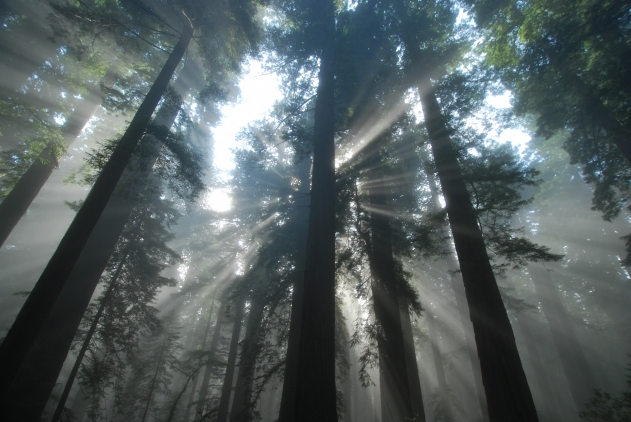
Redwoods in Fog

As I turn my back to the tree and lean against it in full repose, I see a single leaf fall into my line of sight before settling anonymously upon the forest floor. The ground is everywhere strewn with brown leaves, a full covering that lets off a rich, fragrant scent; yet watching this single leaf fall I recognize that each of these leaves has made the journey from branch to floor in its own time and in its own way. Each one has a story, although perhaps few have a witness other than the tree that released it to the ground.

At last I separate myself from the tree on which I am leaning and continue through the woods to its edge. The pathway opens out; the pathway ends in rose blossoms.

Mary Wollstonecraft Shelley: Unveiling the Modern Shadow

I am excited to say this essay was accepted by Kepler College to be displayed on their website. To read the article there please follow this link.

———————————————————————————————————————————

Born Mary Godwin, Mary Wollstonecraft Shelley was the daughter of the revolutionary feminist writer Mary Wollstonecraft, whose powerful treatise, Vindication of the Rights of Woman, opened up new avenues of possibility for the education of women at the commencement of the 19th century. Her daughter was one such beneficiary of Wollstonecraft’s desire to reform women’s education, going on to publish the wildly popular novel Frankenstein at the young age of 20. A look at the planetary aspects of Mary Shelley’s natal chart, using the perspective of archetypal astrology, can help illustrate how the archetypal energies correlated with the planets of our solar system were expressed in her personal life and in her writing, with a particular focus on her masterwork, Frankenstein. An analysis of the world transits, and the personal transits they form to Shelley’s natal chart, at the time of the publication of Frankenstein provide further insight into Shelley’s writing.

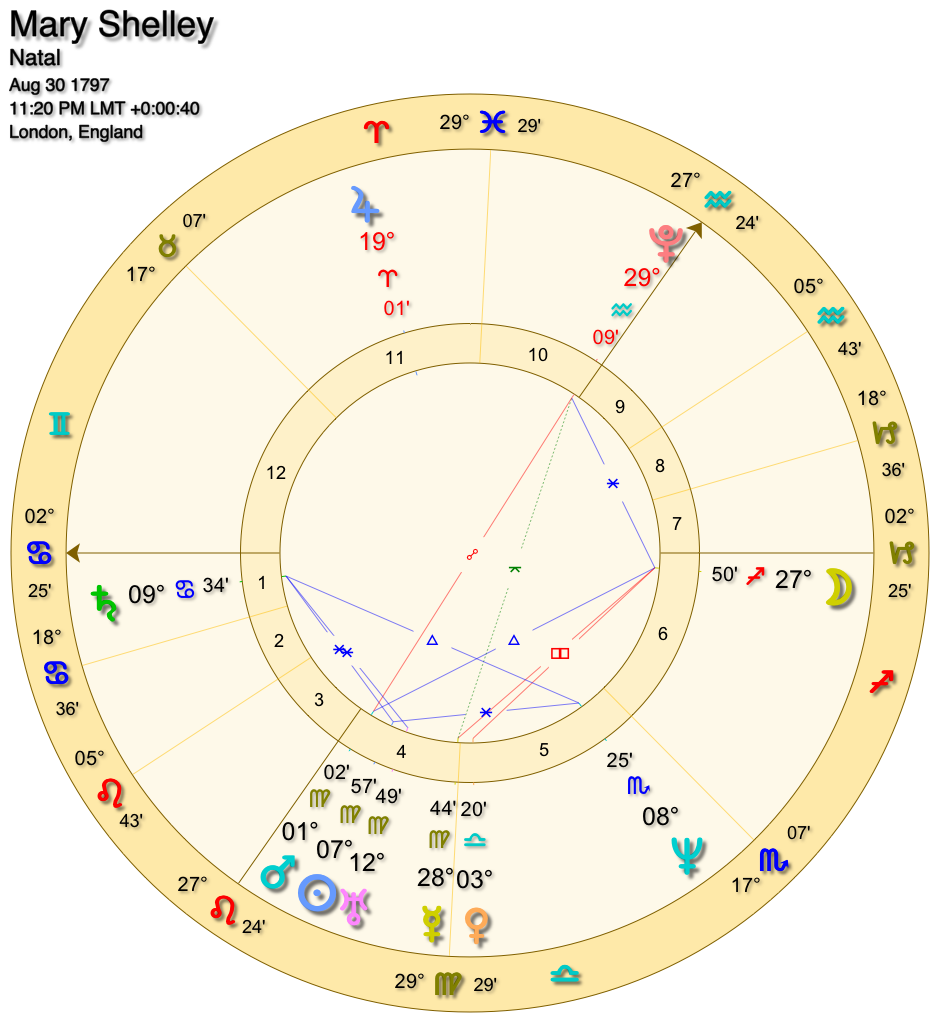
Mary ShelleyMary Godwin, who became Mary Shelley upon her marriage to the Romantic poet Percy Shelley, was born August 30, 1797 at 11:20 pm in London, England. Most prominent in her chart is a triple conjunction of the Sun, Mars, and Uranus in the sign of Virgo, in a tight 180° opposition to Pluto, with Mars closest to Pluto in the opposition. The Sun is archetypally correlated with the principle of the self, of one’s central identity and focus, and the areas in which one shines or expresses oneself most prominently. Uranus, the first of the outer planets to be discovered in the modern era, is correlated with the revolutionary impulse, with breakthrough, rebellion, genius, brilliance, technology, electricity, the young, and the new. Sun-Uranus aspects are often found in the natal charts of brilliant individuals whose work has provided some kind of breakthrough or revolutionary shift in consciousness or worldview, from Copernicus, Galileo, and Kepler, to Newton, Kant, and Freud.[1] The planet Uranus is archetypally correlated with the Greek myth of Prometheus, the Titan who stole fire (a symbol for consciousness) from the Gods and gave it to humanity. Mary Shelley’s husband, Percy Shelley, was also a Sun-Uranus figure. His expression of the archetypal complex can clearly be seen in his poem Prometheus Unbound.

Mary Shelley’s personal expression of the Sun-Uranus combination comes through in the brilliance of her individual expression in her breakthrough first novel, which even has the apt subtitle The Modern Prometheus. The character of Victor Frankenstein is that of a rebel seeking to create life by means of technological innovation, all of which are Uranian themes. He desires to create new life alone, not as father and mother, but to elevate himself to the role of God the Father, the individual solar hero on his quest of technological prowess. Frankenstein takes on the role of both father and mother, rebelling against the order of nature, doing so in an act of technological breakthrough and brilliance. While working, Frankenstein speaks of those he would create, saying “No Father could claim the gratitude of his child so completely as I should deserve theirs.”[2] Yet, he must also suffer the consequences of achievement. Like Prometheus, whose gift to humanity leads to his eternal punishment—chained to a rock while an eagle consumes his liver each day only to have it grow back again each night—Frankenstein is haunted by the life he gave, the monster he created out of his own hubris and ambition.Mary Shelley Chart

Mary Shelley’s Sun-Mars-Uranus triple conjunction is, as mentioned above, in opposition to Pluto. The Uranus-Pluto opposition Shelley is born under is the primary transit that defined the tumultuous era of the French Revolutionary Period. The Uranus-Pluto impulse is toward revolutionary change on a mass scale, the liberation of the repressed and the oppressed, and the unleashing of the taboo. It is the same transit that defined the 1960s countercultural era and our current moment of world revolutions and protests, from the Arab Spring to the Occupy Movement, to the overturning of the Defense of Marriage Act in the United States this current summer.

An interesting connection between Mary Shelley and her mother, Mary Wollstonecraft, is that Wollstonecraft was born with Uranus square Pluto in 1759 and published her masterwork, Vindication of the Rights of Woman, under the Uranus-opposite-Pluto in 1792. Her daughter was born just five years later in 1797 under the same Uranus-Pluto transit, and she went on to publish her own masterpiece, Frankenstein, under the subsequent Uranus square Pluto that was just beginning to come into the orb of influence in 1818. Both mother and daughter’s writing has a revolutionary quality: they were both breaking through the gender barrier in their era that oppressed female writers, and female expression as a whole.

The quality of Shelley’s Frankenstein also expresses Uranus-Pluto archetypal themes in the eruption of the shadow in her story which tells of the creation, through the Uranian technological spark of life, of a Plutonic monster. Shelley reveals and shines light upon (Sun-Uranus) the potential monstrosity (Pluto) of technology (Uranus), as well as the hubris of the modern age and the notion of progress, demonstrating how the sudden break (Uranus) with from the course of nature (Pluto) can unleash (Uranus) tremendous horrors (Pluto). In Frankenstein’s words he describes,

One secret which I alone possessed was the hope to which I dedicated myself; and the moon gazed on my midnight labors, while, with unrelaxed and breathless eagerness, I pursued nature to her hiding places.[3]

The relentless pursuit of nature, the reference to ‘her hiding places,’ and even the idea of a ‘secret. . . possessed’ evoke the underworld nature of the Plutonic, while the sense of the technological secret of life held by a single individual reflects the Sun-Uranus complex. Interestingly, this pursuit of nature is echoed by Dr. Frankenstein’s vengeful pursuit of the monster across the northern wilderness in the latter portion of the book.

The manner in which the horror of Shelley’s narrative unfolds clearly reflects not only her Sun-Uranus conjunction opposite Pluto, but also the Mars-Pluto opposition that is part of this larger complex in her natal chart. Mars correlates with the archetype of the warrior, with a potential range of manifestations from energy, action, and athleticism, to anger and even violence. The archetype of Pluto deepens any archetype with which it is in aspect, so the Mars-Pluto combination can potentially come through as a deep rage or potentially murderous violence, which is clearly expressed in the revenge of the monster of Shelley’s narrative. That Shelley has the Sun in aspect with her Mars-Pluto opposition can be seen in the individual embodiment of the violent shadow, both literally in the monster but also in the individual acts of Frankenstein that brought about the monster’s creation.

Briefly, I would like to touch on a few other aspects in Shelley’s chart that come through in the nature and style of her writing. Shelley has a tight Sun-Neptune sextile which is beautifully captured in a sentence she used to describe herself as a child: “As a child I scribbled. . . Still I had a dearer pleasure than this, which was the formation of castles in the air.”[4] The archetype of Neptune correlates, in one form of its expression, with the imagination and transcendence, which come through in this whimsical, imaginal quote illustrating Shelley’s innate ability to create imaginative narrative. She is also born with a Mercury-Venus conjunction, which can be seen in the beautiful, lyrical quality of her writing. The archetype of Mercury correlates with all forms of communication and expression—from writing, to thinking, speaking, and sensing—while the archetype of Venus correlates to beauty and artistry. Shelley’s Mercury-Venus can also be seen in the romantic fairy-story qualities of some of her other works, such as The Dream or The Heir of Mandolfo. Furthermore, Mercury is in a tight sextile to the Moon in Shelley’s chart, an example of which is the narrative form in which Frankenstein is written: a series of letters. Letter-writing is often intimate and familiar, and in this case also familial, all of which are Lunar qualities, in this instance expressed in Mercurial written form.

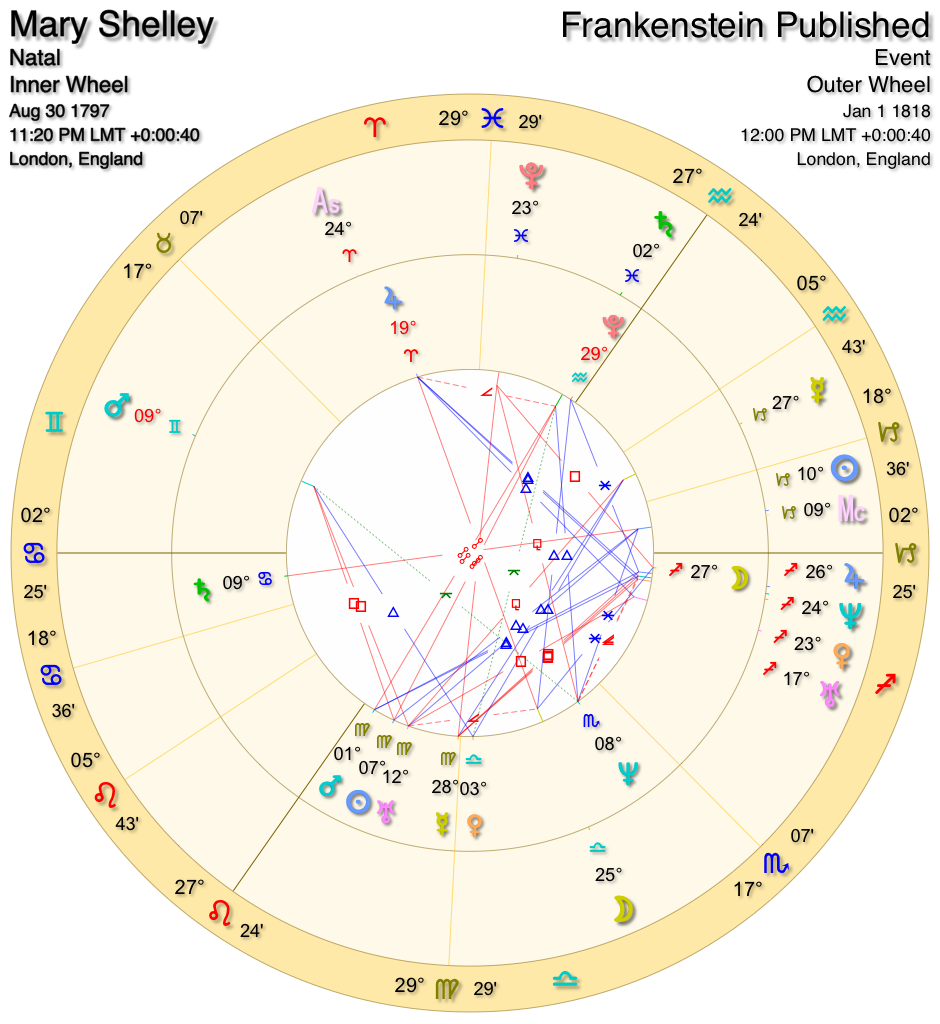
Frankenstein Published TransitsWhile much more could be elaborated in Mary Shelley’s natal chart, I would like to turn to the world transits that were in the sky at the time Frankenstein was published, on January 1, 1818. On that day, and for a short time before and after the publication date, there was a stellium in Sagittarius of Venus, Jupiter, Uranus and Neptune, with the smaller orbit of Venus bringing it briefly into the longer conjunction of Jupiter, Uranus, and Neptune, and the even longer conjunction of Uranus-Neptune that defined much of the Romantic era. While there are many complex ways in which this quadruple conjunction manifested in world events, the particular expression in relation to the publication of Frankenstein can be seen in the successful release of a beautiful piece of literary art produced by the creative imagination. The archetype of Jupiter grants success to whatever it touches, while Venus relates to the artistic expression, and Neptune to the imagination behind the project. Jupiter-Uranus alignments in world history regularly correlate to successful breakthroughs and the inauguration of new initiatives, and have been found to correlate with the first successful publications of numerous authors, including of course Mary Shelley.[5]

In her personal transits, the Venus-Jupiter-Uranus-Neptune stellium was conjoining Shelley’s natal Moon. While the archetype of the Moon is present in all individuals and certainly cannot be simply correlated with all women or “the feminine,” at the time Shelley lived women were often relegated or confined solely to the Lunar realms of home, family, and domestic matrimony by the then dominant patriarchal structures (which had largely appropriated the Solar archetypal role of the individual shining hero as a symbol of “the masculine”). The significance of the Venus-Jupiter-Uranus-Neptune stellium conjoining Shelley’s Moon can be seen in that she would have, in her time, been viewed, because she was a woman, as a Lunar figure who was successfully breaking out of the constrictive mold that did not encourage creative artistic or literary expression by women. The significance of the Moon in this particular case is not because she is a woman, but because of the primarily Lunar role women were usually required to take on. The archetypal energy of the successful Lunar figure is doubled by a transit that would have lasted for only a few hours on the particular day of publication: the Moon in the sky was transiting in opposition to Shelley’s natal Jupiter, which may have provided an increased sense of emotional joy and success for her.

Another significant world transit that was just beginning to come into orb at the time of publication, but which would have become more exact as the book was disseminated and read by the public, was the Saturn-Pluto conjunction of 1818. The energy of this transit would have been intensified for Shelley because, at the time of publication, Saturn was conjoining her natal Pluto as well. The archetype of Saturn is the reality principle that correlates to mortality, death, and gravity, but also to maturity and wisdom; Saturn is archetypally both hard consequences and the learning acquired from consequences. Saturn-Pluto correlates to the shadow side of the encapsulated egoic will to power that is so clearly expressed in Frankenstein. In his book on archetypal astrology, Cosmos and Psyche, Richard Tarnas describes Frankenstein as Shelley’s “prophetic Gothic masterpiece that depicted the monstrous shadow of the technological will to power.”[6] Shelley’s tale is one of death (Saturn) and destruction (Pluto), of moral (Saturn) depravity (Pluto), and of the Saturnian consequences of the soaring heights of Dr. Frankenstein’s, and modernity’s, Sun-Uranus visions of progress.

Interestingly, the day Frankenstein was published the Sun in the sky was transiting opposite Shelley’s natal Saturn, shining a light on the principle of death, as well as the profound consequences of individual actions. Frankenstein is also a shining (Sun) example of a piece of narrative art that has withstood the test of time (Saturn) and come down to us today as a revered piece of literature: another expression of the Sun-Saturn archetypal complex that brought this book into the world from the pen of Mary Shelley.

To read the complete works of Mary Shelley the kindle edition very inexpensive and available here.

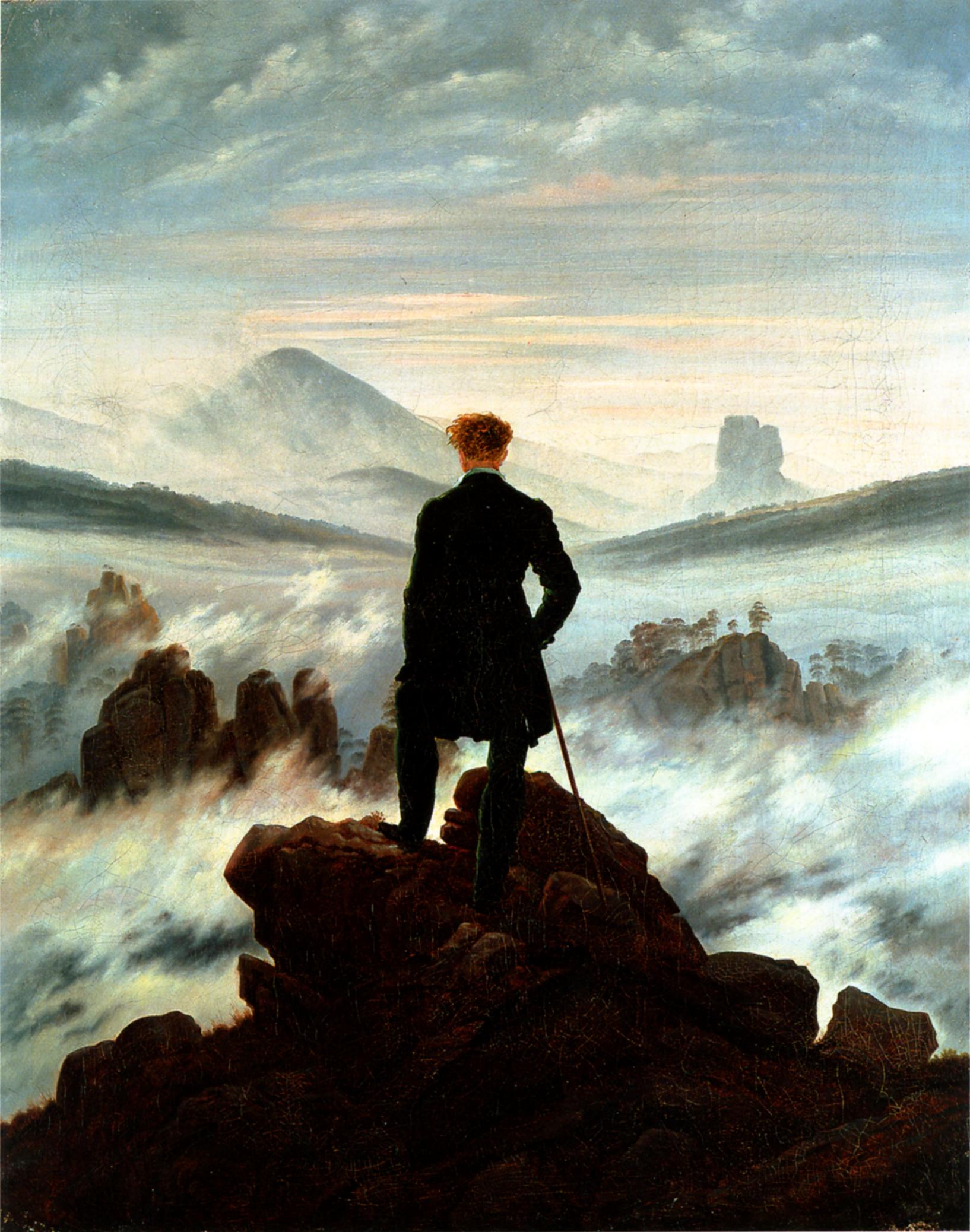
The Wanderer Above the Sea of Fog

Works Cited

Shelley, Mary. The Original Frankenstein or The Modern Prometheus. Edited by Charles

E Robinson. New York, NY: Vintage Classics, 2008.

Tarnas, Richard. Cosmos and Psyche: Intimations of a New World View. New York, NY: Viking Penguin, 2006.

Tarnas, Richard. Prometheus the Awakener: An Essay on the Archetypal Meaning of the

Planet Uranus. Woodstock, CT: Spring Publications, 1995.

Teacher, Janet Bukovinsky. Women of Words: A Personal Introduction to Thirty-Five

Important Writers. Philadelphia, PA: Courage Books, 1994.


[1] Richard Tarnas, Prometheus the Awakener: An Essay on the Archetypal Meaning of the Planet Uranus, (Woodstock, CT: Spring Publications, 1995).

[2]Mary Shelley, The Original Frankenstein or The Modern Prometheus, ed. Charles E Robinson (New York, NY: Vintage Classics, 2008).

[3] Shelley, Frankenstein.

[4] Shelley, qtd. in Janet Bukovinsky Teacher, Women of Words: A Personal Introduction to Thirty-Five Important Writers (Philadelphia, PA: Courage Books, 1994), 17.

[5] Richard Tarnas, Cosmos and Psyche: Intimations of a New World View, (New York, NY: Viking Penguin, 2006).

[6] Richard Tarnas, Cosmos and Psyche, 268.

Jane Austen: A Stroll Through “Mansfield Park”

My father says that with Jane Austen, not a single word is out of place. Each sentence is composed with the utmost precision, an attention to detail and subtlety that distinguishes her writing, and sets it high on the pedestal of the greatest English writers. She wrote at a time when, in her own words, “Men have had every advantage of us in telling their own story.”[1] Her works tell the story women were not often given the opportunity to tell, unveiling the intimate details of home, marriage, and the inner folds of emotion tucked away in the country houses of rural England.

Jane AustenPart of my purpose with this Women of Words project is to read works by female authors that I have never read, and to write a short essay on each author from various perspectives, sometimes literary, sometimes personal, sometimes astrological, or often a combination of these different perspectives. If I have already read something written by the chosen author, I will choose another work of hers, perhaps a piece less well-known. This was the case with Jane Austen. I have had the great pleasure of reading several of her novels already over the years: Sense and Sensibility, Pride and Prejudice, and Emma. I must say I enjoyed each of these immensely and could not rank one as a favorite over another. The characters and their individual development, the dialogue, the prose—all are exquisite. I look forward to the day I can re-enter these provincial worlds again, whether it is by falling passionately in love alongside Marianne Dashwood, or coming to greater self-understanding with Elizabeth Bennet, or undergoing deep emotional maturation alongside Emma Woodhouse.

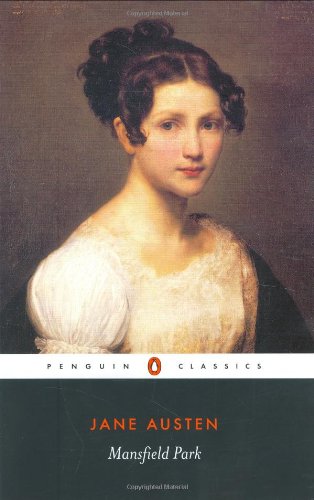
Having already read the three most well-known of Austen’s novels I chose Mansfield Park as my next endeavor for this project. Mansfield Park tells the story of a young girl, Fanny Price, who is brought to the countryside by her wealthy Aunt Bertram and her uncle, Sir Thomas, to be provided with a better upbringing and social opportunity than she would have had if she had been raised by her own lower class parents along with the rest of her siblings. Janet Bukovinsky Teacher describes Mansfield Park as a morality play on entering the church.[2] The primary focus of the plot is Fanny’s dedicated love for her cousin Edmund, who has been her dearest companion since he soothed her tears when she was first displaced into her new home. Drama unfolds when two eligible siblings, Henry and Mary Crawford, move to the neighborhood and upset a romantic tangle amongst nearly all the members of the Bertram family. As the second son, Edmund is destined to become a pastor, a vocation that leaves opposite impressions upon the two young ladies desiring his attention.Mansfield Park

Fanny Price is a sweet, demure, shy girl whose heroism seems to lie solely in her propriety and goodness. At times, there can be something frustrating about her to the contemporary sensibility. Why is she so physically weak? Why does she not stand up for herself, or express her own feelings? While the perspective of the story certainly makes one want to be on Fanny’s side, the actual qualities of her rival characters, particularly that of Mary Crawford, leave one wanting something more from Fanny, some act of heroism or engagement besides her shy propriety. Fanny’s quiet devotion to Edmund is admirable and certainly understandable, but at times his happiness seems far better suited to being with Mary. Mary’s supposed faults, which I will let the reader discover for him- or herself, are not ones that would easily withstand the test of time or feminism.

I often found the most enjoyable moments of the book to be when Austen’s writing steps out of the small, ordinary world of Fanny’s domestic sphere and connects with a more philosophical way of thinking, or enters into observation of the natural world and the greater cosmos. In one passage, when Fanny is walking with Mary through a garden, Fanny begins to muse on the nature of time and memory:

“How wonderful, how very wonderful the operations of time, and the changes of the human mind!”

And following the latter train of thought, she soon afterwards added: “If any one faculty of our nature may be called more wonderful than the rest, I do think it is memory. There seems something more speakingly incomprehensible in the powers, the failures, the inequalities of memory, than in any other of our intelligences. The memory is sometimes so retentive, so serviceable, so obedient—at others, so bewildered and so weak—and at others again, so tyrannic, so beyond controul!—We are to be sure a miracle every way—but our powers of recollection and of forgetting, do seem peculiarly past finding out.”[3]

This is one of those exquisite moments when the reader is permitted to see the deeper thoughts underlying Fanny’s shy demeanor. One can feel almost as though we are briefly permitted to see right through Fanny and into the thought of Austen herself, sharing one of her own contemplations upon the nature of human memory.

Austen was a contemporary of Coleridge and Wordsworth, and one can see the Romantic language of the era coming through in her own descriptions of the natural world. In a quiet scene in the family drawing room, Fanny is withdrawn by the window away from the conversations and flirtations of the Bertram sisters and the Crawfords. To her delight, Edmund joins her for a moment by the window.

Fanny. . . had the pleasure. . . of having [Edmund’s] eyes turned like hers towards the scene without, where all that was solemn and soothing, and lovely, appeared in the brilliancy of an unclouded night, and the contrast of the deep shade of the woods. Fanny spoke her feelings.

“Here’s harmony!” said she, “Here’s repose! Here’s what may leave all painting and all music behind, and what poetry only can attempt to describe. Here’s what may tranquilize every care, and lift the heart to rapture! When I look out on such a night as this, I feel as if there could be neither wickedness nor sorry in the world; and there certainly would be less of both if sublimity of Nature were more attended to, and people were carried more out of themselves by contemplating such a scene.”[4]

A similar Romantic sensibility is evoked toward the novel’s ending, while Fanny is visiting her parents in town. Fanny is contemplating with melancholy the loss of the beauty of spring in the countryside:

It was sad to Fanny to lose all the pleasures of spring. She had not known before what pleasures she had to lose passing March and April in town. She had not known before, how much the beginnings and progress of vegetation had delighted her.—What animation both of body and mind, she had derived from watching the advance of that season which cannot, in spite of its capriciousness, be unlovely, and seeing its increasing beauties, from the earliest flowers, in the warmest divisions of her aunt’s garden, to the opening of leaves of her uncle’s plantations, and the glory of his woods.—To be losing such pleasures was no trifle; to be losing them, because she was in the midst of closeness and noise, to have confinement, bad air, bad smells, substituted for liberty, freshness, fragrance, and verdure, was infinitely worse.[5]

It is interesting to note the strong influence of both the weather and landscape on the unfolding of everyday events in Austen’s novels. They remind the contemporary reader of the differences between the world before and after the invention of the automobile and the construction of major road networks. Social relations, travel plans, family visits, and even physical exercise are far more susceptible to the fluctuations in climate than they would be today.

One of my favorite scenes in Mansfield Park is a conversation that takes place between Edmund Bertram and Mary Crawford as they are walking through the woods of a neighboring estate. It is early in their acquaintance, and a subtle flirtation has begun to develop between them, to Fanny’s chagrin. Mary, at this time, is much more taken with Edmund than he seems to be with her, which starts to come through in the following dialogue. The substance of the conversation itself is on the nature of time as seen from their differing perspectives, views which seem to have something of a gender bias. Mary begins the conversation:

“I am really not tired, which I almost wonder at; for we must have walked at least a mile in this wood. Do not you think we have?”

“Not half a mile,” was his sturdy answer; for he was not yet so much in love as to measure distance, or reckon time, with feminine lawlessness.

“Oh! you do not consider how much we have wound about. We have taken such a very serpentine course; and the wood itself must be half a mile long in a straight line, for we have never seen the end of it yet, since we left the first great path.”

“But if you remember, before we left that first great path, we saw directly to the end of it. We looked down the whole vista, and saw it closed by iron gates, and it could not have been more than a furlong in length.”

“Oh! I know nothing of your furlongs, but I am sure it is a very long wood; and that we have been winding in and out ever since we came into it; and therefore when I say that we have walked a mile in it, I must speak within compass.”

“We have been exactly a quarter of an hour here,” said Edmund, taking out his watch. “Do you think we are walking four miles an hour?”

Oh! do not attack me with your watch. A watch is always too fast or too slow. I cannot be dictated to by a watch.”[6] (Emphasis added.)

Austen reinforces many of the gender norms of her day, including views on manners and propriety of behavior. The primary concern of the women in Austen’s novels is their marriagability, a stark contrast to her revolutionary forebear, Mary Wollstonecraft. Yet Austen herself never wed. She once accepted a suitor’s offer, but by the next morning she had changed her mind and reversed her answer. She seems to express some of her views on a woman’s choice to marry, and whom she is to marry, through the voice of Fanny Price when she says,

“I should have thought,” said Fanny, after a pause of recollection and exertion, “that every woman must have felt the possibility of a man’s not being approved, not being loved by some one of her sex, at least, let him be ever so generally agreeable. Let him have all the perfections in the world, I think it ought not to be set down as certain, that a man must be acceptable to every woman he may happen to like himself.”[7]

To touch briefly on Austen’s birth chart, because we know her exact birth time we are able to know that she has a tight Moon-Saturn conjunction in Libra. Austen is born on December 16, 1775 at 11:45 pm in Stevenston, England. The Moon archetypally relates to the home, domesticity, relationship, emotional expression, and feeling. Saturn, on the other hand, correlates with constraint and restraint, hard work, discipline, reserve, and a serious disposition. Austen’s Moon-Saturn conjunction is expressed archetypally as the quiet sphere of the home that is depicted in all of her novels, as well as the emotional struggles and maturation of her lead female characters. Her detailed descriptions of the quiet day-to-day experiences of living in the English countryside, and the work of securing a husband and home, all correlate to Moon-Saturn. She also did all of her written work (Saturn) in the parlor of her home (Moon), and even would hide the stories she was writing when visitors came calling.Jane Austen's Birth Chart

Another significant aspect in Austen’s natal chart is her Mercury in opposition to a broad Jupiter-Uranus conjunction. The archetype of Mercury comes through as all forms of communication, from writing and speaking, to  thinking, the intellect, and education. Jupiter correlates archetypally with expansion, success, and celebration, while Uranus relates to change, revolution, rebellion, innovation, and ingenious breakthroughs. The Jupiter-Uranus combination correlates with expansion of horizons, successful breakthroughs, and rapidly opening world views and perspectives. Although Austen lived in a constrained home environment, which correlates to her Moon-Saturn conjunction—never moving from her family home—she was able to expand her horizons and those of all her readers through her writing, which correlates to her Mercury in opposition to Jupiter and Uranus. The breakthrough quality of her exquisite novels—from the first, Sense and Sensibility, which she published anonymously, claiming only on the title page that it was “By A Lady”—have rippled through history and come down to us today as the beloved stories of the extraordinary, yet everyday, women of the English countryside.

To read Mansfield Park the kindle edition is free and available here.

Works Cited

Austen, Jane. Mansfield Park. Oxford, England: Oxford University Press, 1988.

Teacher, Janet Bukovinsky. Women of Words: A Personal Introduction to Thirty-Five Important Writers. Philadelphia, PA: Courage Books, 1994.


[1] Jane Austen, qtd. in Janet Bukovinsky Teacher, Women of Words: A Personal Introduction to Thirty-Five Important Writers (Philadelphia, PA: Courage Books, 1994), 12.

[2] Teacher, Women of Words, 12.

[3] Jane Austen, Mansfield Park (Oxford, England: Oxford University Press, 1988), 208-209.

[4] Austen, Mansfield Park, 113.

[5] Austen, Mansfield Park, 431-432.

[6] Austen, Mansfield Park, 94-95.

[7] Ibid, 353.

Sweet Sunset

Have you ever done yoga while a sheet of rain obliterates all visibility of the world around you? Or tasted drinking chocolate so rich and spicy that you would swear you are holding a melted bar of pure chocolate in the cup before you—or somehow been transported to the seductive marble counter of Vianne Rocher’s French-Mayan Chocolaterie? Or sat in a hot bath with crimson and peach rose petals strewn over the surface, the scents of jasmine and ylang ylang spiraling with the steam towards the ceiling, while bells toll the hour softly out the open window? This is just a taste of the joys I had the great privilege to experience in the second half of my visit to New Mexico, a week I am now looking back on with awe and gratitude for the level of both bliss and adventure I was able to experience.

Harp
Photo by Becca Tarnas

On the afternoon of the day I wrote my last post, I went with the friend I was staying with to pay a visit to an acquaintance of hers who is now a retired harp maker. His business was called Harps of Lorién, so I had a good feeling we would get along well. He had only kept two of his harps for himself—the last ones he made—and I had the great joy of being able to play them for a little while. The larger of the two harps had just under five octaves; a beautiful creation with a rich sound, especially in the upper register. The other harp was a lovely little lap harp with 27 strings, the kind I could easily imagine myself carrying on my back on some mythical adventure. Playing them I was reminded of a trilogy I recently read that a friend recommended to me: Riddle-Master by Patricia McKillip. The series is composed of three books, The Riddle-Master of HedHeir of Sea and Fire, and Harpist in the Wind. As one can imagine from the final book title, harps play a significant role in the unfolding of this story.

From harps we moved on to chocolate, a transition no one I know could complain of. I was brought to the Kakáwa Chocolate House where we were greeted with an extensive menu of both European and Meso-American drinking chocolates. After tasting several different samples I settled on the Chile Chocolate, which was made of 100% chocolate, coconut sugar, chile, and Mexican vanilla. The thick liquid was both sweet and spicy, rich and rounded, calming and awakening. It was, to say the least, amazing. Truly an extravagance.

Photo by Becca Tarnas

Our evening plans brought us into central Santa Fe where we had dinner at a restaurant called Blue Corn, followed by drinks at a nearby bar called Thunderbird. My astrological twin and I, of course, ordered the same drink, a cocktail of vodka and crisp pear. Our parallels no longer surprised us, especially when it was something as simple as choosing a drink, or wearing identical socks or pants. Our differences were becoming far more interesting to discover and explore.

The following day, Sunday, my friend and I went back to the land in Glorietta to hike around the area where she and her partner are building their home. The day was cooler than when we were up there on July 4th, or perhaps I was just becoming acclimated to the altitude and desert sun. Clouds were gathering on the edges of the horizon but we still baked under the clear blue of the sky directly over our heads. Walking through the forest of ponderosa pine and cedar I started to notice a distinct smell that would hit me every so often, almost like kaffir lime leaves. What was an essential ingredient of Thai food doing out here? Finally, when I smelled the scent again I stopped and looked all around me, making note of any different plants that might be nearby. To my right was a low tree with gnarled bark and pointed, needle-like leaves. Silver-green berries grew in clusters between the leaves. I took a step closer, realizing the kaffir smell came from this tree. A juniper. I never would have guessed the two smells would be so similar except through this accidental discovery.

Photo by Becca Tarnas

Passing under the eaves of this sparse forest we walked out into an open meadow, a long, snaking expanse of shrub-covered ground that formed a valley between two wooded hills. Gazing overhead we saw a hawk soaring, a local inhabitant my friend recognized because of the distinctive missing feather she had in one of her wings. We climbed up one of the hills to look back down on the meadow we had just crossed. Directly opposite on the hill facing us, at a point not much higher than where we stood, the dark entrance of a cave was just visible between the trees. My friend speculated that this cave might be the home of the hawk that was still circling above us, although she was not sure.

Photo by Becca Tarnas

After returning to downtown Santa Fe, I spent the rest of the afternoon on a quiet meander through the town’s streets, pausing at the stalls of artists and vendors, admiring the bright silver and turquoise that was a prominent theme of the jewelry for sale here. The clouds continued to gather in the sky, making their way towards the town, their dark underbellies heavy with rain. Finding myself in the grassy plaza I sat beneath a tree and took out my watercolors to begin painting a scene I had been holding in my mind since that morning.

The sunset that night was so brilliant—an explosion of bleeding vermillions and reds, rosy oranges and deep purples—that no photo could even begin to capture it. I sometimes wish I could bring a painting forth all in an instant, the colors pouring from my open imagination directly onto the page. But the exact wash of that particular sunset, the ways its unique colors flowed together and blended, is fading from my memory with as much certainty as it faded from that night sky.

Photo by Becca Tarnas

In many ways I feel my time in New Mexico was like that sunset: so beautiful and profound, surprising and unexpected, a crescendo of connection and experience. Returning to the grey fogs of San Francisco felt a little like a shock, the stark white of the sky such a contrast to the desert colors I still held within me, memories like precious gems, each expressing different emotions through their dynamic colors. My astrological twin and I are two Sagittarians who walked together down a spiraling path of an eternally growing checklist of activities: from baking cookies and pumpkin pie to turning our toenails into artistic canvases; from sampling at a delicious gluten-free bakery to a morning of pampering at the spa; from astrological readings and healing massages to crafting beautiful gift collages; from deep conversations and gorgeous laughter to the freedom of just being utterly silly. So much of what happened during my week in New Mexico was so simple, an extended playdate between two sisters, butterfly twins who had somehow only recently met—at least in this lifetime.

Photo by Becca Tarnas
Collage for the Dusk Twin
Photo by Becca Tarnas
Collage for the Dawn Twin