The Ethics of Creativity: Affirming Beauty and Tragedy

Can a system of ethics be based upon beauty? Is a kalocentric world view enough to counter the biocentric, and most often anthropocentric, ethics that are shaping the destruction of Earth’s systems by human beings? Perhaps most importantly, can an ethic that leans on aesthetics produce tangible changes for good in the world? Brian Henning seems to think so, as he argues in The Ethics of Creativity, his book on the moral applicability of Alfred North Whitehead’s process philosophy.

The ethics of creativity is rooted in Whitehead’s concept of concrescence, in which each actual occasion, each infinitesimal “drop of experience,”[1] moves through a four stage process of datum, satisfaction, process, and decision,[2] in which the occasion feels itself in its subjective immediacy before perishing into objective immortality. Whitehead’s term “concrescence” is from the Latin concrēscere, meaning “to grow together.”[3] Concrescence is the process by which each actual occasion, or event, is constituted by its internal relations to all other events. “Each actual occasion is, in this sense, its relationship to the universe.”[4] For Whitehead, individuality is composed of reference to all others as well as to the whole. Concrescence is the process by which “the many become one, and are increased by one.”[5]

Whitehead’s “category of the ultimate”[6] is Creativity: the harmonizing process of concrescence makes creativity kalogenic—for each event to be actual it must to some degree or other be beautiful. Drawing on Charles Hartshorne, Henning writes, “The zero of aesthetic value is the zero of actuality.”[7] All of reality, therefore, has value. Due to concrescence, by which ‘the many become one, and are increased by one,’ each event has value for itself, for others, and for the whole. Henning writes, “Whitehead’s insistence that every individual has value not only for itself, but for others and for the whole of reality, establishes a rich axiological foundation for the development of an organic moral philosophy.”[8] Henning is trying to formulate an ethical system that mirrors the “creative process of the universe itself.”[9] He asserts that “morality must always aim at achieving the most harmonious, inclusive, and complex whole possible.”[10]

Henning applies the ethics of creativity primarily to the ecological crisis, an issue that urgently calls for a rethinking of ethics and morality. He says,

One of the greatest services that a Whiteheadian moral philosophy can provide to contemporary environmental and moral philosophies is to provide the metaphysical basis for understanding not only the locus and scope of intrinsic value, but also its nature.[11]

When Henning applies the ethics of creativity to real world situations in the latter sections of his book, that is when both the gifts and the flaws of the system become most apparent. He describes the two forms of ugliness and evil possible in a Whiteheadian universe: anesthesia, “which involves the frustration of greater possibilities by the interposition of lesser achievements,”[12] such as the inhibition of a greater form of beauty potentially open to an organism; and violence, “which involves the active destruction and inhibition of past achievements of beauty.”[13] The former refers to the inhibition of future achievements, the latter to the past. The good of the individual and of the whole are kept in balance by affirming the real value of each, and by refusing “to accept a dichotomy between the interests of the one and the many.”[14] As a system applied to hypothetical circumstances Henning’s ethics of creativity often seems to provide a superior course of moral action than other systems of ethics based in, for example, utilitarianism or deep ecology. Yet the ethics of creativity is also subject to the fallibility of individual subjectivity and understanding that upsets the consistency of other ethical systems.

Perhaps one of the most compelling aspects of the ethics of creativity and its triadic system of value is the affirmation of tragedy when a moral decision is made. Henning offers the example of choosing between killing a malaria-infected mosquito that is about to bite a human infant, and allowing the mosquito to achieve its aim and sacrificing the child. Henning asserts that to save the child and kill the mosquito allows for greater beauty and complexity to be achieved in the world because the potential for beauty in the human child is greater than that of the mosquito. This is, of course, the natural answer that most human beings (including myself) would give when faced with this situation, although it might not align with the moral systems of mosquitoes. There is a degree of anthropocentrism implicit in ascribing the higher potential for beauty (although perhaps not complexity) to the child. This may be seen as a flaw in Henning’s working of Whitehead’s metaphysics. However, Henning writes,

The aim is not merely to give preference to the more complex individual; the aim in our moral decision making is to determine what would achieve the most harmonious and intense whole with regard to the individuals involved.[15]

He goes on to say, “To choose the mosquito over the infant would be to affirm the less beautiful of two options. Thus, the destruction of the mosquito would be tragic but morally justifiable” (emphasis added).[16] The element of tragedy in our moral decision-making, if truly mourned, I feel affirms the loss of beauty that occurs with each decision. The very act of mourning that tragedy increases the beauty in the universe. A system of ethics should not provide easy answers to moral dilemmas; rather it should allow every side of the ethical decision to be felt by the moral agent, just as in Whitehead’s system each actual occasion feels the whole of the universe with each concrescence.

Rose


Works Cited

Henning, Brian G. The Ethics of Creativity: Beauty, Morality, and Nature in a Processive Cosmos. Pittsburgh, PA: University of Pittsburg Press, 2005.

Whitehead, Alfred North. Process and Reality. New York, NY: The Free Press, 1985.


[1] Brian G. Henning, The Ethics of Creativity: Beauty, Morality, and Nature in a Processive Cosmos (Pittsburgh, PA: University of Pittsburg Press, 2005), 32.

[2] Henning, The Ethics of Creativity, 33.

[3] Ibid, 32.

[4] Ibid.

[5] Alfred North Whitehead, Process and Reality (New York, NY: The Free Press, 1985), 21.

[6] Whitehead, Process and Reality, 21.

[7] Henning, The Ethics of Creativity, 103.

[8] Ibid, 5.

[9] Ibid, 3.

[10] Ibid.

[11]Ibid, 2-3.

[12] Henning, The Ethics of Creativity, 113.

[13] Ibid.

[14] Ibid, 3.

[15] Henning, The Ethics of Creativity, 188.

[16] Ibid.

Spheres of Identity and Difference

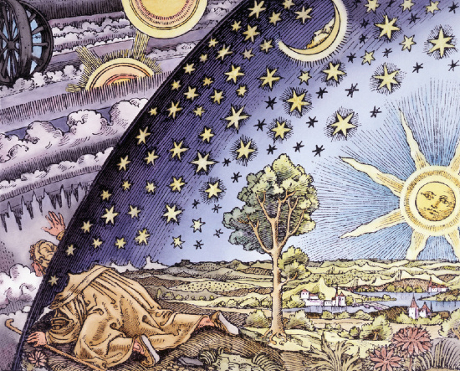
Dive into any moment of the rich cosmogenesis of Plato’s Timaeus and you may find yourself swimming through celestial waters rife with symbolic imagery that unfold into a myriad display of applicable meaning. When the Same, the Different, and Being are brought together in a dynamic primordial mixture, the Soul of the World is born, a Soul that echoes and is echoed by the physical cosmos that is composed of fire, air, earth, and water. The shape and motion of the World Soul mirrors the shape and motion of the physical world, which can primarily be seen in the movement of the spheres of heaven, the motion of the planets and fixed stars around their earthly axis. When the Demiurge crafts the immortal spark present in every mortal human—the human soul—the Demiurge draws from the mixture of the Same, the Different, and Being of which the World Soul was composed. If the World Soul mirrors the motion of the cosmos, does this indicate the human soul does as well, as it too is made from the same, though slightly altered, substance as the first Soul? Additionally, can the illustration of Timaeus’ geocentric cosmos still carry symbolic meaning when read from a heliocentric perspective?

The DemiurgeThe substance of the World Soul is first divided into geometrical portions that are brought harmoniously back together to create the three-dimensional structure of the cosmos as we perceive it. This compound is then split in two and rejoined at the centers, before each is bent back upon itself and rejoined again to create two concentric spheres. This process of dividing and rejoining, over and over again to create the structure of Soul, mirrors the ingredients that were brought together to form the Soul in the first place: the Same, the Different, and Being. The Different brings division, the Same reunites that which has been divided, and thus they continue to form Being; it is a dialectic of creation. Once this substance has been shaped into the two spheres, the Demiurge “decreed that the outer movement should be the movement of the Same, while the inner one should be that of the Different.”[1] The sphere of the Same remains whole, while the sphere of the Different is once again divided into “seven unequal circles.”[2] The Demiurge “set the circles to go in contrary directions: three to go at the same speed, and the other four to go at speeds different from both each other’s and that of the other three.”[3] We see here the different motions of the planetary orbits, perceived during Plato’s time to revolve around the fixed sphere of the Earth: “The Earth he devised to be our nurturer, and because it winds around the axis that stretches throughout the universe, also to be the maker and guardian of the day and night.”[4] The sphere of the Same is the outermost circle of the fixed stars, which moves about the Earth to the right, while the Earth itself was understood to rotate on its axis causing day and night.

Timaeus’ account of the creation of the ensouled cosmos reflects the most sophisticated astronomical knowledge of his time, including the observations that the pathways traced by the seven planets were erratically wandering, something seemingly contrary to the belief that the heavens were a “moving image of eternity.”[5] The Demiurge creates the cosmos as a begotten model of the eternal Forms, yet because it is an imitation and not the Forms themselves the cosmos is not itself eternal. Plato describes that which is eternal as “always changeless and motionless”[6] whereas the ordered cosmos is always in motion. As Plato writes, it is the nature of the Forms on which the cosmos is modeled

to be eternal, but it isn’t possible to bestow eternity fully upon anything that is begotten. And so [the Demiurge] began to think of making a moving image of eternity: at the same time as he brought order to the universe, he would make an eternal image, moving according to number, of eternity remaining in unity. This number, of course, is what we now call “time.”[7]

The planets, and the gods embodying them, “came to be in order to set limits to and stand guard over the numbers of time.”[8] The differing speeds of their motions determine the course and divisions of time: the Sun’s “chief works would be to shine upon the whole universe and to bestow upon all those living things appropriately endowed and taught by the revolution of the Same and the uniform, a share in number”;[9] the Moon inscribes the course of a month, the Sun the course of a year. The spheres of the Different divide into the differentiations of time the sempiternal quality of the fixed celestial sphere of the Same.

Timaeus observes that few people have taken note of the temporal length of the other planetary orbits. He says, “Nobody has given them names or investigated their numerical measurements relative to each other. And so people are all but ignorant of the fact that time really is the wanderings of these bodies, bewilderingly numerous as they are and astonishingly variegated.”[10] Was it really the case that few people in Plato’s time knew that the orbit of Mars was two years, Jupiter’s twelve, or Saturn’s twenty-nine? Or is Plato pointing toward some other ignorance in relation to the wandering motion of the planets? Timaeus goes on to say directly after this statement:

It is nonetheless possible, however, to discern that the perfect number of time brings to completion the perfect year at that moment when the relative speeds of all eight periods have been completed together and, measured by the circle of the Same that moves uniformly, have achieved their consummation. This, then, is how as well as why those stars were begotten which, on their way through the universe, would have turnings. The purpose was to make this living thing as like as possible to that perfect and intelligible Living Thing, by way of imitating its sempiternity.[11]

The ordered cosmos is an imitation of the eternal Forms, but “the resemblance still fell short”[12] nonetheless of the perfect model. The wanderings of the planets are an indication of that imperfect imitation. Yet in the previous passage Plato seems to be indicating a time in which the eight spheres will all be aligned, the ‘perfect number of time’ that will complete the ‘perfect year’ and elevate the cosmos to the level of perfection of the eternal Forms.Perceiving the Cosmos

How is this passage to be read from a heliocentric perspective, from a world view shaped by the Copernican Revolution? Is the consummation of that ‘perfect year’ reflective of a time when the wanderings of the planets are no longer erratic, but rather are in continuous geometrical motion, a true ‘moving image of eternity’?

The Soul of the World contains within it these continual motions of the Same and the Different, as it appears to strive for the perfection of the eternal Forms. This striving towards perfection, according to Plato, is also the task of the philosopher as he or she moves towards Wisdom. Indeed, the motions of the cosmos and the motions of the human soul appear to be parallel as they continue to move in their variegated orbits towards the eternal Forms, towards Goodness, Beauty, and Truth, towards Wisdom. If the philosopher is truly to be a lover of Wisdom he or she must remain as that: a lover and not possessor of Wisdom. So too the cosmos cannot possess the Forms of which it is a reflection; instead it is in a loving dance with eternity, the motions we witness across the sky with the passing of each night. Yet both the World Soul of the cosmos and the soul of the philosopher may still strive for that ‘perfect year,’ the consummation of all motion into one moment when eternity and time, the soul and Wisdom, are united.

Work Cited

Plato. Plato: Complete Works. Edited by John M. Cooper. Indianapolis, IN: Hackett, 1997.


[1] Plato, Timaeus, trans. Donald J. Zeyl, in Plato: Complete Works, ed. John M. Cooper (Indianapolis, IN: Hackett, 1997), 1240, 36c.

[2] Plato, Timaeus, 1240, 36d.

[3] Ibid.

[4] Ibid, 1244, 40c.

[5] Ibid, 1241, 37d.

[6] Plato, Timaeus, 1241, 38a.

[7] Ibid, 1241, 37d.

[8] Ibid, 1242, 38c.

[9] Ibid, 1242, 39b.

[10] Plato, Timaeus, 1243, 39c-39d.

[11] Ibid, 1243, 39d-39e.

[12] Ibid, 1243, 39e.

Darkness, Duality, and the Call for Enmeshed Solidarity

Dark Ecology

When confronted with crisis, one must ask what it is that is in crisis. When it comes to what has been termed the environmental—or ecological—crisis, this question of what is in crisis immediately complexifies. The crisis itself may be that we cannot simply apply a homogenous label to what is unfolding everywhere around, before, and even inside of us. If there is a crisis of nature, and humans are causing it, then knowing what nature and humanity are, what their relationship is, and if they can even be distinguished or differentiated from each other, is crucial to the survival of countless species, including our own, and the ecosystems which these species constitute.

Certain contemporary ecological thinkers have challenged the barrier—constructed by dominant aspects of Western civilization—between the concepts of nature and humanity with a variety of different approaches. These challenges come in the form of Val Plumwood’s ecofeminism, Timothy Morton’s dark ecology, Slavoj Zizek’s ideas of interdependence and the barrier of Included and Excluded, Neil Evernden’s concepts of ecological interrelatedness, and Holmes Rolston’s response to the deconstruction of ecological terminology, among many others. Each of these approaches seeks to address and break down the dualism held between subject and object, primarily as maintained in the separation of humanity from nature.

Val Plumwood’s ecofeminist approach, as encapsulated in her book Environmental Culture: The Ecological Crisis of Reason, uses methods of analogy to read one system of thought into another to think through enculturated dualisms between male/female, rational/emotional, Self/Other, subject/object, and of course, human/nature. She addresses the problems of anthropocentrism and anthropomorphism, systemic remoteness, and hegemonic centrism at multiple levels as embodied not only by dominant rationalistic approaches but also by a variety of ecological perspectives, from animal rights advocacy to deep ecology. Plumwood sees humanity as being faced with “two historic tasks that arise from the rationalist hyper-separation of human identity from nature: they can be summed up as the tasks of (re)situating humans in ecological terms and non-humans in ethical terms.”[1] Her primary prescriptive approach is to shift from an attitude of identity with that which is termed Other, to an attitude of solidarity. She also emphasizes the need to recognize the agency of the Other, instead of only the intrinsic value of the Other.

Holmes Rolston addresses the idea of agency in relationship to value as well when he writes, “The world is full of eyes, legs, wings, antennae, mouths, webs and eggs, all being used in the defence of life. Is it consistent to say that animals defend lives they do not value?”[2] He goes on to say,

The organism is an axiological, though not a moral, system. So the tree grows, reproduces, repairs its wounds and resists death. A life is defended for what it is in itself, without necessary further contributory reference. Every organism has a good-of-its-kind, it defends its own kind as a good kind.[3]

Both Rolston and Plumwood are focusing on the issue of ‘resituating. . . non-humans in ethical terms,’ with an understanding that agency indicates the rights of the Other while also affirming their inherent differences from humanity. Rights need not arise from similarity to the human, as this is a form of anthropocentrism that merely pushes the boundary of duality further from the sphere of the human species.

A tension exists between affirming difference while challenging duality in the various approaches of these five ecological thinkers. As Neil Evernden points out, “Ecology begins as a normal, reductionist science, but to its own surprise it winds up denying the subject-object relationship upon which science rests.”[4] Timothy Morton affirms this when he writes, “‘Nature’ dissolves when we look directly at it, into assemblages of behaviours, congeries of organs without bodies.”[5] Both Morton and Slavoj Zizek argue that the ecological crisis ought to be addressed by abolishing the concept of “Nature” as an external environment radically other to the human. One must, in Zizek’s words, “ the antagonism between the Included and the Excluded,” rather than simply “fight for the environment.”[6] Rolston, on the other hand, accepts the use of the term “nature” but only after addressing the difference of nature as concept or framework and nature as real beings: “‘Nature,’ if a category we have constructed, has real members, that is, things that got there on their own in this world-container, and remain there independently of our vocabulary.”[7]

For Evernden the solution lies in art, aesthetics, and the humanities. He quotes Northrop Frye in saying “the goal of art is to ‘recapture, in full consciousness, that original lost sense of identity with our surroundings, where there is nothing outside the mind of man, or something identical with the mind of man.’”[8] For Plumwood, aspects of this approach might be problematic, primarily the idea of ‘identity with our surroundings’ rather than solidarity and communication with those beings outside the human species. Yet Plumwood also accepts the ambiguity and imperfection inherent to developing effective models of communication with non-humans. She writes,

The problems of representing another culture’s or another species communication however pale before the enormity of failing to represent them at all, or of representing them as non-communicative and non-intentional beings. This is an incomparably greater failing.[9]

This acceptance of the ambiguity and even the mess of ecological engagement are also present in Morton and Zizek’s thought. Morton writes, “Ecological thinking—what I call the ecological thought—is precisely this ‘humiliating’ descent, towards what is rather abstractly called ‘the Earth.’”[10] Zizek, who draws significantly from Morton, looks to the necessarily externalized slums produced by the capitalist system to highlight the dualism of Included and Excluded, and at the overlap of nature and industrial civilization in a state of “common decay”[11] to break down the conception of an insolated humanity and an “impenetrable inhuman nature.”[12] These ideas are at the core of Morton’s “dark ecology,” which “realizes that we are hopelessly entangled in the mesh.”[13]

To say that Plumwood, Morton, Zizek, Evernden, and Rolston agree with one another would be a severe misinterpretation of each of their projects. However, they do stand on some common ground with one another as they pose challenges to current systems of dualistic, anthropocentric, hegemonic thinking. While there may not be a common identity between these ecological thinkers, there does appear to be, in Plumwood’s terms, a solidarity between their challenges to ecological philosophy and the concept of nature.

Works Cited

Evernden, Neil. “Beyond Ecology: Self, Place, and the Pathetic Fallacy.” The North American Review 263 (Winter 1978).

Morton, Timothy. “Thinking Ecology: The Mesh, the Strange Stranger, and the Beautiful Soul.” Collapse 6 (2010): 265-293.

Rolston, Holmes. “Nature for Real: Is Nature a Social Construct?” in The Philosophy of the Environment, edited by T.D.J. Chappell, 38-63. Edinburgh, UK: University of Edinburgh Press, 1997.

Plumwood, Val. Environmental Culture: The Ecological Crisis of Reason. New York, NY: Routledge, 2002.

Zizek, Slavoj. “Nature and Its Discontents.” SubStance 37:3 (2008): 37-72.


[1] Val Plumwood, Environmental Culture: The Ecological Crisis of Reason (New York, NY: Routledge, 2002), 8-9.

[2] Holmes Rolston, “Nature for Real: Is Nature a Social Construct?” in The Philosophy of the Environment, ed. T.D.J. Chappell (Edinburgh, UK: University of Edinburgh Press, 1997), 60.

[3] Rolston, “Nature for Real: Is Nature a Social Construct?” 61.

[4] Neil Evernden, “Beyond Ecology: Self, Place, and the Pathetic Fallacy,” The North American Review 263 (Winter 1978): 93.

[5] Timothy Morton, “Thinking Ecology: The Mesh, the Strange Stranger, and the Beautiful Soul,” Collapse 6 (2010): 285.

[6] Slavoj Zizek, “Nature and Its Discontents,” SubStance 37:3 (2008): 45.

[7] Rolston, “Nature for Real: Is Nature a Social Construct?” 43.

[8] Northrop Frye, qtd. in Evernden, “Beyond Ecology: Self, Place, and the Pathetic Fallacy,” 99.

[9] Plumwood, Environmental Culture, 60-61.

[10] Morton, “Thinking Ecology: The Mesh, the Strange Stranger, and the Beautiful Soul,” 265.

[11] Zizek, “Nature and Its Discontents,” 63.

[12] Ibid, 50.

[13] Morton, “Thinking Ecology: The Mesh, the Strange Stranger, and the Beautiful Soul,” 293.

Phenomenology of Astrology

This phenomenological exploration, originally written in December 2013, was published in the Fall 2016 issue of Immanence: The Journal of Applied Mythology, Legend, and Folktale.

Prologue: Cosmos in Ellipsis

As I climb higher up the gray switchback staircase of rickety wooden boards my body tenses with the increasing height, even as my mind knows I am safe, that the stairs beneath my feet will support me. Already present is that indescribable bodily sense, that physical intuition that seems only able to be captured wordlessly, by something as unarticulated as an ellipsis . . . I step out onto the gravel of the roof to be met by the sight of the flaming orb of the setting Sun. This closest of stars burns the clarity from the landscape, blurring the features of the horizon line being pulled toward it: hill, forest, and stretch of ocean I can only perceive in memory as the deepening gold of sunset shatters my sight into uncountable, undifferentiable monads of color.

Sitting on the wide ledge of the roof my body settles into an accustomed level of comfort at this new height. But if I lean closer to the edge, to glance below at the street, then this indescribable bodily sense flares up once again, a seeming leap of my heart into my throat that signifies danger or delight I cannot tell. Why is it that looking down four stories at unforgiving concrete gives the same bodily sensation as looking deeply into the eyes of one I love? Wherein lies the truth of this . . .

Looking away from the Sun I turn to my left to see the Moon seated aloft in a soft indigo sky. The reverberating green echo of the Sun’s shape slowly fades from my vision as the Moon’s gentler light fills my gaze instead. The relationship of these two celestial bodies feels familiar . . . and my body knows it before I do . . . Ah yes, I stood upon a mountain exactly a month ago today, positioned as a third body between these two heavenly beings, seeing them in this same triangular relationship once again. I feel this, sense this, intuit this, I . . . this, my body . . . this: this relationship, this interaction.

Whenever I behold a celestial body ablaze in the night sky it stops me in my tracks, without fail. My body is commanded to stop, to wonder, to worship these orbs. My breath catches. It feels not unlike falling in love . . . over and over and over, with each wandering star I witness. The same as looking down from some great height, but rather it is looking up . . . No it is looking out, a looking out into the depths of space. To behold the Sun, the Moon, a thousand stars is to look up, to look out, and to look down into the greatest depths all at once. No wonder we lose our balance, no wonder our bodies react, they catch us and remind us that gravity is real.

I have seen countless sunsets but no one is the same, no one is ever worth looking away from before it has made its perfected exit. I never say to myself, “Not this time, I have seen this before.” It now becomes impossible to look away as the ocean swallows the flaming disc of molten gold. In these final moments of a day I will never see again I feel my heart pulled, as though by an emotion-laden gravitational force, toward the Sun. My heart strains within my chest to follow the Sun beyond the crashing purple waves.

Wash over me, oh descending night . . . let me drown once more in your celestial waters.

Introduction: An Experiential Astrology

“The stars are like letters which inscribe themselves at every moment in the sky . . . . Everything in the world is full of signs. . . . All events are coordinated. . . . All things depend on each other; as has been said, ‘Everything breathes together.’” – Plotinus

Go outside on a clear night. Gaze up into the sky, let the points of light that have been traveling for minutes or millennia enter into you through your eyes. I ask not what do you see, but rather, what does it feel like? Your eyes are drawn to one particular body blazing like a white flame in the western sky. A wandering planet, visible at a different height above the horizon with each passing night—only to disappear into the overwhelming light of the Sun for an extended period of time, to once again be found shining in the indigo skies preceding dawn. Your body quivers in response to this gem-like orb, truly like a bright diamond set among a net of precious stones. Beauty. How can this not be an experience of Beauty, an archetypal vision burning forth in the physical realm? You watch Venus slowly sink beyond the blackened waves of the Earth’s greatest sea, a trail of Venus-shine tracing a path directly from the planet to where your feet stand on a grassy cliff’s edge. A geometrical relationship exists between your body and the body of Venus, but you also feel a psychic connection as well: beauty shines forth from this planet, a beauty which you cannot help but feel resonating internally as well. Distill all of this moment to its essence, to Beauty.

In the ancient world astronomy and astrology were a single science, to be practiced as a unified discipline of contemplating what Plato called the “moving image of eternity”[1] that is the night sky. With the rise of modernity, astronomy and astrology diverged, astronomy to become a science solely of mathematical physics and celestial mechanics, while astrology was relegated to the realm of superstition and pseudoscience. Contemporary research on astrology, however, has come to affirm “a highly significant––indeed a pervasive––correspondence between planetary movements and human affairs.”[2] This correspondence is perceptible in the position of the planets at the time of one’s birth, as well as in the transiting movement of the planets in relation to the birth chart throughout one’s life, and the continuously changing dynamics of the planets’ relational positions to each other. The correlated expression is of an archetypal nature: the character or energy of the planets is expressed in a multivalence of ways both by human individuals and in collective cultural and natural events.

An astrological chart is a two-dimensional representation of our three-dimensional solar system, shown from a geocentric perspective but using heliocentric calculations to predict the specific locations of the planets (Figure 1). Sometimes in the practice of astrology it can be easy to become absorbed in the planetary archetypes as symbols, as they are manifested in the human psyche. Just as astronomy has forgotten it was once completed by astrology, perhaps sometimes astrology too can forget to look back out into the starry sky to gain greater understanding, and not just to the multidimensional manifestations of the archetypes in human events. If phenomenology is meant to bring us, as Husserl said, “back to the things themselves,” perhaps a phenomenological approach to astrology may be in order, to experience at all levels the archetypal energies pulsating through all dimensions of the cosmos.

The Sun

Why is it we are so compelled to watch the sunset? On clear days the Sun is visible all through the daylight hours, yet it is usually only when the Sun is near the horizon at dusk and dawn that the desire to suspend whatever we might be doing simply to watch overcomes us. The Sun is most accessible to the naked eye at this time. The explosion of color—of rose, vermillion, gold, magenta, orange, crimson, indigo—as the sunlight passes through the greatest density of Earth’s atmosphere is like watching a cosmic painter improvise with an infinite watercolor set on living canvas. How could we look away?

The Sun in the birth chart represents the conscious self, what one identifies as, what we name ourselves, how we shine in the world, the will to be, to exist. The Sun illuminates, focuses, radiates, integrates. It is the autonomous self, the ego, the part of ourselves that says “I am.” When I gaze at the horizon illuminated by the setting Sun, the “I” that I call myself—the “I” whose personality is reflected in the position of the Sun in my birth chart, the location at which the actual Sun appeared to be from my situated position on a moving Earth—is gazing out at the Sun that contains all “I”s. Every birth chart contains a Sun, every person has a self whose personality is reflected in the planetary and zodiacal relationships to that Sun. Yet it is all the same Sun. Each one of us has a personal relationship to this celestial body that gives life to the Earth, gives movement to the solar system. When we look at the Sun, not only do we see our self reflected, we see all selves reflected back to us. No wonder it is so hard to look away.

Yet when the Sun sets the starry sky can begin to shine forth. When the self steps aside, all the other persons of our being are able to come forth and shine with their own archetypal colors.

The Moon

A few nights ago I was walking down a busy city street at night, cars passing back and forth, people hurrying in every direction, home from work, onto buses, into subway stations. Stepping around the corner of a tall building and looking up through the maze of power lines blocking a dark, almost star-less sky, I was struck by the sight of the Moon, barely a crescent of light showing on its face, yet in its darkness still visible all the way around. The dark orb appeared to be hanging so close to the Earth, a haunting reminder that not all the world is contained in the narrow field of our bustling urban lives. Yet I was amazed to see no one else stopped to stare at this fantastic apparition far more beautiful than any of the hurried activity occurring down at the street level.

The Moon astrologically represents our relational self, the emotions, feelings, the body. It is the mother-child relationship, that which cares and nurtures, and that which desires to be cared for and nurtured. The Moon is the matrix of being, the family, the home, the past, our most intimate selves. It is what our conscious self is unconscious of, sometimes invisible in its intimacy. We can become so accustomed to seeing the Moon night after night, or as a pale sphere in the daytime sky, that we forget its presence if we are too wrapped up in the overly focused narrowness of our ego-driven lives. It does not demand attention. Yet the Moon is always present, the closest celestial body to Earth, affecting the ebb and flow of the ocean tides, mirroring the ebb and flow of our changing emotions and bodily sensations.

From Earth we always see the same face of the Moon; the Moon’s rotation on its axis and its orbit about the Earth take the same amount of time. This physical characteristic gives the impression that the Moon does not rotate at all, which contributed to the long-held belief that the Earth was the stationary center of the cosmos. The maternal nature of the Lunar archetype seems to be symbolically expressed in this physical positioning; the Moon cradling the young human species in an Earth-centered universe for far longer than if the Moon had rotated on its axis.

Sun Trine Moon

I am standing on the precipice of a mountain gazing westward, into the molten fire of the setting Sun. One hundred and twenty degrees to my left, an angle my body can hold within itself as I gaze in both directions, the waxing Moon rises over the further arches of a vermillion and rose stained ridge. I can feel the relationship of Sun and Moon within my body, somehow feeling my heart as the third point in this harmonious triangle. “We grasp external space through our bodily situation,”[3] Maurice Merleau-Ponty writes. Standing between rising Moon and setting Sun I know their relationship because my body is in relationship to each of them. “We also find” Merleau-Ponty continues, “that spatial forms or distances are not so much relations between different points in objective space as they are relations between these points and a central perspective—our body.”[4]

I am a full participant in this moment. My body is in relationship with these two powerful celestial bodies that light up our world, that pull all of the existence I know forward along its spiraling path. “For us the body is much more than an instrument or a means; it is our expression in the world, the visible form of our intentions,” the phenomenologist says.[5] This seems to hold true not only for my own body, but each body I am able to witness: the flaming Sun, the pregnant Moon, blazing Venus as it becomes visible in the cooling hues of the sky, the point of light that is Saturn that appears not long after Venus makes her debut, and the solidity of the Earth beneath my feet. Each are bodies giving visible form to their intentions.

I turn to my companions standing next to me and say, “This is a transit. Can you feel it?

Jupiter

A couple years ago I was out walking through Golden Gate Park in the later evening. In the darkness of the park I saw through a gap in the trees the shining, soft orange light of Jupiter. It was the only light in the sky, dazzling between dappled purple clouds. I left the path to stand in the darkness of the trees, to focus all my attention upon this planetary body, this planetary being.

As I gazed with openness and curiosity upon Jupiter it appeared to grow brighter, and I almost felt as though a communion was arising between us. As dark clouds passed over the planet it still managed to shine through radiantly. I was suddenly reminded of the moment in J.R.R. Tolkien’s The Return of the King when Sam looks up at the smog covering the desolation of Mordor:

There, peeping among the cloud-wrack above a dark tor high up in the mountains, Sam saw a white star twinkle for a while. The beauty of it smote his heart, as he looked up out of the forsaken land, and hope returned to him. For like a shaft, clear and cold, the thought pierced him that in the end the Shadow was only a small and passing thing: there was light and high beauty for ever beyond its reach[6]

It suddenly dawned on me that part of the archetypal nature of Jupiter is Hope. I had the sense I was looking directly at the Divine and feeling Hope, an uplifting and elevation of spirit, a buoyancy and joy I could not explain. The Shadow of our times, the great devastation of our Earth, will also pass in the end. There is always Hope.

Encountering The Archetypes

Sometimes the planets want to speak to us. This is the only way I can describe what such a connection feels like. Once, in a meditative state, I closed my eyes and gazed upward towards the heavens and could feel that all the planets were so excited I finally was listening that they each were telling me who they are all at once. It was an overwhelming deluge of colors, emotions, images, sensations, processes; it was far too much to take in. I begged them, please come one at a time.

One by one, beginning with the Sun, each planet introduced itself, revealing how their multidimensional and multivalent appearances in the incarnated realm were really all unified into single archetypes in the transcendent realm. With each planet I encountered qualities I had learned of before, and yet other qualities which were new to me. The Sun, radiant presence, gold, singularity of vision, shone through me, through everything; nothing else existed in that light. The Moon, cradling and being cradled, softness, a silver sheen of lavender comfort, holding in warmth, fullness and settled contentment. Mercury, a quickening pace as my thoughts raced to catch up, a rapid quill spelling, articulating, word, glance, taste, touch, sound, senses singing. Venus, a verdant green of flowering beauty, vines growing in curls that turn into exquisite art, the silver sparkling of dew under leaves, mirroring a reciprocity of love and heart-warming presence, the shiver of pleasure and desire. Mars, a flaming red heat burning through me with energy, action, anger, force, violence, blood, rushing in a hiss of fiery passion. Jupiter, uplifting to a panoramic sweep of glory and triumph, images of great civilizations flourishing in their crowning moments, a spiraling climb to the grand arches of the Kingdom of Heaven, laughing, just laughing, releasing into giggles, soft joy, lips kissed by a smile.

The smile faded into a serious fixed gaze as Saturn entered my field, making me sit straighter, feeling the structural strength of my bones, my skeleton, holding me erect and steady, the stability of age-old institutions weathering through time, weathered away by time—Time who eats his children—feeling my body slowly decay in death, yet somehow feeling reassured by this, again and again in repetition, that all things must come to an end, and with that final acceptance at last can come wisdom.

Lightning quick Uranus burst through, not settling into a single color or image, always overturning, breaking out, breaking through, a pace impossible to follow as sparks of genius flew off of every new idea to explode in firecrackers opening up ever unexplored future horizons.

All dissolved, and no sense of myself remained as the oceanic azure oneness of Neptune washed over all that had come before, containing everything in its synchronous holism, a peaceful oblivion of floating in a flowing celestial realm of watery image, ethereal spirit, imaginal soul, transcending all boundaries.

And with a rendering tear the ocean ripped apart as a volcanic chasm, Pluto, gaped open swallowing all in titanic destruction, a violence so deep it was beyond fear, rather a pulsing of life impulse to survive or perish, pushed and pressured by the unbounded force of desire, teeth, torn flesh, corpses, pushing through the excrement, massive desolation laying waste, decomposing, turning over, evolving through pain, passing through the white hot burning fire and from the dead ashes reborn . . .

Then white light. All the colors melted together, every image unified. Only light.

Such an encounter with the archetypes I felt at every level of my being. It is like hearing the story of the entire world all at once. It is a distillation of everything into the passing of but a few breaths, a bracketing of everything, to be able to fully experience everything. An archetype is a phenomenological reduction of experience, a reduction that distills being down to its essence. Return to the things themselves. Look to the night sky, the planets want to tell you who they are—who you are.

When the starry night passes, so comes the dawn. The self is reborn from the multitudinous matrix of being. Yet as day shines forth, one can still feel the stars radiating behind the blue sky.

Works Cited

Merleau-Ponty, Maurice. The Primacy of Perception. Edited by James M. Edie. Evanston, IL: Northwestern University Press, 1964.

Plato. Plato: Complete Works. Edited by John M. Cooper. Indianapolis, IN: Hackett, 1997.

Tarnas, Richard. Cosmos and Psyche: Intimations of a New World View. New York, NY:             Viking Penguin, 2006.

Tolkien, J.R.R. The Lord of the Rings, New York, NY: Houghton Mifflin Company, 1954.

[1] Plato, Timaeus, trans. Donald J. Zeyl, in Plato: Complete Works, ed. John M. Cooper (Indianapolis, IN: Hackett, 1997), 1241, 37d.

[2] Richard Tarnas, Cosmos and Psyche: Intimations of a New World View, (New York, NY: Viking Penguin, 2006), 68-69.

[3] Maurice Merleau-Ponty, The Primacy of Perception, ed. James M. Edie (Evanston, IL: Northwestern University Press, 1964), 5.

[4] Merleau-Ponty, The Primacy of Perception, 5.

[5] Ibid.

[6] J.R.R. Tolkien, The Lord of the Rings: The Return of the King (New York, NY: Houghton Mifflin Company, 1954), 901.

Setting Sun

Metamorphosis of the Unwilling

My body felt heavy, awkward. I did not actually want to dance. Staying safely curled up in the soft cushions of the chair, cocooned in a warm blanket, seemed far more appealing. So I did something I do not usually allow myself to do. When called forward to dance I asked if I could wait. To see when, or even if, my body had any desire to come out of its instinct to remain hidden and safely nestled in obscurity.

I waited. Beautiful bodies danced before me. I waited longer. I witnessed. Now? Almost. . .

Stop planning, I told myself. Stop trying to control this moment, or know what moves you think you know how to make.

I waited. The waiting turned into something else. Waiting. Ah. . .  that’s when you know you’ve somehow moved to the edge of your seat.

My feeling of inward hesitation led me to surrender all mental control of what I was supposed to do next. If I didn’t want to dance I didn’t want to plan it either. I stepped forward, not knowing what song momentarily would come to fill the swollen silence that now held me in subdued anticipation. In those brief, still moments I moved about, first contemplating a chair in the corner, then leaning against the wall, and finally just sitting with my knees tucked up on the floor. I wrapped myself in a long piece of fur. I could bring my inwardness and hesitation into the heart of this unstarted dance, holding myself in warmth and comfort even here.

Then the music began. Then the music began to move me. I had nothing to do. My body somehow knew how to follow.

With each beat one shoulder, then the other, moved a little. The fur slipped down, inch by inch. As my movement unfolded I felt I was being led, led by sound and the intelligence of my body riding those musical waves. The fur stayed with me, followed me, like it too had its own dance it wished to play out upon my body. Few thoughts arose, only points of memory-formation, tagging this moment or that for posterity. Not all stayed with me. Much of this dance is a blur that whirled away into the moments that drew the dance forth from me. Somehow I moved from the floor to the wall. My body, the fur, the music, all knew what to do. I did not. Nor did I need to.

Sensation led me forward, leaving the support of the wall. The metal pole stretching from ceiling to floor, an arboreal axis, called me forward. Giving myself the mental option never to dance with this powerful object during the course of this song allowed the desire instead to co-arise between my body and the music. As I walked toward the pole the fur dragged behind me; it left my grasp without thought the moment I no longer needed its comfort and support.

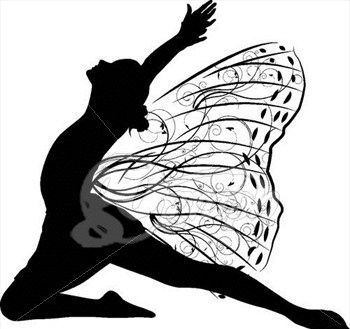
The pole calls forth spirals and swirls, a spinning energy that can only exist between flexibility and stability. I do not know how I danced, but only that my body was sending ripples of exuberance through my consciousness, a recognition that I was doing what I could not plan. I ascended the stretch of metal a foot, two, three, with a feeling like the internal inch of a caterpillar along a vertical branch. Seated above the ground I let my hands go, trusting the security of my legs, spreading my wings behind me. A caterpillar no more, I opened myself into metamorphosis, descending to the rhythm of a musical heartbeat.

Butterfly Dancer


Incarnation

Bury me in my immanence,
These bones who hold me in,
Under flesh, underground,
Beneath gravity of skin.

What does it mean
To walk this Earth?
What does it mean
When these bodies come to birth?

Immersed in this flesh,
A mirror from below.
Songs echo from the deep
As the child learns to grow.

Each unfolding limb
A living fossil entwined:
The eye of the storm
In the whirlpools of the mind.

Stretch for the stars,
Bury your toes in the sand.
If I look in your eyes
Will you hold my hand?

What does it mean
To walk this Earth?
What does it mean
When these bodies come to birth?

Limber laughter enmeshed
In each step we take,
From these early paces
To final footpad ache.

Walk with me sister,
Walk with me son,
Tread this careful curve
Where multitude is One.

Sing with the clouds
As they cross the sky,
Breathe out all staleness
With a synchronized sigh.

I want to tread this path,
With you always by,
When we play, flow, and dance,
Hold council and cry.

What does it mean
To walk this Earth?
What does it mean
When these bodies come to birth?

Dance this Earth prayer
As long as we breathe,
Bury me in my immanence,
To find joy with all who grieve.

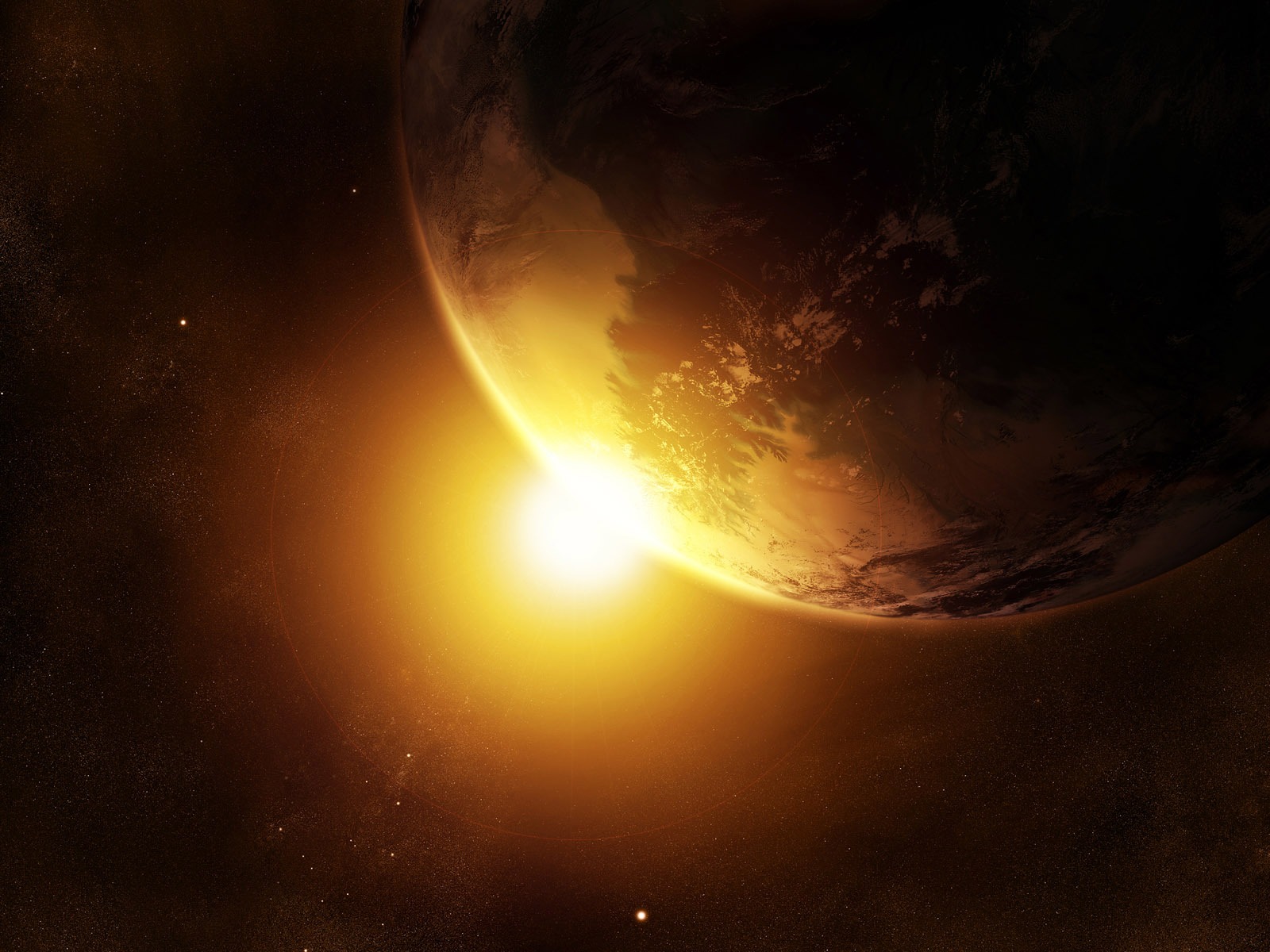
Earth and Sunrise

Co-Created Movement

The soles of my leather shoes are thin, allowing me to feel the contours of the path with each step. The thick layer of redwood leaves that slowly disintegrates into the rich canyon soil, soften the sounds of all the footsteps being taken around me. A meandering line of people are wending their quiet way along this forest path, each connected to one another, yet simultaneously enclosed in their own imagination-suffused worlds. The path bends to the right, taking a steep dive toward the clear, spring-fed creek. This is the place we cross, leaving the soft path momentarily, to leap from rock to rock, staying precariously above the chill waters below.

Photo by Matthew David Segall

I watch as the first person in this line of individuals begins to descend. Her arms flail slightly, not reaching for an object to steady her, yet monitoring her balance nonetheless. It seems she is about to fall and a ripple of concern echoes back through the group of waiting walkers, some expressed verbally, others merely in a position of body or facial expression. No, she assures us. She often can look as though she is about to topple off her feet, but this is just how she finds her balance. She apologizes for worrying anyone, and continues to make her wavering descent.

The next person, who is walking directly before me, begins to take careful steps down the winding way, with a greater steadiness in his footfall, but still with arms out to balance his movement. No one is concerned for his safety, however. His is not a gait that inspires uncertainty.

Without thinking I begin to move next along the trail. In a state of reflective curiosity I observe my own movement, fascinated by how the way I move might differ from those ahead of me now stepping or leaping from boulder to boulder over the cold stream. My arms are relaxed by my side, and I feel my footsteps fall evenly forward, one after the other. I find my balance like a line within myself. Why do I not use my arms? What is giving me this sense of stability? I recognize that I know this path, having walked it countless times from childhood into adulthood, and wonder if that history is built into my sense of balance now. My feet, my legs, the whole length of my body knows the placement of this path before my mind has a chance to reflect on it.

What, I ask myself, is movement? One usually thinks of movement as arising from the body of a person or other being who is moving with agency through the world. The uniqueness of movement seems to arise from the body and personality of the individual. Yet in this moment, as I watch myself and others navigate the winding, steep path by the stream, I realize how all movement is really a co-creation. Movement arises not from the individual’s agency but rather in the intermediate place between the individual—with all her history, personality, unconscious material, physical qualities, and so forth—and the dynamic contours of the surrounding world. The movement itself, although I might call it mine, is rather both mine and the world’s as we press into each other with each passing moment.

Psyche in Breath

“Breathing is our very first teaching—a silent teaching—in the way of interdependency, continuity, relationship, giving and receiving. Our first teaching is one of perfect integration, harmony, non-duality. Breathing comes naturally; it is so rudimentary that it requires no action of volition, no attention or thought. But, for that very reason, the wisdom of breathing is the most difficult, and the very last to be learned.”
– David Michael Levin[1]

Do not put a butterfly in a bell jar,
She is no rose.
No still whorl of petals,
No silent standing stem
To be gazed at from without,
To be denied an inner landscape
From within.

What is this translucent glass,
This invisible barring shield?
Does it keep her safe,
Preserve her from decay?
While a rose’s petals will fall,
A butterfly’s soul
Will not stay.

A life’s breath is finite
When thus closed in.
A life’s breath is finite
When one is shut in.
When all the air’s depleted
What new may
Begin?

Each wing beat a breath,
Each breath a wing beat
In her fluttering breast.
Count each beat,
Count each rest,
Count each moment,
For Self begins in breath.

Breathe deep, wingéd soul,
Sing your heartfelt song.
Expand this element
That you are,
Expand your heart
Beyond the confines
Of this bell jar.

Two images I see
When I say “glass blown”:
A shattering crash
Of splintered glass,
As air forces through
And you fly to the
Unknown.

Or softer yet, though dangerous
Nonetheless:
A warmth, a temperance
Melts the glass from within,
Melting out, melting forth,
Melting away
Oh, begin.

Each wing beat a breath,
Each breath a wing beat
In her fluttering breast.
Count each beat,
Count each rest,
Count each moment,
Now Self begins in breath.

Butterfly in Bell Jar

Work Cited

Levin, David Michael. “Logos and Psyche: A Hermeneutics of Breathing.” Research in Phenomenology 14 (1984): 121-147.


[1] David Michael Levin, “Logos and Psyche: A Hermeneutics of Breathing,” Research in Phenomenology 14 (1984): 129.

Bridging Our Attitudes Toward Nature

“Phusis kruptesthai philei”

For twenty-five hundred years the concept of Nature has evolved through the writings of Western History. The myriad meanings of the Greek word phusis have unfolded through history as Nature personified, Nature divine, Nature hidden, Nature secretive, nature separate from humanity, nature inclusive of humanity, nature as dead matter, Nature as art, Nature as All. Pierre Hadot traces this winding history in his book-length essay The Veil of Isis by examining the famous aphorism attributed to the philosopher Heraclitus, “phusis kruptesthai philei,” usually translated as “Nature loves to hide.”[1] Using these three cryptic words, whose meaning it seems also loves to hide, Hadot explores the many different ways this aphorism could be—and has been—translated, and the various effects such interpretations have had upon the continuing relationship humanity has with the world into which we each are born. Hadot perceives how traditional metaphors such as Heraclitus’ phrase will

hold sway for centuries over successive generations like a kind of program to be realized, a task to be accomplished, or an attitude to be assumed, even if, throughout the ages, the meaning given to these sentences, images, and metaphors can be profoundly modified.[2]

He goes on to note that “To write the history of a thought is sometimes to write the history of a series of misinterpretations.”[3]

Isis Veiled

Why is it that Nature loves to hide? What is it she—for in Hadot’s traced lineage Nature is always unquestioningly personified as female—is hiding, and from whom is she hiding it? History has offered many answers, from Nature as divine mystery, to Nature as weak and inferior and thus wrapped up in shame, Nature as clothed in imagination, Nature as malicious toward humanity, Nature protective of humanity: all of these and more have been reasons given for why Nature’s veils have been deemed so difficult to peel away.

At the beginning of the nineteenth century, the metaphor of the veils and the secrets of Nature never ceases to fade, until it gives way to amazement before an unveiled Nature, which, in Goethe’s expression, henceforth became “mysterious in full daylight,” in the nudity of her presence.[4]

The image of veiled Nature has tempted the curiosity of humanity from deep into our ancestral memory until the present day, although the understanding of who and what Nature is has shifted dramatically over that time.

Hadot posits two archetypal narratives to illustrate what he sees as the primary approaches humanity has taken in the quest to unveil Nature: the Promethean and the Orphic. In Hadot’s own words, these approaches or perspectives can be understood as follows:

Orpheus thus penetrates the secrets of nature not through violence but through melody, rhythm, and harmony. Whereas the Promethean attitude is inspired by audacity, boundless curiosity, the will to power, and the search for utility, the Orphic attitude, by contrast, is inspired by respect in the face of mystery and disinterestedness.[5]

The Promethean attitude is based upon a notion of progress in which humanity will some day attain all of nature’s veiled secrets so that they might be put to use for the betterment of the human species. The three main methods of the Promethean attitude, as Hadot delineates them, are that of experimentation, mechanics, and magic, all of which manipulate nature in some way for a specific end. In this perspective Nature is seen as hiding her secrets out of hostility for humanity, keeping her knowledge hidden due to a kind of spite.

The Orphic attitude takes the approach that “if nature has hidden certain things, then it had good reasons to hide them.”[6] In many ways the Orphic is an antidote to the Promethean, although it extends far beyond that as well. The Orphic approach is that of approaching nature through the contemplation of art, poetry, music, classical physics, and myth. Hadot’s archetypal analysis of nature is itself an Orphic approach, in that he draws on myth and art to unfold the meanings of humanity’s changing relationship to the natural world.

In our current era of ecological destruction and crisis, understanding what is at stake and how we came to this precipice is key to moving in a new direction. If we do not have an understanding of what humanity has perceived nature to be throughout history then we have little chance of knowing how to heal our relationship to that which we call nature. Although in The Veil of Isis Hadot seems to favor more of an Orphic approach, in that it is more holistic, contemplative, non-violent, and non-exploitative, it could be that finding a bridge between the two perspectives is a better way forward. Although a deep chasm has often separated the two, Hadot offers examples of individual thinkers who embody both perspectives within themselves. For example, to dive back toward Western philosophy’s beginnings, Hadot demonstrates how Plato carries both a Promethean and Orphic attitude within his works. In the Timaeus, “Plato represents the world fashioned in an artisanal way,” but that world can also be understood through mechanical, mathematical models.[7] Plato saw phusis as divine art.[8] For Hadot, the view of nature as art is in itself part of a solution for overcoming the division of human and nature that has contributed to create the ecological crisis.

If. . . people consider themselves a part of nature because art is already present in it, there will no longer be opposition between nature and art; instead, human art, especially in its aesthetic aspect, will be in a sense the prolongation of nature, and then there will no longer be any relation of dominance between nature and mankind.[9]

Hadot’s work is not prescriptive, yet he indicates that finding bridges may be what is needed: a bridge between Promethean and Orphic, a bridge between humanity and nature—and in many ways art is able to fill this bridging role.


Work Cited

Hadot, Pierre. The Veil of Isis: An Essay on the History of the Idea of Nature. Translated by Michael Chase. Cambridge, MA: The Belknap Press of Harvard University Press, 2006.


[1] Pierre Hadot, The Veil of Isis: An Essay on the History of the Idea of Nature, trans. Michael Chase (Cambridge, MA: The Belknap Press of Harvard University Press, 2006), 1.

[2] Hadot, The Veil of Isis, xiii.

[3] Hadot, The Veil of Isis, 14.

[4] Ibid, 87.

[5] Hadot, The Veil of Isis, 96.

[6] Ibid, 91.

[7] Hadot, The Veil of Isis, 97.

[8] Ibid, 22.

[9] Ibid, 92.