There is nothing quite like riding the train at magic hour, into the City of Dreaming Spires. I spent much of the day in London, including several important hours catching up with an old friend, having a fantastic brunch at The Breakfast Club in Soho, and walking through Hyde Park during the sunny, warm afternoon. As the day dwindled toward evening I walked from Warwick Avenue to Paddington Station, past canal boats floating low in the water covered in bright, chipping paint and overgrown planter boxes of flowers.
The departing sun set the sky alight in lavender, periwinkle, rose and indigo while the train sped toward Oxford. I chose to walk the mile and a half from the station to my lodgings in a friend’s college rooms so I could take in the city along the way. Sure enough I passed beneath the lit steeple of the University Church of St. Mary the Virgin, and not long after the tower at Magdalen College, where C.S. Lewis spent much of his teaching career. Crossing the bridge over the River Cherwell I could look back and see clearly why Oxford has been called the City of Dreaming Spires: the old college buildings send up spire after stone spire into the starry night air.
I arrived into my rooms which were warm and welcoming, filled with familiar books, including a shrine with Jung’s Red Book upon it. I found it somewhat amazing (although not surprising once I reflected on whose room I was occupying and our similar academic interests) that I had come halfway around the planet to study Tolkien’s visionary artwork, the contents of his Red Book, in the Bodleian Library, and right in my bedroom would be an accessible copy of the other Red Book to which I am comparing the results. It felt like an affirmation I was in the right place.
The Bodleian Library – Photo by Becca Tarnas
Early the following morning I awoke, soon to realize I was shaking—with anticipation, nerves, excitement, I wasn’t entirely sure. I planned to arrive at Admissions in the Bodleian at 9:00 am as they opened, and hopefully if all went well in getting my reader’s card I’d be meeting with the head archivist of the Tolkien special collection by 9:30. Walking through the streets of Oxford, down Queen’s Lane and under Oxford’s own Bridge of Sighs toward the library, I felt a deep sense of connection to this place. Ten years ago I once had the dream of attending this university, and now again that desire was reawakened. I could feel the past presence of those literary figures who had shaped me in such a formative way. Something in the heart of Oxford was calling to me once more.
I entered first the oldest building of the Bodleian, which had many doors branching off the courtyard with signs over their doors reading Schola Naturalis Philosophae and Schola Moralis Philosophae, among several others. Soon I was redirected toward the Weston Library, a newer building although still seemingly old to my eyes. I entered Admissions, handed in the various forms explaining my research purposes along with three (three!) forms of identification. To my relief I was approved without much delay but, before handing me my reader’s card, I was to swear an oath aloud that ran four lines long:
Then to the lockers where I left all my belongings except a pencil and blank sheets of paper, through the secure entryway, up the stairs and into the reading room. There I was met by the Tolkien archivist, a wonderful woman who has what I felt to be one of the most admirable and enviable positions in the library. We spoke for a little while about my research goals and then she set me up at a table with the first of four boxes of Tolkien’s artwork that I would be studying over this morning and the following.
The Reference Library in the Weston – Photo by Becca Tarnas
My hands shook a little as I opened the first box, but I soon relaxed into the process, turning from one drawing to the next. What did I find there? Well, I’ve signed too many forms to risk revealing much here without the permission of the Tolkien Trust. But I’ll just simply say that I believe I found what I came for, that my thinking in these areas has been affirmed, and perhaps someday I will be able to express the fullness of what I saw in my dissertation. Much of Tolkien’s great art has been published already, for which I am immensely grateful. But a few pieces remain hidden which would be wonderful if they could be seen by the wider world. And the sequence itself of the artwork has its own story to tell.
After several hours and even more pages of notes I decided it was time for a change of scene, so I packed up and departed the library. I made a brief stop in Blackwell’s Bookshop, my favorite book store in the world that I hadn’t been inside of for about five years. Of course they had a whole Inklings section right up at the front, and I was able to get a copy of Verlyn Flieger’s edited edition of Tolkien’s fantastic essay “On Fairy-Stories,” first given in 1939 as the Andrew Lang lectures at the University of St. Andrews in Scotland. They also had lovely little editions of several of Tolkien’s short stories; I limited myself to two: Smith of Wootton Major and The Adventures of Tom Bombadil and Other Verses from the Red Book, each with accompanying introductory and critical essays.
The Eagle and Child – Photo by Becca Tarnas
Lunch at the Eagle and Child pub seemed the only appropriate place to go next, so I walked up St. Giles to the legendary “Bird and Baby,” and was soon sitting in the back room with a pint and vegetable pie, gazing at oil portraits of Tolkien and Lewis and scribbling notes on my morning’s research.
That afternoon I met up with a family friend who happens to be teaching in Oxford for the next two months, so we spent the next several hours catching up and discussing ideas on an array of topics, from philosophy and religion, to literature and travel. We walked home through Oxford in the evening together, conversation still well underway.
Morning found me once again in the Sir Charles Mackerras Reading Room, pouring over more drawings. But finally the time came for me to depart and I left with reluctance. Would I have the opportunity to again be a researcher in these halls? I hope my life may take such a turn.
For the afternoon I had a special pilgrimage planned: a long walk from Oxford city center first to 20 Northmoor Road, where Tolkien and his family lived seventeen years, and then on a few more miles up to the Wolvercote Cemetery where Tolkien and his wife Edith are buried beneath one gravestone. It felt important to me to walk, to really put in the time and effort and make it to each place on foot.
20 Northmoor Road – Photo by Becca Tarnas
I noticed as I was walking down Northmoor Road I was shaking a little again. The wooden gate bears a metal number 20, and bushes and blackberry vines grow about the entrance. Someone else has made their home here now, and it looks simple and well-kept. The only distinguishing feature is a small blue plaque near the gable of the roof stating:
J.R.R. Tolkien
Author of The Lord of the Rings Lived here 1930-1947
I tried to imagine what it might have been like to live here, raising four children, preparing lectures, marking exams, and writing thousands upon thousands of pages of fantasy and Elvish lexicons during some of the spare hours in between. I peered at the smaller house next door, number 22, where the Tolkiens had lived for a shorter period before, from 1926 to 1930. Eventually I continued on my way, grateful to have glimpsed these two homes.
The walk up to Wolvercote Cemetary was actually much longer than I expected, and a few times I thought I might be lost. I started to worry I wasn’t going in the right direction, or worse yet that I was but had somehow mistaken the cemetery and was walking far out of my way for nothing. I departed the road I had been on, thinking perhaps the cemetery was further east. I began to walk down an unfamiliar road when suddenly I had a strong sense to turn around. I did, and following intuition more than anything else I realized I was now on Banbury Road, the very road the cemetery was meant to be on. Sure enough just several hundred feet further, and a little sign pointed me into a wide, grassy cemetery. A brass plaque indicated to follow the signs to Tolkien’s grave. I had made it.
The Tolkiens are buried right near the back of the cemetery, a modest plot with a granite stone at the head and a rose bush with a few blooms, their fading petals marking the end of summer. The stone reads:
Edith Mary Tolkien
Luthien
1889-1971
John Ronald Reuel Tolkien
Beren
1892-1973
I cannot recount here all the emotions that arose in me at the sight of this grave. I’ll simply say it was a deeply meaningful experience, far more than I was even expecting. I spent a long time there. At one moment a strong wind picked up, shaking the trees. I was reminded of when the wind blew through the trees as Tolkien and Lewis were on Addison’s Walk by Magdalen College, the night that Lewis had his conversion experience, which Tolkien commemorated in his poem “Mythopoeia.” Finally I felt it was time to depart. As I turned away I saw a small, pure white feather on the ground. Rarely do I collect tokens of remembrance, but this time I felt the feather was for me.
The Tolkiens’ Grave – Photo by Becca Tarnas
It was a joy to rest my feet as I sat on the upper deck of the bus back toward city center, right at the front window so I could see clearly the whole return journey. I felt in a place of great peace. Arriving back into the heart of Oxford, I walked over to Exeter College, where Tolkien studied as an undergraduate, and was able to enter with my newly acquired reader’s card. (“I’m a visiting researcher, may I enter the college?”) Passing the emerald green quad I entered first the chapel, where a tapestry of the Adoration of the Magi adorned the front left-hand wall. A copper bust of Tolkien stood near the back, not too far from the door. Although small, Exeter’s chapel is exquisite. From there I somehow found myself in the Fellows’ Garden, a peaceful lawn bathed in sunlight, trees and flowers scattered throughout, a large fig climbing the stone wall by the private college library. Toward the back right of the garden is a small pond filled with water lilies, and a stone staircase ascending the outer wall of the college. Coming to the top of the stairs I found myself with a spectacular view looking out toward the round Radcliffe Camera, the tower of the University Church just beyond it. Below me a crowd of tourists happened to be walking by, but up here on the wall of Exeter College I was secluded, in the peace of an idyllic garden where generations have come to study outside.
Exeter Fellows’ Garden – Photo by Becca Tarnas
After Exeter I went on to visit two more colleges: Christ Church College, which is by far the largest and wealthiest, with vast meadows stretching beyond it, and Magdalen, where C.S. Lewis was situated. Walking down the echoing corridor beside the Magdalen quad I had an internal image of black-robed students walking down these same halls, when suddenly I turned a corner and a whole choir of schoolboys in the very black robes I had been imagining processed down the passageway before me, turning quickly (and the smallest ones in the back shoving each other) into an arched doorway to the left. My footsteps carried me further until I passed out of the wrought-iron gates and across the small bridge over the River Cherwell onto the pathway of Addison’s Walk. Turning left I walked for a ways beside the river, stopping when I came to the next bridge and seeing to my right in the meadow a large herd of deer. All of the females and fawns were standing eating grass, while the two males with antlers—one significantly larger and presumably older than the other—sat on the ground on either side of the herd. After a moment in quiet reflection beside the deer, I turned back the way I’d come. I noticed a few things I had missed on the way in: a few large stumps that had been carved into thrones rooted directly into the ground, and a small moored boat that looked like it must belong to Ratty from Wind in the Willows.
Radcliffe Camera & University Church – Photo by Becca Tarnas
By now completely exhausted from all my walking, I returned to the University Church which had a garden café at the bottom, and sat with a perfect cup of English tea and a scone, replete with clotted cream and strawberry jam. Just refreshed, I went to meet the same family friend I had joined the afternoon prior and we walked together over to Christ Church chapel to attend Evensong. It’s one thing to tiptoe into the college chapels when no one is there and take in the art and carvings on the walls, it’s another to come in when candles are lit and the air vibrates with the voices of young men and boys in the choir.
Thus, after a beautiful dinner and evening, my time in Oxford was coming to a close. The following morning I packed everything up and walked back toward the train station the same way I had walked in. An autumn mist had descended on the city, turning the morning Sun’s light into diffused rays that scattered across the yellow stones and fading trees. I felt a reluctance to leave this place. But if I am meant to return to the dreaming spires at some point in the future then I must trust that I will.
Dreaming Spires by Morning Light – Photo by Becca Tarnas
The River Stroud and the Westgate Gardens – Photo by Becca Tarnas
Canterbury: I couldn’t have imagined a better place to hold a conference titled Re-Enchanting the Academy. Although cars run on the narrow streets and the ninety-degree angles of contemporary buildings can be found throughout the city, one can feel the Chaucerian age palpably. Cobblestones, thatched roofs, white walls between dark wooden beams that seem to bow out at the middle, as if the centuries are weighing on the building like a elderly man carries a potbelly. Canals and bridges, gardens and stone walls, crawling ivy touched by the crimson blush of early autumn—the air seemed to tingle with enchantment, but an old, slow enchantment, one that has settled deep into the stones along with the overgrown moss.
English Redwood – Photo by Becca Tarnas
I came in to Canterbury after a non-stop flight from San Francisco to London Heathrow, and an adventure of trains and tubes, until I was deposited at the Canterbury East station as I approached twenty-four hours of being awake. Trailing my little suitcase I walked up the exceedingly narrow cobbled sidewalks to a hostel I’d booked ahead. A brief wander into town later and my first cup of English tea, I fell into a jet-lagged sleep.
Or tried to. For a variety of reasons I had a terrible night at the hostel and, desperate for a sense of peace and solitude, I checked out early the next morning and managed to find a lovely hotel right in the heart of Canterbury. For the rest of my stay I was grateful to myself for making this decision, so that I might have the space, comfort, and rest to engage fully in the conference. I must say, something about that first difficult night has made all the pleasures of the rest of my trip so far all the sweeter.
Greyfriars Chapel – Photo by Becca Tarnas
After getting my hotel situation sorted, I had a few hours to myself to wander in the morning sun. My feet carried me to the Westgate Towers that have stood at the entrance to the old city for six hundred years. Through the gate I found myself on a bridge over the Stour River, and stretching away on either side of the river were the beautiful Westgate Gardens, a meandering array of lawns, flowers, stone arches, twisting trees, and pathways. I even came across a California redwood, who had adapted to the English soil by growing up with curves and twists, rather than tall and straight like the redwoods on my home coast. I also found my way to Greyfriars Chapel, a small chapel built in 1267 that spans a narrow river.
Eventually the time came to meet Patrick Curry, one of the keynote speakers of the conference, for lunch at the Goods Shed near the Canterbury West station. Goods Shed is a large, barn-like structure filled with stands where piles of colorful organic produce are arranged, and counters selling cheeses, breads, meats, fish, and deserts. Moments later Patrick and his partner walked through the door, and we sat down to an exquisite lunch together: cappuccino, elderflower elixir, a vegetarian platter of grilled squash and eggplant, tomato toast, creamy soup, poached egg, and several other tasty arrangements. Among our topics discussed was Patrick’s new book, Deep Roots in a Time of Frost: Essays on Tolkien, of which he kindly gave me a copy.
St. Martin’s Priory – Photo by Becca Tarnas
Lunch led us straight to the conference, which Patrick opened with his talk: “The Enchantment of Learning and the Fate of Our Times.” He addressed the need to leave the door open to enchantment, but not to try to force or tame it. One cannot make enchantment happen, one can only cultivate the conditions that allow for its occurrence. With that note to start on we set off on three days of presentations, usually two tracks running simultaneously. The conference was held primarily in St. Martin’s Priory at Canterbury Christ Church University, a gorgeous brick building surrounded by truly enchanting gardens, filled with roses, apple trees, and even a labyrinth set up for one of the conference workshops.
Presentations ranged from psychogeography to depth psychology, the Book Fairy (that moment when you encounter just the right passage or phrase that sets you off on a new train of thought or research), astrology and astrological music, poetry and myth, and the need to re-invite the feminine, the body, and the Earth back into the academy. One issue I brought up in relation to some of the material was the need to address patriarchy both inside and outside the academy, without shaming men who want to be allies, and without recreating an essentialist gender binary. Through this conversation I encountered a wonderful astrologer, who happened to have been friends with my Dad for twenty years. We found that not only did we share a common astrological world view, but her sister is also a harpist! As we chatted together walking merrily home at sunset I felt like I had somehow found my fairy godmother.
My own presentation took place on Saturday afternoon, the third on a panel with the Jungians Jean Hinson Lall and Roderick Main, both of whom I was honored to follow. I presented on my dissertation work, Jung’s and Tolkien two Red Books, and found I had a receptive and supportive audience with wonderful questions and feedback. For me the dialogue carried on long into the evening and the conference dinner.
Conference Labyrinth – Photo by Becca Tarnas
The magnificent Canterbury Cathedral was just a street away from my hotel, so I woke up early Sunday morning to attend communion, primarily from the desire to see and feel the cathedral from the inside in a role that wasn’t a tourist. The air was so still as I approached, my footsteps echoing on the cobblestones and my breath visible in the morning air. Entering inside I was overwhelmed by the majesty of the building, the long stone steps leading higher and further into the nave. This cathedral was founded by St. Augustine in 597 BCE when he came over from Rome to be the first Archbishop of Canterbury, and over the centuries it was expanded and rebuilt, including in 1070 after a major fire destroyed much of the cathedral. I felt a profound mixture of emotions, in part inspired by the minimal attendance in relation to the grandeur of the building. Turning inward I could feel the centuries upon centuries of people who had come here to worship, able to see and hear in my imagination the full crowds that once would have overflowed this hall. Yet now all was nearly quiet.
Ritual. If we are to revive enchantment we need ritual, but it must be ritual that is meaningful for who we are now. Perhaps for many we are in a time between rituals, seeking the meaning that will enchant.
Soon the conference was coming to a close. I was amazed to find that many of the ideas brought forward, presented by individuals from several parts of the world, were frequently ones I had encountered in some form at CIIS. Over the course of the weekend I came to value at a new level the education I am getting at my little institute in California. Yet to engage with so many others specifically on these topics was invaluable.
A final stop at the Goods Shed once again for a piece of quiche, and Patrick and I hopped on the train to London. From there new explorations would soon ensue…
I am delighted to announce two events coming up later this year at which I will be presenting. The first event is the conference Re-Enchanting the Academy at Christchurch Canterbury University in England, which will take place September 25-27. I will be presenting on my ongoing dissertation research into the synchronistic parallels of the two “Red Books” of C.G. Jung and J.R.R. Tolkien. The abstract for my presentation is available here: The Synchronicity of the Two Red Books: Jung, Tolkien, and the Imaginal Realm. The Re-Enchanting the Academy Conference Program is now available as well and it looks like there will be a fantastic line-up. I’ll be presenting on Saturday afternoon during the panel session from 1:30-3:00 pm.
Painting by C.G. Jung for The Red Book.
Since the opportunity to go to England does not arise every day, I will be staying a couple weeks in the British Isles to do research in the Tolkien archives at the Bodleian Library of Oxford University, the institution where Tolkien both attended school as an undergraduate and taught as a professor for much of his life. I am hoping to come across some artwork of his, particularly from his early sketchbook entitled The Book of Ishness, that has not yet been published. Who knows what further parallels may lie between the art of the Professor and the great Swiss Doctor? I will also get to travel to Cambridge University to visit my wonderful dissertation chair Jacob Sherman, who is currently holding the three-year post of University Lecturer in Philosophy of Religion.
Painting by J.R.R. Tolkien for The Hobbit.
The second event which I am announcing is a lecture and workshop offered through the Idaho Friends of Jung in Boise, taking place November 13-14. I will be presenting on the same subject as above, but will have both the Friday evening lecture and the Saturday morning workshop to delve more deeply into the material through dialogue with the participants. The descriptions of the lecture and workshop are available here: The Synchronicity of the Two ‘Red Books’: Jung, Tolkien, and the Imaginal Realm.
Thank you all so much for the support that has allowed me to be bringing these ideas further out in to the world!
“But whoever looks from inside, knows that everything is new. The events that happen are always the same. But the creative depths of man are not always the same.” – C.G. Jung, The Red Book[1]
As I have already explored in the essay “The Red Book and the Red Book: Jung, Tolkien, and the Convergence of Images,” C.G. Jung and J.R.R. Tolkien simultaneously underwent profound experiences of the imaginal realm, transformative encounters with the deep psyche that became the prima materia for their lifeworks. While I have previously analyzed the synchronicity of the two Red Books through the parallel images, symbols, and stories brought forward by each of their authors, I have not delved too far into the significance of their synchronic timing. Jung’s and Tolkien’s deep imaginal experiences both began around 1913 and continued until the end of that decade, although the particular vein of creativity set in motion during that time lasted for each of them until the close of the 1920s.
The primary experiences of active imagination for Jung were from 1913 to 1917, but his Red Book period is considered to have lasted until 1930, when he left off inscribing and illustrating his imaginal encounters onto the pages of the Liber Novus. Nearly simultaneously, from 1912 to 1928, Tolkien was illustrating The Book of Ishness, his sketchbook that contained a series of visionary drawings and paintings. The early years of this project were the most abundant, but he continued intermittently to add fantastical images until the end of the 1920s. Meanwhile during the heart of those years, from 1916 to 1925, Tolkien was primarily dedicated to the composition of his mythology, the great cosmogonic cycles that narrate the creation of Arda and the First Age of the world.
Why is the synchronic timing of Jung’s and Tolkien’s imaginal experiences important? Is it simply another coincidence? Or does it intimate some deeper, more profound implication concerning the nature of human existence in the cosmos? One hermeneutic method of unpacking the significance of this timing is archetypal astrology, which reveals the underlying archetypal patterns of the times through the correlated positions of the planets. When two or more planets come into geometrical alignment, the correlated archetypal energies can be seen unfolding multivalently in human and worldly events for the duration of the alignment. When the slower-moving outer planets of Saturn, Uranus, Neptune, and Pluto align with each other, whole epochs of history, lasting years to decades depending on the configuration, reflect the relevant archetypal qualities in myriad ways.
Archetypal astrology provides a lens that can shed new light on our understanding of Jung’s and Tolkien’s experiences during this time period. By looking at the world transits during the years of their imaginal encounters we will be able to see the larger archetypal gestalt in which these experiences were emerging, while touching on Jung’s and Tolkien’s natal charts will illuminate the archetypal patterning of their individual psyches and how this may have further shaped the character of their experiences. Furthermore, we will look at the unfolding personal transits Tolkien and Jung underwent during their Red Book periods, honing in on several significant dates throughout this time, to see how the same world transits interacted with their unique birth charts, indicating differing modes of creative expression for the same archetypal energies.
The planetary alignment that correlates most significantly with Jung’s and Tolkien’s awakening to the imaginal is the opposition of Uranus and Neptune that lasted from 1899 to 1918.[2] The most potent time of both men’s visionary periods took place in the sunset years of this alignment, from 1913 to 1917. In the modern astrological tradition, the archetype of Neptune, as Richard Tarnas writes, “is considered to govern the transcendent dimensions of life, imaginative and spiritual vision, and the realm of the ideal.”[3] Neptune “rules both the positive and negative meanings of enchantment—both poetic vision and wishful fantasy, mysticism and madness, higher realities and delusional unreality.”[4] Furthermore, “the Neptune principle has a special relation to the stream of consciousness and the oceanic depths of the unconscious, to all nonordinary states of consciousness, to the realm of dreams and visions, images and reflections.”[5] In contrast, the planet Uranus, as Tarnas articulates,
is empirically associated with the principle of change, rebellion, freedom, liberation, reform and revolution, and the unexpected breakup of structures; with sudden surprises, revelations and awakenings, lightning-like flashes of insight, the acceleration of thoughts and events; with births and new beginnings of all kinds; and with intellectual brilliance, cultural innovation, technological invention, experiment, creativity, and originality.[6]
When the archetypal natures of these two planets, Uranus and Neptune, come into relationship with each other, personal and world events with increasing frequency tend to reflect their combined energies. Repeatedly throughout the world’s cultural history Uranus-Neptune alignments correlate with
widespread spiritual awakenings, the birth of new religious movements, cultural renaissances, the emergence of new philosophical perspectives, rebirths of idealism, sudden shifts in a culture’s cosmological and metaphysical vision, rapid collective changes in psychological understanding and interior sensibility . . . and epochal shifts in a culture’s artistic imagination.[7]
The first couple of decades of the twentieth century, when the Uranus-Neptune opposition was in effect, was a period of tremendous cultural and artistic innovation and creativity. As Sonu Shamdasani, the editor of The Red Book, writes, “On all sides, individuals were searching for new forms with which to depict the actualities of inner experience, in a quest for spiritual and cultural renewal.”[8] Jung’s and Tolkien’s unexpected awakenings to active imagination and fantasy, and their subsequent outpourings of creative genius, perfectly exemplify the characteristic manifestations of Uranus-Neptune alignments. In Jung’s words, “Our age is seeking a new spring of life. I found one and drank of it and the water tasted good.”[9] His use here of liquid metaphors and symbols—spring, drank, water—are particularly characteristic of the Neptune archetype.
Uranus-Neptune alignments also correlate with “cosmic epiphany” and the “birth of new forms of artistic expression,”[10] which can be seen in the unique artistic format of Jung’s Red Book, and the new languages and mythological composition of Tolkien’s cosmogonic cycles.
If it were possible to briefly summarize the essence of the material that emerged for Jung and Tolkien at this time—an impossible task—one might say that it is an expression of “the quintessential Uranus-Neptune theme of a radical transformation of the God-image and a revolutionary new understanding of the divine will acting in history.”[11] Jung’s Red Book can be seen as a participation in the death and rebirth of God, a renewal of the sacred through an encounter with soul. Similarly, the myths Tolkien began to compose during this same period are a new expression of the creation of the world, a reemergence of God’s creativity in an imaginal realm. As Shamdasani writes, “Jung held that the significance of these fantasies was due to the fact that they stemmed from the mythopoeic imagination which was missing in the present rational age.”[12] Tolkien also would have agreed with this statement as is evidenced in his poem Mythopoeia, of which the following is a fragment:
Though now long estranged,
man is not wholly lost nor wholly changed.
Disgraced he may be, yet is not dethroned,
and keeps the rags of lordship once he owned,
his world-dominion by creative act:
not his to worship the great Artefact,
man, sub-creator, the refracted light
through whom is splintered from a single White
to many hues, and endlessly combined
in living shapes that move from mind to mind.[13]
Although human beings have fallen, in Tolkien’s view, and become estranged from the divine imagination by the emergence of disenchanted rationality, we are still able to become alchemical vessels for that sacred creativity, to refract the light of the mythopoeic imagination into our own fantasies and imaginal encounters.
Figure 1: C.G. Jung’s Birth Chart
During the primary visionary years of Jung’s Red Book period, the previously discussed Uranus-Neptune world transit was crossing his natal Sun-Neptune square (see Figure 1). In an individual’s birth chart, the Sun is an expression of the personal identity, the autonomous self imbued with conscious awareness, the personality and ego identity, the will to be and to exist, as well as what the individual identifies him or herself to be. Jung’s Sun square Neptune can be seen multivalently expressed throughout his life, for example, in his personal exploration of the archetypal realm, his permeability of identity to the imaginal and spiritual, his later understanding of the Self as an archetype, and his lifelong effort to bring individual consciousness and the archetypal unconscious into fruitful relationship.
Figure 2: Jung’s First Red Book Vision
At the time Jung’s imaginal experiences began, the Uranus-Neptune opposition of the early twentieth century was crossing not only his natal Sun-Neptune, but the Ascendant-Descendent axis of his chart, the horizon of his birth moment, initiating both a dissolution and liberation of his identity (see Figure 2). The Uranus-Neptune transit was activating and awakening Jung to the eternal vastness of the archetypal realm, drawing forward encounters with imaginal figures who confronted his personal assumptions about the nature of spiritual reality and the psyche, leading to a descent and dissolution of his Solar egoic identity in an encounter with his soul.
Figure 3: The Beginning of Tolkien’s Mythology
The same Uranus-Neptune opposition was also shaping the archetypal atmosphere of Tolkien’s imaginal encounters, but the transit was crossing a different part of his chart, and thus manifesting in a realm other than his Solar identity. When Tolkien wrote the first words of his Middle-Earth mythology in September 1914 the Uranus-Neptune opposition was crossing his natal Venus, whose corresponding archetype relates to art, beauty, artistic creativity, and aesthetic expression (see Figure 3). Because at this time Uranus and Neptune were widening in their orb, now ten degrees apart, Uranus was tightly conjunct Tolkien’s Venus, while Neptune had yet to come into potently effective orb with his Venus. However, over the next several years, from 1916 to 1922, when Tolkien’s mythology was pouring forth from a seeming wellspring of imaginative creativity, Neptune was in tighter opposition to his natal Venus. That the Uranus-Neptune opposition crossed Tolkien’s Venus, rather than the Sun as it did for Jung, is reflected in his chosen form of expression for the emerging material: Tolkien channeled the stream of imaginal energy into the artistic form of mythopoeic narrative, rather than using the experiences as tools to explore his own psyche and personal identity as Jung did. Interestingly, after 1915 all of Tolkien’s works of art were illustrations for his stories, unlike the earliest visionary drawings in The Book of Ishness which have no explanation for their origins other than their titles. Other powerful forces were coming through for Tolkien in those early years of creativity which we will explore later in this essay, but it seems that only once Uranus and Neptune activated his natal Venus did he find his preferred artistic outlet for the imaginal visions he was receiving.
While the long Uranus-Neptune transit crossing Jung’s Sun and Tolkien’s Venus reflect the larger gestalt of the experiences they were each undergoing, a deeper look at their individual transits will reveal the nuanced differences in their experiences and their individual expressions of those encounters. While the larger arc of this project is to show the uncanny convergence of Jung’s and Tolkien’s explorations of the imaginal realm, the current analysis of their divergence will help to unveil the cosmic underpinnings of their unique creative expressions.
A repeated vision shared in different manifestations by Jung and Tolkien was that of a Flood, or the Great Wave as Tolkien called it. While we know that Tolkien’s Great Wave visions came to him throughout his life beginning in childhood, primarily as dreams, we do not have specific dates for their occurrence. However, Jung’s first Flood vision took place on October 17, 1913 while on a train journey. He saw an immense flood that engulfed all the lands of Europe, destroying civilization and carrying floating rubble and corpses in its wake. The waters then turned to blood.[14] Two weeks later he had the vision again; eventually he would come to recognize it as a premonition of the coming First World War.
Besides the Uranus-Neptune opposition on Jung’s Sun previously discussed, another major world transit was beginning to come into orb at this time: Saturn conjunct Pluto. As Tarnas writes, Saturn-Pluto alignments coincide with
especially challenging historical periods marked by a pervasive quality of intense contraction: eras of international crisis and conflict, empowerment of reactionary forces and totalitarian impulses, organized violence and oppression, all sometimes marked by lasting traumatic effects.[15]
Less than a year after Jung’s Flood vision, World War I broke out in Europe when the Saturn-Pluto conjunction was in almost exact alignment. Yet during the previous autumn of 1913, Jung had been granted a painful premonition of that war as the wide Saturn-Pluto conjunction was in opposition to his natal Mars, the archetype of the warrior, of battle, anger, and violence (see Figure 4). Jung’s vision contained the combined Mars-Saturn-Pluto themes in the images of mass destruction and violent death, and the bloody wave of battle engulfing the continent. Yet the experience was also a precognitive visionary awakening reflective of the Uranus-Neptune alignment previously explored.
Figure 4: Jung’s Flood Vision
The same Saturn-Pluto conjunction that corresponded with Jung’s Flood vision and World War I was also transiting Tolkien’s chart, but in his case it was opposing his natal Mercury. The archetype of Mercury relates to language, speech, thought, writing, the intellect, education, and all forms of communication. Tolkien’s greatest love, it might be argued, was for languages, for their phonetic sound and resonant meaning, their evolutions and transformations, and their histories and lineages. Tolkien was born with his natal Mercury in an exact square to Saturn, which can be seen in his appreciation for ancient languages and literature (he disliked nearly all literature written after Chaucer, instead dedicating himself to medieval epics like Beowulf and the Norse and Icelandic sagas such as the Elder Edda), his meticulous attention to the details of language and expression, his painstaking and repeated revisions of all his manuscripts striving for an unattainable level of perfection, and his habit of what he called “niggling” over the finesses of his invented languages (see Figure 5). As Tolkien’s biographer Humphrey Carpenter writes, “Tolkien had a passion for perfection in written work of any kind, whether it be philology or stories. This grew from his emotional commitment to his work, which did not permit him to treat it in any manner other than the deeply serious.”[16] All this eloquently expresses the Saturn archetype of seriousness, the old and the ancient, precision, strict standards, revision and correction, meticulous attention to details, all in relation to Mercury’s realm of language and writing.
Figure 5: J.R.R. Tolkien’s Natal Chart
Pluto slowly transited Tolkien’s natal Mercury-Saturn from 1909 to 1919, the years which encompassed his education at Oxford in Philology, his deeply painful separation from the love of his life Edith Bratt (who later became his wife), the visionary drawings in The Book of Ishness, the composition of his first Middle-Earth poem The Voyage of Earendel, his fighting in World War I including in the Battle of the Somme, the deaths of two of his closest friends, and the earliest compositions of The Silmarillion stories including the cosmogonic myth called the Ainulindalë. As Saturn conjoined Pluto in the sky leading up to World War I, the powerful transformational energies associated with Pluto that had already been working on Tolkien’s mind found a Saturnian form and structure in his invention of languages and the creation of myths to accompany them. If anything truly sets Tolkien apart in the realm of fiction authors it is that he developed multiple, fully-fledged imaginal languages with their own syntax and etymology, languages that feel ancient and powerful in tone and character, with grammatical structures that trace their linguistic evolution through time—all Mercury-Saturn-Pluto themes. During these years it was as though his linguistic capabilities had been opened to the evolutionary stream of language itself, and he was able to participate in the generation and rebirth of new linguistic structures.
Interestingly, coming out of the ten-year transit of Pluto across Tolkien’s Mercury, Pluto then began to oppose Tolkien’s natal Sun, a transit that lasted until the end of the 1920s as he continued to compose the cycles of the First Age of Middle-Earth. Thus, the nearly twenty-year transit of Pluto across his wide Sun-Mercury conjunction entirely encompassed the years Tolkien was writing the myths of The Silmarillion. This was the time period when Tolkien was having the powerful visionary experiences that became the prima materia of his later, more refined works: The Red Book of Westmarch, known better as The Hobbit and The Lord of the Rings.
To return to that pivotal moment in the late summer of 1914, when Saturn was conjunct Pluto and the destructive wave of the First World War had been unleashed across the continent of Europe, another potent transit was in the sky, also activating significant aspects of both Tolkien’s and Jung’s charts. At that time the planet Jupiter had come into the Uranus-Neptune alignment, making a conjunction with Uranus that lasted from December 1913 to January 1915. Archetypally, Jupiter is associated with “the principle of expansion and magnitude, providence and plenitude, liberality, elevation and ascendency, and with the tendency to experience growth and progress, success, honor, good fortune, abundance, aggrandizement, prodigality, excess and inflation.”[17] In time periods when Jupiter was aligned with Uranus, as Tarnas writes, “An expansively and buoyantly energizing quality characterized such eras, one that often engendered a certain creative brilliance and the excitement of experiencing suddenly expanded horizons.”[18] As we examined earlier, at this time Uranus was opposing Jung’s Sun, while it was conjoining Tolkien’s Venus. Thus, when Jupiter entered the configuration the expansive, elevating, liberating, breakthrough qualities associated with the Jupiter-Uranus combination could be seen in the profound shift that took place for each of these men during this fourteen-month period.
Under the Jupiter-Uranus conjunction transiting his Venus (see Figure 6), Tolkien encountered the names Earendel and Middle-Earth in the lines of an old Anglo-Saxon poem, both of which played profoundly prominent roles in his mythology. After this discovery, Tolkien composed on September 24, 1914 the poem The Voyage of Earendel the Evening Star, now recognized as the first written work in the Middle-Earth legendarium. Truly it was a breakthrough moment, as Tolkien was finding expression for the images and languages that had been coming to him for the last few years. After this point he began to write more stories about Middle-Earth and the peoples that inhabited this land, the Eldar, the many races of Elvenfolk living in the imaginal realm.
Figure 6: Tolkien’s Earendel Poem
Coinciding with this same Jupiter-Uranus alignment, Jung’s Red Book visions were taking a profound turn. A new figure had entered into his imaginal experiences, a wise guide and teacher, one who instructed Jung in a caring, loving, and spiritually illuminating way. This figure was Philemon, the ancient alchemical wisdom-keeper who became Jung’s mentor in the realm of Soul. In Shamdasani’s words, “To Jung, Philemon represented superior insight, and was like a guru to him.”[19] On the day that Philemon was first recorded appearing, January 27, 1914, a remarkable configuration of planets was in the sky. Not only was Jupiter conjunct Uranus in opposition to Neptune as previously discussed, but the Sun, Moon, Mercury, and Venus were also conjoining the longer Jupiter-Uranus conjunction (see Figure 7). This rare and powerful configuration was all crossing Jung’s natal Sun. Not only did this event occur at the new moon, when the Moon conjoins the Sun in a coniunctio of yin and yang energies, but the emergence of Philemon brought into Jung’s psyche a Solar figure representative of his higher self, or Self, whose teachings brought tremendous new insight and awakening, communicated with love, compassion, and wisdom. The transits on this day could be seen as the birth chart of Philemon, which itself would be a fruitful topic to explore in depth.
Figure 7: Jung’s First Encounter with Philemon
Finally, to conclude this brief archetypal study, I would like to look at one major aspect that both Jung and Tolkien carried throughout their lives, that can be seen not only reflected in their Red Book periods, but in the entirety of their lifeworks. This is the conjunction of Neptune and Pluto, which occurs when the long cycles of the two outermost planetary bodies align, a meeting that takes place approximately every five hundred years and lasts for about 25-30 years each time. Neptune-Pluto alignments have occurred at the rise and fall of civilizational epochs, the most pivotal moments in history when the entire paradigm of a culture dies and is reborn from the ashes, whether it is the fall of the Roman Empire and the beginning of the Middle Ages, the dawn of the Renaissance, or the turn of the 20th century. As Tarnas writes,
the major Neptune-Pluto cyclical alignments appear to have coincided with especially profound transformations of cultural vision and the collective experience of reality, which often took place deep below the surface of the collective consciousness. [20]
The most recent Neptune-Pluto conjunction took place from 1880 to 1905, and Jung was born on the cusp of the transit in 1875. Jung lived the first thirty years of his life in Neptune-Pluto’s culturally transformative gestalt, while Tolkien was born in 1892 with the conjunction within 1° orb (see Figures 1 and 5). While a full study could be given to the ways just this single alignment is apparent in both Jung’s and Tolkien’s entire oeuvre, I want to particularly attend to how two specific themes of this most recent Neptune-Pluto conjunction came through Jung and Tolkien: these manifestations are, as Tarnas describes them, “the dying of the gods that had ruled the Western spirit for two millennia and more” and the simultaneous “powerful upsurge of ‘the unconscious’ in many senses.”[21] The profound and transformative encounters with the deep psyche and imaginal realm that both Jung and Tolkien experienced in their lifetimes are highly reflective of the Neptune-Pluto conjunction they each carry. They both had an encounter of overwhelming potency with the collective unconscious by passing through the underworld gateway of imagination. The powerful visions of the Flood that initiated Jung’s descent, and Great Wave dreams that haunted Tolkien, are also clear expressions of Neptune-Pluto: consciousness being violently “flooded” by the unconscious with overwhelming images of decimating waters that destroy and subsume all in their path. Furthermore, the death and rebirth of God in Jung’s Red Book, and the rebirth of Creation and the fall from grace in Tolkien’s cosmogony are but a taste of the ways Neptune-Pluto manifested in their life works. In a time of disenchanted rational modernity these two men seem to have been chosen as alchemical vessels for a deep, cosmic truth to be reborn. As Jung wrote in the pages of The Red Book, “To give birth to the ancient in a new time is creation. . . . The task is to give birth to the old in a new time.”[22] This is the karmic task both Jung and Tolkien carried in their own ways, to encounter the gods in the archetypal realm, and to express their living truths on the pages of imagination.
Bibliography
Carpenter, Humphrey. J.R.R. Tolkien: A Biography. New York, NY: Houghton Mifflin Company, 2000.
Hammond, Wayne G. and Christina Scull. J.R.R. Tolkien: Artist & Illustrator. New York, NY: Houghton Mifflin Company, 2000.
Jung, C.G. Memories, Dreams, Reflections. Edited by Aniela Jaffé. Translated by Richard and Clara Winston. New York, NY: Vintage Books, 1989.
–––––. The Red Book: Liber Novus. Edited by Sonu Shamdasani. Translated by Mark Kyburz, John Peck, and Sonu Shamdasani. New York, NY: W.W. Norton & Company, 2009.
Owens, Lance. “Lecture I: The Discovery of Faërie.” In J.R.R. Tolkien: An Imaginative Life. Salt Lake City, UT: Westminster College, 2009. http://gnosis.org/tolkien/lecture1/index.html.
“It was a pleasantly ingenious pun in its way, suggesting people with
vague or half-formed intimations and ideas plus those who dabble in ink.” – J.R.R. Tolkien[1]
The Oxford Inklings have long held a fascination for me—a group of great literary authors meeting weekly to share their poetry and fiction, and discuss their ideas and beliefs. A meeting of the minds who, at different points in their careers, produced The Lord of the Rings, The Chronicles of Narnia, Poetic Diction, The Place of the Lion, and multiple other works across a great range of genres and topics. How did these writers come to know each other? How much did they influence one another’s work? Such questions as these are addressed by Humphrey Carpenter in his biographical work The Inklings: C.S. Lewis, J.R.R. Tolkien, Charles Williams and Their Friends.
In many ways, Carpenter’s The Inklings is primarily a biography of C.S. Lewis, with the lives of Tolkien, Williams, Owen Barfield and others woven in when their narrative threads cross paths with Lewis’s. Yet this is perhaps an entirely appropriate approach considering the group that called themselves the Inklings ultimately orbited around Lewis—the meetings took place in his Magdalen rooms, and his friendship was what the members of the group held in common. Nonetheless, Carpenter’s weaving together of these many, and often disparate, biographical threads produces a compelling tapestry that displays a historical picture both complex and deep, inviting one into the nuanced differences of multiple intellectual and creative lives.
Certain aspects of this interwoven narrative particularly shone forth for me, such as the descriptions of the shared feeling between Lewis and Tolkien when reading certain myths and stories of familiarity with the unfolding tale, a sense of longing and nostalgia as though one has somehow participated in this story before. It is a feeling with which I also am familiar, becoming apparent to me the first time I heard The Hobbit read aloud. Names such as Rivendell, Middle-Earth, and Dale, the songs and laughter of the Elves, all felt deeply familiar from the first time I heard them. Tolkien was able to imbue his own stories with that same essence that he and Lewis felt and found so richly compelling in the myths of Northern Europe.
Tolkien and Lewis’s friendship could really be seen as the core of the Inklings, as it was they who were the most consistent members throughout the duration of the informal literary group. Another moment I found particularly touching and unique to their characters was when Lewis first critiqued a poem of Tolkien’s, but instead of simply writing a commentary in his own voice he rather chose to execute his narrative creativity by annotating the poem “as if it were a celebrated piece of ancient literature, already heavily studied by scholars with such names as ‘Pumpernickel,’ ‘Peabody,’ ‘Bentley,’ and ‘Schick;’ he alleged that any weaknesses in Tolkien’s verses were the result of scribal errors or corruptions in the manuscript.”[2] Their creativity is coming through even in these most simple of interactions, giving the reader a greater sense of the imaginations able to access the worlds of Narnia and Middle-Earth.
Perhaps my favorite chapter in the whole of the book was the one entitled “Mythopoeia.” It centers around Lewis’s conversion to Christianity, first through his recognition of a divine presence when he, in his words, “admitted that God was God,”[3] and ending with his belief in the significance of the life, death, and resurrection of Christ. The key to his conversion was a recognition of the truth of myth, as articulated both by Barfield and by Tolkien. Barfield’s book Poetic Diction had a major impact on both Lewis and Tolkien, in which he describes the way in which language has evolved to show a correlated evolution of consciousness, from mythical perception to rational intellect. In Carpenter’s narrative: “In the dawn of language, said Barfield, speakers did not make a distinction between the ‘literal’ and the ‘metaphorical,’ but used words in what might be called a ‘mythological’ manner.”[4] One of the examples Barfield uses to illustrate this is when we translate the Latin word spiritus into English it can mean “wind,” “breath,” or “spirit” depending on the context. Yet for the ancient speakers of the word spiritus it meant all three of these words, and perhaps more, all at once—they were a unified whole in which the physical is indistinguishable from its psychical, ensouled presence. This is also the perspective from which Tolkien argued when he and Lewis entered into debate about the truth of myths. To quote Carpenter’s narrative at some length:
[Lewis] still did not believe in the myths that delighted him. Beautiful and moving though such stories might be, they were (he said) ultimately untrue. As he expressed it to Tolkien, myths are “lies and therefore worthless, even though breathed through silver.”
No, said Tolkien. They are not lies.
Just then (Lewis afterwards recalled) there was a “rush of wind which came so suddenly on the still, warm evening and sent so many leaves pattering down that we thought it was raining. We held our breath.”[5]
Tolkien goes on to illustrate his point with what surrounded them in that moment, the trees and night sky overhead. I find it significant that in this pivotal moment it is as though the world itself is speaking, to offer its subtle yet powerful evidence to the words Tolkien says. No, myths are not lies. They are all around us. The rush of wind, spiritus, makes its presence known. The men hold their breath, spiritus. Spirit is present.
To you, a tree is simply a vegetable organism, and a star simply a ball of inanimate matter moving along a mathematical course. But the first men to talk of “trees” and “stars” saw things very differently. To them, the world was alive with mythological beings. They saw the stars as living silver, bursting into flame in answer to the eternal music.[6]
I would even alter Carpenter’s language further in keeping with what both Tolkien and Barfield understood. The stars were not “as living silver” they were living silver. Not only did the first humans to speak of trees and stars “see” them differently, they were different because they were in participatory relationship to these ancient people.
Lewis’s conversion to Christianity came about later that night when Tolkien explained first that “not merely the abstract thoughts of man but also his imaginative inventions must originate with God, and must in consequence reflect something of eternal truth,”[7] and then later not only is “the death and resurrection of Christ . . . the old ‘dying god’ story all over again,” but that “here is a real Dying God, with a precise location in history and definite historical consequences. The old myth has become fact.”[8] Tolkien’s recourse to myth, first by showing the truth of it, and then by showing how myth entered history in the story of Christ, is what led to Lewis’s conversion, and hence to his many works of Christian apologetics and allegorical fantasy.
The Inkling with whom I was the least familiar, but whose life and personality I felt completely charmed by and engaged with, was Charles Williams. The portrait Carpenter draws of him feels so alive, I was amazed I had somehow gone so long without an introduction to Williams and his work. In Carpenter’s words:
He would treat someone’s personal worry with the same vitality that he showed in [his] lecture, the same grave courtesy and fiery vision; so that it was easy to go home feeling that this was what it would have been like to meet Dante himself, or Blake, or even Shakespeare.[9]
Williams seemed to be an immensely complex and nuanced figure, always holding in balance perspectives of light and shadow: “Behind every bad thing he could see something good, and also behind every good thing he could see darkness.”[10] Furthermore, “He was able to embrace everything—belief and doubt, hope and disillusion, love and hatred—within the secure irony that he had developed.”[11] Meeting Williams through biography first, rather than through his fiction, has left me simply with the wish that I might have met him.
Carpenter’s biographical style flows best when he is able to paint a narrative picture, as though one were really present, for example, at a particular meeting of the Inklings. He does this in a chapter entitled “Thursday evenings,” in which he combines quotations from works and letters with multiple reports of what the evenings were like to give a fictional portrait of an Inklings gathering (he does this also in his book J.R.R. Tolkien: A Biography in which he narrates a sample day of Tolkien’s life in Oxford). The effect is absolutely enticing, making the reader feel almost as if they were there, and wish that to do so were really a possibility.
Perhaps my most pervasive feeling as I read The Inklings was a continual desire to have been able to participate in this group, wondering what it may have been like to listen to the early chapters of The Lord of the Rings when it was still titled “The New Hobbit,” or to hear Barfield and Tolkien discuss language, or Lewis and Williams on poetry and theology. And this longing actually brought forward an unexpectedly painful realization as I continued to read about this group of writers, at least one of whom has fundamentally shaped who I am and how I think, feel, imagine, and engage creatively with the world. All of the Inklings were men, and a woman was never permitted to be present at a Thursday gathering, or invited to join in the conversation at the Bird and Baby pub on Tuesday mornings. I realized that at the table of my intellectual forebears I, as a woman, would not have been welcome.
It was Lewis who held the most, to be frank, misogynist views, but I was pained to find the ways in which Barfield and Tolkien also agreed with him. Lewis has said that
“the husband is the head of the wife just so far as he is to her what Christ is to the Church” adding: “If there must be a head, why the man? Well, is there any very serious wish that it should be the woman?” And elsewhere: “Do you really want a matriarchal world? Do you really like women in authority? When you seek authority yourself, do you naturally seek it in a woman?”[12]
I had hoped such views might have been confined to Lewis, but Tolkien has also written:
“How quickly an intelligent woman can be taught, grasp the teacher’s ideas, see his point—and how (with some exceptions) they can go no further, when they leave his hand, or when they cease to take a personal interest in him. It is their gift to be receptive, stimulated, fertilized (in many other matters than the physical) by the male.”[13]
I do recognize that such sexist views are, in large part, a product of the time in which these men lived. Yet I also cannot help but feel their words with pain, and recognize the countless women whose voices have been silenced, again and again, by such mistaken and degrading beliefs. It is an injustice to recognize at once how much Tolkien and so many other male writers have shaped who I am through their words and imaginal creations, and then to know that they regarded “the female mind as inferior to the male.”[14] If somehow I were able to go back through time and arrive at Lewis’s Magdalen door on a Thursday evening I would not have been permitted to cross the threshold because of my gender.
There is some comfort to know that perhaps Williams might have made an argument for my entry if such a situation were to occur (and it would be far more likely to occur in the supernatural fluidity of space and time in Williams’ novels than elsewhere). Williams once said that it would be likely that “any principle of the relations of the sexes will be wrong, since there are, after all, no such things; there are an infinite number of women and an infinite number of men.”[15] Williams, it seems, would have at least based his admission on individual merit rather than blind gender exclusion.
Perhaps because of these statements from Lewis and Tolkien I was particularly delighted to meet on the page the woman who became Lewis’s wife later in his life, Joy Davidman.
Lewis was astonished by her. “Her mind was lithe and quick and muscular as a leopard,” he wrote of her. “Passion, tenderness and pain were all equally unable to disarm it. It scented the first whiff of cant or slush; then sprang, and knocked you over before you knew what was happening. How many bubbles of mine she pricked! I soon learned not to talk rot to her unless I did it for the sheer pleasure of being exposed and laughed at.”[16]
That such a woman came into his life and made the powerful impact she did felt long overdue as I was reaching the later pages of Carpenter’s book. But the role Joy Davidman played in Lewis’s life was indeed significant, and one that seemed to make a lasting imprint.
Both Lewis and Tolkien were resistant to having their personal lives explored in the context of their literary works, likely because they did not want the work to be psychoanalyzed and picked apart in search of biographical details and hidden personal truths. My sense is that this desire in part comes from their belief—shared at least after Lewis’s conversion—that myths ultimately are true. Because the source of myth is beyond simple human invention, but is rather the divine imagination creating through the human artist, the personal lives of the creators should not be looked to for the source of the stories. A human being is simply the container for them, the vessel into which the divine inspiration pours. And while such myths may be “partially spoiled in each writer by the admixture of his own mere individual ‘invention,’”[17] the hope is that we as readers, as fellow explorers of imagination, can see past those personal faults, and truly “glimpse” the reality of “Other-worlds.”[18]
Works Cited
Carpenter, Humphrey. The Inklings: C.S. Lewis, J.R.R. Tolkien, Charles Williams and Their Friends, London, England: HarperCollinsPublishers, 2006.
Tolkien, J.R.R. The Tolkien Reader. New York, NY: Ballantine Publishing Group, 1966.
[1] J.R.R. Tolkien, qtd. in Humphrey Carpenter, The Inklings: C.S. Lewis, J.R.R. Tolkien, Charles Williams and Their Friends (London, England: HarperCollinsPublishers, 2006), 67.
The world of Narnia has a distinct aura, a tangible presence that remains evasive, elusive yet alluring. The feeling of the Narnian world is somehow familiar, eliciting that nostalgic pull that calls from the heart of the Imaginal Realm. Many years had passed since I last read C.S. Lewis’s series of seven short novels for children, and I returned to them with fresh eyes and a much wider perspective than my childhood consciousness brought to the stories. While still enchanted by the places, the names, the people of Narnia, I was also aware of the underlying Christian themes woven into the stories in a way I was not as a child. Recognizing these themes elicited a mixed reaction from me, for on the one hand I could appreciate what Lewis was trying to communicate, but on the other I have been so deeply influenced by J.R.R. Tolkien and his profound distaste for allegory that occasionally I wished the stories could stand for themselves, apart from any parallel meaning intended by the author. At times I felt I was losing the real experience of Narnia to the allegory behind it.
The Chronicles of Narnia tell the full arc of the history of that realm, from its creation in The Magician’s Nephew and its parallels with Genesis, to The Last Battle, with its coming of the Antichrist and the Last Judgment, ending in the extinguishing of the world of Narnia. Yet each one also feels somewhat disparate from the others, in tone, style, and feeling. They almost seem to not quite hang together, while at the same time being compelling and hugely popular. My two favorite stories were The Lion, the Witch, and the Wardrobe and the Dawn Treader, interestingly perhaps the most and the least allegorical of the tales respectively. Although The Lion, the Witch, and the Wardrobe tells of the Crucifixion and the Resurrection, with Aslan the Lion representing Christ, that story also feels like the one in which the pure realm of Narnia, apart from any allegorical meaning, shines through most brightly. The world of Narnia has a life of its own in that tale, more exuberant than in any of the other stories, perhaps in part stemming from the fact it was the first book Lewis wrote in the series. The four Pevensie children, the frozen Lantern Waste, Mr. Tumnus the Faun, Aslan himself, all have an imaginal reality to them which stands above and beyond the allegory that later came to be told through their actions. The Christian allegories Lewis is telling are taking place in a genuine part of Faërie, to draw on Tolkien’s term for the Imaginal Realm. Indeed, these aspects of Narnia came to Lewis before the Christian themes worked themselves into the tales, and Aslan himself seemed to be appearing in Lewis’s dreams for some time before he began writing, as the Imaginal Realm can so often do when the veils between worlds begin to thin.
The Voyage of the Dawn Treader, my second favorite of the novels, appears to be the least allegorical, intended to depict the spiritual life of those upon the journey to the World’s End. There is a numinosity to this story, and one feels saturated by the light of the East as the voyagers enter the sweet seas whose waters give strength and vitality. I felt a longing to enter into this depiction of Narnia more strongly than in all the other tales, as the Dawn Treader sails through the sea of white lilies toward Aslan’s country. Perhaps the magnetism of both The Lion and The Dawn Treader comes in particular from that tangible sense of Narnia as a real place, alluring one to enter into its landscapes.
Looking beyond the purely Narnian and Christian themes, there is also a Platonic element to Lewis’s stories. Particularly in The Silver Chair, which takes place in an underground realm, the allegory of the Cave from Plato’s Republic is echoed in the witch’s enchantment of the children who have entered her domain. She is attempting to convince them that no world exists beyond her underground realm, and the children appeal to her by describing their own world which is quickly fading from their memories. In their penultimate defense they attempt to describe the Sun, which the witch dismisses as an imaginary enhancement of a lamp. Finally, they appeal to Aslan and try to describe a lion, only to be told they are just embellishing upon a cat. But in the end the children and their companions overthrow the witch’s enchantments because the power of the world above, the world beyond the shadows of Plato’s cave, is stronger and more real than the lies she is weaving below in the darkness. Carrying the Platonic theme further, in the final chapters of The Last Battle, after the world of Narnia has ended and the many familiar characters drawn from all seven books are traversing a new landscape, they discover that the new land is the real Narnia and that the one with which they were familiar was merely a copy, a Shadowland. The Professor, or Lord Diggory, exclaims: “It’s all in Plato, all in Plato: bless me, what do they teach them at these schools?”[1]
The Last Battle was difficult for me to read for many reasons, not least of which because of the judgments passed upon so many of the characters. When Aslan stands at the door of Narnia as the world is ending, in one moment all the creatures of that world are judged and divided. Those who glance upon him for even a moment without love in their eyes are cast aside; Talking Beasts become dumb and descend out of Aslan’s realm forever, to a place unbeknownst even to the author. Furthermore, all of the characters from our world who have played roles in the various stories are drawn together into the real Narnia, a place that is an allegory for Heaven, because in their own world they have all died in a sudden train accident—all except Susan, who was once a Queen of Narnia and who played a major role in both The Lion, the Witch, and the Wardrobe and in Prince Caspian. She has apparently dismissed her memories of Narnia as merely fantasy, games she played with her siblings as children. Yet at the end of The Lion, the Witch, and the Wardrobe Aslan says, “Once a king or queen in Narnia, always a king or queen.”[2] Has he forgotten his own words? Is doubting one’s experiences so deep a sin that Susan is not only banned from ever entering the real Narnia, but also loses all of her siblings and parents to a single train accident and, one assumes, must now bear this grief alone in England? Where is Aslan’s compassion and forgiveness? Does he not recall that she wept alongside Lucy over his dead body upon the Stone Table before his resurrection? Or is there perhaps some other hidden answer, a consolation not directly written on the pages of the final book?
Perhaps the most difficult aspect for me about the closing of The Chronicles is that because the world has come to an end we as readers cannot hold on to the glimmer of hope that we may find a doorway to that world as well. Fairy-story gives us faith in the real existence of the Imaginal Realm, and a trust that we too may some day be given the grace to enter its domain. But what if “the gates should be shut and the keys be lost,”[3] as Tolkien writes, and we are locked upon the outside? Whence then do we turn to enter into Faërie? Perhaps it is in this sense of loss and nostalgia that one can truly reflect upon the potency of Lewis’s stories, for though they do at times bear the flaws of an all-too-human author, do we not still wish to return to the woods of Lantern Waste, the palace of Cair Paravel, and the sweet waters and white lilies of the eastern Silver Sea? Perhaps we may yet be granted that wish, for the time of the Narnian world does not align linearly with the time of this world—and some new doorway may someday open, allowing a different epoch of Narnia to be explored by some fortuitous wandering soul. With the ending comes both nostalgia and hope, a sense of loss mingled with the potential for remembrance and rebirth.
Works Cited
Lewis, C.S. The Chronicles of Narnia. New York, NY: Harper Trophy, 1994.
Tolkien, J.R.R. “On Fairy-Stories.” In The Monsters and the Critics. Edited by Christopher Tolkien. London, England: HarperCollins Publishers, 2006.
[1] C.S. Lewis, The Last Battle: The Chronicles of Narnia, (New York, NY: Harper Trophy, 1994), 212.
[2] C.S. Lewis, The Lion, the Witch, and the Wardrobe: The Chronicles of Narnia, (New York, NY: Harper Trophy, 1994), 199.
[3] J.R.R. Tolkien, “On Fairy-Stories” in The Monsters and the Critics, ed. Christopher Tolkien (London, England: HarperCollins Publishers, 2006), 109.
This is a condensed version of my presentation on “The Red Book and the Red Book: Jung, Tolkien, and the Convergence of Images”given in the fall of 2014 at Esalen Institute. The longer presentation is available here, and the accompanying paper can be found here. For further exploration, the methods section of my dissertation is also available.
“Perhaps the path or method of re-search done with soul in mind is simply a recognition that all our acts of knowing are attempts at remembering what we once knew but have forgotten. Perhaps all our attempts at re-search are sacred acts whose deep motive is salvation or redemption. Maybe all our re-search reenacts the Gnostic dream of the fall of soul into time and its desire to return home.” – Robert Romanyshyn[1]
The journey of this dissertation began with the intuition of a synchronicity. The first time I beheld The Red Book of C.G. Jung I felt an echo in my memory: J.R.R. Tolkien also had a Red Book, The Red Book of Westmarch, that he claimed was the supposedly fictional source from which he had translated his stories The Hobbit and The Lord of the Rings. Yet, besides the titles, there was no reason to suppose any similarity existed between the two Red Books; no reason except that my intuition was telling me to look further, to find out if there might perhaps be more in common between these seemingly disparate works than would ordinarily be expected.
As I started preliminary research on this topic I began to find uncanny similarities between many of the images and experiences recorded in Jung’s Red Book and several of the stories and pieces of artwork from Tolkien’s oeuvre. Furthermore, I found that both men were having experiences of what Jung came to call “active imagination” beginning in the same year—1913—and continuing for several years thereafter. The images from this time period provided the seminal material that both men spent the next forty years developing in their work. The further I investigated, the more the similarities revealed themselves, until I began to question what the implications were of the synchronicity of the two Red Books. If Jung and Tolkien were simultaneously having experiences of active imagination that led them each to create art and writing with many similarities in style and content, what did this indicate about the sources of these experiences? If these findings were not to be dismissed as mere coincidence, then what did they imply about the nature of imagination? Such thoughts led me to the formulation of the primary research question of my dissertation: What implications might the imaginal experiences of Jung and Tolkien have for the modern disenchanted world view that has led to our current ecospiritual crisis, and how might a greater understanding of imagination lead to a shift in consciousness? My preliminary thesis statement is that the experiences of these two men point to the ontological reality of an imaginal realm, which holds significant implications for overturning the disenchanted world view that has contributed greatly to the ecological crisis.
Because of the nature of my inquiry, and the manner in which the research topic revealed itself, the methodological approach to this dissertation must be one that affirms the importance of imagination and intuition in the research process. Therefore I will be using an alchemical hermeneutics, as developed by Robert Romanyshyn, as my primary research methodology because it is an approach that aims to “keep soul in mind,”[2] and emphasizes the importance of imagination, intuition, feelings, dreams, synchronicity, and the myriad other expressions of the unconscious that emerge in the research process. Alchemical hermeneutics is what Romanyshyn calls an imaginal approach to research, an approach that complements other methods, rather than seeking to replace them.[3] Thus, I will be taking a mixed methods approach to this research topic, with each method filtered through the imaginal lens of alchemical hermeneutics.
“When one designs a method,” Romanyshyn writes, “one is mapping out the journey that one will take from that place of not knowing one’s topic to that place of coming to know it.”[4] For my dissertation research I will be employing an array of methods to address the multiple levels of the topic: literary, artistic, biographical, historical, and archetypal analysis, which will each be engaged from an imaginal research perspective. If alchemical hermeneutics is the path mapped out for my research journey, I see these different forms of comparative analysis as the supplies I have in my pack to aid me along the way. Each of these methods will come in handy at different points on the journey, depending on what the terrain of the research is at the current moment.
“Method is also who the researcher is in the work, who he or she is as he or she continuously opens a path into a work. Method is an attitude that pervades the whole process of research as a journey.”[5] My choice of an alchemical hermeneutics will not only shape the results of my research, it will shape me along the way. According to Romanyshyn, “dissertation writing can become an aspect of the individuation process.”[6] As I am transformed by the process of researching and writing, my methodological approach will be transformed as well. This is what Romanyshyn refers to as the hermeneutic circle:
Within the embrace of this circle of understanding, the knower approaches a text with some foreknowledge of it, which in turn is questioned and challenged and amplified by the text, thereby transforming the knower who returns to the text with a different understanding of it.[7]
For example, when I first approached Jung’s Red Book, I had already been steeped for a decade and a half in the stories, languages, and images of Tolkien’s world of Middle-Earth. This reserve of knowledge, which I was already shaped by, in turn shaped how I approached my initial reading of Jung’s Red Book. Yet, after delving more deeply into the content of Jung’s imaginal experiences, the way in which I viewed Tolkien’s stories, and his process of creating them, began to shift as well. As Romanyshyn points out, “the topic chooses the researcher as much as, and perhaps even more than, he or she chooses it.”[8] I had the sense that something in the material was asking me to explore it, although the calling seemed to be taking place below the conscious level. One way in which alchemical hermeneutics differentiates from traditional hermeneutics is that is seeks to bring the unconscious of the researcher into the process of research itself. Romanyshyn describes this recursive dialogue between the researcher and the material as the hermeneutic spiral:
One task of an alchemical hermeneutic method is to deepen the hermeneutic circle by twisting it into a spiral. The researcher, then, follows the arc of the hermeneutic circle, but in such a way that the engagement of the two takes into account the unconscious aspects of the researcher and the work.[9]
The imaginal approach to research is particularly well-suited to this topic because it seeks to recreate through methodology Jung’s and Tolkien’s own imaginal methods in producing their material. Romanyshyn writes, “In a sense, we might say that alchemical hermeneutics is the offspring of the encounter between the tradition of hermeneutics and depth psychology.”[10]
Before unpacking further the pertinent aspects of alchemical hermeneutics, I would like to look at the more specific methods I will be using throughout this research journey. As mentioned previously, I will be using literary, artistic, biographical, historical, and archetypal analysis, depending on which aspects of Jung and Tolkien I am studying. Both men expressed themselves primarily through writing, therefore I will be using literary analysis to compare the texts they each produced. To narrow the scope of which texts I will analyze, I am focusing on material directly related to or produced by imaginal means—in Tolkien’s case the stories, poems, and languages that he composed, and in Jung’s case the narrations of his experiences of active imagination, recorded primarily in The Red Book. I will be comparing the content of these texts, and at times the style, although the fact that they were originally written in different languages—English and German, respectively—will have to be taken into account.
Besides the common name of The Red Book, what originally drew my attention to the potential similarities between Jung’s and Tolkien’s work was a resonance in the style and content of their artwork. Not only were there common images of dragons, cosmic trees, eyes, and mandalas, but there were deeper similarities that I could feel intuitively but were not explicitly on the surface. These were images that seemed to be expressing the entrance into an internal world, an imaginal world, the realm of psyche. An analysis of these images has to take place on multiple levels. On the one hand, the images can be analyzed for specific content, compared to each other as well as to other artwork produced at the time. Is the resonance in style particular to Jung and Tolkien, or does it reflect a larger artistic style of that cultural period in history? On the other hand, the artwork can also be analyzed symbolically, not only when there are shared appearances between Tolkien’s and Jung’s art, but also when the images differ aesthetically yet might symbolically be pointing toward a congruent meaning.
Hermeneutics is the art of interpreting and coming to understand symbols as expressed in texts and images. An alchemical hermeneutics seeks to approach this act of interpretation by recognizing that a symbol can never be exhausted, for the very nature of a symbol is that it presences what is absent. Romanyshyn writes,
Interpretation is always a “failure” because what is present in the symbol remains haunted by what is absent. . . . Interpretation at the level of soul is not just about deciphering a hidden meaning, it is also about a hunger for the ordinary presence that still lingers as an absent presence.[11]
In my approach to the images created by Jung and Tolkien, both in text and in art, I am not only reading what the symbols contained therein are explicitly communicating, but also what is implicit in their very existence. I am asking of these symbols not only what they are expressing, but why. What meanings do these symbols point towards? The meaning of symbols can unfold eternally: “Alchemical hermeneutics,” Romanyshyn writes, “is not, therefore, only about arriving at meaning as a solution. It is also about the continuous dissolution of meaning over time in relation to the unfinished business in the soul of the work.”[12] As I walk the path of my research I have to come to recognize that the path does not end, I will only choose to stop treading it at a certain moment. As Romanyshyn goes on to say, “there is never simply an ‘after’ of the work, a time when, after the work is finished, it is done.”[13]
In addition to literary and artistic comparative analysis, I will also be doing biographical and historical analysis. I believe that life context is essential to understanding any person’s work, particularly when the material is as intimate as the Red Books are to their authors. Therefore, I will delving into all the available biographies of both Tolkien and Jung, looking for how the external experiences of their lives may have shaped their imaginal explorations. In order to put their life stories into context I will also be looking at the historical landscape in which Jung and Tolkien lived their lives. What cultural, political, ecological, and other pertinent factors were shaping their experiences? How did their imaginal experiences and expressions relate to or differ from their contemporaries? Looking at the larger context in which Jung and Tolkien were each having their imaginal experiences will shed light on the significance of the similarities in their work, whether the correlations are unique to them or are reflective of the culture and historical situation at large.
The final method I will be using to approach this research will be archetypal analysis. There are two ways in which I will be using the archetypal lens: one will be identifying the archetypes present in the stories and symbols expressed by Tolkien and Jung in their works, and the second will be using the empirical data of archetypal astrology to explore the birth charts, world transits, and personal transits relevant to the area of research. The latter archetypal method will illustrate the correlations between the movements of the planets and the manifestations of their archetypal energies in world events as well as in the personal lives of Tolkien and Jung. Thus, this aspect of archetypal analysis will be done alongside the biographical and historical readings of the material. The astrological perspective can shed light on the collective energies manifesting in world events during specific time periods, or on the energies being carried by individuals as reflected in their personal transits and natal charts. For example, the primary years of creative imagination for Jung and Tolkien, beginning in 1913, took place under the opposition of the planets Uranus and Neptune, which archetypally correlates with
widespread spiritual awakenings, the birth of new religious movements, cultural renaissances, the emergence of new philosophical perspectives, rebirths of idealism, sudden shifts in a culture’s cosmological and metaphysical vision, rapid collective changes in psychological understanding and interior sensibility . . . and epochal shifts in a culture’s artistic imagination.[14]
Recognizing that these transits were taking place can bring greater illumination to the imaginal experiences Jung and Tolkien were undergoing during this time.
The same archetypal eye that can recognize the astrological patterns manifesting in both personal and worldly events can also be turned inward to interpret the stories and images expressed in the Red Books. The second form of archetypal analysis will therefore be done in conjunction with the literary and artistic analysis discussed before. An archetypal lens will allow the symbols inherent in the material to speak a common language, allowing correlations to be more discernible.
One final methodological approach I am taking to my dissertation research is the analogical approach used by Daniel Polikoff in his book In the Image of Orpheus: Rilke: A Soul History. This method can be seen as a means of encompassing the five methods I just delineated and unifying them into a multivalent, symbolic lens. The analogical approach allows the researcher to recognize analogies between artistic expression and life event, or between life event and archetype, or between archetype and myth, and so forth. By reading through the many layers present, the meanings of the symbols in the work can continue to reveal themselves indefinitely.
While the empirical orientation of this dissertation is the identification of similarities between Jung’s and Tolkien’s Red Books, the deeper question at work in the research is what the implications are of these correlations. Therefore, not only are the similarities of import, but the differences are as well. If the similarities in their work point toward a common experience of the imaginal realm, what do the differences indicate? As I approach these questions in my research I have to be careful not to impose my own preconceived ideas onto the material, but rather remain open to what is being communicated directly to me by the work. As Romanyshyn writes,
Not so impatient to engage the work in any conscious way, not so quick to irritate the work into meaning, the researcher who uses the alchemical hermeneutic method is content to dream with the text, to linger in reverie in the moment of being questioned, as one might, for example, linger for a while in the mood of a dream.[15]
Here is both the gift and the challenge of an imaginal approach to research, because it can be such a trial to stay with the material when no clear answers seem to be arising, when the meaning or understanding one is searching for is not on the surface. Romanyshyn goes on:
Thus, the alchemical hermeneutic researcher begins with a kind of emptiness. It is an emptiness that has the qualities of patience and hospitality, which leave the researcher continuously open to surprise, an openness that, in having no plans, simply invites the text—the work—to tell its tale.[16]
When I first began my research on the Red Books there were times when I was sure that I would find nothing, no correlations to back up the intuition I had that some relation existed between these works. Yet, as Jung wrote, intuition “is not concerned with the present but is rather a sixth sense for hidden possibilities.”[17] I felt I had to surrender myself to whatever the text wanted to reveal. Romanyshyn speaks of how “The ego as author of the work has to ‘die’ to the work to become the agent in service to those for whom the work is being done.”[18] It may not even be clear for whom the work is being done, but that too is part of the surrender of ego to the soul of the work. “Within an imaginal approach,” Romanyshyn writes, “that larger tale to which one is in service is the unfinished business in the soul of the work, which makes its claims upon a researcher through his or her complexes for the sake of continuing that work.”[19] An essential part of the imaginal approach is recognizing that the work itself has soul, and has agency. The work guides the researcher as much as the researcher guides the work.
Soul means many things to many different people, and its elusive meanings have changed and evolved over millennia as well. From the depth psychological perspective soul, or Psyche, is primary. We exist in Psyche’s realm. “Soul is not inside us,” Romanyshyn writes. “It is on the contrary our circumstance and vocation. It surrounds us, and we are called into the world, as we are called into our work, through this kind of epiphany.”[20] Not only is the researcher ensouled, the researcher’s work is as well. An alchemical hermeneutics acknowledges that embeddedness in soul and seeks to articulate it, to give “voice to the soul of one’s work” by “allowing oneself to be addressed from that void, which depth psychology calls the unconscious.”[21]
How does one listen to the void? How does one open oneself to the unspoken wisdom of the unconscious? In an imaginal approach, this orientation is called a poeticsof the research process. Not literally drawing on poetry, it is a means of entering into mythopoetic consciousness. In Romanyshyn’s words: “A poetics of the research process, then, is a way of welcoming and hosting within our work the images of the soul, a way of attending to more than just the ideas or facts, and it requires a different style, a different way of being present.”[22] More specifically, “A poetics of research invites the researcher to become the work through the powers of reverie and imagination and then let go of it.”[23] Traditional hermeneutics does not explicitly give a place to reverie and imagination in its methodological process, yet they are epistemological forces shaping the work nonetheless, although oftentimes unconsciously. A poetics of research allows the knowledge and understanding born from reverie the space to unfold. “In reverie,” says Romanyshyn, “we are in that middle place between waking and dreaming, and, in that landscape, the borders and edges of a work become less rigid and distinct. . . . In reverie, the work takes on a symbolic character and is freed of its literal and factual density.”[24]
Part of my research process has been learning to cultivate these moments of reverie while in direct relationship with Jung’s and Tolkien’s material, particularly while doing the literary and artistic analysis. When reading Jung’s Red Book for the first time, I created a ritual practice around the reading to honor the feeling I had that I was approaching a sacred text. The practice was in some ways communicated to me by the confluence of my embodied reaction to the material and the text itself. At first I would sit down to read with the intention of taking in as much material as possible, as I might with any other text I was researching. But I began to find after about eight pages I would emotionally shut down and disconnect from what was on the page; I was saturated, and literally could absorb no more. I would sit staring at the page wondering what had happened. Romanyshyn speaks of the role the body plays in our research, and that one should pay attention to those moments when we disconnect from the text, when we seem to drift off intellectually and depart from ourselves and what is present before us.[25] Something important is being communicated in that moment, and instead of reprimanding ourselves for “spacing out” we can instead learn to cultivate that place of reverie. One lesson I received from paying attention to this moment of splitting off from the text was that its richness could not be digested if I sought to take in too much at once. Therefore, I created a daily practice of reading eight pages—no more and no less—of The Red Book at a pace where I could absorb more of the material, and also be absorbed into the material. Such an approach, according to Romanyshyn, “deepens research and makes it richer by attending to the images in the ideas, the fantasies in the facts, the dreams in the reasons, the myths in the meanings, the archetypes in the arguments, and the complexes in the concepts.”[26]
Another aspect of my daily practice with Jung’s Red Book was that I only read from the original text. The Red Book has been published with the same size pages as Jung’s original manuscript, making it a weighty volume fifteen inches in height and eleven inches wide. Jung created The Red Book to look and feel like a medieval manuscript, and when one sits and reads it one cannot help but feel like a monk pouring over an ancient text. One must sit up at a table to read the book because it is too heavy to hold in one’s lap; the turning of each page feels like an accomplishment, giving the sense that the turning of a leaf has its consequences. Although a reader’s edition, as well as digital versions of the text, are available, I had an intuition I would learn more from the volume if I sat with its weight each day and learned from it at the emotional and physical levels, as well as at the intellectual level.
When approaching Tolkien’s work I developed a few different practices to bring the same care and reverence as I was bringing to Jung’s Red Book. I have read much of Tolkien’s oeuvre repeatedly over the course of my life, and to a high degree have internalized much of the content. When I came across a correlation in Jung’s work, it usually triggered my memories of some passage or aspect of Tolkien’s stories that I had read years before. The texts I was consulting of Tolkien’s, in the initial research, were a part of me, imprinted on my memory and soul. In some ways, my own memory could be seen as one of the texts being consulted in the research. Therefore, I decided to try to bring my memory even more consciously into the process. Certain passages I chose to memorize, to internalize the exact wording of Tolkien’s writing. For me this was another way of attending to the poetics of research, to become one with the poetics of the material. Another way in which I sought to bring ritual practice into my reading of Tolkien’s work was reading certain stories out loud with my partner. By presencing the language to each other, hearing the shape of the words—particularly the words of languages that Tolkien invented—gave greater life to the text and allowed the imaginal experience to lift off the page. Both sitting with Jung’s Red Book and reading Tolkien’s stories out loud became practices of trying to recreate their own imaginal experiences, of attempting to come to a greater understanding of their journeys into the realm of the imagination.
From these practices of physically sitting with the weight of the texts, as well as with the artwork created by both men, I realized that another part of the research I wish to undertake is to travel to the homelands of Tolkien and Jung to attempt to find any additional artwork in their archives that have not yet been published. In the Bodleian Library in Oxford, England is an archive of Tolkien’s work that I know contains several pieces of artwork not previously published. I am particularly interested in a series of drawings from his unpublished sketchbook The Book of Ishness, which is a series of imaginal drawings created at the exact same time as the early years of Jung’s Red Book period. While some of the images have been published in Hammond and Scull’s J.R.R. Tolkien: Artist & Illustrator, a footnote in that book lists the titles of the many drawings from the series that remain unpublished. I am curious to see if any of these bear a resemblance to more of Jung’s artwork. Thus I would also want to travel to archives in Zürich, Switzerland where the papers and artwork of Jung are held, to see what other images of his have not been published.
Approaching research from a place of reverie can open unexpected doorways into the research topic. For example, my research question regards the nature of imaginal experience, and one day when I was sitting with The Red Book I closed my eyes after reading a particularly beautiful passage about the sea. As I my eyelids descended, an inner world opened up before me: I had the sense of diving into a still pool in a forest glade and of swimming down, down, down. Long past the moment I felt I should have touched the bottom I was still descending. Then, instead of touching the base of the pool, I found myself surfacing from another body of water. The world had inverted, turned upside down. The waters in which I found myself swimming stretched as far as the eye could see under a grey sky, wan sunlight illuminating the backs of the clouds. As I began to swim forward I saw the white shores of what seemed to be an island. I swam up to the beach and pulled myself from the waters. A forest grew not far from the water’s edge, and I walked through the soft sands on a path under the trees. As I began to ascend the path, the vision started to fade and I reopened my physical eyes to The Red Book lying open before me.
This experience was not looked for in my analyses of Jung and Tolkien, but it gave me an experiential understanding of what active imagination felt like. Imaginal experiences born of reverie or dreams—of sleep or waking—can contribute to the methodological approach to the research. However, as Romanyshyn writes, “dreams as portals into research are not the data of research.”[27] While the content of this vision will not be a part of my dissertation, the experience of it has shaped me and therefore will implicitly shape the nature of the work.
The subject of my dissertation is the descent into soul, the threshold into the world of the imagination that both Jung and Tolkien seemed to have crossed on their life journeys. Part of what I am attempting to understand was their own methodological approach to those journeys. As Romanyshyn writes, “the descent into the depths of soul is easy. Finding our way back, however, is the art and is the work.”[28] The Red Books were Tolkien’s and Jung’s means of finding their way back from the world of soul. By treading the path again and again it becomes easier for others to follow in their footsteps. In creating a methodology I am attempting to find the maps they used on their imaginal journeys, and to survey the terrain in my own right.
Part of the intuition that drew me into this research was a sense of recognition of the experiences both Jung and Tolkien had undergone. At age nine when I first encountered the realm of Middle-Earth by having The Hobbit read aloud to me, I acknowledged that there was something deeply familiar about this territory. The sound of the names, the feeling of the places and the people all seemed to be echoing something I had somehow known before. When, over a decade and a half later, I encountered Jung’s Red Book I had that same sense of familiarity, and again could not place from whence it came. This very feeling Romanyshyn addresses as why we are drawn to do the research that we do, what in the work calls us forth to attend to it. He writes, “Research with soul in mind is re-search, a searching again, for something that has already made its claim upon us, something we have already known, however dimly, but have forgotten.”[29] The process of research is that of anamnesis, the un-forgetting that is the philosopher’s quest, as Plato articulates. The inexplicable affinity and familiarity the work holds for the researcher is the soul of the work calling to the soul of the researcher. It is a call to action within the realm of soul itself. That call ignites the desire to remember, to re-search, to find what we sense is there. As quoted in the epigraph opening this essay, “Maybe all our re-search reenacts the Gnostic dream of the fall of soul into time and its desire to return home.”[30]
Bibliography
Carpenter, Humphrey. J.R.R. Tolkien: A Biography. New York, NY: Houghton Mifflin Company, 2000.
Hammond, Wayne G. and Christina Scull. J.R.R. Tolkien: Artist & Illustrator. New York, NY: Houghton Mifflin Company, 2000.
Hillman, James. Re-Visioning Psychology. New York, NY: Harper Perennial, 1992.
Jung, C.G. Memories, Dreams, Reflections. Edited by Aniela Jaffé. Translated by Richard and Clara Winston. New York, NY: Vintage Books, 1989.
–––––. The Red Book: Liber Novus. Edited by Sonu Shamdasani. Translated by Mark Kyburz, John Peck, and Sonu Shamdasani. New York, NY: W.W. Norton & Company, 2009.
Polikoff, Daniel. In the Image of Orpheus: Rilke: A Soul History. Wilmette, IL: Chiron Publications, 2011.
Romanyshyn, Robert. The Wounded Researcher: Research with Soul in Mind. New Orleans, LA: Spring Journal Books, 2007.
Samuels, Andrew, Bani Shorter and Fred Plant. A Critical Dictionary of Jungian Analysis. New York, NY: Routledge & Kegan Paul, 1986.
Tarnas, Richard. Cosmos and Psyche: Intimations of a New World View. New York, NY: Viking Penguin, 2006.
Tolkien, J.R.R. The Letters of J.R.R. Tolkien. Edited by Humphrey Carpenter, with Christopher Tolkien. New York, NY: Houghton Mifflin Company, 2000.
–––––. The Lord of the Rings. New York, NY: Houghton Mifflin Company, 1994.
–––––. “On Fairy-Stories.” In The Monsters and the Critics. Edited by Christopher Tolkien. London, England: HarperCollins Publishers, 2006.
–––––. The Silmarillion. New York, NY: Houghton Mifflin Company, 2001.
–––––. “Smith of Wootton Major.” In Tales from the Perilous Realm. London, England: HarperCollinsPublishers, 2002.
[1] Robert Romanyshyn. The Wounded Researcher: Research with Soul in Mind (New Orleans, LA: Spring Journal Books, 2007), 268.
“The realm of fairy-story is wide and deep and high and filled with many things: all manner of beasts and birds are found there; shoreless seas and stars uncounted; beauty that is an enchantment, and an ever-present peril; both joy and sorrow as sharp as swords.” – J.R.R. Tolkien[1]
With these words J.R.R. Tolkien introduces his readers to Faërie, the domain of fairy-story, a realm encountered through Imagination. But what, one might ask, are fairy-stories? Often fairy-stories have been construed as short tales written for children, of little weight or importance in the world of adult matters. In five separate essays, this simplistic perspective is argued against by Tolkien, C.S. Lewis, George MacDonald, G.K. Chesterton, and Stephen Clark, who each wrote their own defense of the genre of fairy-story. From differing yet complementary perspectives, these five authors address what fairy-story is and why it is important, exploring the relationship between fantasy and reality, Truth and Imagination, and the laws of consistency and morality that allow an true imaginal world to come into being.
Lewis opens his short essay “On Stories” by pointing out that little attention has been paid by critics to Story, or at least to the particular qualities of Story that make it alluring. The particulars, the details of the experience, that which creates the tangible atmosphere and aura, are what draw the reader into the narrative—not some abstract plot concept but rather the unique qualities of the story lure us to return again and again to certain tales. Indeed, Lewis writes,
We do not enjoy a story fully at the first reading. Not till the curiosity, the sheer narrative lust, has been given its sop and laid asleep, are we at leisure to savour the real beauties. Till then, it is like wasting great wine on a ravenous natural thirst which merely wants cold wetness. The children understand this well when they ask for the same story over and over again, and in the same words.[2]
Although Lewis here refers to children’s appreciation of fairy-story, he and Tolkien—and I would argue the other three authors discussed here as well—agree that fairy-stories are by no means exclusively intended for children. Tolkien writes,
At least it will be plain that in my opinion fairy-stories should not be specially associated with children. They are associated with them: naturally, because children are human and fairy-stories are a natural human taste.[3]
Tolkien goes on to say, “If fairy-story as a kind is worth reading at all it is worthy to be written for and read by adults.”[4] The stories that affect us most as children are usually those we read again and again long into adulthood. Such stories shape who we are as individuals, allowing us as readers to fully inhabit the emotions, experiences, challenges, and breakthroughs of a multitude of people. Through story, and the inherent awakening of Imagination, we can bring more of ourselves forth into the world and develop more fully.
To create a fairy-story worth reading, a successful fantasy, the creator must imbue it with what Tolkien calls an “inner consistency of reality,” a quality that is bestowed only by the power of Imagination.[5] The successful storyteller “makes a Secondary World which your mind can enter. Inside it, what he relates is ‘true’: it accords with the laws of that world. You therefore believe it, while you are, as it were, inside.”[6] MacDonald, as written in his essay “The Fantastic Imagination,” shares with Tolkien this perspective on internal consistency: “To be able to live a moment in an imagined world, we must see the laws of its existence obeyed.”[7] Without such laws an imaginal world could not hold, it would fall apart into meaningless disconnection. For Tolkien and MacDonald, these internal laws, the ‘inner consistency of reality,’ are given by the power of Imagination. Imagination allows one to access to Truth, and Truth is what provides an imaginal world with its own reality.
Law is the soil in which alone beauty will grow; beauty is the only stuff in which Truth can be clothed; and you may, if you will, call Imagination the tailor that cuts her garment to fit her, and Fancy his journeyman that puts the pieces of them together, or at most embroiders their button-holes.[8]
Both MacDonald and Tolkien reference the theory of Imagination articulated by S.T. Coleridge in his Biographia Literaria, which delineates the difference between the creative powers of the Primary and Secondary Imagination from the function of Fancy. The role of Fancy is to reassemble aggregates of remembered experience. Imagination, on the other hand, gives birth to new life: the Primary Imagination births the Primary World of creation, the Secondary Imagination births Secondary Worlds of human Art and creativity. The Primary and Secondary Imagination differ only in degree, and the Secondary Imagination is simply the Primary Imagination creating through the vessel of the human being. For this reason Tolkien refers to one who creates a Secondary World as a “sub-creator” because she or he is creating under the Primary Creator. Tolkien writes, “Fantasy remains a human right: we make in our measure and in our derivative mode, because we are made: and not only made, but made in the image and likeness of a Maker.”[9] Human creativity is the gift of Divine creativity.
Within the heart of Faërie, as understood by these authors, is also a consistent moral law that is more pronounced than the moral law of the Primary World. Chesterton writes in his essay “Fairy Tales”: “I think poets have made a mistake: because the world of the fairy-tales is a brighter and more varied world than ours, they have fancied it less moral; really it is brighter and more varied because it is more moral.”[10] Indeed, the clear morality present in fairy-stories is a sign of their enchantment; when such connection is severed the world becomes disenchanted. Perhaps this is why, in a time when the dominant world view is largely disenchanted, fairy-stories are so alluring—even when the critics say that as adults we must put them aside. Fairy-stories allow access to Truth in a way that everyday lived experience may not. Tolkien points towards this when he writes, “The peculiar quality of the ‘joy’ in successful Fantasy can thus be explained as a sudden glimpse of the underlying reality or truth. It is not only a ‘consolation’ for the sorrow of this world; but a satisfaction, and an answer to that question, ‘Is it true?’”[11] Shining through the fantastical narrative is that glimpse of Truth, which can be perceived more clearly through the fresh lens of fairy-story, rather than the clouded window of our ordinary, everyday perception.
The Truth glimpsed in fairy-story is the Truth that broadens one’s perspective beyond the confines of a disenchanted, materialistic world view. Clark, in his essay “How To Believe In Fairies,” writes,
It is to take folk-stories seriously as accounts of the “dreamworld,” the realm of the conscious experience of which our “waking world” is only a province, to acknowledge and make real to ourselves the presence of spirits that enter our consciousness as moods of love or alienation, wild joy or anger. In W.B. Yeats’s philosophy fairies are the moods and characters of human life, conceived not as alterations in a material being, but as the spiritual rulers of an idealistically conceived world.[12]
Clark articulates the idea that to believe in fairies, or mermaids or dragons, or other inhabitants of Faërie, is not to reduce them to some facet of the known material world—such as insects, manatees, or other mistakenly glimpsed animals—but to accept as an essential part of these beings the very mystery of what they are. Tolkien writes that Elves, and other creatures of Faërie, are “true” “even if they are only creations of Man’s mind, ‘true’ only as reflecting in a particular way one of Man’s visions of Truth.”[13] The beings of Faërie are born of Truth and mystery, and if we do not reduce them to mistaken perceptions of the physical world, or mere flights of Fancy, Truth and mystery comingle and give birth to something real.
For Tolkien fairy-stories provide a “recovery” of the Primary World, “a regaining of a clear view.”[14] Fantasy gives us the opportunity “to clean our windows; so that the things seen clearly may be freed from the drab blur of triteness and familiarity.”[15] Returning from the pages of fantasy to one’s life, our mundane habits give way to the patterning of story. Imagination breathes new life into the simplest actions—once again we can recognize the miracle in good food, the laughter of a friend, the colors of the setting Sun. In Lewis’s words, “. . . the whole story, paradoxically enough, strengthens our relish for real life.” Yet Lewis seems to diverge from Tolkien when he says: “This excursion into the preposterous sends us back with renewed pleasure to the actual.”[16] I do not feel Tolkien draws such a distinct line between the ‘preposterous’ and the ‘actual.’ Fantasy and reality for Tolkien cannot ultimately be separated.
On this matter, Clark seems to be in greater agreement with Lewis than Tolkien. Lewis writes “that is one of the functions, of art: to present what the narrow desperately practical perspectives of real life exclude.”[17] I would argue that real life does not exclude the fantastical with which art reacquaints us; rather habit and routine allow us to forget the fantastical inherently present in real life. Clark argues that the ‘desperately practical perspectives of real life,’ as Lewis describes them, are what allow us to fully appreciate and understand the world of Faërie:
Only those who have lived out of water know what water is. Only those whose ordinary human life is structured by ceremonial and human meaning, who know of their duties and their perils, their friends and children, can clearly conceive that form of life which is fairy.[18]
I would say that the experience of disenchantment, of seeing the world from a desperately practical perspective, is simply a forgetting of the enchantment inherent in our lived reality, the magic of the waking world. Such forgetting is its own form of enchantment. We are compelled, as Lewis felt, to return again and again to the great stories that affected our lives so deeply because some part of us knows we want to remember. We forget so that we may remember. “The primal desire at the heart of Faërie,” Tolkien writes, is “the realisation, independent of the conceiving mind, of imagined wonder.”[19] We forget so that again and again we may return, through story and Imagination, to experience wonder once more.
Works Cited
Chesterton, G.K. “Fairy Tales.” In G.K. Chesterton. New York, NY: Catholic Way Publishing, 2014.
Clark, Stephen R.L. “How To Believe In Fairies,” Inquiry, 30:4: 337-355.
MacDonald, George. “The Fantastic Imagination.” In A Dish of Orts, 232-237. Hazleton, PA: The Electronic Classics Series, 2012.
Lewis, C.S. “On Stories.” In Of Other Worlds, 3-21. San Diego, CA: Harcourt, Inc, 1994.
Tolkien, J.R.R. “On Fairy-Stories.” In The Monsters and the Critics. Edited by
Christopher Tolkien. London, England: HarperCollins Publishers, 2006.
[1] J.R.R. Tolkien, “On Fairy-Stories” in The Monsters and the Critics, ed. Christopher Tolkien (London, England: HarperCollins Publishers, 2006), 109.
[2] C.S. Lewis, “On Stories,” in Of Other Worlds (San Diego, CA: Harcourt, Inc, 1994).

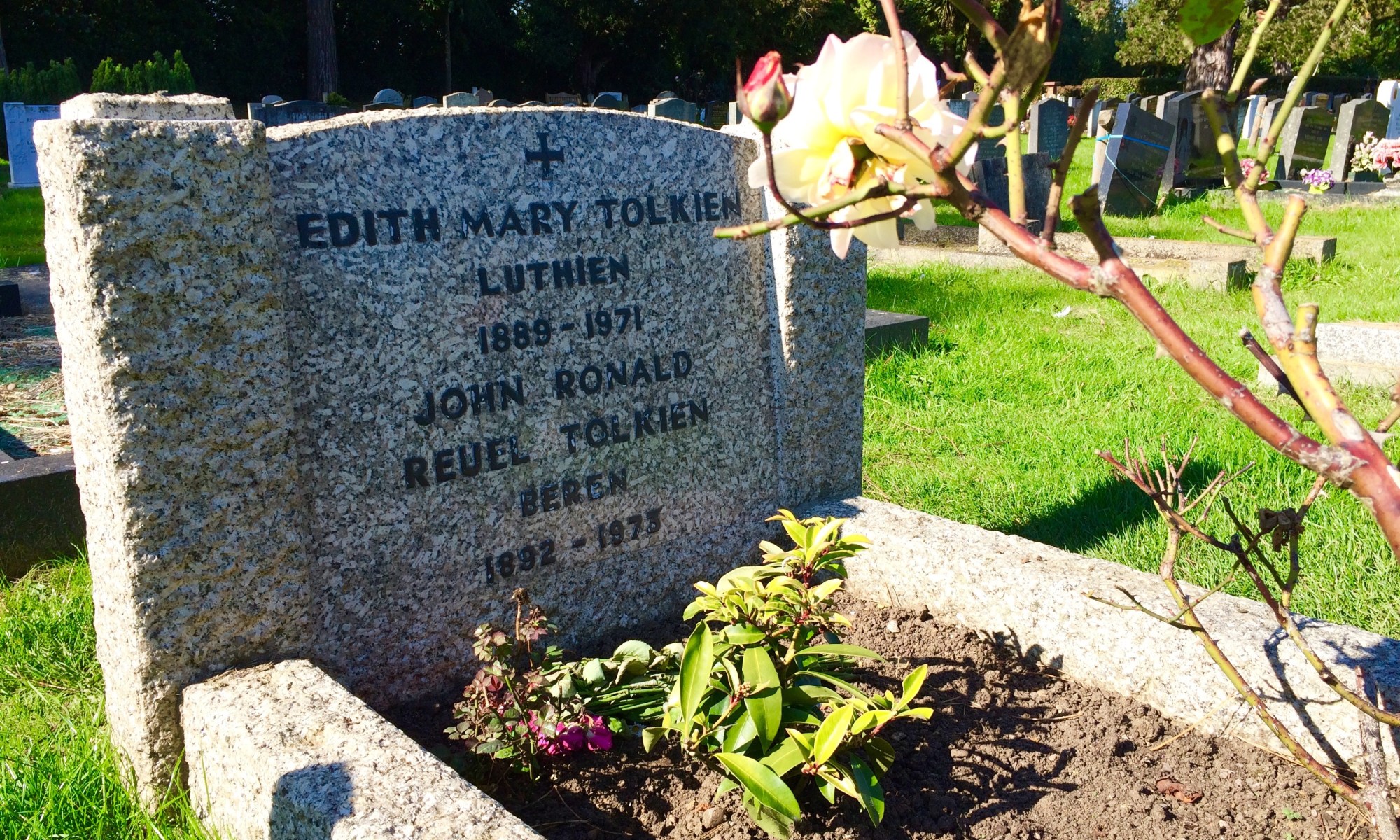

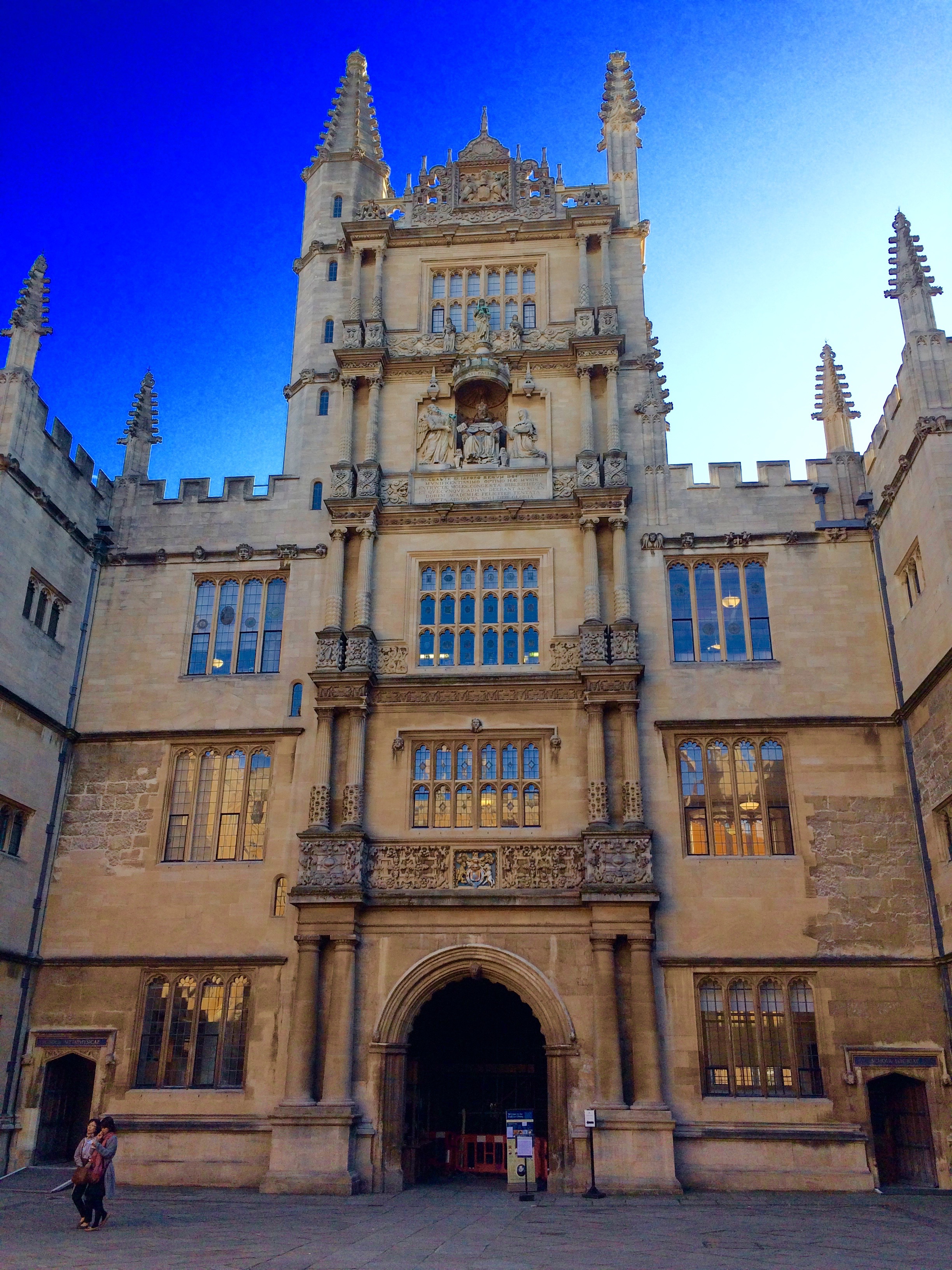

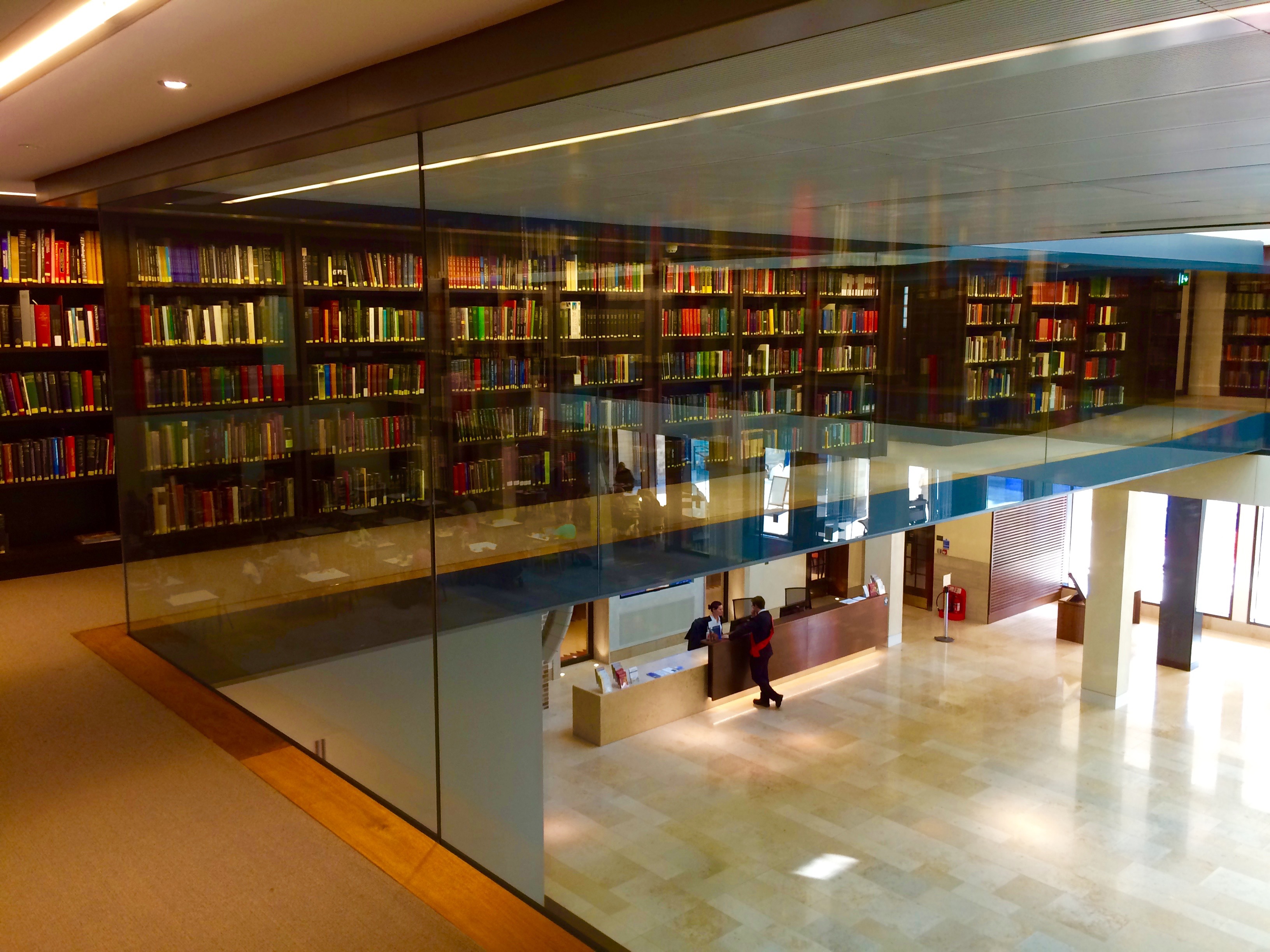


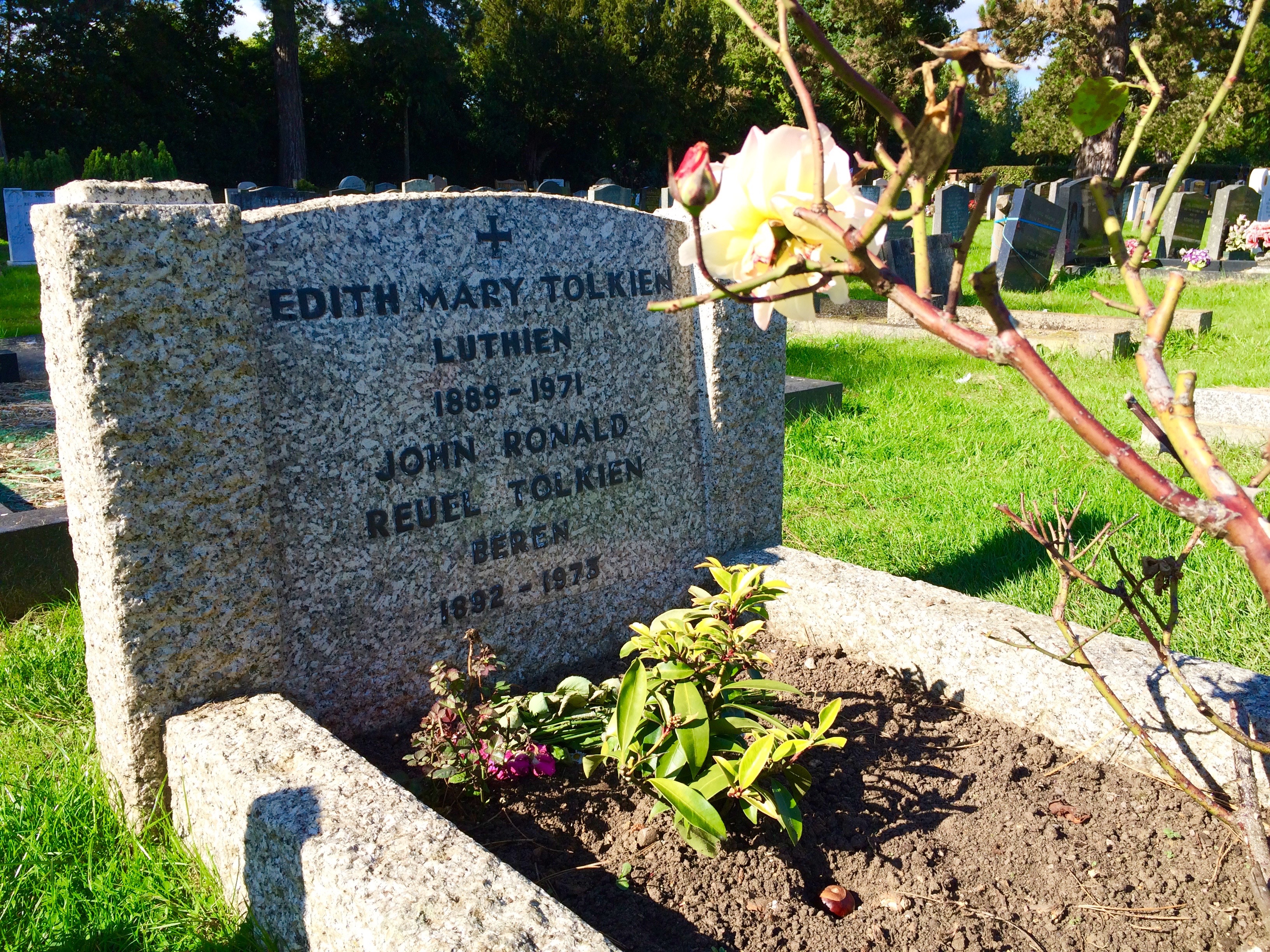
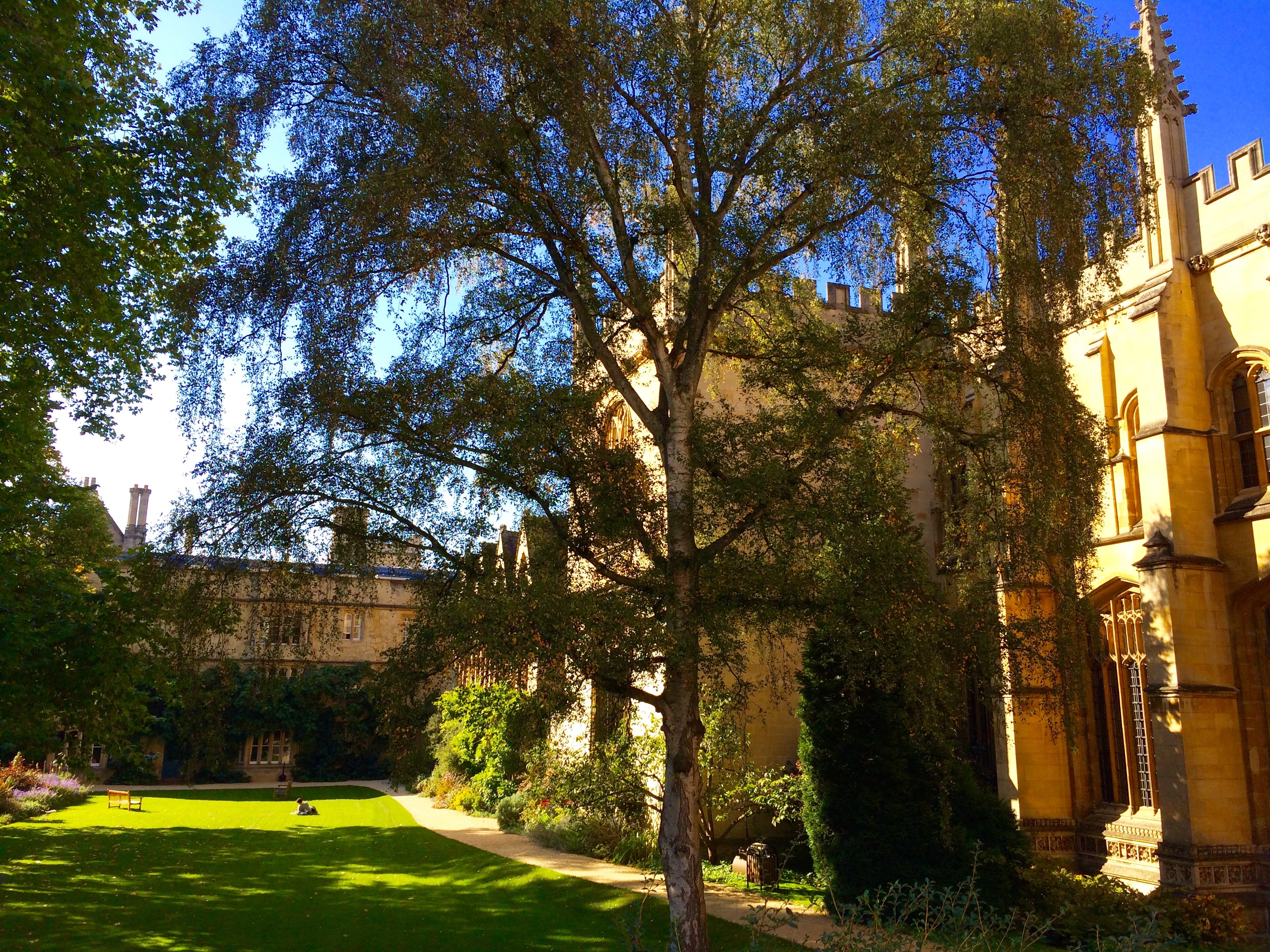

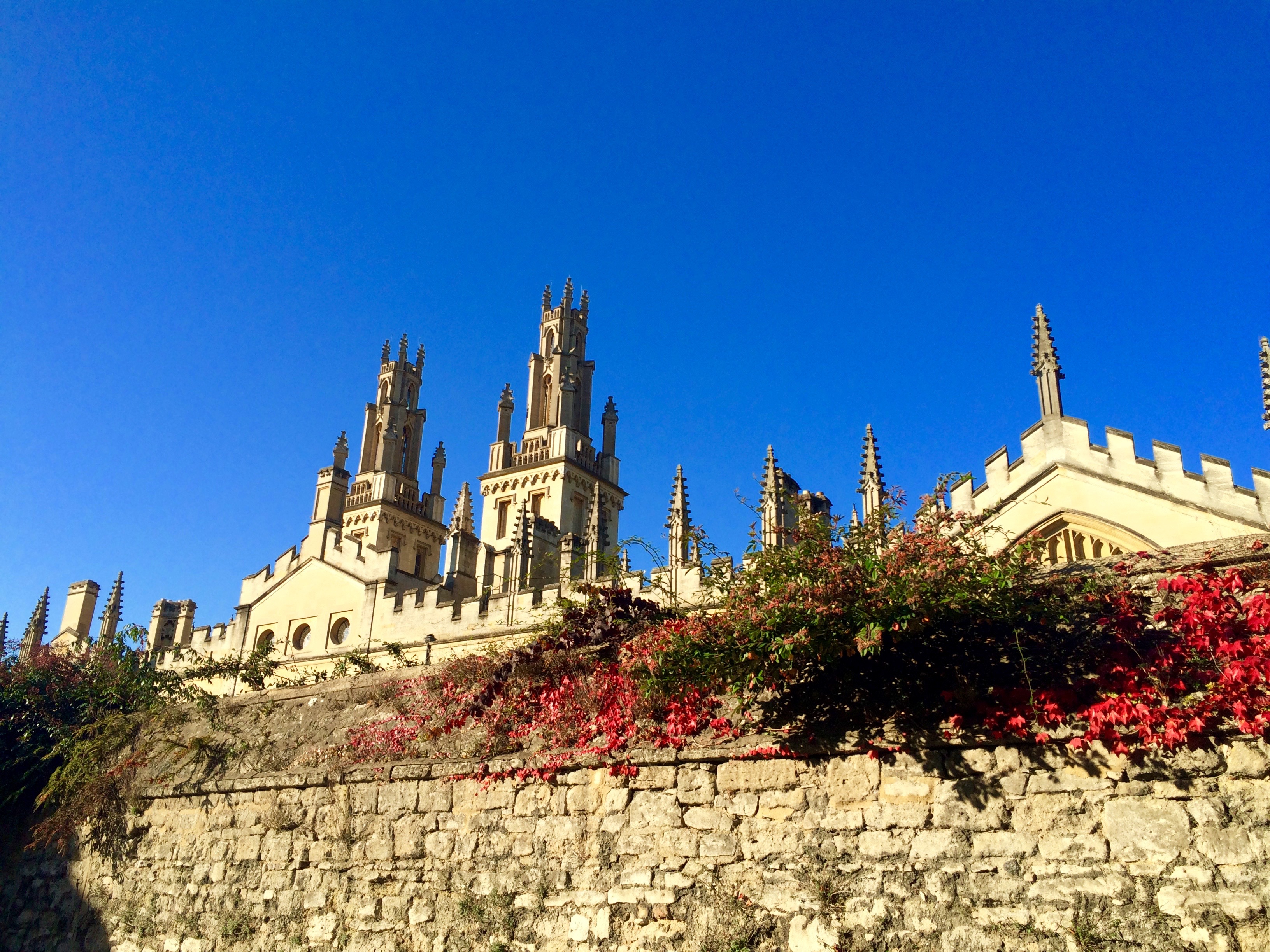

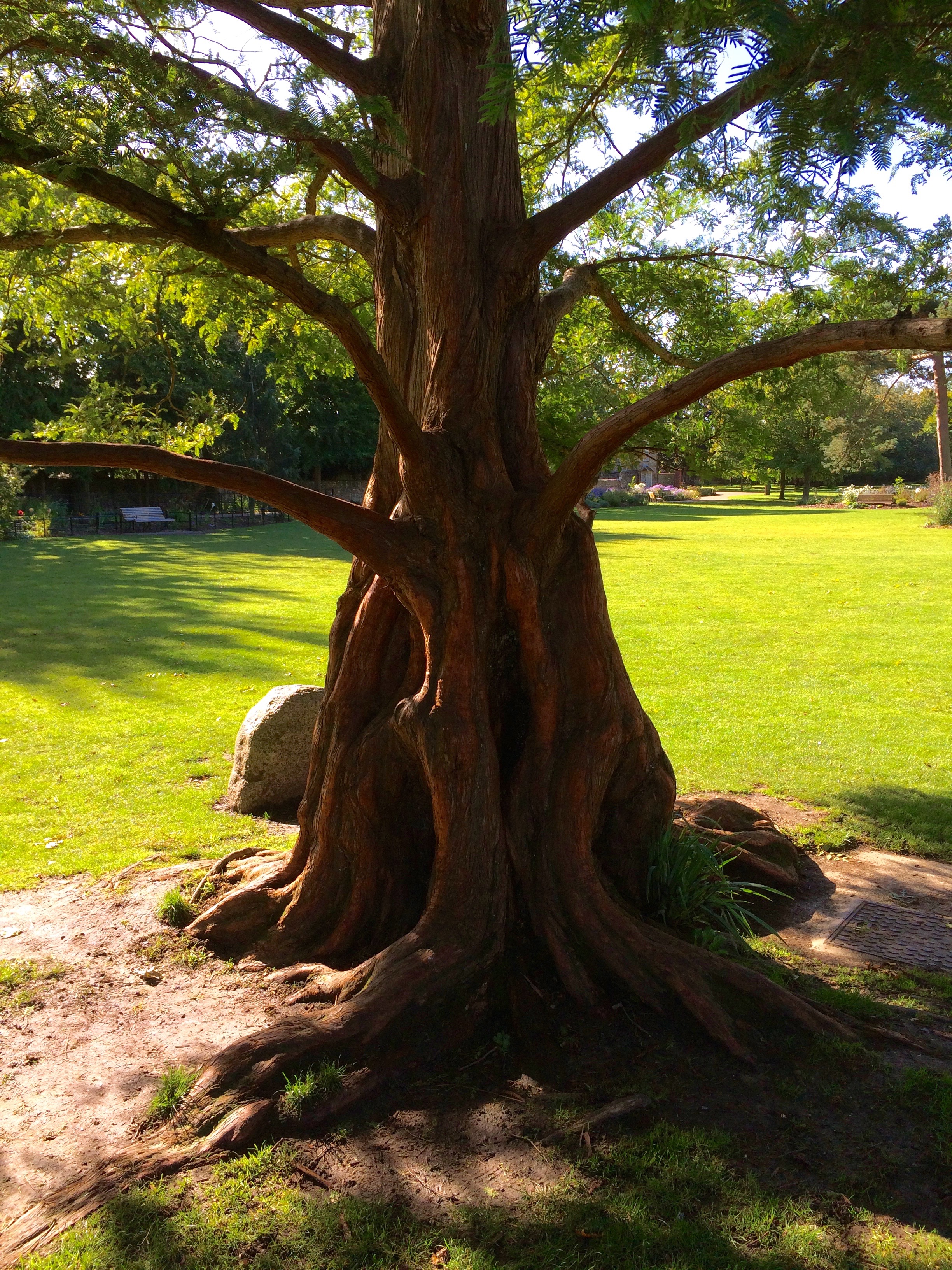


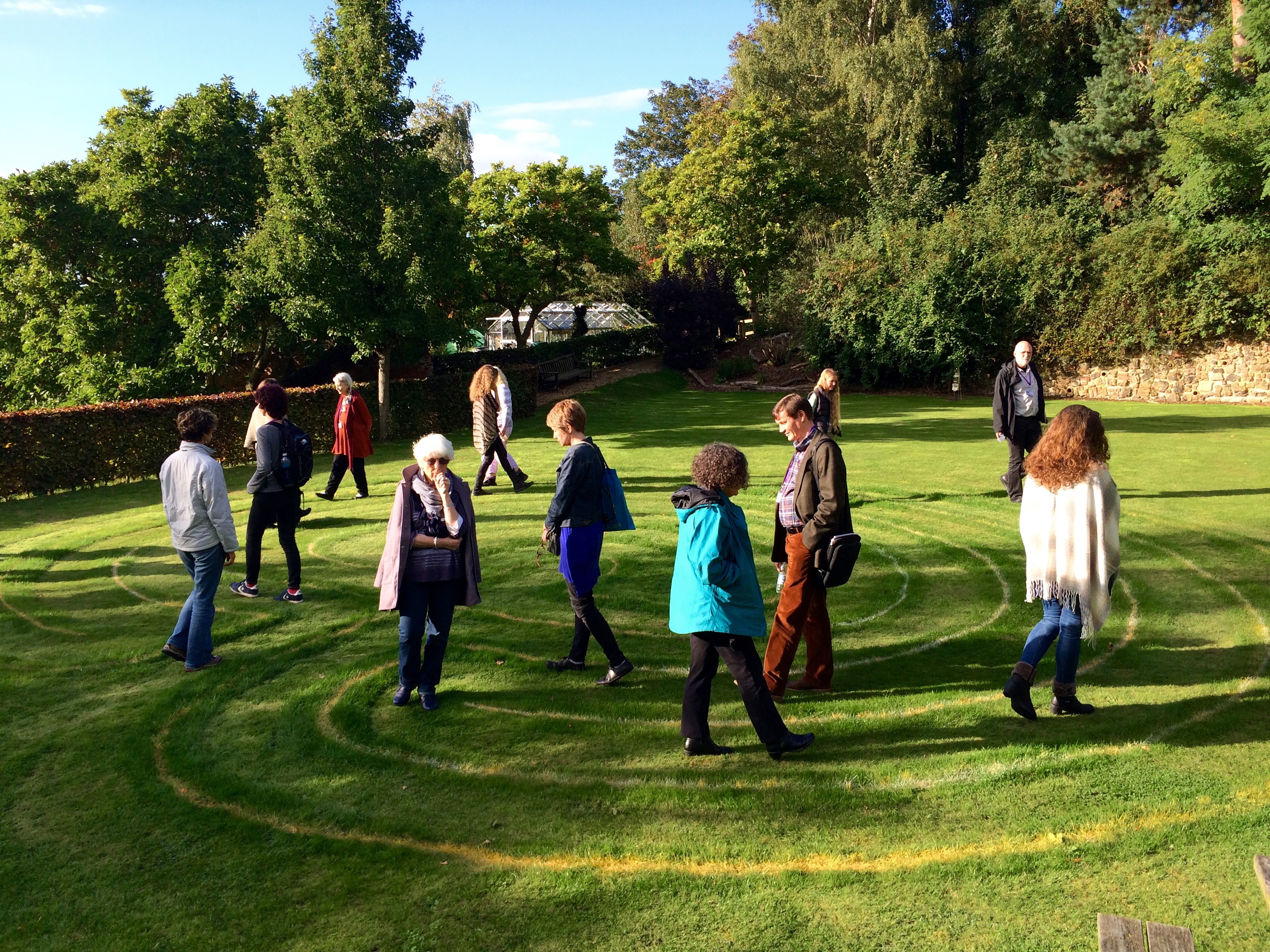


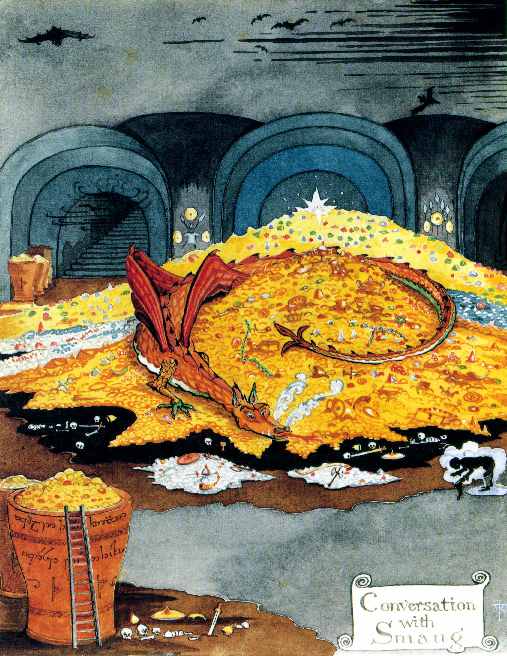


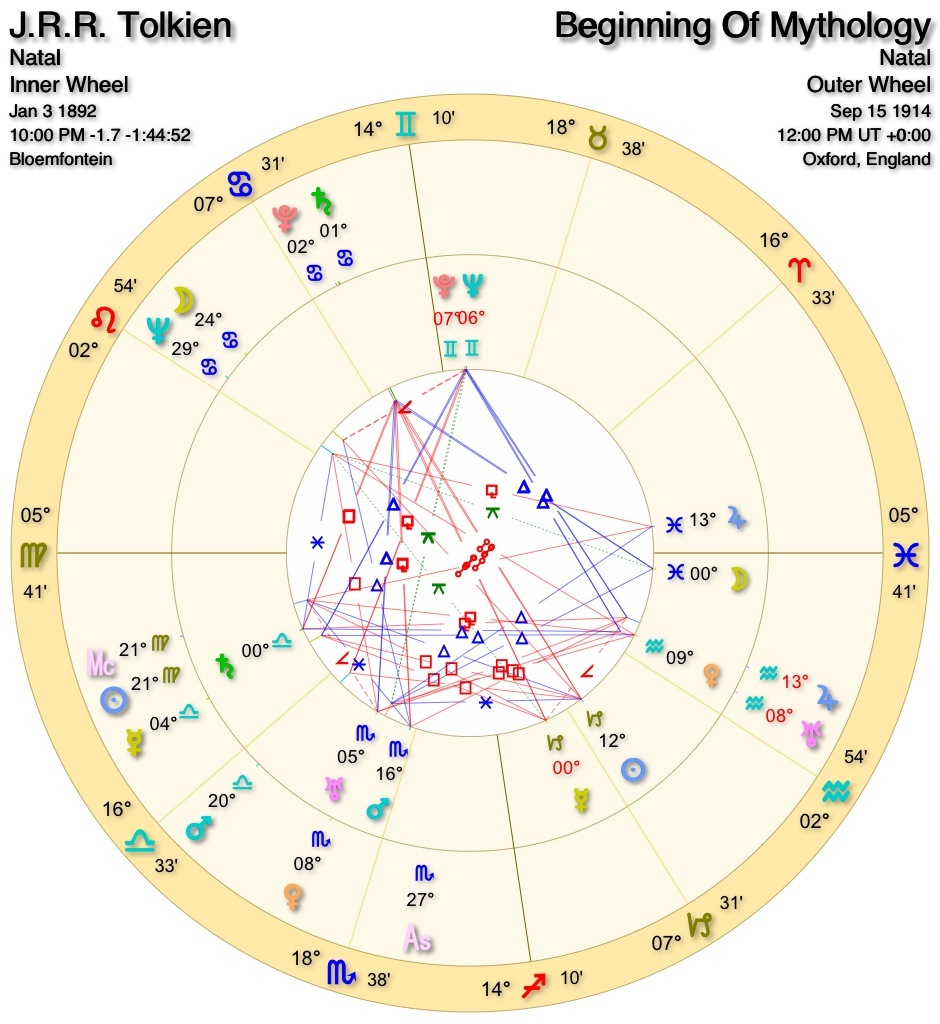

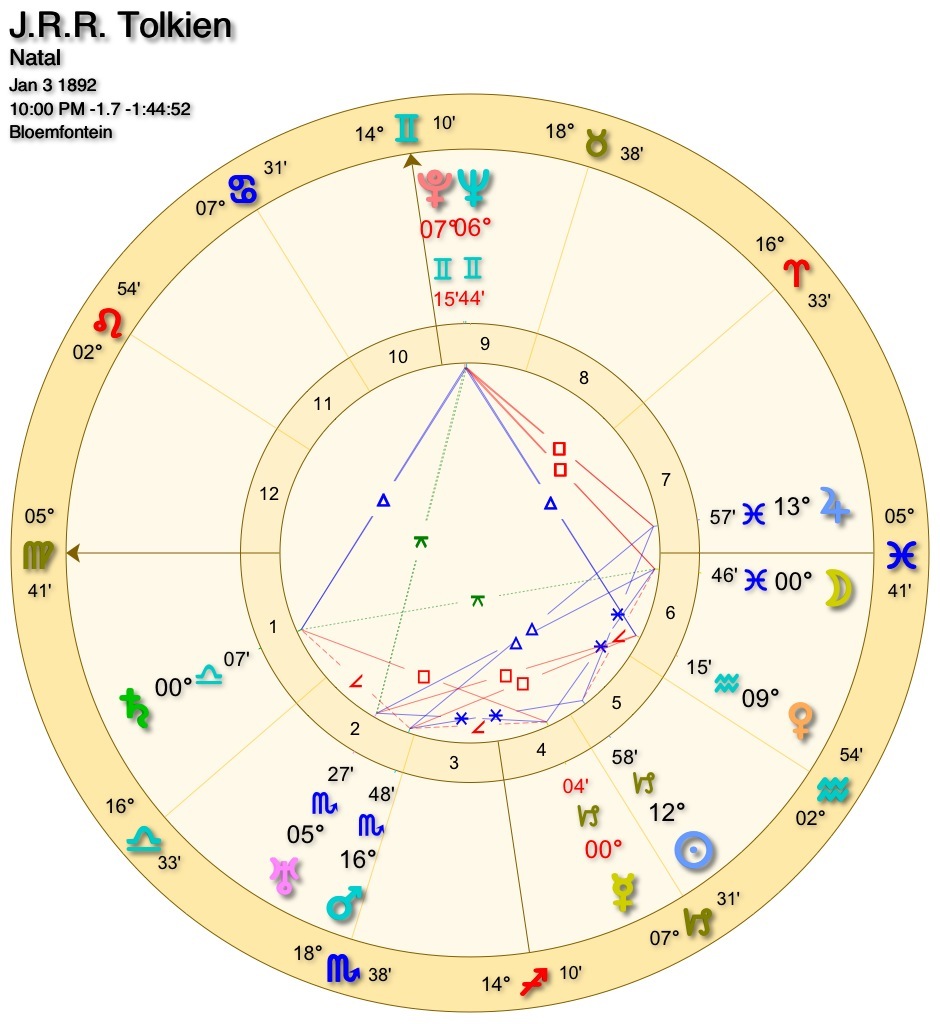

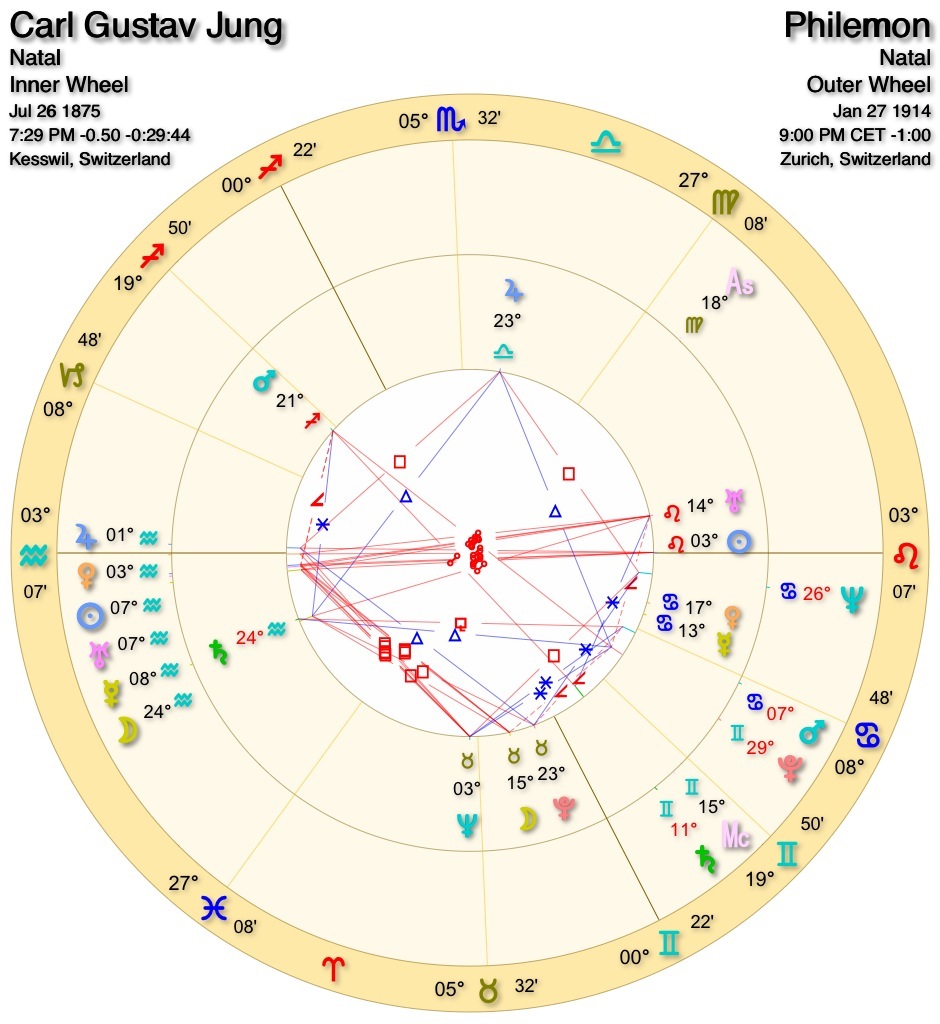
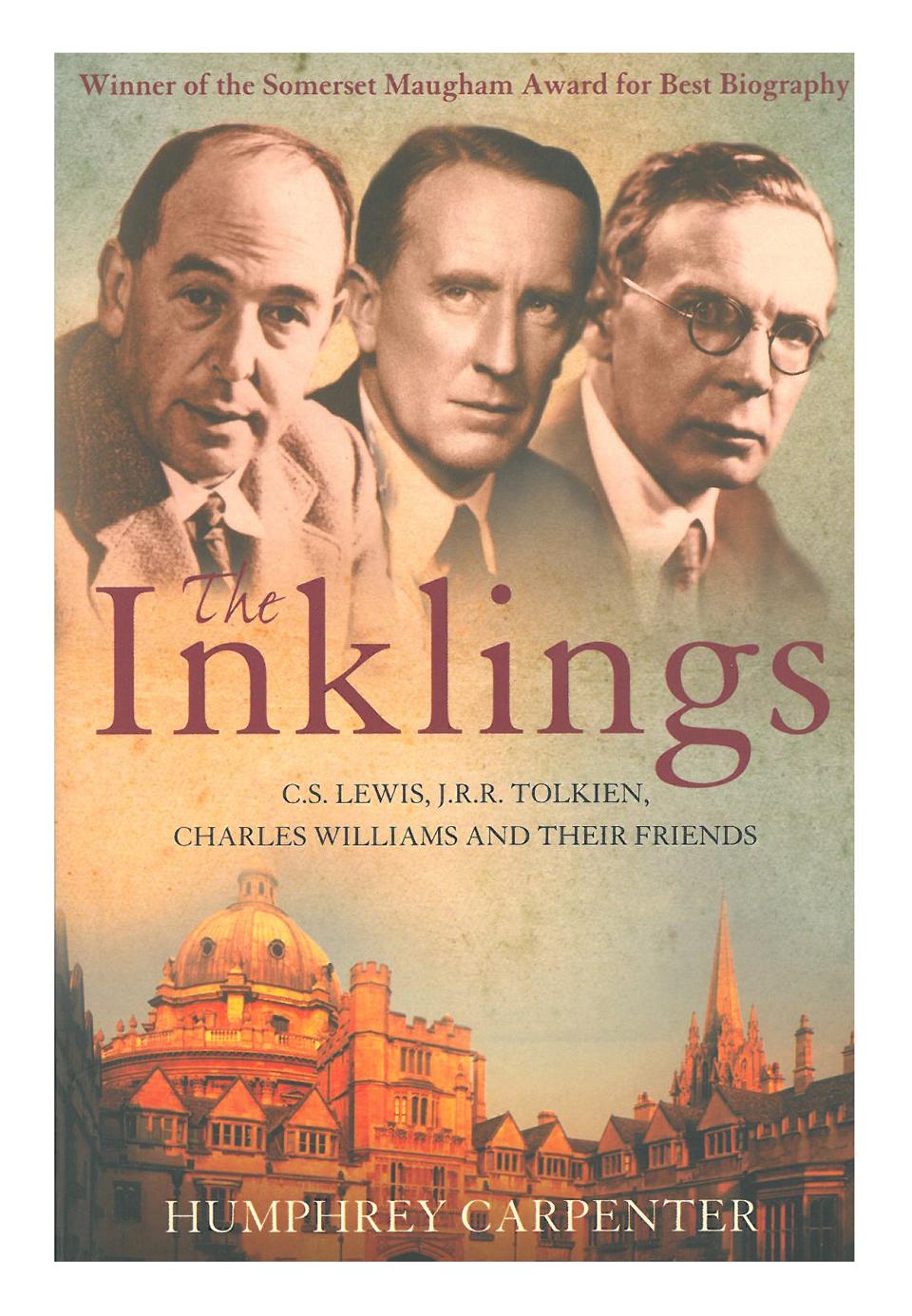
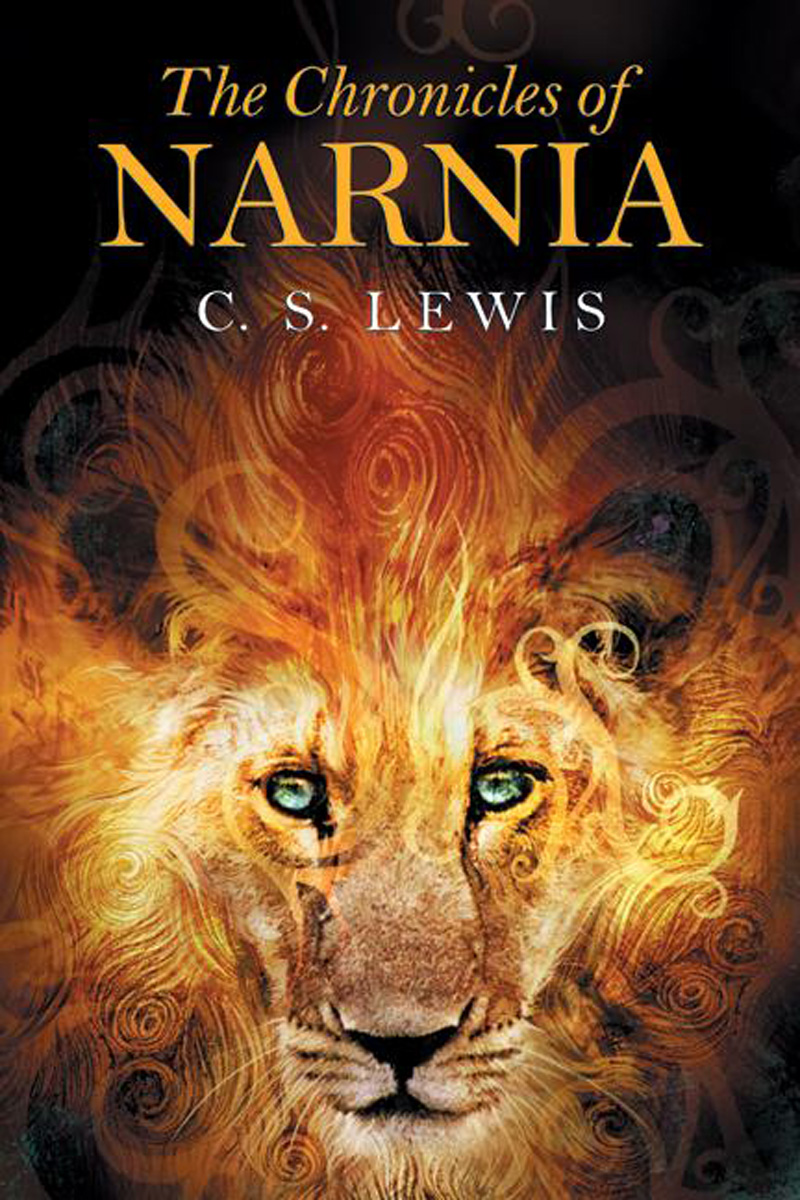

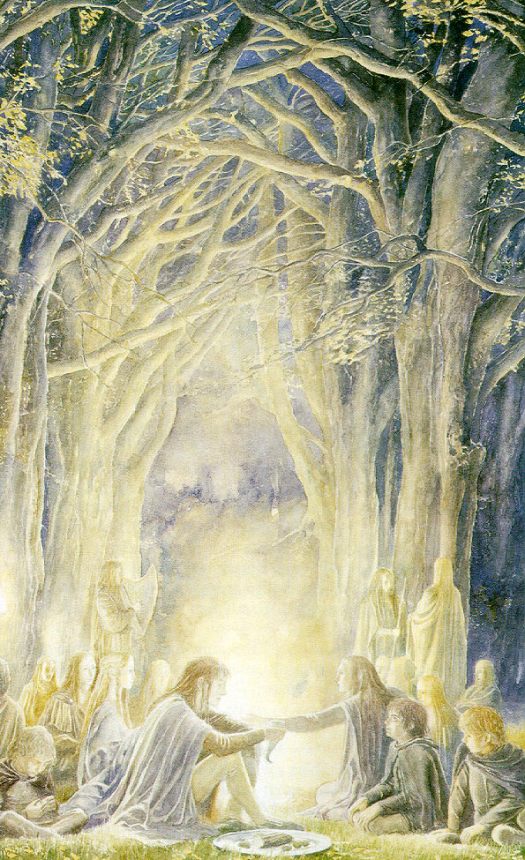
 Becca Tarnas