This paper was presented at the conference “Seizing an Alternative: Toward An Ecological Civilization,” held in Claremont, California at Pomona College. The section of the conference was titled “Alienation from Nature,” and the track, organized by Matthew Segall, was called “Late Modernity and Its Re-imagining.”
This conference is titled “Seizing an Alternative,” a title that implies the alternative is already here, it is not something new that must be invented. The alternative has been present all along, waiting, urging us even, to open our imaginations to the possibility that this alternative is, in a sense, the very essence—a hidden essence—of our world. At this conference our section has been addressing the alienation from the rest of the cosmos felt by the human being in late modernity. And each talk in our track has been revealing, in its own way, the deep interconnection that has always been present between us and our world. We are our world. The cosmic web has not been cut, although part of our human journey has been to feel as though the threads of our existence have been severed.
In 1983 a conference was held at this same university, organized primarily by Catherine Keller and David Ray Griffin. The conference was called “Archetypal Process,” and sought to bring into dialogue the process philosophy of Whitehead and the archetypal psychology of Carl Gustav Jung and James Hillman. As Griffin pointed out, process philosophy and archetypal psychology are both postmodern movements, but postmodern in a different sense from the “relativistic, nihilistic, deconstructive postmodernism” that might better be called “ultramodernism, or mostmodernism.”[1] Process philosophy and archetypal psychology, in Griffin’s words, are examples of “a constructive, reconstructive, or revisionary postmodernism, in which many of the presuppositions of modernity are challenged and revised.”[2] They are postmodern movements that “both want to return soul and divinity to the world.”[3] In his talk at the conference, James Hillman spoke of the need for a metaphysics that could support archetypal psychology. Hillman had abandoned Jung’s metaphysics in order to save his psychology. Yet this was not enough. Metaphysics is always operative, whether one acknowledges it or not. What Hillman sought was a metaphysics of praxis, a metaphysics that supported the practice of psychology, the practice of soul-making—an alchemical metaphysics. Whitehead can provide such a metaphysics, a cosmology in which soul can do its work.
Hillman spoke in his talk of that word, cosmology: it both “refers to the astronomical order of the heavenly bodies, and it also has a metaphysical meaning, according to Whitehead’s Process and Reality.”[4] As Whitehead says, cosmology is a scheme “of general ideas in terms of which every element of our experience can be interpreted.”[5] What if we do as Hillman suggested, and “keep together the two meanings, astronomical and metaphysical?”[6] Allow me to quote Hillman, in his ever-eloquent stylings, on what it would mean to maintain the unity of the two meanings of the word cosmology:
Let us say that the astronomical bodies (the planets) offer metaphysical bodies (the Gods [or one might say the archetypes]) by means of whom every element of experience can be interpreted. What is beyond in both meanings are the heavenly bodies. These afford some nouns and adjectives, some processes and some realities. The planetary persons fill the void of the beyond with the myths of their bodies and the bodies of their myths. This cosmology is a psychological field—a field because metaphysics is placed in imaginal locations; psychological because the planets are persons with traits, with behaviors, and in relation with one another.[7]
Hillman is offering us a vision of an archetypal cosmology, an archetypally-patterned, astronomically-grounded cosmology.
In his work with Stanislav Grof on non-ordinary and expanded states of consciousness, Richard Tarnas came to find, in his words, “a highly significant––indeed a pervasive––correspondence between planetary movements and human affairs.”[8] What is this correspondence? It is perceptible in the position of the planets at one’s birth, as well as in the transiting movement of the planets in relation to the birth chart throughout one’s life, and the ever-changing dynamics of the planets’ relational positions to each other. It is a correspondence of an archetypal character. Archetypal astrology. It is a continuously ongoing, universally visible form of synchronicity, what Jung describes as a meaningful coincidence between an inner event and an outer event. Archetypal astrology is an empirically-based, yet mythopoetically informed, practice—tracking the ongoing archetypal interconnection between psyche and cosmos, microcosm and macrocosm.
While Tarnas and others have put forward substantial evidence for the astrological perspective, demonstrating the multifaceted ways in which astrology works, today I want to explore another question: why does astrology work? What does the recognition of the highly precise, yet poetically subtle, correspondence between planetary movements and events on Earth indicate about the nature of the cosmos? In dialogue with this question Whitehead’s process philosophy can, perhaps, offer us a metaphysical foundation.
Before moving forward, a word on the nature of archetypes. Perhaps this can best be conveyed by Jung himself, the great diviner of the archetypal patterning of the human psyche. To quote Jung:
A kind of fluid interpenetration belongs to the very nature of all archetypes. They can only be roughly circumscribed at best. Their living meaning comes out more from their presentation as a whole than from a single formulation. Every attempt to focus them more sharply is immediately punished by the intangible core of meaning losing its luminosity. No archetype can be reduced to a simple formula. It is a vessel which we can never empty, and never fill. It has a potential existence only, and when it takes shape in matter it is no longer what it was. It persists throughout the ages and requires interpreting ever anew. The archetypes are the imperishable elements of the unconscious, but they change their shape continually.[9]
As this quote from Jung illustrates, it is the very nature of the archetypes to not be fully definable and describable, without misrepresenting and dulling their divine luminosity. Thus, moving forward, I want to acknowledge the impossibility of capturing archetypal presence in a single metaphysical system that explains in totality how they operate in the world.
In his introduction to the book that emerged from the “Archetypal Process” conference, Griffin draws a parallel between Jung’s concept of archetypes and Whitehead’s concept of eternal objects, each being part of an explanation of formal causation. For Whitehead, an eternal object is “any entity whose conceptual recognition does not involve a necessary reference to any definite actual entities of the temporal world.”[10] An eternal object is a potentiality relevant to some actual occasion, a possibility not yet defined by actuality. Eternal objects are like Platonic Forms in that they are real apart from any of their particular expressions, but unlike Plato’s Forms, their reality is “deficient in actuality”[11] according to Whitehead. Because of this deficiency, eternal objects long to enter into actuality, to ingress into actual occasions. All the ways in which we describe this world—the adjectives—these are the eternal objects: the colors, shapes, feelings, smells, tastes, qualities. Archetypes we come to understand through such qualities, but archetypes are the unifying fields or gravitational attractors that draw together a complex array of eternal objects into singular, though always fluid, form.
Grant Maxwell, who spoke yesterday in this track, has written about the relation between Whitehead’s eternal objects and Jung’s archetypes. He posits that planetary archetypes and eternal objects are both examples of formal causation, a mode of causality forbidden by modern materialism. He also suggests they should not be directly equated. I agree. I would speculate that planetary archetypes include both the potentiality of Whitehead’s eternal objects and the incarnate experience of actual occasions. Archetypes are not just eternal objects or potentials, because they would seem to have more agency and autonomy that Whitehead grants to eternal objects. Archetypes are complex personalities, persons even in Hillman’s language, yet there is a metaphorical unity to their complexity. “All ways of speaking of archetypes,” Hillman writes, “are translations from one metaphor to another.”[12]
To explore metaphor more deeply, we can make a slight turn toward Owen Barfield, the anthroposophically-informed philosopher who wrote such works as Saving the Appearances and Poetic Diction. Barfield posits an understanding of the evolution of consciousness in which the physical and psychical, material and spiritual, bodily and ensouled qualities of all entities in the world were once unified in the experience of ancient human consciousness. Only over the slow course of history have these concepts been separated from each other—subjective from objective—so that even now my language describing this to you inherently reflects this split. I must speak of object and subject, body and spirit. To give an example Barfield uses to illustrate this: when we translate the Latin word spiritus into English, spiritus can mean “wind,” “breath,” or “spirit” depending on the context. Yet for the ancient speakers of the word spiritus it meant all three of these words, and perhaps more, all at once—they were a unified whole in which the physical is utterly indistinguishable from its psychical, ensouled presence.
Yet these words are inherently related to one another at their source. They are examples of “true metaphor” in Barfield’s understanding. The way certain eternal objects complexify and ingress as archetypal beings is an example of such “true metaphor.” As Hillman said, “All ways of speaking of archetypes are translations from one metaphor to another.”[13] The infinite array of eternal objects that express the qualities of Saturn, or Venus, or Neptune, or any of the other planetary archetypes, are metaphorically related to one another, a relation that was much more apparent to ancient consciousness than to modern consciousness. This is how the ancients knew what names to give the planets, which physical planets belonged to which Gods, because the meaning of the celestial bodies was directly apparent to them. The world has changed because we have changed in our participation with it. Yet it still continues to change. The music of the spheres may have been silent for many in late modernity, yet now—at the turn of the tides—we are beginning to relearn the score.
For Whitehead the source of all things is creativity. Creativity is primary. Creativity is the realm of pure potential. Chaos. Griffin has referred to Whitehead’s philosophy as “process theology,” “especially when the chief focus is on God and other questions of ‘ultimate concern’ (Paul Tillich), such as ultimate origin, order, value, and meaning.”[14] In Whitehead’s scheme, God is not the ultimate. Creativity is. God is that which orders the chaos of pure potentiality into the hierarchy of eternal objects—and, I would posit, into the archetypes. God takes chaos and turns it into cosmos, but God is born of that chaos. God is the first concrescence, an everlasting concrescence, the first experiential achievement of chaos becoming cosmos.
An image I find compelling to illustrate this—chaos becoming cosmos—is that of a prism refracting white light into an iridescent rainbow. The white light is that realm of pure potentiality, chaotic creativity. In Whitehead’s scheme the prism itself is God, that which refracts the indefinite into the definite, that differentiates pure light into the colors of the rainbow. Each color is an archetype—red clearly different from blue, yellow distinct from purple. But within the band of light that is each color an infinity of shades is at play. Every shade of green could be seen as every possible eternal object that could ingress as an expression of Venus, or every shade of blue the endless possibilities of Neptune. They are still the same light as the white light, but the prism—which could be identified with God—has ordered them into colors.
What makes a rainbow so spectacular? Why do we stop to take note of them? Because we can see them. A rainbow makes light itself visible. The rainbow is a symbol of divine possibility entering into the world, yearning for our participation in its beauty.
The moment a child takes her first breath can be seen as the first concrescence of that child independently of the mother’s body. The child herself is a society of actual occasions, each of which are also concrescing in this moment, making up the experience of the newborn. This moment, the first inhalation, is when the birth chart of an individual is set. The archetypal energies expressed throughout the rest of an individual’s life reflect the planetary configurations, the archetypal relationships, or eternal potentialities, of this particular moment. At the time of birth all of the actual occasions that have ever been, that have perished into objective immortality to use Whitehead’s term, become one— are prehended by the actual occasion that is the newborn child in that moment—before also perishing. Every archetypal expression that has ever manifested is gifted to the child. Yet the past actual occasions that are most felt by the concrescing actual occasion are those that are immediately prior. Thus the positions of the planets and their correlated archetypal energies, that are being enacted everywhere upon the Earth, are what is most immediately inherited by the child in her first moment of independence. As the child continues to live and grow, her subjectivity—the crest of her concrescing wave—continues to inherit the archetypally ordered actual occasions, as can be seen in the unfolding of astrological transits. Yet the birth chart is still effective, and can still be seen in the progression of the individual’s life. How can this be so? How can a past actual occasion, from the moment of birth, be more archetypally influential than other past actual occasions?
Let us return to the image of God as an eternally concrescing actual occasion, never perishing but continuously feeling the procession of the cosmic community of finite actual occasions. Perhaps in this understanding of God we can glimpse what may be happening in relation to the actual occasion when the individual’s birth chart is set. It is almost like the actual occasion that concresced with the child’s first intake of air is also an everlasting concrescence, one that continues from that moment forward. Each preceding concrescence takes place within the gestalt set by that first concrescence—which is how transits to the birth chart could be experienced by the individual. The birth chart is like the prism of that individual’s life, refracting the archetypal potential into the archetypal particulars of this person. That moment when the birth chart is set concresces onward, even beyond the bodily death of the individual. We see transits to the birth chart still being operative long after the person carrying that chart has died: for instance, when a renaissance of interest in someone’s work occurs after their death. As an example, (and please excuse my more technical astrological language for a moment) as this conference is being held Neptune in the sky is exactly crossing Whitehead’s natal Mercury-Uranus square, bringing a revisioning and reimagining of world view, which relates to Neptune-Uranus, to Whitehead’s ingenious philosophical system, which relates to Mercury-Uranus.
Like the dipolar nature of Whitehead’s God, the archetypes too seem to have a primordial pole and a consequent pole. The primordial pole orders the realm of eternal objects so that they can ingress as relevant possibilities into the actual occasions of the cosmic community, while the consequent pole feels the experiences of this world community and continuously adjusts the ordering of the eternal objects. So too, I believe, it is with the archetypes. For as they ingress into living manifestation, we participate in their becoming, we co-creatively engage their archetypal qualities through our own lives. The archetypes also have a consequent nature, one that feels what we feel, and that forever reshapes the potentialities for the future ingression of the archetypes, in our own lives and in the lives of future generations. Our participation is enacting an evolution in the archetypes themselves.
We are being called upon to seize an alternative. We are being called upon to participate. By consciously engaging with the archetypes as we co-creatively manifest them, we are reshaping the potentialities with which they will manifest in the future. No future is yet set. But the past occasions that will inform it are here now. A rainbow makes white light visible. Let’s look forward with eyes open.
Bibliography
Griffin, David Ray, ed. Archetypal Process: Self and Divine in Whitehead, Jung, and Hillman. Evanston, IL: Northwestern University Press, 1989.
Hillman, James. Re-Visioning Psychology. New York, NY: Harper Perennial, 1992.
Jung, C.G. “The Psychology of the Child Archetype.” In The Archetypes and the Collective Unconscious:Collected Works of Carl Gustav Jung. Translated by R. F. C. Hull, Edited by H. Read, M. Fordham, G. Adler, W. McGuire. Princeton, NJ: Princeton University Press, 1940.
Maxwell, Grant. “Archetype and Eternal Object: Jung, Whitehead, and the Return of Formal Causation.” Archai: The Journal of Archetypal Cosmology Volume 3 (Winter 2011): 51-71.
Tarnas, Richard. Cosmos and Psyche: Intimations of a New World View. New York, NY: Viking Penguin, 2006.
Whitehead, Alfred North. Process and Reality. New York, NY: The Free Press, 1985.
[1] David Ray Griffin, “Introduction,” in Archetypal Process: Self and Divine in Whitehead, Jung, and Hillman, ed. David Ray Griffin (Evanston, IL: Northwestern University Press, 1989), 6.
[3] David Ray Griffin, “Preface,” in Archetypal Process: Self and Divine in Whitehead, Jung, and Hillman, ed. David Ray Griffin (Evanston, IL: Northwestern University Press, 1989), vii.
[4] James Hillman, “Back to Beyond: On Cosmology,” in Archetypal Process: Self and Divine in Whitehead, Jung, and Hillman, ed. David Ray Griffin (Evanston, IL: Northwestern University Press, 1989), 220.
[5] Alfred North Whitehead, Process and Reality (New York, NY: The Free Press, 1985), 3.
[8] Richard Tarnas, Cosmos and Psyche: Intimations of a New World View (New York, NY: Viking Penguin, 2006), 68-69.
[9] C.G. Jung, “The Psychology of the Child Archetype” (1940) in The Archetypes and the Collective Unconscious,Collected Works of Carl Gustav Jung, trans. R. F. C. Hull, ed. H. Read, M. Fordham, G. Adler, W. McGuire, (Princeton, NJ: Princeton University Press), 179.
“In the last part of May the sky grew pale and the clouds that had hung in high puffs for so long in the spring dissipated. The sun flared down on the growing corn day after day until a line of brown spread along the edge of each green bayonet. The clouds appeared, and went away, and in a while they did not try anymore. The weeds grew darker green to protect themselves, and they did not spread any more. The surface of the earth crusted, a thin hard crust, and as the sky became pale, so the earth became pale, pink in the red country and white in the gray country.
. . . And as the sharp sun struck day after day, the leaves of the young corn became less stiff and erect; they bent in a curve at first, and then, as the central ribs of strength grew weak, each leaf tilted downward. Then it was June and the sun shone more fiercely. The brown lines on the corn leaves widened and moved in on the central ribs.” – John Steinbeck, The Grapes of Wrath[1]
Dry earth, cloudless skies. Waiting, anticipating, counting days, weeks, months. Perhaps years. When will the rain fall? The moisture slowly leaves the soil, plants begin to die. The emotional atmosphere is defined by denial and groundless hope, anxiety and concern, worry and prayer. Dust builds, crops fail. Water—translucent and fluid, so easy to take for granted when in abundance, all one can think about when it is lacking.
What is a drought? Droughts are evasively difficult to define, even by those who study their patterns extensively. Essentially a drought is constituted by a lack of precipitation in a certain area, extended over a significant period of time.[2] Of course, the precipitation levels and length of time rain is absent will all vary from bioregion to bioregion, which is part of what makes a clear definition of drought so evasive. The human experience of drought is a complex interplay of unusual or unexpected natural events, such a lower precipitation, combined with the demands human beings put on water resources. Due to a variety of complicated interacting factors, droughts can have widespread and devastating consequences.
The words opening this essay are drawn from John Steinbeck’s iconic book The Grapes of Wrath, which narrates the story of migrant farming families who had to abandon their fields and homes on the Great Plains when the 1930s Dust Bowl droughts decimated their crops and whipped up blinding dust storms that choked plants and blackened skies. Many factors went into making this one of the worst 20th century droughts in North America, including a lack understanding of the Great Plains ecology, the widespread introduction of mechanized farming, and the crippling economic crash of the Great Depression that began in 1929. The deep-rooted native grasses of the Great Plains had been ploughed by homesteading settlers and overgrazed by their livestock, leaving the unanchored soil tremendously vulnerable to the wind.[3]
When the Dust Bowl droughts hit the Great Plains in three successive waves, in 1934, 1936, and 1939, vast numbers of farmers migrated across the United States to the fertile crescent of Central California to eke out a living harvesting the fruits and vegetables growing in abundance here. California’s Central Valley is still the breadbasket—or rather “fruit and vegetable basket”— of the United States, growing the vast majority of fresh produce not only for the country but for international export.[4] “No other state, or even combination of states, can match California’s output per acre,” the journalist Brian Palmer writes.[5] Yet it now seems the cornucopia of agriculture in the U.S. may be facing an insurmountable obstacle.
Now in 2015, California is entering its fourth year of drought, eleven trillion gallons of water shy of relief,[6] with only about a year of surface water left stored in the state’s reservoirs.[7] California was able to become the land of plentiful bounty through heavy irrigation, and now as the Sierra Nevada snowpack is a fraction of what it should be, farmers are turning more frequently to pumping groundwater. Groundwater is drawn from underground aquifers, massive geological formations that have held vast amounts of pristine waters for millennia. Some water experts refer to such water as “fossil water” because it will never replenish on any meaningful human timescale. As Christiana Z. Peppard writes in her book Just Water,
Most aquifers take upward of ten thousand years to refill—an extraordinarily long time, considering that just as many years ago, our ancestors were scribbling on cave walls with hard rocks. Many aquifers take much, much longer to refill—on the order of millions of years.[8]
As the drought worsens the state’s nonrenewable water sources are being rapidly drained to maintain maladaptive agricultural practices—namely highly irrigated, industrial agriculture in a semi-arid bioregion. Human actions, including continuously increasing greenhouse gas emissions that are inducing anthropogenic climate change, are exacerbating the consequences of the recent diminishment in rainfall.[9] The lack of precipitation during the Dust Bowl was only part of what made the 1930s droughts so devastating. Another major factor was the methods of mechanized agriculture, which did not take into account the basic ecology of the landscape and stripped the soil of its capability to hold moisture. Today we seem to be having a repetition of history.
Drought is often referred to as “a creeping phenomenon”[10] and “an elusive climate event.”[11] Scientifically predicting the onset of a drought cannot be done more than a month or two in advance, because prediction “depends on the ability to forecast two fundamental meteorological surface parameters, precipitation and temperature,” according to the National Drought Mitigation Center.[12] The historical record indicates the inherent variability of the climate, making long-term forecasts elusive because, as the Drought Center States:
. . . anomalies of precipitation and temperature may last from several months to several decades. How long they last depends on air–sea interactions, soil moisture and land surface processes, topography, internal dynamics, and the accumulated influence of dynamically unstable synoptic weather systems at the global scale.[13]
While different bioregions each have their own rhythms of wet and dry spells that repeat with varying degrees of stability, the capacity to determine the length and impact of any given drought remains evasive. As Ivan Ray Tannehill wrote eloquently back in 1947:
The first rainless day in a spell of fine weather contributes as much to the drought as the last, but no one knows how serious it will be until the last dry day is gone and the rains have come again. . . we are not sure about it until the crops have withered and died.[14]
How any given drought is defined, and its duration and impact on the land and its human inhabitants—both immediate and lasting—all shape how droughts are perceived.
Three North American droughts stand out as the most severe of the 20th century, according to the National Oceanic and Atmospheric Administration. These are the 1930s Dust Bowl drought, the major 1950s drought in the central United States, and the late 1980s drought covering the West Coast to the Great Plains.[15] Today’s drought in the U.S. West may be joining that list. “In the California and Nevada region,” recently stated the climatologist Kelly Redmond, “this is among the worst we’ve seen it in the last 120 years or so.”[16] Of course, this statement refers particularly to the region being affected by the current drought, but Redmond’s statement is nonetheless significant.
As a life-long California resident I have become increasingly aware of the drought’s impacts on my home state. Discussions of water shortage have become commonplace, ranging from wondering if the state’s mandatory 25% reductions in water usage are enough,[17] to questioning why the cuts do not apply to the agricultural sector that uses 80% of the state’s water,[18] and sitting with the real possibility that this drought may not end and California’s climate has fundamentally changed. Another issue has also come to the foreground of my attention, one that scientists would certainly not be inclined to look at in relation to drought patterns. Like factors such a temperature and precipitation, this is also a naturally recurring cycle grounded in the rhythms of the natural world, but rather than an ecosystem pattern it is a solar system pattern, a much larger scale than meteorologists take into account.
If we turn our eyes to the cosmos, we can see that currently the planet Saturn and the planet Neptune are at a 90° angle to each other, forming what is called a square aspect. The alignment began in January 2014, when the two planets came within 10° of each other, and will end in October 2017 when they pass out of the same 10° range. If one looks back at an ephemeris to see where these same planets were during the three most prominent North American droughts of the 20th century, an interesting pattern appears: in 1934-38 Saturn was in 180° opposition to Neptune in the sky, the same years as the worst of the Dust Bowl droughts; in 1950-56 Saturn was conjoined with Neptune in the same place on the ecliptic, the same years as the 1950s drought; and in 1987-91 Saturn and Neptune were also in a conjunction, encompassing the years of the late 1980s drought.
What is the significance of such planetary alignments and their correlations to these droughts? As has been argued by Richard Tarnas in Cosmos and Psyche: Intimations of a New World View, a significant body of evidence has come forward indicating a profound correlation between the positions of the planets and events unfolding on Earth in human history and world events, individual biography and psychology, and even in natural ecological events. What emerged from this body of evidence was a revival of an ancient practice long-dismissed by the modern paradigm, re-engaged with new rigor and empiricism. As the Jungian psychologist and professor Keiron Le Grice writes,
Archetypal astrology, as this new approach been called, is based on an observed correspondence between the planets in the solar system and specific themes, qualities, and impulses associated with a set of universal principles and thematic categories known as planetary archetypes. Each of the planetary bodies, as well as the Sun and the Moon, is associated with a distinct archetypal principle.[19]
The planetary archetypes associated with each planet are expressed in world events in multivalent and multidimensional ways. As Tarnas writes,
. . . an essential characteristic of this analysis was that it did not predict specific events or personality traits. Rather, it articulated the deeper archetypal dynamics of which events and traits were the concrete expression. This is seemed to do with astonishing precision and subtlety.[20]
While Cosmos and Psyche looks at a vast array of cultural, social, artistic, scientific, psychological, and political events in relation to several planetary alignments, for this study I am focusing on one particular phenomenon—namely droughts—in relation to the corresponding planetary alignments. To begin, I am looking at the relationship between droughts and the Saturn-Neptune cycle of alignments, before looking further at certain apparent anomalies to this pattern and from there exploring the more nuanced dynamics unfolding in relation to specific drought events.
As previously mentioned, the droughts of the mid-1930s, early to mid-1950s, and late 1980s all took place under Saturn-Neptune alignments, as is our current drought in the western U.S. today. Why does Saturn-Neptune archetypally correlate with drought? The archetype of Saturn relates to contraction, negation, restriction, lack, and boundaries; it is the principle of time and structure, decay and death, loss and endings. Any archetype with which Saturn comes into relationship it will problematize, negate, constrain and create obstacles. The archetype of Neptune, on the other hand, is the principle of fluidity, boundlessness, and interconnectivity, that which unifies and merges, dissolves and dilutes; Neptune is the archetype of oceanic oneness, transcendent spirituality, the heavenly cosmos, image and imagination, illusion and mirage—it is the principle of water itself, both as symbol and physical liquid.
One can see how the combination of archetypal qualities associated with Saturn and Neptune manifest as drought: lack of water, low moisture, negation of water’s life-giving properties. To draw some images from the Dust Bowl, Saturn-Neptune came through not only in the absence of precipitation, but in the dry particles of dust that flowed boundless across the land, reducing visibility and even blackening the skies. The Saturnian themes of lack, absence, dryness, reduction, and darkness are present here, combined with the Neptunian qualities of rainwater, boundlessness, clarity of vision and perception, and the image of the celestial sky (all negated, blocked, and obscured by the previously mentioned Saturnian characteristics). Another expression of the Saturn-Neptune alignment that contributed to the Dust Bowl droughts was the lack of understanding of the intricate interconnected dynamics of ecosystem structures that led to the agricultural practice of ploughing the deep-rooted grassed that retained moisture and maintained soil structure. Again, Neptune comes through as the soil moisture and interconnected unity of the ecosystem, while Saturn is present in the structures, retention and maintenance, the anchoring roots, and even the sharp cut of the metal plow. The elusive quality of droughts and the scientific difficulty in defining them also have a Saturn-Neptune quality, as Saturn relates to difficulty and definition, Neptune to the slippery aspects of evasiveness and illusion.
The Saturn-Neptune opposition came into 15° orb (recognized by archetypal astrologers as the general range when archetypally correlated events occur) in 1934, and was in exact alignment in 1936-7 when the drought was at its worst. The third wave of drought that came in during 1939 was after the Saturn-Neptune opposition had moved past operative alignment—a topic we will explore later in this essay.
An opposition between two planets is the same configuration as a Full Moon, when the Moon is on one side of the Earth and the Sun on the other. The completion of that cycle is the New Moon, when the Sun and the Moon are conjoined in the same place in the sky relative to the Earth. After the Saturn-Neptune opposition of the mid-1930s, when they were in the “Full Moon” alignment, these two planets reached the conclusion of their cycle, or the “New Moon” alignment, in the conjunction of the 1950s. Saturn started to come into 15° orb with Neptune in 1950, right as the drought began in the southwestern states, and was having a major impact on Oklahoma, Kansas, and Nebraska by 1953 when the conjunction was exact. According to the National Oceanic and Atmospheric Administration,
By 1954, the drought encompassed a ten-state area reaching from the mid-west to the Great Plains, and southward into New Mexico. The area from the Texas panhandle to central and eastern Colorado, western Kansas and central Nebraska experienced severe drought conditions.[21]
While the Saturn-Neptune conjunction went out of orb in 1955, the drought ended when the 1957 spring rains began to pour down on the parched soil. Like in the 1930s, the effects of the drought persisted beyond the Saturn-Neptune transit under which they commenced—again, a topic we will explore later in the essay.
Now to turn to the third of the major 20th century North American droughts, the 1987-89 drought that severely affected the West Coast and the northern Great Plains. Although the late 1980s drought covered just 36% of the United States, compared to the Dust Bowl’s 70%, it was the costliest drought, indeed the costliest natural disaster of any kind to effect the U.S., with damages and losses exceeding approximately $39 billion.[22] As the environmental studies and philosophy professor Dale Jamieson describes,
Much of the United States spent the summer [of 1988] in the grip of extreme heat and serious drought. Fires raged in Yellowstone National Park, agricultural production declined dramatically, and water levels in the Mississippi River system dropped precariously, resulting in channel closings and ship groundings.[23]
Sure enough, beginning in 1987 Saturn had started to conjoin Neptune again, one full cycle after the 1950s conjunction. Once again the themes of Saturnian lack of Neptunian rains can be seen here, as well as the loss (Saturn) of an idealized, pristine (Neptune) national park, and the grounding (Saturn) of water-going vessels (related to both archetypes as Saturn is the container and Neptune the water) in the river systems. This was the first drought of this magnitude in the U.S. since the 1950s and it took the population by surprise, which is partially why the damage was so great.[24] Interestingly, Saturn and Neptune were joined in a rare triple conjunction by the planet Uranus at this time—archetypally Uranus relates to the unexpected, the sudden and the disruptive, which can be seen in the unanticipated severity and consequences of the late 1980s drought.
What about the intervening Saturn-Neptune opposition of 1970-73 and the following opposition of 2004-07? It happens that in 1972-73 the El Niño Southern Oscillation was particularly strong, causing droughts in multiple locations around the globe.[25] As Jamieson remarks:
The El Niño of 1972-73 brought worldwide devastation and was followed by other climate anomalies. Drought-related famine killed hundreds of thousands of people in African Sahel and in India. Drought struck other countries as well, including the United States. Crop failures brought the Soviet Union into the world grain market. . . .[26]
The patterning of strong El Niño and La Niña events (they are ranked weak, moderate, and strong) correlates with surprising consistency to two major outer planetary cycles, which we will explore more closely toward the end of this analysis.
The most recent opposition of Saturn and Neptune in 2004-08 manifested in major climate events that carried the Saturn-Neptune archetypal complex, but in many ways expressed the opposite side of the archetypal spectrum from a drought. The major climate events of the 2004-08 were the Indonesian tsunami of December 2004, and Hurricane Katrina in August 2005. Each exhibited strong Saturn-Neptune characteristics, as Tarnas describes,
death caused by water, the ocean as source of suffering and loss, contamination of water, water-borne and infectious diseases, numberless haunting images of death and sorrow transmitted throughout the world and permeating collective consciousness.[27]
Like under drought conditions, water is the cause of death, suffering, and loss, but in the case of hurricanes and tsunamis it is the flooding of water, rather than its lack, which brings about the Saturnian devastation. To draw a parallel image, the dust storms of the 1930s Dust Bowl drought looked like a “massive wall of blowing dust that resembled a land-based tsunami.”[28]
Even though this Saturn-Neptune opposition was characterized by such destructive watery events, a major drought was occurring in the Amazon rainforest at the same time, beginning in 2005. The Amazon drought was so severe it lasted until 2010, two years after the Saturn-Neptune transit had ended. Like the major North American droughts of the 1930s and 1950s, the Amazon drought extended beyond the Saturn-Neptune alignment under which it started. They all ended under a different alignment of two outer planets, Saturn and Pluto. While we have been looking closely at the Saturn-Neptune themes associated with drought, Pluto in relationship with Saturn has a significantly different quality.
Pluto is associated with the principle of elemental power, depth, and intensity; with that which compels, empowers, and intensifies whatever it touches, sometimes to overwhelming and catastrophic extremes. . . . It is the dark, mysterious, taboo, and often terrifying reality that lurks beneath the surface of things, beneath the ego, societal conventions, and the veneer of civilization, beneath the surface of the Earth, that is periodically unleashed with destructive and transformative force.[29]
When Saturn and Pluto align, the same Saturnian themes of constraint, obstacles, oppression, suffering, and death are present but instead acting upon the powerful intensity of the Pluto archetype described above. Saturn-Pluto alignments are associated with,
especially challenging historical periods marked by a pervasive quality of intense contraction: eras of international crisis and conflict, empowerment of reactionary forces and totalitarian impulses, organized violence and oppression, all sometimes marked by lasting traumatic effects.[30]
What is the significance of so many of the most devastating droughts of the last century ending during Saturn-Pluto transits? While the drought events themselves reflect the Saturn-Neptune themes of extended periods of time without precipitation, the long-term impacts of such meteorological changes can cause tremendous suffering on a mass scale with conditions of food scarcity leading to famine and potentially death, much more reflective of the qualities of Saturn-Pluto.
This project has been to research which planetary alignments correlated with the most significant droughts of the last century or so, for which we have the most accurate records and dates. The repeated correlation between major droughts and the Saturn-Neptune cycle certainly has compelling evidence, but anomalies to the pattern must exist. After all, because of the multivalence and indeterminacy of archetypal manifestations, the occurrence of a drought under every single Saturn-Neptune alignment would seem to indicate a fixed rigidity to the archetypal expressions that is not supported by the larger astrological evidence. As Tarnas writes, “I gradually came to recognize that, contrary to its traditional reputation and deployment, such an astrology is not concretely predictive but, rather, archetypally predictive.”[31] Noticing how the 1930s, 1950s, and 2000s droughts concluded under Saturn-Pluto alignments, I decided to look at the correlations with the other major droughts my research had turned up.
In her book This Changes Everything, Naomi Klein draws forward evidence that every major volcanic eruption for which we have accurate records has been followed by debilitating drought around the globe. Looking at her research I recognized an additional overlying correlation: each of these events in which there was a sequence of volcanic eruption, drought, and famine, correlated with a Saturn-Pluto or Saturn-Neptune alignment, and almost always both in succession. What is archetypally significant about the relationship of Saturn-Pluto alignments with volcanic eruptions is that Pluto is the principle of volcanic, eruptive power unleashing from the underworld realm, while Saturn is the problematic and often dire consequences caused by such eruptions.
We can begin by looking at Mount Pinatubo in the Philippines, which erupted June 12, 1991 when the Saturn-Neptune conjunction (which correlated with the devastating late 1980s western U.S. drought) was at 20° orb, the outer range of when archetypally relevant correlations have been observed for conjunctions, while the Saturn-Pluto square was entering 12° orb, right at the penumbral phase when correlations begin to be more frequent for squares (conjunctions and oppositions appear to have a wider orb of influence ranging 15°-20°, while squares have a slightly narrower orb of 10°-15°). Large sections of Africa were already suffering from drought, under the Saturn-Neptune conjunction just ending, and by 1992 when the Saturn-Pluto alignment was tightening in orb there was a 20% reduction in precipitation in southern Africa, and a 10-15% reduction in South Asia which had a negative impact on approximately 120 million people.[32]
Cycling back to the previous quadrature alignment of Saturn and Pluto, the conjunction of 1980-84, Mexico’s El Chichón volcano erupted from March to September 1982 as the conjunction was approaching exact alignment. The eruption led to low precipitation and drought, particularly affecting the African continent where 20 nations were already suffering from drought conditions.[33] While there had been a Saturn-Neptune square in from 1978 to late 1980, the African droughts are recorded to have begun in early 1981, right at the tale end of the alignment. The El Chichón eruption seems to have severely exacerbated the drought conditions, giving them a particularly Saturn-Pluto quality.
The three years with the lowest global average precipitation in the last half century were after the eruptions of Pinatubo, Chichón, and the 1963 eruption of Mount Agung in Bali.[34] Agung’s detonation occurred under the Saturn-Neptune square of 1961-64, and also corresponded with low global precipitation and drought. In the U.S. the drought was experienced most strongly in the Northeast, the Midwest, and the Great Plains, and this drought too concluded under the Saturn-Pluto opposition of the mid-1960s.[35] It is interesting to note, however, that Agung did not erupt under a Saturn-Pluto alignment but rather a Uranus-Pluto transit. Further research would need to be done to discern the differences in quality and effects of this volcanic eruption compared to those that become active under Saturn-Pluto alignments.
To conclude this particular inquiry we will look at the eruption of two other volcanoes clearly connected with widespread drought: Alaska’s Mount Katmai eruption in 1912, and Iceland’s Laki volcano in 1783. While Katmai did not erupt under Saturn-Pluto, the drought-related famine hit in 1913-14 under a Saturn-Pluto conjunction,[36] killing 125,000 people in western Africa alone.[37] To look further back into history, Laki erupted in Iceland in 1783 under a Saturn-Neptune square, which was followed by famine and plague in Egypt, Japan, India, Western and Central Europe under the Saturn-Pluto conjunction in the following two years.[38] A more in-depth study than this one could explore the nuances of each of these volcanic eruptions and their related droughts and famines, particularly to see what particular differences may exist if an eruption occurred under Saturn-Neptune versus Saturn-Pluto. Each combination, while having the Saturnian elements in common, manifest quite differently in world events. Yet there seems to be a significant relationship between these two planetary alignments and the unfolding impacts of drought-related events.
As mentioned earlier in this essay, the patterning of strong El Niño and La Niña events—according to records kept since the middle of the 20th century—happen to correlate every time with a Saturn-Neptune or Saturn-Pluto quadrature alignment. In 1957-58, 1965-66, and 1982-83 El Niño coincided with a Saturn Pluto transit, while in 1972-73, 1987-88, and 1997-98 El Niño coincided with a Saturn-Neptune transit. Furthermore, the La Niña climate patterns of 1973-74, 1988-89, and 1999-2000 all aligned with Saturn-Neptune quadrature transits, and in 1975-76 and 2010-11 correlated with Saturn-Pluto.[39] The pattern is only present for the strong oscillations, however, because the moderate and weak ones are too frequent to appear to have astrological significance. The effects of each of these La Niña and El Niño events, and whether they had a more Neptunian or Plutonic impact, would be interesting to look into for further research.
I would like to look at one final archetypally correlated pattern before concluding this essay, which relates to why the Dust Bowl droughts in the 1930s were so devastating, not only ecologically but economically. As mentioned at the beginning of this essay, the Dust Bowl followed directly on the heels of the Great Depression, which greatly exacerbated the impact caused by the droughts. The Depression played out under a rare T-square configuration of Saturn, Uranus, and Pluto that lasted from 1929 to 1933.[40] A configuration of these three planets correlates with the collapse and breakdown of old structures, often unleashing powerful forces of destruction and transformation. As Tarnas writes, “Entrenched assumptions and expectations confront the unpredictable and the disruptive. . . . Such periods have generally been marked by critical events and cultural phenomena that both climax and catalyze longer-term processes.”[41] The instability and social collapse that followed the Depression left farmers far more economically vulnerable when the Dust Bowl struck.
The next time such a T-square alignment of Saturn, Uranus, and Pluto came into the sky was in 2008-11, lining up exactly with the economic collapse of the Great Recession. One can see the clear diachronic patterning in the breakdown of social and institutional structures, unleashing powerful reactionary forces of revolution and rebellion worldwide—from Occupy Wall Street, to the Arab Spring, to the Black Lives Matter movements and many others still playing out on the world stage under the continuing Uranus-Pluto square that will last till the end of this decade.
Not only did the 2008-11 Saturn, Uranus, Pluto T-square line up with the Recession but—to look at another pattern we have been studying—the volcano Eyjafjallajökull erupted in Iceland in April and May 2010, sending vast amounts of ash and particulates into the atmosphere and grounding aircraft for days.[42] While Klein did not use Eyjafjallajökull as an example of a volcanic eruption followed by drought, I noticed that major droughts occurred worldwide following the eruption, still under the Saturn-Uranus-Pluto alignment: beginning in 2010-11 droughts began in the U.S., Mexico, China, East Africa, the Sahel, Australia, and the South Pacific island Tuvalu. Indeed, because so many droughts are occurring worldwide, and because of the difficulty in clearly defining drought and predicting its conclusion, greater hindsight may be needed to determine the duration and impact of these droughts that opened the current decade. What I particularly want to draw attention to is the diachronic patterning of the Saturn-Uranus-Pluto T-square followed by a Saturn-Neptune transit correlated with an economic crash and major droughts—which happened both in the 1930s and is unfolding before us today.
To fill in the picture further, I looked back to the T-square of Saturn, Uranus, and Pluto just prior to the 1930s T-square, that occurred in the mid-1870s. In North China the worst drought over the past three hundred years was unfolding beginning in 1876 right as Saturn, Uranus, and Pluto were not only in a T-square configuration, but as Jupiter aligned to form a Grand Cross[43] (Saturn opposite Uranus and Jupiter opposite Pluto, respectively) greatly amplifying and magnifying the energies. The drought led to one of the worst famines in world history, leading to the deaths of between 9 and 14 million people.[44] The haunting depictions of the famine, of adults and children alike trying to survive off grass and tree bark,[45] and allegedly at times resorting to human flesh,[46] express the most shadowy aspects of the Saturn-Uranus-Pluto alignment—societal collapse, mass suffering and death, and even the reversion to the Plutonic barbarity of cannibalism to stay alive.
Today, the drought does not exist in the western U.S. only. Globally we are entering into a fresh water crisis for which we, as of yet, have no viable solutions in place. Peppard gives a concise definition of what the global fresh water crisis is:
Fresh water is essential for every human being, society, and ecosystem. There is no substitute for fresh water. But it represents less than 2.5 percent of all available water on earth. Our current rates and types of fresh water use are unsustainable, even while demand for fresh water continues to rise. The causes of global fresh water scarcity are complex but can be traced to increased demand for fresh water, coupled with unsustainable rates of extraction and consumption of fresh water (especially from nonrenewable groundwater sources such as deep aquifers).[47]
The current Saturn-Neptune square is bringing such issues as the global water crisis and the impacts of sustained drought to the forefront of the collective consciousness. The solutions required to address such issues are complex and diverse. Peppard points out that we do not have a global water crisis, but rather crises plural:
. . . while there is a universal need for fresh water, there is no such thing as a universal solution to fresh water scarcity. The water situation facing the Sahara desert or the Tibetan plateau is simply not the same as that in Brazil or Seattle. The shape of human or ecosystem need depends very much on the particular context, and responses to fresh water scarcity will be appropriate only insofar as they take this into account. Therefore, it is more accurate to speak of fresh water crises in the plural than of a singular fresh water crisis.[48]
Peppard’s book, Just Water, was published in 2014 during the first year of the current Saturn-Neptune square. One can hear the archetypal themes in her language, the Saturnian need, scarcity, problems, and crises in the unifying, universal Neptunian realm of water.
Saturn-Neptune alignments bring such issues as the universal need for water and its impending scarcity to the forefront, yet they are also time periods that offer the opportunity to address such issues in an archetypally relevant way. Major gains were made under previous Saturn-Neptune alignments in the realm of protecting clean air and water sources: the U.S. Clean Air Act was passed 1963 under Saturn-square-Neptune, and the Clean Water Act in 1972 under the following Saturn-Neptune conjunction. Under the same alignment the Marine Mammal Protection Act was also passed in 1972, and the Safe Drinking Water Act in 1974; in Canada the Water Act was passed in 1970 and Clean Air Act in 1971.[49] Measures could be passed today that similarly address the need for universal access to clean fresh water.
The Saturn-Neptune archetypal complex has many gifts as well as challenges, both for those born with the alignment in their natal charts and for the collective when the transit is in the sky as it is today. Saturn-Neptune brings the ability to imagine practical solutions to concrete problems, to build a bridge between one’s spiritual ideals and the real challenges facing the human community, to bring, as Tarnas writes,
. . . spiritual values (Neptune) into practical expression and enduring embodiment (Saturn) both within and against the resistances of concrete social and political structures (also Saturn), through hard work and disciplined pragmatic organization (also Saturn.)[50]
The gifts of Saturn-Neptune can become the medicine to its challenges, providing one with the ability to see through the denial and delusions related to the current ecological crises, and to pragmatically envision a more universally just world. “In its perhaps most admirable form,” Tarnas writes, “the Saturn-Neptune complex appears to be associated with the courage to face a hard and often tragic reality without illusion and still remain true to the ideals and dreams of a better world.”[51] By recognizing both the shadow and gifts of our archetypally patterned past, perhaps now we can learn from the rhythms of the cosmos and change the course of the stream of the future—and making sure there is still water flowing in that stream as well.
Works Cited
Bramall, Chris. Chinese Economic Development. New York, NY: Routledge, 2009.
California Drought. “State Water Board Adopts 25 Percent Mandatory Water Conservation Regulation.” May 5, 2015. Accessed May 13, 2015. http://ca.gov/drought/.
Committee of the China Famine Relief Fund. The Great Famine. Shanghai, China: American Presbyterian Mission Press, 1879.
Cook, Benjamin I., Toby R. Ault and Jason E. Sperdon. “Unprecedented 21st Century Drought Risk in the American Southwest and Central Plains.” Science Advances, February 12, 2015. Accessed May 13, 2015. doi: 10.1126/sciadv.1400082. http://advances.sciencemag.org/content/1/1/e1400082.
Gillette, H.P. “A Creeping Drought Under Way,” Water and Sewage Works, March 1950.
Jamieson, Dale. Reason in a Dark Time: Why the Struggle Against Climate Change Failed—And What It Means for Our Future. New York, NY: Oxford University Press, 2014.
Klein, Naomi. This Changes Everything. New York, NY: Simon & Schuster, 2014.
Le Grice, Keiron. “The Birth of a New Discipline.” Archai: The Journal of Archetypal Cosmology Volume 1 (Summer 2009): 3-29.
Null, Jan. “El Niño and La Niña Years and Intensities.” Golden Gate Weather Services. Updated May 6, 2015. Accessed May 11, 2015. http://ggweather.com/enso/oni.htm.
Wilhite, Donald A. and Margie Buchanan Smith. “Drought As Hazard: Understanding the Natural and Social Context.” In Drought and Water Crises: Science, Technology, and Management Issues. Edited by Donald A. Wilhite. Boca Raton, FL: CRC Press, Taylor & Francis Group, 2005.
Worster, Donald. Dust Bowl: The Southern Plains in the 1930s. New York, NY: Oxford University Press, 2004.
[1] John Steinbeck, The Grapes of Wrath (New York, NY: Penguin Books, 1992), 3.
[2] Donald A. Wilhite and Margie Buchanan Smith, “Drought As Hazard: Understanding the Natural and Social Context,” in Drought and Water Crises: Science, Technology, and Management Issues, ed. Donald A. Wilhite (Boca Raton, FL: CRC Press, Taylor & Francis Group, 2005), 5.
[8] Christiana Z. Peppard, Just Water: Theology, Ethics, and the Global Water Crisis (Maryknoll, NY: Orbis Books, 2014), 26.
[9] Benjamin I. Cook, et al. “Unprecedented 21st Century Drought Risk in the American Southwest and Central Plains,” Science Advances February 12, 2015, accessed May 13, 2015, doi: 10.1126/sciadv.1400082, http://advances.sciencemag.org/content/1/1/e1400082.
[10] H.P. Gillette, “A Creeping Drought Under Way,” Water and Sewage Works, March 1950: 104-5.
[17] “State Water Board Adopts 25 Percent Mandatory Water Conservation Regulation,” California Drought, May 5, 2015, accessed May 13, 2015, http://ca.gov/drought/.
[23] Dale Jamieson, Reason in a Dark Time: Why the Struggle Against Climate Change Failed—And What It Means for Our Future (New York, NY: Oxford University Press, 2014), 31.
[25] Jan Null, “El Niño and La Niña Years and Intensities,” Golden Gate Weather Services, updated May 6, 2015, accessed May 11, 2015, http://ggweather.com/enso/oni.htm.
[36] This Saturn-Pluto conjunction aligned with the beginning of World War I, just as the Saturn-Pluto square that concluded the 1930s droughts aligned with the beginning of World War II, and the Saturn-Pluto opposition of the mid-1960s that concluded the early 1960s droughts aligned with the Vietnam War.
“But whoever looks from inside, knows that everything is new. The events that happen are always the same. But the creative depths of man are not always the same.” – C.G. Jung, The Red Book[1]
As I have already explored in the essay “The Red Book and the Red Book: Jung, Tolkien, and the Convergence of Images,” C.G. Jung and J.R.R. Tolkien simultaneously underwent profound experiences of the imaginal realm, transformative encounters with the deep psyche that became the prima materia for their lifeworks. While I have previously analyzed the synchronicity of the two Red Books through the parallel images, symbols, and stories brought forward by each of their authors, I have not delved too far into the significance of their synchronic timing. Jung’s and Tolkien’s deep imaginal experiences both began around 1913 and continued until the end of that decade, although the particular vein of creativity set in motion during that time lasted for each of them until the close of the 1920s.
The primary experiences of active imagination for Jung were from 1913 to 1917, but his Red Book period is considered to have lasted until 1930, when he left off inscribing and illustrating his imaginal encounters onto the pages of the Liber Novus. Nearly simultaneously, from 1912 to 1928, Tolkien was illustrating The Book of Ishness, his sketchbook that contained a series of visionary drawings and paintings. The early years of this project were the most abundant, but he continued intermittently to add fantastical images until the end of the 1920s. Meanwhile during the heart of those years, from 1916 to 1925, Tolkien was primarily dedicated to the composition of his mythology, the great cosmogonic cycles that narrate the creation of Arda and the First Age of the world.
Why is the synchronic timing of Jung’s and Tolkien’s imaginal experiences important? Is it simply another coincidence? Or does it intimate some deeper, more profound implication concerning the nature of human existence in the cosmos? One hermeneutic method of unpacking the significance of this timing is archetypal astrology, which reveals the underlying archetypal patterns of the times through the correlated positions of the planets. When two or more planets come into geometrical alignment, the correlated archetypal energies can be seen unfolding multivalently in human and worldly events for the duration of the alignment. When the slower-moving outer planets of Saturn, Uranus, Neptune, and Pluto align with each other, whole epochs of history, lasting years to decades depending on the configuration, reflect the relevant archetypal qualities in myriad ways.
Archetypal astrology provides a lens that can shed new light on our understanding of Jung’s and Tolkien’s experiences during this time period. By looking at the world transits during the years of their imaginal encounters we will be able to see the larger archetypal gestalt in which these experiences were emerging, while touching on Jung’s and Tolkien’s natal charts will illuminate the archetypal patterning of their individual psyches and how this may have further shaped the character of their experiences. Furthermore, we will look at the unfolding personal transits Tolkien and Jung underwent during their Red Book periods, honing in on several significant dates throughout this time, to see how the same world transits interacted with their unique birth charts, indicating differing modes of creative expression for the same archetypal energies.
The planetary alignment that correlates most significantly with Jung’s and Tolkien’s awakening to the imaginal is the opposition of Uranus and Neptune that lasted from 1899 to 1918.[2] The most potent time of both men’s visionary periods took place in the sunset years of this alignment, from 1913 to 1917. In the modern astrological tradition, the archetype of Neptune, as Richard Tarnas writes, “is considered to govern the transcendent dimensions of life, imaginative and spiritual vision, and the realm of the ideal.”[3] Neptune “rules both the positive and negative meanings of enchantment—both poetic vision and wishful fantasy, mysticism and madness, higher realities and delusional unreality.”[4] Furthermore, “the Neptune principle has a special relation to the stream of consciousness and the oceanic depths of the unconscious, to all nonordinary states of consciousness, to the realm of dreams and visions, images and reflections.”[5] In contrast, the planet Uranus, as Tarnas articulates,
is empirically associated with the principle of change, rebellion, freedom, liberation, reform and revolution, and the unexpected breakup of structures; with sudden surprises, revelations and awakenings, lightning-like flashes of insight, the acceleration of thoughts and events; with births and new beginnings of all kinds; and with intellectual brilliance, cultural innovation, technological invention, experiment, creativity, and originality.[6]
When the archetypal natures of these two planets, Uranus and Neptune, come into relationship with each other, personal and world events with increasing frequency tend to reflect their combined energies. Repeatedly throughout the world’s cultural history Uranus-Neptune alignments correlate with
widespread spiritual awakenings, the birth of new religious movements, cultural renaissances, the emergence of new philosophical perspectives, rebirths of idealism, sudden shifts in a culture’s cosmological and metaphysical vision, rapid collective changes in psychological understanding and interior sensibility . . . and epochal shifts in a culture’s artistic imagination.[7]
The first couple of decades of the twentieth century, when the Uranus-Neptune opposition was in effect, was a period of tremendous cultural and artistic innovation and creativity. As Sonu Shamdasani, the editor of The Red Book, writes, “On all sides, individuals were searching for new forms with which to depict the actualities of inner experience, in a quest for spiritual and cultural renewal.”[8] Jung’s and Tolkien’s unexpected awakenings to active imagination and fantasy, and their subsequent outpourings of creative genius, perfectly exemplify the characteristic manifestations of Uranus-Neptune alignments. In Jung’s words, “Our age is seeking a new spring of life. I found one and drank of it and the water tasted good.”[9] His use here of liquid metaphors and symbols—spring, drank, water—are particularly characteristic of the Neptune archetype.
Uranus-Neptune alignments also correlate with “cosmic epiphany” and the “birth of new forms of artistic expression,”[10] which can be seen in the unique artistic format of Jung’s Red Book, and the new languages and mythological composition of Tolkien’s cosmogonic cycles.
If it were possible to briefly summarize the essence of the material that emerged for Jung and Tolkien at this time—an impossible task—one might say that it is an expression of “the quintessential Uranus-Neptune theme of a radical transformation of the God-image and a revolutionary new understanding of the divine will acting in history.”[11] Jung’s Red Book can be seen as a participation in the death and rebirth of God, a renewal of the sacred through an encounter with soul. Similarly, the myths Tolkien began to compose during this same period are a new expression of the creation of the world, a reemergence of God’s creativity in an imaginal realm. As Shamdasani writes, “Jung held that the significance of these fantasies was due to the fact that they stemmed from the mythopoeic imagination which was missing in the present rational age.”[12] Tolkien also would have agreed with this statement as is evidenced in his poem Mythopoeia, of which the following is a fragment:
Though now long estranged,
man is not wholly lost nor wholly changed.
Disgraced he may be, yet is not dethroned,
and keeps the rags of lordship once he owned,
his world-dominion by creative act:
not his to worship the great Artefact,
man, sub-creator, the refracted light
through whom is splintered from a single White
to many hues, and endlessly combined
in living shapes that move from mind to mind.[13]
Although human beings have fallen, in Tolkien’s view, and become estranged from the divine imagination by the emergence of disenchanted rationality, we are still able to become alchemical vessels for that sacred creativity, to refract the light of the mythopoeic imagination into our own fantasies and imaginal encounters.
Figure 1: C.G. Jung’s Birth Chart
During the primary visionary years of Jung’s Red Book period, the previously discussed Uranus-Neptune world transit was crossing his natal Sun-Neptune square (see Figure 1). In an individual’s birth chart, the Sun is an expression of the personal identity, the autonomous self imbued with conscious awareness, the personality and ego identity, the will to be and to exist, as well as what the individual identifies him or herself to be. Jung’s Sun square Neptune can be seen multivalently expressed throughout his life, for example, in his personal exploration of the archetypal realm, his permeability of identity to the imaginal and spiritual, his later understanding of the Self as an archetype, and his lifelong effort to bring individual consciousness and the archetypal unconscious into fruitful relationship.
Figure 2: Jung’s First Red Book Vision
At the time Jung’s imaginal experiences began, the Uranus-Neptune opposition of the early twentieth century was crossing not only his natal Sun-Neptune, but the Ascendant-Descendent axis of his chart, the horizon of his birth moment, initiating both a dissolution and liberation of his identity (see Figure 2). The Uranus-Neptune transit was activating and awakening Jung to the eternal vastness of the archetypal realm, drawing forward encounters with imaginal figures who confronted his personal assumptions about the nature of spiritual reality and the psyche, leading to a descent and dissolution of his Solar egoic identity in an encounter with his soul.
Figure 3: The Beginning of Tolkien’s Mythology
The same Uranus-Neptune opposition was also shaping the archetypal atmosphere of Tolkien’s imaginal encounters, but the transit was crossing a different part of his chart, and thus manifesting in a realm other than his Solar identity. When Tolkien wrote the first words of his Middle-Earth mythology in September 1914 the Uranus-Neptune opposition was crossing his natal Venus, whose corresponding archetype relates to art, beauty, artistic creativity, and aesthetic expression (see Figure 3). Because at this time Uranus and Neptune were widening in their orb, now ten degrees apart, Uranus was tightly conjunct Tolkien’s Venus, while Neptune had yet to come into potently effective orb with his Venus. However, over the next several years, from 1916 to 1922, when Tolkien’s mythology was pouring forth from a seeming wellspring of imaginative creativity, Neptune was in tighter opposition to his natal Venus. That the Uranus-Neptune opposition crossed Tolkien’s Venus, rather than the Sun as it did for Jung, is reflected in his chosen form of expression for the emerging material: Tolkien channeled the stream of imaginal energy into the artistic form of mythopoeic narrative, rather than using the experiences as tools to explore his own psyche and personal identity as Jung did. Interestingly, after 1915 all of Tolkien’s works of art were illustrations for his stories, unlike the earliest visionary drawings in The Book of Ishness which have no explanation for their origins other than their titles. Other powerful forces were coming through for Tolkien in those early years of creativity which we will explore later in this essay, but it seems that only once Uranus and Neptune activated his natal Venus did he find his preferred artistic outlet for the imaginal visions he was receiving.
While the long Uranus-Neptune transit crossing Jung’s Sun and Tolkien’s Venus reflect the larger gestalt of the experiences they were each undergoing, a deeper look at their individual transits will reveal the nuanced differences in their experiences and their individual expressions of those encounters. While the larger arc of this project is to show the uncanny convergence of Jung’s and Tolkien’s explorations of the imaginal realm, the current analysis of their divergence will help to unveil the cosmic underpinnings of their unique creative expressions.
A repeated vision shared in different manifestations by Jung and Tolkien was that of a Flood, or the Great Wave as Tolkien called it. While we know that Tolkien’s Great Wave visions came to him throughout his life beginning in childhood, primarily as dreams, we do not have specific dates for their occurrence. However, Jung’s first Flood vision took place on October 17, 1913 while on a train journey. He saw an immense flood that engulfed all the lands of Europe, destroying civilization and carrying floating rubble and corpses in its wake. The waters then turned to blood.[14] Two weeks later he had the vision again; eventually he would come to recognize it as a premonition of the coming First World War.
Besides the Uranus-Neptune opposition on Jung’s Sun previously discussed, another major world transit was beginning to come into orb at this time: Saturn conjunct Pluto. As Tarnas writes, Saturn-Pluto alignments coincide with
especially challenging historical periods marked by a pervasive quality of intense contraction: eras of international crisis and conflict, empowerment of reactionary forces and totalitarian impulses, organized violence and oppression, all sometimes marked by lasting traumatic effects.[15]
Less than a year after Jung’s Flood vision, World War I broke out in Europe when the Saturn-Pluto conjunction was in almost exact alignment. Yet during the previous autumn of 1913, Jung had been granted a painful premonition of that war as the wide Saturn-Pluto conjunction was in opposition to his natal Mars, the archetype of the warrior, of battle, anger, and violence (see Figure 4). Jung’s vision contained the combined Mars-Saturn-Pluto themes in the images of mass destruction and violent death, and the bloody wave of battle engulfing the continent. Yet the experience was also a precognitive visionary awakening reflective of the Uranus-Neptune alignment previously explored.
Figure 4: Jung’s Flood Vision
The same Saturn-Pluto conjunction that corresponded with Jung’s Flood vision and World War I was also transiting Tolkien’s chart, but in his case it was opposing his natal Mercury. The archetype of Mercury relates to language, speech, thought, writing, the intellect, education, and all forms of communication. Tolkien’s greatest love, it might be argued, was for languages, for their phonetic sound and resonant meaning, their evolutions and transformations, and their histories and lineages. Tolkien was born with his natal Mercury in an exact square to Saturn, which can be seen in his appreciation for ancient languages and literature (he disliked nearly all literature written after Chaucer, instead dedicating himself to medieval epics like Beowulf and the Norse and Icelandic sagas such as the Elder Edda), his meticulous attention to the details of language and expression, his painstaking and repeated revisions of all his manuscripts striving for an unattainable level of perfection, and his habit of what he called “niggling” over the finesses of his invented languages (see Figure 5). As Tolkien’s biographer Humphrey Carpenter writes, “Tolkien had a passion for perfection in written work of any kind, whether it be philology or stories. This grew from his emotional commitment to his work, which did not permit him to treat it in any manner other than the deeply serious.”[16] All this eloquently expresses the Saturn archetype of seriousness, the old and the ancient, precision, strict standards, revision and correction, meticulous attention to details, all in relation to Mercury’s realm of language and writing.
Figure 5: J.R.R. Tolkien’s Natal Chart
Pluto slowly transited Tolkien’s natal Mercury-Saturn from 1909 to 1919, the years which encompassed his education at Oxford in Philology, his deeply painful separation from the love of his life Edith Bratt (who later became his wife), the visionary drawings in The Book of Ishness, the composition of his first Middle-Earth poem The Voyage of Earendel, his fighting in World War I including in the Battle of the Somme, the deaths of two of his closest friends, and the earliest compositions of The Silmarillion stories including the cosmogonic myth called the Ainulindalë. As Saturn conjoined Pluto in the sky leading up to World War I, the powerful transformational energies associated with Pluto that had already been working on Tolkien’s mind found a Saturnian form and structure in his invention of languages and the creation of myths to accompany them. If anything truly sets Tolkien apart in the realm of fiction authors it is that he developed multiple, fully-fledged imaginal languages with their own syntax and etymology, languages that feel ancient and powerful in tone and character, with grammatical structures that trace their linguistic evolution through time—all Mercury-Saturn-Pluto themes. During these years it was as though his linguistic capabilities had been opened to the evolutionary stream of language itself, and he was able to participate in the generation and rebirth of new linguistic structures.
Interestingly, coming out of the ten-year transit of Pluto across Tolkien’s Mercury, Pluto then began to oppose Tolkien’s natal Sun, a transit that lasted until the end of the 1920s as he continued to compose the cycles of the First Age of Middle-Earth. Thus, the nearly twenty-year transit of Pluto across his wide Sun-Mercury conjunction entirely encompassed the years Tolkien was writing the myths of The Silmarillion. This was the time period when Tolkien was having the powerful visionary experiences that became the prima materia of his later, more refined works: The Red Book of Westmarch, known better as The Hobbit and The Lord of the Rings.
To return to that pivotal moment in the late summer of 1914, when Saturn was conjunct Pluto and the destructive wave of the First World War had been unleashed across the continent of Europe, another potent transit was in the sky, also activating significant aspects of both Tolkien’s and Jung’s charts. At that time the planet Jupiter had come into the Uranus-Neptune alignment, making a conjunction with Uranus that lasted from December 1913 to January 1915. Archetypally, Jupiter is associated with “the principle of expansion and magnitude, providence and plenitude, liberality, elevation and ascendency, and with the tendency to experience growth and progress, success, honor, good fortune, abundance, aggrandizement, prodigality, excess and inflation.”[17] In time periods when Jupiter was aligned with Uranus, as Tarnas writes, “An expansively and buoyantly energizing quality characterized such eras, one that often engendered a certain creative brilliance and the excitement of experiencing suddenly expanded horizons.”[18] As we examined earlier, at this time Uranus was opposing Jung’s Sun, while it was conjoining Tolkien’s Venus. Thus, when Jupiter entered the configuration the expansive, elevating, liberating, breakthrough qualities associated with the Jupiter-Uranus combination could be seen in the profound shift that took place for each of these men during this fourteen-month period.
Under the Jupiter-Uranus conjunction transiting his Venus (see Figure 6), Tolkien encountered the names Earendel and Middle-Earth in the lines of an old Anglo-Saxon poem, both of which played profoundly prominent roles in his mythology. After this discovery, Tolkien composed on September 24, 1914 the poem The Voyage of Earendel the Evening Star, now recognized as the first written work in the Middle-Earth legendarium. Truly it was a breakthrough moment, as Tolkien was finding expression for the images and languages that had been coming to him for the last few years. After this point he began to write more stories about Middle-Earth and the peoples that inhabited this land, the Eldar, the many races of Elvenfolk living in the imaginal realm.
Figure 6: Tolkien’s Earendel Poem
Coinciding with this same Jupiter-Uranus alignment, Jung’s Red Book visions were taking a profound turn. A new figure had entered into his imaginal experiences, a wise guide and teacher, one who instructed Jung in a caring, loving, and spiritually illuminating way. This figure was Philemon, the ancient alchemical wisdom-keeper who became Jung’s mentor in the realm of Soul. In Shamdasani’s words, “To Jung, Philemon represented superior insight, and was like a guru to him.”[19] On the day that Philemon was first recorded appearing, January 27, 1914, a remarkable configuration of planets was in the sky. Not only was Jupiter conjunct Uranus in opposition to Neptune as previously discussed, but the Sun, Moon, Mercury, and Venus were also conjoining the longer Jupiter-Uranus conjunction (see Figure 7). This rare and powerful configuration was all crossing Jung’s natal Sun. Not only did this event occur at the new moon, when the Moon conjoins the Sun in a coniunctio of yin and yang energies, but the emergence of Philemon brought into Jung’s psyche a Solar figure representative of his higher self, or Self, whose teachings brought tremendous new insight and awakening, communicated with love, compassion, and wisdom. The transits on this day could be seen as the birth chart of Philemon, which itself would be a fruitful topic to explore in depth.
Figure 7: Jung’s First Encounter with Philemon
Finally, to conclude this brief archetypal study, I would like to look at one major aspect that both Jung and Tolkien carried throughout their lives, that can be seen not only reflected in their Red Book periods, but in the entirety of their lifeworks. This is the conjunction of Neptune and Pluto, which occurs when the long cycles of the two outermost planetary bodies align, a meeting that takes place approximately every five hundred years and lasts for about 25-30 years each time. Neptune-Pluto alignments have occurred at the rise and fall of civilizational epochs, the most pivotal moments in history when the entire paradigm of a culture dies and is reborn from the ashes, whether it is the fall of the Roman Empire and the beginning of the Middle Ages, the dawn of the Renaissance, or the turn of the 20th century. As Tarnas writes,
the major Neptune-Pluto cyclical alignments appear to have coincided with especially profound transformations of cultural vision and the collective experience of reality, which often took place deep below the surface of the collective consciousness. [20]
The most recent Neptune-Pluto conjunction took place from 1880 to 1905, and Jung was born on the cusp of the transit in 1875. Jung lived the first thirty years of his life in Neptune-Pluto’s culturally transformative gestalt, while Tolkien was born in 1892 with the conjunction within 1° orb (see Figures 1 and 5). While a full study could be given to the ways just this single alignment is apparent in both Jung’s and Tolkien’s entire oeuvre, I want to particularly attend to how two specific themes of this most recent Neptune-Pluto conjunction came through Jung and Tolkien: these manifestations are, as Tarnas describes them, “the dying of the gods that had ruled the Western spirit for two millennia and more” and the simultaneous “powerful upsurge of ‘the unconscious’ in many senses.”[21] The profound and transformative encounters with the deep psyche and imaginal realm that both Jung and Tolkien experienced in their lifetimes are highly reflective of the Neptune-Pluto conjunction they each carry. They both had an encounter of overwhelming potency with the collective unconscious by passing through the underworld gateway of imagination. The powerful visions of the Flood that initiated Jung’s descent, and Great Wave dreams that haunted Tolkien, are also clear expressions of Neptune-Pluto: consciousness being violently “flooded” by the unconscious with overwhelming images of decimating waters that destroy and subsume all in their path. Furthermore, the death and rebirth of God in Jung’s Red Book, and the rebirth of Creation and the fall from grace in Tolkien’s cosmogony are but a taste of the ways Neptune-Pluto manifested in their life works. In a time of disenchanted rational modernity these two men seem to have been chosen as alchemical vessels for a deep, cosmic truth to be reborn. As Jung wrote in the pages of The Red Book, “To give birth to the ancient in a new time is creation. . . . The task is to give birth to the old in a new time.”[22] This is the karmic task both Jung and Tolkien carried in their own ways, to encounter the gods in the archetypal realm, and to express their living truths on the pages of imagination.
Bibliography
Carpenter, Humphrey. J.R.R. Tolkien: A Biography. New York, NY: Houghton Mifflin Company, 2000.
Hammond, Wayne G. and Christina Scull. J.R.R. Tolkien: Artist & Illustrator. New York, NY: Houghton Mifflin Company, 2000.
Jung, C.G. Memories, Dreams, Reflections. Edited by Aniela Jaffé. Translated by Richard and Clara Winston. New York, NY: Vintage Books, 1989.
–––––. The Red Book: Liber Novus. Edited by Sonu Shamdasani. Translated by Mark Kyburz, John Peck, and Sonu Shamdasani. New York, NY: W.W. Norton & Company, 2009.
Owens, Lance. “Lecture I: The Discovery of Faërie.” In J.R.R. Tolkien: An Imaginative Life. Salt Lake City, UT: Westminster College, 2009. http://gnosis.org/tolkien/lecture1/index.html.
To give birth to the ancient in a new time is creation. . . . The task is to give birth to the old in a new time.” – C.G. Jung[1]
“Fantasy remains a human right: we make in our measure and in our derivative mode, because we are made: and not only made, but made in the image and likeness of a Maker.” – J.R.R. Tolkien[2]
This essay was the seed of what is currently being developed into my Ph.D. dissertation, which will be available in spring 2017. Many of the ideas have been expanded and revised as I have brought in new perspectives and further research.
When you close your eyes and images arise spontaneously, what is it that you are seeing? The inside of your mind? Your imagination? The interior of your soul? Are you seeing something others can see also? Is it real? Is it inside just you, or inside everyone? Is it only internal, or could it be external as well? Might you actually be seeing a place, a realm, into which not only you but others also can enter? Does this realm have a name? These are questions I have often asked myself, when I close my eyes and am beckoned down some new road I have never encountered in this green world beneath the Sun, or when I read a story flowing from the pen of some author and find that I somehow already know the tale, am familiar with the names, have seen the images of these places before. Reading stories is an anamnesis, a discovery of the new found by treading down the paths of the old. Creativity, creation from the imagination, is that rediscovery, that recollection and remembrance. As C.G. Jung writes, “To give birth to the ancient in a new time is creation. . . . The task is to give birth to the old in a new time.” But how do we begin to undertake that task? And what does it look like when we do?
The Red Book. Carl Gustav Jung undertook the task of giving birth to the ancient in his time by following the meandering pathways of his imagination into the darkest depths of his psyche; the images with which he returned he inscribed in black and red letters, accompanied by rich illustrations, on large pages bound by two covers of red leather.
The Red Book of Westmarch. J.R.R. Tolkien set out to write a mythology—“a body of more or less connected legend,”[3] cosmogonic myths and romantic tales whose “cycles should be linked to a majestic whole”[4]—which came to the world in the form of The Hobbit, The Lord of the Rings, and The Silmarillion. But within the world of the story itself these tales are written out in a book that has been passed on from generation to generation: inscribed in black and red letters, accompanied by rich illustrations, in a large book bound by two covers of red leather. The book is referred to—by Tolkien who presents himself simply as the translator of this work—as The Red Book of Westmarch.
At first glance the parallel names of Jung’s and Tolkien’s respective Red Books just seem to be an odd coincidence. They could not actually have anything to do with one another, or share anything in common in content. On the one hand, Jung was one of the founders of depth psychology, an explorer of the unconscious, of the archetypal realm, of the phenomenon of synchronicity, a man of Switzerland born in 1875. On the other hand, Tolkien was firmly English, a philologist, famous author of The Lord of the Rings, one of the founders of the genre of fantasy literature, a younger man born in 1892. At first glance there seems to be little common ground between the two men, let alone between their work. There have, of course, been Jungian analyses of Tolkien’s work—focusing on both the content of his fiction, and on aspects of his biography. But, as of yet, there have been few, if any, extensive “Tolkienian analyses,” [5] to use Lance Owens’ phrase, of Jung and his work, particularly his work with active imagination and its product: the Liber Novus, also named The Red Book.
As I began to explore Jung’s Red Book in the context of Tolkien’s writings I started to find certain similarities between their work beyond the titles and color of the leather binding. There seemed to be a certain resonance between the two bodies of work, a convergence of images—a synchronicity, in Jung’s terminology—a synchronicity of imagination. The following essay is not so much the laying out of one particular thesis, but rather an exploration of this synchronicity of images, a journey through art, language, and story. Because of the nature of this exploration I will also quote at greater length than I usually might, because the original words of each of these men carries great power in themselves.
The first parallel that stood out to me was the timing of when Jung began his “Red Book period”—the time of his psychological descent when the fantasy images began to come to him in waking life—and when Tolkien began making an unusual series of drawings in a sketchbook he entitled The Book of Ishness. In 1913 both men, Jung an established psychoanalyst, Tolkien a young man early in his undergraduate studies at Oxford, took an unusual turn in their lives, turning away from the outer images of the world of common day and focusing instead upon the inner images of the imagination. Jung’s Red Book period is considered to have spanned the years 1913-1930,[6] but the primary content of his visions came to him from late 1913 through around 1917, the first vision taking place on December 12, 1913.[7] The majority of the sketches in Tolkien’s Book of Ishness were done over a shorter period of time: from December 1911 through the summer of 1913 he made his “Earliest Ishnesses,”[8] but he continued to add to The Book of Ishness up until 1928.[9] Alongside the visionary drawings another form of creativity was emerging through Tolkien as well: the arts of language. Tolkien was trying his hand at writing poetry and prose not only in English, but in languages of his own invention as well. The first mythic stories that were to become part of The Silmarillion Tolkien wrote down in September 1914.[10] Although the primary creative period for both Jung and Tolkien was during these potent years of the 1910s, they each spent the next forty years of their lives developing the material they encountered during that time.[11] As Jung wrote of that period:
The years when I was pursuing my inner images were the most important in my life—in them everything essential was decided. It all began then; the later details are only supplements and clarifications of the material that burst forth from the unconscious, and at first swamped me. It was the prima materia for a lifetime’s work.[12]
One means of understanding the simultaneity of Jung’s and Tolkien’s periods of creative imagination is archetypal astrology, which interprets archetypally the relational positions of the planets in the sky at the time Tolkien and Jung were having these unusual experiences. Yet, although astrology sheds a strong light upon the timing of the outpouring of this imaginal material, that is not the primary direction this particular essay will be taking. However, I would briefly like to point out a few significant planetary alignments before moving deeper into exploring the art and writings of Jung and Tolkien.
From 1899-1918 there was an opposition between the slow-moving outer planets Uranus and Neptune.[13] The archetype of Neptune, as Richard Tarnas writes, “is considered to govern the transcendent dimensions of life, imaginative and spiritual vision, and the realm of the ideal.”[14] He goes on to say that Neptune “rules both the positive and negative meanings of enchantment—both poetic vision and wishful fantasy, mysticism and madness, higher realities and delusional unreality.”[15] Finally, “The Neptune principle has a special relation to the stream of consciousness and the oceanic depths of the unconscious, to all nonordinary states of consciousness, to the realm of dreams and visions, images and reflections.”[16] In contrast, the planet Uranus, as Tarnas also writes,
is empirically associated with the principle of change, rebellion, freedom, liberation, reform and revolution, and the unexpected breakup of structures; with sudden surprises, revelations and awakenings, lightning-like flashes of insight, the acceleration of thoughts and events; with births and new beginnings of all kinds; and with intellectual brilliance, cultural innovation, technological invention, experiment, creativity, and originality.[17]
When the archetypal natures of these two planets, Uranus and Neptune, come into geometrical relationship with each other, personal and world events with increasing frequency tend to reflect the combined energies of these archetypes. Uranus-Neptune alignments correlate with
widespread spiritual awakenings, the birth of new religious movements, cultural renaissances, the emergence of new philosophical perspectives, rebirths of idealism, sudden shifts in a culture’s cosmological and metaphysical vision, rapid collective changes in psychological understanding and interior sensibility . . . and epochal shifts in a culture’s artistic imagination.[18]
The visionary periods of both Jung and Tolkien perfectly exemplify the characteristic manifestations of Uranus-Neptune alignments. The most potent time of both men’s imaginal experiences took place in the sunset years of the early 20th century opposition alignment, from 1913-1917. Furthermore, they were not the only of their contemporaries to be having fantasy visions and translating them into paint and the written word.[19]
The following two axial, or quadrature, alignments of Uranus and Neptune since the turn of the 20th century have also correlated to significant periods in terms of the work of both Tolkien and Jung. During the square alignment of the 1950s Tolkien’s masterpiece The Lord of the Rings was published in three volumes in 1954 and 1955. Under the same alignment, in 1957, Jung began working with Aniela Jaffé on compiling his autobiographical memoir Memories, Dreams, Reflections. Finally, under the most recent alignment of Uranus and Neptune, the conjunction that lasted from 1985-2001,[20] the film renditions of The Lord of the Rings, directed by Peter Jackson, were produced in New Zealand, with the first installation released in December 2001. Also at the end of that same Uranus-Neptune alignment in the year 2000, the decision was made by the Society of Heirs of C.G. Jung to at last publish the long-awaited seminal work of Jung’s career, his Liber Novus, The Red Book.[21]
Intimations of the imaginal explorer Jung would become were present from his childhood, particularly in his relationship to his dreams, visions, and sense of having two personalities, one of whom he felt was connected to an earlier historical period. Jung referred to these two personalities simply as No. 1 and No. 2. No. 1 was the personality who corresponded with his age and current time in history, a schoolboy who struggled with algebra and was less than self-assured.[22] No 2. Jung felt was an old man, who perhaps lived in the 18th century,[23] but also had a mysterious connection to the Middle Ages.[24] Yet No. 2 was also not tied to history or even time, for he lived in “God’s world,” a boundless, eternal realm.[25] Jung described this realm as follows:
Besides [personality No. 1’s] world there existed another realm, like a temple in which anyone who entered was transformed and suddenly overpowered by a vision of the whole cosmos, so that he could only marvel and admire, forgetful of himself. . . . Here nothing separated man from God; indeed, it was as though the human mind looked down upon Creation simultaneously with God.[26]
In another description, Jung writes how he felt when experiencing life as personality No. 2, saying,
It was as though a breath of the great world of stars and endless space had touched me, or as if a spirit had invisibly entered the room—the spirit of one who had long been dead and yet was perpetually present in timelessness until far into the future. Denouements of this sort were wreathed with the halo of the numen.[27]
The vision Jung paints in these descriptions brings to mind a quote from Tolkien’s essay “On Fairy-Stories,” in which he describes a similar perspective, like a view from above, that one gains while in the realm of Faërie—Faërie being Tolkien’s term for the realm of imagination. He writes,
“The magic of Faërie is not an end in itself, its virtue is in its operations: among these are the satisfaction of certain primordial human desires. One of these desires is to survey the depths of space and time. Another is to hold communion with other living things.”[28]
Tolkien too had the sense he somehow had been born into the wrong time. His interests lay primarily in the Middle Ages, and he was drawn to ancient languages such as Anglo-Saxon, Gothic, Old Icelandic, and several other tongues no longer spoken in the contemporary world. Tolkien had an intuitive feel for these languages as if they were his own. He was most inspired by pre-Chaucerian literature, particularly favoring the heroic myths of the Finnish Kalevala, and the world of monsters and dragons presented in the Anglo-Saxon Beowulf. Even his voice had an other-worldly or ancient tone to it. As his biographer Humphrey Carpenter writes, “He has a strange voice, deep but without resonance, entirely English but with some quality in it that I cannot define, as if he had come from another age or civilization.”[29]
Both Jung and Tolkien painted and drew as children, but their art, leading into adulthood, was always representational in nature, usually of the surrounding landscapes.[30] However, there was an abrupt change in the style of each of their artwork from the early 1910s onward, moving from depictions of topography to abstract, semi-figurative, and symbolic art.[31] [32]
One of the earliest visions that came to both Jung and Tolkien was of major significance to each of them: an overpowering Flood, or as Tolkien sometimes called it, the Great Wave. The first of Jung’s Flood visions came to him while awake, on October 17, 1913:
In October, while I was alone on a journey, I was suddenly seized by an overpowering vision: I saw a monstrous flood covering all the northern and low-lying lands between the North Sea and the Alps. . . . I saw the mighty yellow waves, the floating rubble of civilization, and the drowned bodies of uncounted thousands. Then the whole sea turned to blood.[33]
Two weeks later Jung had the vision again, this time accompanied by a voice saying, “Look at it well; it is wholly real and it will be so. You cannot doubt it.”[34]
An uncannily similar vision came also to Tolkien, both while awake and while sleeping, beginning when he was about seven years old and continuing throughout much of his adult life.[35] He called the vision his “Atlantis-haunting”:
This legend or myth or dim memory of some ancient history has always troubled me. In sleep I had the dreadful dream of the ineluctable Wave, either coming out of the quiet sea, or coming in towering over the green inlands. It still occurs occasionally, though now exorcized by writing about it. It always ends by surrender, and I wake gasping out of deep water.[36]
When World War I broke out in August 1914 Jung recognized that his vision of the destructive Flood was prophetic of the war; his interior images were reflective of the external political and cultural situation occurring in Europe. The outbreak of the war indicated to Jung that he was not, as he had been afraid, going mad, but was rather a mirror of the madness unfolding in the external world. Tolkien, being an Englishman and of a younger generation than Jung, fought in that very war that Jung’s vision had prophesied. Needless to say, the war had a tremendous effect upon Tolkien, particularly the Battle of the Somme in which two of his most beloved friends were killed.[37] Later in his life, as Tolkien was creating The Lord of the Rings, world events began to reflect what he had already written in his narrative. As his close friend, and fellow Oxford don, C.S. Lewis wrote, “These things were not devised to reflect any particular situation in the real world. It was the other way round; real events began, horribly, to conform to the pattern he had freely invented.”[38]
The next vision that came to Jung, and the first that he wrote out in calligraphic hand in his Red Book, marked the beginning of his “confrontation with the unconscious.”[39] To get a fuller sense of the experiential nature of this vision, I will quote at length from Memories, Dreams, Reflections:
It was during Advent of the year 1913—December 12, to be exact—that I resolved upon the decisive step. I was sitting at my desk once more, thinking over my fears. Then I let myself drop. Suddenly it was as though the ground literally gave way beneath my feet, and I plunged down into dark depths. I could not fend off the feeling of panic. But then, abruptly, at not too great a depth, I landed on my feet in a soft, sticky mass. I felt great relief, although I was apparently in complete darkness. After a while my eyes grew accustomed to the gloom, which was rather like a deep twilight. Before me was the entrance to a dark cave, in which stood a dwarf with a leathery skin, as if he were mummified. I squeezed past him through the narrow entrance and waded knee deep through icy water to the other end of the cave where, on a projecting rock, I saw a glowing red crystal. I grasped the stone, lifted it, and discovered a hollow underneath. At first I could make out nothing, but then I saw that there was running water. In it a corpse floated by, a youth with blond hair and a wound in the head. He was followed by a gigantic black scarab and then by a red, newborn sun, rising up out of the depths of the water. Dazzled by the light, I wanted to replace the stone upon the opening, but then a fluid welled out. It was blood. A thick jet of it leaped up, and I felt nauseated. It seemed to me that the blood continued to spurt for an unendurably long time. At last it ceased, and the vision came to an end.[40]
In this inaugural vision of The Red Book are contained many symbolic images. But for this particular study, what stands out to me are the numerous parallels to images in Tolkien’s own works of the many underworld, underground journeys that take place in Middle-Earth: the dark journey through the lost Dwarf realm of Moria in which Gandalf is lost in a battle with Shadow and Flame; Frodo and Sam’s fearful passage through the monstrous spider Shelob’s midnight tunnel on the borders of Mordor, which has resemblance to the giant scarab Jung describes; Aragorn and the Grey Company’s journey through the Paths of the Dead, in which they encounter a dead host of restless shades, another parallel to Jung’s encounter with the Dead deeper into The Red Book; Bilbo’s encounter with the dragon Smaug in the dark halls of Erebor, the Lonely Mountain; and Bilbo’s fateful encounter with the twisted creature Gollum, whose lair was deep within a mountain cavern, upon a little island rock set within the icy waters of a subterranean lake. Upon that rock, like the red crystal of Jung’s vision, lay long-hid the One Ring, the Ring of Power made by the Dark Lord Sauron. In both stories the heart of the narrative begins here, upon this island rock, where a lost treasure of unknown power is hid, awaiting for a new hand to grasp it.
At about the same time Jung was experiencing these early fantasies, Tolkien started to draw the visionary illustrations in his Book of Ishness. Two particularly stand out in correlation to Jung’s own vision, as they seem to symbolize a similar entrance into an underworld imaginal realm. The first is titled simply Before, and depicts a dark corridor lit with flaming torches, leading to a gaping doorway from which a red glow issues ominously (see Figure 1).
Figure 1: Tolkien – Before
Lance Owens describes Before as “primitive, quick, a statement of the deep dream world.”[41] Verlyn Flieger also comments on the sketch, saying that “The title Before conveys the dual notions of ‘standing in front of’ and ‘awaiting,’ or ‘anticipating.’ The sketch is remarkable for its mood, which conveys both foreboding (the dark corridor) and hope (the lighted doorway).”[42]
The second sketch seems to be intended to follow directly after Before: it depicts a solitary figure walking out of a doorway of the same shape as in the previous drawing, and heading down a long hall lit with many torches. The drawing is titled Afterwards (see Figure 2). The coloring is in great contrast to the stark red and black of Before; Afterwards is sketched in yellows and blues, although it too conveys a sense of darkness and gloom, yet less foreboding than the previous drawing.
Figure 2: Tolkien – Afterwards
The Book of Ishness contained a series of Tolkien’s drawings, all of them symbolic or abstract in nature.[43] As previously mentioned, Tolkien underwent a shift in the subjects he chose to illustrate. As Owens explains it, Tolkien felt “a need to draw not what he saw on the outside, but what he saw on the inside.”[44] Interestingly, in 1911 not long before he began to draw his “Earliest Ishnesses,” Tolkien visited Switzerland, Jung’s homeland, for the only time in his life. He went on a walking tour through the Alps, whose majestic peaks had a tremendous impact on him.[45] How close geographically Jung and Tolkien might have been to each other at that time, one can only guess. While in Switzerland Tolkien came across a postcard on which was a painting by J. Madlener, titled Der Berggeist, “the mountain spirit” (see Figure 3). The painting depicts an old man in a cloak and wide-brimmed hat, seated beneath a tree in an alpine setting.
Figure 3: J. Madlener – Der Berggeist
Many years later Tolkien made a note on this painting: “Origin of Gandalf.”[46] Within The Book of Ishness Tolkien also composed a painting he entitled Eeriness, that seems to depict a wizard-like figure bearing a staff who is walking down a long road lined with dark trees (see Figure 4). Like all the illustrations in The Book of Ishness, there is no explanation of the content of the pictures beyond their titles—we can only guess what inner images of Tolkien’s they are reflecting.
Figure 4: Tolkien – Eeriness
Perhaps the most striking of all the Ishnesses is the one titled End of the World (see Figure 5). In this drawing a small figure is stepping off of a cliff extending over the sea. The Sun is shining brightly down onto the scene, and seemingly within the water itself shine white stars, and a crescent Moon bends across the horizon line. Although the image of a man stepping off a cliff, and its corresponding title, may seem to be somber, even depressing, they convey a dual meaning: this is not only the “end of the world” in reference to its demise, or to the death of the individual, but it is the “end of the world” in that the individual has reached its edge and wishes to continue on his journey. As Owens says of this image, “that fellow has stepped, and he is not falling, he is walking into a Sun, into a Moon, into Stars.”[47] One might see End of the World as a symbol of the threshold Tolkien appears to have crossed at this time—the doorway to the imaginal, into what he called the realm of Faërie.
Figure 5: Tolkien – End of the World
Much of Jung’s fantasy material came to him not only as images but in the form of runes and words that he would hear. No easy translation of his fantasies was available to him. As written in the Translators’ Note to The Red Book, “The task before him was to find a language rather than use one ready at hand.”[48]
When Tolkien began to take up the creation of his own language systems, it was because he too was hearing words, languages with no correlate in the outside world.[49] Owens compares Tolkien’s hearing of languages to Mozart’s experiences of hearing full melodies playing out in his mind.[50] He wished to compose languages as others composed symphonies.[51] Accompanying these languages were races of people, Elves he soon discovered, who came replete with names and histories of their own. The images of story seemed to arise from the music of the languages themselves. In a passage in The Fellowship of the Ring, Tolkien illustrates an experience Frodo has in the Hall of Fire in Rivendell while listening to Elvish music, which I believe may be a description of Tolkien’s own experience with the story visions that would accompany the Elven languages:
At first the beauty of the melodies and of the interwoven words in elven-tongues, even though he understood them little, held him in a spell, as soon as he began to attend to them. Almost it seemed that the words took shape, and visions of far lands and bright things that he had never yet imagined opened out before him; and the firelit hall became like a golden mist above seas of foam that sighed upon the margins of the world. Then the enchantment became more and more dreamlike, until he felt that an endless river of swelling gold and silver was flowing over him, too multitudinous for its pattern to be comprehended; it became part of the throbbing air about him, and it drenched and drowned him. Swiftly he sank under its shining weight into a deep realm of sleep.[52]
The same year Jung’s Red Book visions began, Tolkien came across a pair of lines in an Anglo-Saxon poem titled Crist, written by the poet Cynewulf.
“Hail Earendel, brightest of angels
above the middle-earth sent unto men”[53]
Many years later Tolkien wrote of his finding both the names Earendel and Middle-Earth: “I felt a curious thrill . . . as if something had stirred in me, half wakened from sleep. There was something very remote and strange and beautiful behind those words, if I could grasp it, far beyond ancient English.”[54] Tolkien felt as though he had come across something he somehow already knew, a stirring of remembrance, of anamnesis. In September 1914, just after World War I broke out and while Jung was gripped by the visions of his psychological descent, Tolkien wrote his first poem about this figure Earendel, who was to become a central character in his mythology, with the slightly altered name Eärendil.
“The Voyage of Earendel the Evening Star”
Earendel sprang up from the Ocean’s cup In the gloom of the mid-world’s rim; From the door of Night as a ray of light Leapt over the twilight brim, And launching his bark like a silver spark From the golden-fading sand Down the sunlit breath of Day’s fiery death He sped from Westerland.[55]
The poem is describing the journey of a lone wanderer across the night sky, a single light entering the realm of darkness before making his descent into the West, the direction in which, according to Tolkien, dwelt the Faërie realm.
The journey of the Evening Star seems to have entered Jung’s imagination also, although by another name. Upon the cornerstone of the tower he built at Bollingen, Jung had inscribed this line, among several others: “This is Telesphoros, who roams through the dark regions of this cosmos and glows like a star out of the depths. He points the way to the gates of the sun and to the land of dreams.”[56]
When Tolkien showed “The Voyage of Earendel the Evening Star” to his close friend G.B. Smith, he asked Tolkien what the poem was really about. Tolkien gave an unusual response: “I don’t know. I’ll try to find out”[57] He always maintained that the stories he was writing were true in a sense, that he was not making them up but rather discovering them. As his biographer writes, “He did feel, or hope, that his stories were in some sense an embodiment of a profound truth.”[58] Jung too, “maintained a ‘fidelity to the event,’ and what he was writing was not to be mistaken for a fiction.”[59] What then was it that both men were encountering, that appeared to be an internal experience, and yet had such a profound air of reality?
The Liber Novus, Jung’s Red Book, “depicts the rebirth of God in the soul.”[60] The Red Book is “Jung’s descent into Hell” and is “an attempt to shape an individual cosmology.”[61] Tolkien’s own Red Book, in the form of his mythology and The Lord of the Rings, is also an attempt to shape an individual cosmology and cosmogony, a world containing the God he loved and worshipped. And Tolkien also depicted a descent into Hell—into Mordor, and into worse Hells: the dark realm of Thangorodrim, the darkness of lost and corrupted souls.
Both Jung and Tolkien were drawn to the style of medieval manuscripts, with their calligraphy and illuminated letters, and emulated the medieval aesthetic in their artwork. Jung spoke of the style of language in which he wrote The Red Book, saying: “First I formulated the things as I had observed them, usually in ‘high flown language,’ for that corresponds to the style of the archetypes. Archetypes speak the language of high rhetoric, even of bombast.”[62] The language used in Tolkien’s Silmarillion, and even in the latter chapters of The Lord of the Rings, has a similar tone, sounding mythic, almost Biblical in nature.
The term “fantasy” was of great significance for both Jung and Tolkien, and although the specific language in which they defined the term differs somewhat, there are certain significant overlaps. In A Critical Dictionary of Jungian Analysis, “Fantasy” is defined as the
Flow or aggregate of images and ideas in the unconscious Psyche, constituting its most characteristic activity. To be distinguished from thought or cognition. . . . “Active” fantasies, on the other hand, do require assistance from the ego for them to emerge into consciousness. When that occurs, we have a fusion of the conscious and unconscious areas of the psyche; an expression of the psychological unity of the person.[63]
The Jungian dictionary finds a contradiction in the further definition of Fantasy, saying that Jung seemed to have “two disparate definitions of fantasy: (a) as different and separate from external reality, and (b) as linking inner and outer worlds.”[64] Although these definitions seem contrary, perhaps when read in light of Tolkien’s definition of “Fantasy” they may not seem to be quite as at odds as first appears: “Fantasy, the making or glimpsing of Other-worlds, was the heart of the desire of Faërie.”[65] Tolkien goes on to say, “Fantasy is a natural human activity. It certainly does not destroy or even insult Reason; and it does not either blunt the appetite for, nor obscure the perception of, scientific verity.”[66] He also adds, “Fantasy is a rational not an irrational activity.”[67] According to this definition, Fantasy appears highly similar to Jung’s practice of active imagination, that links a person of the external world to the internal realm of Faërie, yet is also the very heart of that separate realm of the Imagination.
Figure 6: Jung – Red Book Dragon
Diving further into the content of The Red Book itself, there are many significant parallels simply between the style of artwork composed by Jung and Tolkien. For one, they both painted multiple dragons, symbols of the archetypal monster to be confronted in the heart of the underworld (see Figures 6, 7, 8 and 9). Another archetypal symbol both
men painted multiple times was of a great tree, that could be seen as the World Tree or the Tree of Tales. Tolkien “regularly” drew what he called the Tree of Amalion, which particularly resembled a single tree painted in Jung’s Red Book with large ornaments situated upon each branch (See Figures 10 and 11).[68] Jung wrote in his memoir, “Trees in particular were mysterious and seemed to me direct embodiments of the incomprehensible meaning of life. For that reason the woods were the place where I felt closest to its deepest meaning and to its awe-inspiring workings.”[69] Trees were beloved, even sacred, to Tolkien: “he liked most of all to be with trees. He would like to climb them, lean against them, even talk to them.”[70] The entrance to the realm of Faërie, for Tolkien, lay not underground, as was depicted in many traditional fairy-stories, but through the woods; in the world of trees lay the transition between realities. While for Jung the archetype of the World Tree played a significant role, Tolkien’s mythology had at its heart not one World Tree but two, the Two Trees of Valinor, whose intermingling silver and gold lights illuminated the newly created world before the Sun and Moon were formed of their last fruit and flower.
Figure 7: Tolkien – Glorund
One of the most prominent figures Jung encounters in The Red Book is Philemon, an old man who provides guidance and teaches magic. Many chapters could be dedicated solely to Philemon and the teachings from his wisdom, but in this study I will focus primarily on his resemblance to another old man who provides guidance and is an embodiment of magic: Gandalf the Grey, one of the Istari, a wizard, who within the course of The Lord of the Rings becomes Gandalf the White and guides the Free Peoples of Middle-Earth to victory against the Dark Lord Sauron. Gandalf not only plays a similar role as Philemon, but also his original name—his Maia name by which he was known in the Undying Lands in the West, before he was sent in human form to Middle-Earth—was Olorin. The name Olorin comes from the Elvish olor which means “dream” but, as Flieger writes, “that does not refer to (most) human ‘dreams,’ certainly not the dreams of sleep.”[71] Furthermore, olor is derived from Quenya olo-s which means “vision, phantasy.”[72]
Figure 8: Tolkien – Conversation with Smaug
The vision of the Great Wave stayed with both Jung and Tolkien and entered into their imaginal writings. Jung wrote out one particular fantasy of the Wave that came to him January 2, 1914 in the pages of The Red Book. Yet another synchronicity was that this recurring vision, which he seemed to share with Tolkien, occurred on the eve of Tolkien’s birthday, January 3. Yet because Jung always did his practice of active imagination late at night he very well may have beheld the Great Wave after midnight, on the date of Tolkien’s twenty-second birthday. As written in The Red Book, Jung’s fantasy unfolded as follows:
“Wave after wave approaches, and ever new droves dissolve into black air. Dark one, tell me, is this the end?”
“Look!”
The dark sea breaks heavily—a reddish glow spreads out in it—it is like blood—a sea of blood foams at my feet—the depths of the sea glow—how strange I feel—am I suspended by my feet? Is it the sea or is it the sky? Blood and fire mix themselves together in a ball—red light erupts from its smoky shroud—a new sun escapes from the bloody sea, and rolls gleamingly toward the uttermost depths—it disappears under my feet.[73]
Figure 9: Jung – Red Book Dragon
Tolkien also wrote of the Great Wave many times, in The Silmarillion, in his two unfinished tales The Lost Road and The Notion Club Papers, and as Faramir’s dream in The Lord of the Rings. He said when he bestowed the dream upon Faramir he ceased to dream of it himself, although he found out years later his son Michael had inherited the dream in his turn.[74] One of the most powerful narrations of the Great Wave takes place in the Second Age at the Downfall of Númenor, also called the Akallabêth: “Darkness fell. The sea rose and raged in a great storm . . . the Sun, sinking blood-red into a wrack of clouds.”[75]
And the deeps rose beneath them in towering anger, and waves like unto mountains moving with great caps of writhen snow bore them up amid the wreckage of the clouds, and after many days cast them away upon the shores of Middle-earth. And all the coasts and seaward regions of the western world suffered great change and ruin in that time; for the seas invaded the lands, and shores foundered, and ancient isles were drowned, and new isles were uplifted; and hills crumbled and rivers were turned into strange courses.[76]
Figure 10: Tolkien – Tree of Amalion
The name Númenor, given to the island kingdom that sank beneath the waves in divine retribution for a mortal transgression of hubris, has often been mistakenly written as “Numinor,” even by Tolkien’s close friend C.S. Lewis. Tolkien felt such a mistake came from associating the name with the Latin numen, numina that is the root of the word “numinous,” a term of particular significance to Jung. Tolkien explains that the name Númenor is actually derived from the Eldarin base NDU, meaning “below, down, descend.” This base is the root of the Quenya word nume, meaning “going down, occident,” and númen “the direction or region of the sunset.”[77] Not only does the mistaken name of the land that sank beneath the Great Wave refer to the numinous, but the actual name implies a descent, the very term used for the psychological process Jung was undergoing during his Red Book period.
The power of Fantasy comes directly into the visions of The Red Book when Jung encounters the God Izdubar, a giant somewhat resembling the Norse God Thor. In the course of their conversation Jung brings up an aspect of Western science, the disenchanted world view from which he comes. The encounter of a mythic being with the disenchanted perspective of the modern world mortally wounds the God, laming him so he cannot walk and sapping his life strength away. In an attempt to save him Jung realizes that if he can convince Izdubar he is a fantasy he may have some hope in saving him. Jung’s dialogue captures both the humor and profundity of the exchange, thus I will quote at length directly from The Red Book:
Figure 11: Jung – Red Book Tree
I: “My prince, Powerful One, listen: a thought came to me that might save us. I think that you are not at all real, but only a fantasy.”
Izdubar: “I am terrified by this thought. It is murderous. Do you even mean to declare me unreal—now that you have lamed me so pitifully?”
I: “Perhaps I have not made myself clear enough, and have spoken too much in the language of the Western lands. I do not mean to say that you are not real at all, of course, but only as real as a fantasy. If you could accept this, much would be gained.”
Iz: “What would be gained by this? You are a tormenting devil.”
I: “Pitiful one, I will not torment you. The hand of the doctor does not seek to torment even if it causes grief. Can you really not accept that you are a fantasy?”
Iz: “Woe betide me! In what magic do you want to entangle me? Should it help me if I take myself for a fantasy?”
I: “I know that the name one bears means a lot. You also know that one often gives the sick new names to heal them, for with a new name, they come by a new essence. Your name is your essence.”
Iz: “You are right, our priests also say this.”
I: “So you are prepared to admit that you are a fantasy?”
Iz: “If it helps—yes.”
. . .
“A way has been found. You have become light, lighter than a feather. Now I can carry you.” I put my arms round him and lift him up from the ground; he is lighter than air, and I struggle to keep my feet on the ground since my load lifts me up into the air.[78]
Through this exchange Jung demonstrates the tremendous power that Fantasy has, if allowed to work its enchantment. He writes, “Thus my God found salvation. He was saved precisely by what one would actually consider fatal, namely by declaring him a figment of the imagination.”[79]
Significant in itself, this scene of carrying one who ought to be heavy yet is somehow light also has a resemblance to one of the most moving moments in The Lord of the Rings, when Sam and Frodo are struggling up the treacherous slopes of Mount Doom.
“Now for it! Now for the last gasp!” said Sam as he struggled to his feet. He bent over Frodo, rousing him gently. Frodo groaned; but with a great effort of will he staggered up; and then he fell upon his knees again. He raised his eyes with difficulty to the dark slopes of Mount Doom towering above him, and then pitifully he began to crawl forward on his hands.
Sam looked at him and wept in his heart, but no tears came to his dry and stinging eyes. “I said I’d carry him, if it broke my back,” he muttered, “and I will!”
“Come, Mr. Frodo!” he cried. “I can’t carry it for you, but I can carry you and it as well. So up you get! Come on, Mr. Frodo dear! Sam will give you a ride. Just tell him where to go, and he’ll go.”
As Frodo clung upon his back, arms loosely about his neck, legs clasped firmly under his arms, Sam staggered to his feet; and then to his amazement he felt the burden light. He had feared that he would have barely strength to lift his master alone, and beyond that he had expected to share in the dreadful dragging weight of the accursed Ring. But it was not so. Whether because Frodo was so worn by his long pains, wound of knife, and venomous sting, and sorrow, fear, and homeless wandering, or because some gift of final strength was given to him, Sam lifted Frodo with no more difficulty than if he were carrying a hobbit-child pig-a-back in some romp on the lawns or hayfields of the Shire. He took a deep breath and started off.[80]
Perhaps one of the most profound areas in which the fantasy visions, and respective world views, of Jung and Tolkien overlap is around the nature of evil. They both had a deep understanding of the nature of evil, and were able to articulate its presence in the world in a way that demonstrates the importance of confronting that evil and going into its depths on behalf of personal and collective transformation. Yet not only do Tolkien and Jung share a similar understanding of the workings of evil, they also share uncannily similar depictions of evil nature in both their art and writing. Within The Lord of the Rings, the clearest view we are given of the Dark Lord is his great Eye, “an image of malice and hatred made visible . . . the Eye of Sauron the Terrible [that] few could endure.”[81] Frodo has two separate visions of the Eye, each more terrifying than the last. The first is while gazing into the Mirror of Galadriel in the woods of Lothlórien.
But suddenly the Mirror went altogether dark, as dark as if a hole had opened in the world of sight, and Frodo looked into emptiness. In the black abyss there appeared a single Eye that slowly grew, until it filled nearly all the Mirror. So terrible was it that Frodo stood rooted, unable to cry out or to withdraw his gaze. The Eye was rimmed with fire, but was itself glazed, yellow as a cat’s, watchful and intent, and the black slit of its pupil opened on a pit, a window into nothing.
Then the Eye began to rove, searching this way and that; and Frodo knew with certainty and horror that among the many things that it sought he himself was one.[82]
Figure 12: Tolkien – Eye of Sauron
The second exposure to the Eye of Sauron that Frodo endures is upon Amon Hen, the Hill of Seeing:
All hope left him. And suddenly he felt the Eye. There was an eye in the Dark Tower that did not sleep. He knew that it had become aware of his gaze. A fierce eager will was there. It leaped towards him; almost like a finger he felt it, searching for him. Very soon it would nail him down, know just exactly where he was.[83]
Figure 13: Red Book Eye
These powerful depictions of the piercing gaze of evil also entered into Jung’s Red Book visions, in both image and word. Tolkien did many illustrations of the Eye of Sauron, showing a red iris with a hard black pupil. Within the illuminated letter on the first page of the Liber Secundus, the second section of Jung’s Red Book, is a nearly identical illustration: a red eye with a hollow black pupil in its center (see Figures 12 and 13). Yet Jung also writes further into The Red Book,
Nothing is more valuable to the evil one than his eye, since only through his eye can emptiness seize gleaming fullness. Because the emptiness lacks fullness, it craves fullness and its shining power. And it drinks it in by means of its eye, which is able to grasp the beauty and unsullied radiance of fullness. The emptiness is poor, and if it lacked its eye it would be hopeless. It sees the most beautiful and wants to devour it in order to spoil it.[84]
The eye that symbolizes evil is an eye that looks only outward; it does not look inward, it does not self-reflect. The eye as symbol of evil cautions against the refusal to look deep into one’s innermost self, to face the Shadow within. If one only looks outward one becomes subsumed by that Shadow; it is all the world can see although the eye may be blind to it from within. Indeed, both Jung and Tolkien even used the term Shadow to refer to this darkness that must be faced and reflected upon.
“He who journeys to Hell also becomes Hell: therefore do not forget from whence you come . . . do not be heroes . . .” Jung writes in The Red Book.[85] Indeed, the two Hobbits who journey into Hell, into Mordor, are not Heroes. They are but simple folk who do the task that is at hand, that has been set before them by the greater powers of the world. But Frodo succumbs to the Hell into which he enters; at the final moment when he is meant to throw the One Ring into the Cracks of Doom, within the heart of the volcano Orodruin, Mount Doom, he cannot do it. He takes the Ring for himself.
Then Frodo stirred and spoke with a clear voice, indeed with a voice clearer and more powerful than Sam had ever heard him use, and it rose above the throb and turmoil of Mount Doom, ringing in the roof and walls.
“I have come,” he said. “But I do not choose now to do what I came to do. I will not do this deed. The Ring is mine!” And suddenly, as he set it on his finger, he vanished from Sam’s sight.[86]
Frodo has, in that pivotal moment, become the evil he had set out to destroy. But it is only through that act, and through his ultimate sacrifice, that the quest can in the end be achieved. In the same section of The Red Book in which Jung writes of the eye of evil, he also writes, “the scene of the mystery play is the heart of the volcano.”[87] The moment of transformation, the unexpected turn that Tolkien calls the eucatastrophe, takes place in the fiery heart of the volcanic underworld.
Figure 14: Jung – Red Book Mandala
A form of art that Jung found to have particular significance in the psychological journey was the mandala, a circular and quadratic emblem that he came to recognize as a symbol of the Self. Without knowing what at first he was doing, Jung drew his first mandala on January 16, 1916 (see Figure 14).[88] He came to understand that the mandala form represented “Formation, transformation, the eternal mind’s eternal recreation.”[89] In Tolkien’s artwork I did not expect to also find drawings of mandalas, and yet it seems that towards the end of his life he would wile away the time drawing ornate patterns on the backs of envelopes and on newspapers as he solved the crossword.[90] Many of these emblems, which he later designated as Elvish heraldic devices symbolizing individual characters within his mythology, were mandalic in form (see Figure 15), as were some others of his more complete drawings (see Figure 16). Yet another interesting quality of Tolkien’s art was that he often designed his pictures around a central axis.[91] If one were to imagine moving from the sideways perspective portrayed in the drawing to a bird’s eye view from above, these illustrations of Tolkien’s quite likely would resemble a mandala (see Figures 17 and 18).
Figure 15: Tolkien – Mandalas, Emblems, and Heraldic Devices
“If the encounter with the shadow is the ‘apprentice-piece’ in the individual’s development, then that with the anima is the ‘master-piece.’”[92] Jung wrote these words in reference to his own visionary experiences, as well as the experiences of the patients with whom he worked. We have already explored parallels in Jung’s and Tolkien’s encounters with the Shadow. But what of the encounter with Anima? The Anima for Jung is the female personification of the soul of a man, and the Animus is the male personification of the soul of a woman. Anima figures can take many forms, of course based upon the psychology of each individual. For Jung, one of the personifications of his Anima whom he encountered in the physical world at a young age was a girl he met briefly while walking in the Swiss mountains. As they began to descend the mountain side by side, he said “. . . a strange feeling of fatefulness crept over me. ‘She appeared at just this moment,’ I thought to myself, ‘and she walks along with me as naturally as if we belonged together.’”[93] Reflecting later on the encounter, he wrote, “. . . seen from within, it was so weighty that it not only occupied my thoughts for days but has remained forever in my memory, like a shrine by the wayside.”[94] This girl was one of several women who represented an Anima image for Jung, the female symbol of his soul.
Figure 16: Tolkien – The Hills of Morning
The last story that Tolkien ever wrote in his life was called Smith of Wootton Major. It is a short story of a man who, as a child, is given a fay star, an emblem from the realm of Faërie, that grants him passageway into that enchanted world. On one of his journeys through Faërie this man encounters, in a high mountain meadow, a beautiful dancing maiden.
On the inner side the mountains went down in long slopes filled with the sound of bubbling waterfalls, and in great delight he hastened on. As he set foot upon the grass of the Vale he heard elven voices singing, and on a lawn beside a river bright with lilies he came upon many maidens dancing. The speed and the grace and the ever-changing modes of their movements enchanted him, and he stepped forward towards their ring. Then suddenly they stood still, and a young maiden with flowing hair and kilted skirt came out to meet him.
She laughed as she spoke to him, saying: “You are becoming bold, Starbrow, are you not? Have you no fear what the Queen might say, if she knew of this? Unless you have her leave.” He was abashed, for he became aware of his own thought and knew that she read it: that the star on his forehead was a passport to go wherever he wished; and now he knew that it was not. But she smiled as she spoke again: “Come! Now that you are here you shall dance with me”; and she took his hand and led him into the ring.
There they danced together, and for a while he knew what it was to have the swiftness and the power and the joy to accompany her. For a while. But soon as it seemed they halted again, and she stooped and took up a white flower from before her feet, and she set it in his hair. “Farewell now!” she said. “Maybe we shall meet again, by the Queen’s leave.”[95]
Figure 17: Tolkien – The Elven-King’s Gate
Although clearly of a fictional nature, Smith’s encounter with the Elven-maiden has certain resemblances to the young girl with whom Jung walked in the Swiss mountains, and perhaps she had a similar significance to each of them too. Indeed, Jung even wrote in The Red Book that he sees “the anima as elf-like; i.e. only partially human.”[96]During Smith’s final visit to Faërie his most profound meeting occurs:
On that visit he had received a summons and had made a far journey. Longer it seemed to him than any he had yet made. He was guided and guarded, but he had little memory of the ways that he had taken; for often he had been blindfolded by mist or by shadow, until at last he came to a high place under a night-sky of innumerable stars. There he was brought before the Queen herself. She wore no crown and had no throne. She stood there in her majesty and her glory, and all about her was a great host shimmering and glittering like the stars above; but she was taller than the points of their great spears, and upon her head burned a white flame. She made a sign for him to approach, and trembling he stepped forward. A high clear trumpet sounded, and behold! they were alone.
He stood before her, and he did not kneel in courtesy, for he was dismayed and felt that for one so lowly all gestures were in vain. At length he looked up and beheld her face and her eyes bent gravely upon him; and he was troubled and amazed, for in that moment he knew her again: the fair maid of the Green Vale, the dancer at whose feet the flowers sprang. She smiled seeing his memory, and drew towards him; and they spoke long together, for the most part without words, and he learned many things in her thought, some of which gave him joy, and others filled him with grief. . . .
Then he knelt, and she stooped and laid her hand on his head, and a great stillness came upon him; and he seemed to be both in the World and in Faery, and also outside them and surveying them, so that he was at once in bereavement, and in ownership, and in peace. When after a while the stillness passed he raised his head and stood up. The dawn was in the sky and the stars were pale, and the Queen was gone. Far off he heard the echo of a trumpet in the mountains. The high field where he stood was silent and empty: he knew that his way now led back to bereavement.[97]
The encounter with the Queen of Faery may be as significant as the encounter with the Anima, and perhaps that is who the Queen of Faery is. Smith of Wootton Major is considered to be something of an autobiographical tale, or as close as Tolkien would ever come to writing one. Perhaps he is writing of his own encounter with his Anima, or rather an encounter with the archetype of Anima as present in all myths, within the individual human soul and in the mythic dimensions of the cosmos.
Figure 18: Tolkien – Original Cover of The Hobbit
Jung identified what he called the “transcendent function” as that which bridges the conscious and the unconscious. The transcendent function takes the form of a symbol that transcends time and conflict, that is common to both the conscious and the unconscious, and that offers the possibility of a new synthesis between them.[98] In The Red Book Jung writes of the power of such a symbol:
The symbol is the word that goes out of the mouth, that one does not simply speak, but that rises out of the depths of the self as a word of power and great need and places itself unexpectedly on the tongue. . . . If one accepts the symbol, it is as if a door opens leading into a new room whose existence one previously did not know.[99]
Symbols are present in myths and stories, and in the living visions of the creative imagination. Symbolic, archetypal story can open doorways between the conscious and the unconscious, between this world and the enchanted realm of Faërie. “Such stories,” Tolkien writes, “open a door on Other Time, and if we pass through, though only for a moment, we stand outside our own time, outside Time itself maybe.”[100] Perhaps Fantasy, or Imagination itself, are the transcendent function of which Jung speaks.
In reading Jung’s and Tolkien’s Red Books side by side and seeing the profound similarities in their experiences, and in the writing and artwork produced from those experiences, I came to feel that they may have been entering into the same realm. Whether we call it Faërie, or the collective unconscious, or the Imagination, both men seemed to be crossing a threshold and walking down parallel and even overlapping paths in the same kingdom. Jung writes, “The collective unconscious is common to all; it is the foundation of what the ancients called the ‘sympathy of all things’.”[101] It is the fertile ground from which grows the Tree of Tales, it is the wellspring of the Imagination born anew in each creative person. Tolkien too had a sense that this place in which he witnessed his stories was the unconscious. In a letter to W.H. Auden, Tolkien writes,
I daresay something had been going on in the “unconscious” for some time, and that accounts for my feeling throughout, especially when stuck, that I was not inventing but reporting (imperfectly) and had at times to wait till “what really happened” came through.[102]
I have come to believe that Imagination is a place, a realm, that is both inner and outer. The Imagination is not merely a human capacity, a function of the mind or the workings of the brain. It is a place that can be accessed through human capacity, through creativity, but Imagination extends far beyond human capacity as well. It is a world as infinite as the physical one in which we daily dwell.
Now that the particular leg of this journey is drawing to a close, we can ask how Jung and Tolkien can inform each other’s works. Jung advised that each person could make their own Red Book from the Fantasies that arise through the practice of active imagination. He said to return to your Red Book like you would to a sanctuary or cathedral, for your soul is within its pages.[103] The Red Book that Tolkien created for himself he gave to the world in the form of The Lord of the Rings. It is a text that is treated by many as a sacred text, one to be returned to year after year, or read aloud with loved ones. Why is that? Because The Lord of the Rings, like Jung’s Red Book, is an invitation to enter the realm of Imagination. It is an invitation to find our own stories and learn to tell them. Indeed, when Tolkien was first conceiving of his Middle-Earth legendarium, at the same time that Jung was writing down the visions of his Red Book, he saw it as a great mythological arc in which space would be left for others to take it further with their own art and stories. He once wrote, in his usual self-deprecating tone, “I would draw some of the great tales in fullness, and leave many only placed in the scheme, and sketched. The cycles should be linked to a majestic whole, and yet leave scope for other minds and hands, wielding paint and music and drama. Absurd.”[104]
Sonu Shamdasani, the historian of psychology who took on the great task of editing Liber Novus, captures succinctly and elegantly what Jung’s and Tolkien’s respective Red Books are inviting each one of us to do. He writes, “What was most essential was not interpreting or understanding the fantasies, but experiencing them.”[105]
Works Cited
Carpenter, Humphrey. J.R.R. Tolkien: A Biography. New York, NY: Houghton Mifflin Company, 2000.
Flieger, Verlyn. A Question of Time: J.R.R. Tolkien’s Road to Faërie. Kent, OH: The Kent State University Press, 1997.
Hammond, Wayne G. and Christina Scull. J.R.R. Tolkien: Artist & Illustrator. New York, NY: Houghton Mifflin Company, 2000.
Jung, C.G. “Archetypes of the Collective Unconscious.” In Collected Works. Vol. 9, i. Princeton, NJ: Princeton University Press, 1959.
–––––. Memories, Dreams, Reflections. Edited by Aniela Jaffé. Translated by Richard and Clara Winston. New York, NY: Vintage Books, 1989.
–––––. The Red Book: Liber Novus. Edited by Sonu Shamdasani. Translated by Mark Kyburz, John Peck, and Sonu Shamdasani. New York, NY: W.W. Norton & Company, 2009.
Owens, Lance. “Lecture I: The Discovery of Faërie.” In J.R.R. Tolkien: An Imaginative Life. Salt Lake City, UT: Westminster College, 2009. http://gnosis.org/tolkien/lecture1/index.html.
Samuels, Andrew, Bani Shorter and Fred Plant. A Critical Dictionary of Jungian Analysis. New York, NY: Routledge & Kegan Paul, 1986.
Tarnas, Richard. Cosmos and Psyche: Intimations of a New World View. New York, NY: Viking Penguin,
Tolkien, J.R.R. The Letters of J.R.R. Tolkien. Edited by Humphrey Carpenter, with Christopher Tolkien. New York, NY: Houghton Mifflin Company, 2000.
–––––. The Lord of the Rings. New York, NY: Houghton Mifflin Company, 1994.
–––––. “On Fairy-Stories.” In The Monsters and the Critics. Edited by Christopher Tolkien. London, England: HarperCollins Publishers, 2006.
–––––. The Silmarillion. New York, NY: Houghton Mifflin Company, 2001.
–––––. “Smith of Wootton Major.” In Tales from the Perilous Realm. London, England: HarperCollinsPublishers, 2002.
[1] C.G. Jung, The Red Book: Liber Novus, ed. Sonu Shamdasani, trans. Mark Kyburz, et al. (New York, NY: W.W. Norton & Company, 2009), 311.
[2] J.R.R. Tolkien, “On Fairy-Stories” in The Monsters and the Critics, ed. Christopher Tolkien (London, England: HarperCollins Publishers, 2006), 145.
[3] J.R.R. Tolkien, qtd. in Humphrey Carpenter, J.R.R. Tolkien: A Biography (New York, NY: Houghton Mifflin Company, 2000), 97.
[4] Tolkien, qtd. in Carpenter, J.R.R. Tolkien: A Biography, 98.
[5] Lance Owens, “Lecture III: Tolkien and the Imaginative Tradition,” in J.R.R. Tolkien: An Imaginative Life, (Salt Lake City, UT: Westminster College, 2009), http://gnosis.org/tolkien/lecture3/index.html.
[6] Ulrich Hoerni, “Preface,” in Jung, The Red Book, VIII.
[7] Jung, The Red Book, 200.
[8] Wayne G. Hammond and Christina Scull, J.R.R. Tolkien: Artist & Illustrator (New York, NY: Houghton Mifflin Company, 2000), 40.
[9] Hammond and Scull, J.R.R. Tolkien: Artist & Illustrator, 50.
[12] C.G. Jung, Memories, Dreams, Reflections, ed. Aniela Jaffé, trans. Richard and Clara Winston (New York, NY: Vintage Books, 1989), 199.
[13] Richard Tarnas, Cosmos and Psyche: Intimations of a New World View (New York, NY: Viking Penguin, 2006), 365.
[14] Tarnas, Cosmos and Psyche, 355.
[15] Ibid.
[16] Ibid.
[17] Ibid, 93.
[18] Tarnas, Cosmos and Psyche, 356.
[19] Sonu Shamdasani, “Introduction,” in Jung, The Red Book, 204.
[20] Tarnas, Cosmos and Psyche, 365.
[21] Hoerni, “Preface,” in Jung, The Red Book, IX.
[22] Jung, Memories, Dreams, Reflections, 33.
[23] Ibid, 34.
[24] Ibid, 87.
[25] Ibid, 72.
[26] Ibid, 45.
[27] Ibid, 66.
[28] Tolkien, “On Fairy-Stories,” 116.
[29] Carpenter, J.R.R. Tolkien: A Biography, 13.
[30] Jung, The Red Book, 196.
[31] Jung, The Red Book, 203.
[32] Hammond and Scull, J.R.R. Tolkien: Artist & Illustrator, 40.
[33] Jung, Memories, Dreams, Reflections, 175.
[34] Ibid.
[35] Carpenter, J.R.R. Tolkien: A Biography, 31.
[36] J.R.R. Tolkien, The Letters of J.R.R. Tolkien, ed. Humphrey Carpenter, with Christopher Tolkien (New York, NY: Houghton Mifflin Company, 2000), 347.
[37] Lance Owens, “Lecture I: The Discovery of Faërie,” in J.R.R. Tolkien: An Imaginative Life, (Salt Lake City, UT: Westminster College, 2009), http://gnosis.org/tolkien/lecture1/index.html.
[38] Carpenter, J.R.R. Tolkien: A Biography, 193.
[39] Hoerni, “Preface,” in Jung, The Red Book, VIII.
[40] Jung, Memories, Dreams, Reflections, 179.
[41] Owens, “Lecture I: The Discovery of Faërie.”
[42] Verlyn Flieger, A Question of Time: J.R.R. Tolkien’s Road to Faërie (Kent, OH: The Kent State University Press, 1997), 260, n. 2.
[43] Hammond and Scull, J.R.R. Tolkien: Artist & Illustrator, 40.
[44] Owens, “Lecture I: The Discovery of Faërie.”
[45] Carpenter, J.R.R. Tolkien: A Biography, 57-8.
[46]Carpenter, J.R.R. Tolkien: A Biography, 59.
[47] Owens, “Lecture I: The Discovery of Faërie.”
[48] Mark Kyburz, John Peck, and Sonu Shamdasani, “Translators’ Note,” in Jung, The Red Book, 222.
[49] Owens, “Tolkien, Jung, and the Imagination,” interview with Miguel Conner.
[50] Owens, “Lecture I: The Discovery of Faërie.”
[51] Carpenter, J.R.R. Tolkien: A Biography, 44.
[52] J.R.R. Tolkien, The Lord of the Rings: The Fellowship of the Ring (New York, NY: Houghton Mifflin Company, 1994), II, i, 227.
[53] Carpenter, J.R.R. Tolkien: A Biography, 72.
[54] Carpenter, J.R.R. Tolkien: A Biography.
[55] Ibid, 79.
[56] Jung, Memories, Dreams, Reflections, 227.
[57] Carpenter, J.R.R. Tolkien: A Biography, 83.
[58]Ibid, 99.
[59] Shamdasani, “Introduction,” in Jung, The Red Book, 202.
[60] Ibid.
[61] Ibid.
[62] Jung, Memories, Dreams, Reflections, 177-8.
[63] Andrew Samuels, et al., A Critical Dictionary of Jungian Analysis (New York, NY: Routledge & Kegan Paul, 1986), 58.
[64] Samuels, et al., A Critical Dictionary of Jungian Analysis, 59.
[65] Tolkien, “On Fairy-Stories,” 135.
[66] Tolkien, “On Fairy-Stories,” 144.
[67] Ibid, 139, n. 2.
[68] Hammond and Scull, J.R.R. Tolkien: Artist & Illustrator, 64.
[69] Jung, Memories, Dreams, Reflections, 67-8.
[70] Carpenter, J.R.R. Tolkien: A Biography, 30.
[71] Flieger, A Question of Time, 165.
[72] Ibid, 166.
[73] Jung, The Red Book, 274.
[74] Tolkien, The Letters of J.R.R. Tolkien, 213.
[75] Tolkien, The Lord of the Rings: The Fellowship of the Ring, II, vii, 354.
[76] J.R.R. Tolkien, The Silmarillion (New York, NY: Houghton Mifflin Company, 2001), 280.
[77] Tolkien, The Letters of J.R.R. Tolkien, 361.
[78] Jung, The Red Book, 282.
[79] Ibid, 283.
[80] J.R.R. Tolkien, The Lord of the Rings: The Return of the King (New York, NY: Houghton Mifflin Company, 1994), VI, iii, 919-20.
[81] Tolkien, The Silmarillion, 280-1.
[82] Tolkien, The Lord of the Rings: The Fellowship of the Ring, II, vii, 355.
[83] Ibid, II, x, 392.
[84] Jung, The Red Book, 289.
[85] Jung, The Red Book, 244.
[86] Tolkien, The Lord of the Rings: The Return of the King, VI, iii, 924.
[87] Jung, The Red Book, 247.
[88] Ibid, 206.
[89] Jung, Memories, Dreams, Reflections, 221.
[90] Carpenter, J.R.R. Tolkien: A Biography, 242.
[91] Hammond and Scull, J.R.R. Tolkien: Artist & Illustrator, 149.
[92] C.G. Jung, “Archetypes of the Collective Unconscious,” in Collected Works, vol. 9, i (Princeton, NJ: Princeton University Press, 1959), 29.
[93] Jung, Memories, Dreams, Reflections, 79.
[94] Ibid, 80.
[95] J.R.R. Tolkien, “Smith of Wootton Major,” in Tales from the Perilous Realm (London, England: HarperCollinsPublishers, 2002), 160-1.
[96] Jung, The Red Book, 198, n. 39.
[97] Tolkien, “Smith of Wootton Major,” 162-4.
[98] Samuels, et al., A Critical Dictionary of Jungian Analysis, 150.
[99] Jung, The Red Book, 311.
[100] Tolkien, “On Fairy-Stories,” 128-9.
[101] Jung, Memories, Dreams, Reflections, 138.
[102] Tolkien, The Letters of J.R.R. Tolkien, 212.
As I climb higher up the gray switchback staircase of rickety wooden boards my body tenses with the increasing height, even as my mind knows I am safe, that the stairs beneath my feet will support me. Already present is that indescribable bodily sense, that physical intuition that seems only able to be captured wordlessly, by something as unarticulated as an ellipsis . . . I step out onto the gravel of the roof to be met by the sight of the flaming orb of the setting Sun. This closest of stars burns the clarity from the landscape, blurring the features of the horizon line being pulled toward it: hill, forest, and stretch of ocean I can only perceive in memory as the deepening gold of sunset shatters my sight into uncountable, undifferentiable monads of color.
Sitting on the wide ledge of the roof my body settles into an accustomed level of comfort at this new height. But if I lean closer to the edge, to glance below at the street, then this indescribable bodily sense flares up once again, a seeming leap of my heart into my throat that signifies danger or delight I cannot tell. Why is it that looking down four stories at unforgiving concrete gives the same bodily sensation as looking deeply into the eyes of one I love? Wherein lies the truth of this . . .
Looking away from the Sun I turn to my left to see the Moon seated aloft in a soft indigo sky. The reverberating green echo of the Sun’s shape slowly fades from my vision as the Moon’s gentler light fills my gaze instead. The relationship of these two celestial bodies feels familiar . . . and my body knows it before I do . . . Ah yes, I stood upon a mountain exactly a month ago today, positioned as a third body between these two heavenly beings, seeing them in this same triangular relationship once again. I feel this, sense this, intuit this, I . . . this, my body . . . this: this relationship, this interaction.
Whenever I behold a celestial body ablaze in the night sky it stops me in my tracks, without fail. My body is commanded to stop, to wonder, to worship these orbs. My breath catches. It feels not unlike falling in love . . . over and over and over, with each wandering star I witness. The same as looking down from some great height, but rather it is looking up . . . No it is looking out, a looking out into the depths of space. To behold the Sun, the Moon, a thousand stars is to look up, to look out, and to look down into the greatest depths all at once. No wonder we lose our balance, no wonder our bodies react, they catch us and remind us that gravity is real.
I have seen countless sunsets but no one is the same, no one is ever worth looking away from before it has made its perfected exit. I never say to myself, “Not this time, I have seen this before.” It now becomes impossible to look away as the ocean swallows the flaming disc of molten gold. In these final moments of a day I will never see again I feel my heart pulled, as though by an emotion-laden gravitational force, toward the Sun. My heart strains within my chest to follow the Sun beyond the crashing purple waves.
Wash over me, oh descending night . . . let me drown once more in your celestial waters.
Introduction: An Experiential Astrology
“The stars are like letters which inscribe themselves at every moment in the sky . . . . Everything in the world is full of signs. . . . All events are coordinated. . . . All things depend on each other; as has been said, ‘Everything breathes together.’” – Plotinus
Go outside on a clear night. Gaze up into the sky, let the points of light that have been traveling for minutes or millennia enter into you through your eyes. I ask not what do you see, but rather, what does it feel like? Your eyes are drawn to one particular body blazing like a white flame in the western sky. A wandering planet, visible at a different height above the horizon with each passing night—only to disappear into the overwhelming light of the Sun for an extended period of time, to once again be found shining in the indigo skies preceding dawn. Your body quivers in response to this gem-like orb, truly like a bright diamond set among a net of precious stones. Beauty. How can this not be an experience of Beauty, an archetypal vision burning forth in the physical realm? You watch Venus slowly sink beyond the blackened waves of the Earth’s greatest sea, a trail of Venus-shine tracing a path directly from the planet to where your feet stand on a grassy cliff’s edge. A geometrical relationship exists between your body and the body of Venus, but you also feel a psychic connection as well: beauty shines forth from this planet, a beauty which you cannot help but feel resonating internally as well. Distill all of this moment to its essence, to Beauty.
In the ancient world astronomy and astrology were a single science, to be practiced as a unified discipline of contemplating what Plato called the “moving image of eternity”[1] that is the night sky. With the rise of modernity, astronomy and astrology diverged, astronomy to become a science solely of mathematical physics and celestial mechanics, while astrology was relegated to the realm of superstition and pseudoscience. Contemporary research on astrology, however, has come to affirm “a highly significant––indeed a pervasive––correspondence between planetary movements and human affairs.”[2] This correspondence is perceptible in the position of the planets at the time of one’s birth, as well as in the transiting movement of the planets in relation to the birth chart throughout one’s life, and the continuously changing dynamics of the planets’ relational positions to each other. The correlated expression is of an archetypal nature: the character or energy of the planets is expressed in a multivalence of ways both by human individuals and in collective cultural and natural events.
An astrological chart is a two-dimensional representation of our three-dimensional solar system, shown from a geocentric perspective but using heliocentric calculations to predict the specific locations of the planets (Figure 1). Sometimes in the practice of astrology it can be easy to become absorbed in the planetary archetypes as symbols, as they are manifested in the human psyche. Just as astronomy has forgotten it was once completed by astrology, perhaps sometimes astrology too can forget to look back out into the starry sky to gain greater understanding, and not just to the multidimensional manifestations of the archetypes in human events. If phenomenology is meant to bring us, as Husserl said, “back to the things themselves,” perhaps a phenomenological approach to astrology may be in order, to experience at all levels the archetypal energies pulsating through all dimensions of the cosmos.
The Sun
Why is it we are so compelled to watch the sunset? On clear days the Sun is visible all through the daylight hours, yet it is usually only when the Sun is near the horizon at dusk and dawn that the desire to suspend whatever we might be doing simply to watch overcomes us. The Sun is most accessible to the naked eye at this time. The explosion of color—of rose, vermillion, gold, magenta, orange, crimson, indigo—as the sunlight passes through the greatest density of Earth’s atmosphere is like watching a cosmic painter improvise with an infinite watercolor set on living canvas. How could we look away?
The Sun in the birth chart represents the conscious self, what one identifies as, what we name ourselves, how we shine in the world, the will to be, to exist. The Sun illuminates, focuses, radiates, integrates. It is the autonomous self, the ego, the part of ourselves that says “I am.” When I gaze at the horizon illuminated by the setting Sun, the “I” that I call myself—the “I” whose personality is reflected in the position of the Sun in my birth chart, the location at which the actual Sun appeared to be from my situated position on a moving Earth—is gazing out at the Sun that contains all “I”s. Every birth chart contains a Sun, every person has a self whose personality is reflected in the planetary and zodiacal relationships to that Sun. Yet it is all the same Sun. Each one of us has a personal relationship to this celestial body that gives life to the Earth, gives movement to the solar system. When we look at the Sun, not only do we see our self reflected, we see all selves reflected back to us. No wonder it is so hard to look away.
Yet when the Sun sets the starry sky can begin to shine forth. When the self steps aside, all the other persons of our being are able to come forth and shine with their own archetypal colors.
The Moon
A few nights ago I was walking down a busy city street at night, cars passing back and forth, people hurrying in every direction, home from work, onto buses, into subway stations. Stepping around the corner of a tall building and looking up through the maze of power lines blocking a dark, almost star-less sky, I was struck by the sight of the Moon, barely a crescent of light showing on its face, yet in its darkness still visible all the way around. The dark orb appeared to be hanging so close to the Earth, a haunting reminder that not all the world is contained in the narrow field of our bustling urban lives. Yet I was amazed to see no one else stopped to stare at this fantastic apparition far more beautiful than any of the hurried activity occurring down at the street level.
The Moon astrologically represents our relational self, the emotions, feelings, the body. It is the mother-child relationship, that which cares and nurtures, and that which desires to be cared for and nurtured. The Moon is the matrix of being, the family, the home, the past, our most intimate selves. It is what our conscious self is unconscious of, sometimes invisible in its intimacy. We can become so accustomed to seeing the Moon night after night, or as a pale sphere in the daytime sky, that we forget its presence if we are too wrapped up in the overly focused narrowness of our ego-driven lives. It does not demand attention. Yet the Moon is always present, the closest celestial body to Earth, affecting the ebb and flow of the ocean tides, mirroring the ebb and flow of our changing emotions and bodily sensations.
From Earth we always see the same face of the Moon; the Moon’s rotation on its axis and its orbit about the Earth take the same amount of time. This physical characteristic gives the impression that the Moon does not rotate at all, which contributed to the long-held belief that the Earth was the stationary center of the cosmos. The maternal nature of the Lunar archetype seems to be symbolically expressed in this physical positioning; the Moon cradling the young human species in an Earth-centered universe for far longer than if the Moon had rotated on its axis.
Sun Trine Moon
I am standing on the precipice of a mountain gazing westward, into the molten fire of the setting Sun. One hundred and twenty degrees to my left, an angle my body can hold within itself as I gaze in both directions, the waxing Moon rises over the further arches of a vermillion and rose stained ridge. I can feel the relationship of Sun and Moon within my body, somehow feeling my heart as the third point in this harmonious triangle. “We grasp external space through our bodily situation,”[3] Maurice Merleau-Ponty writes. Standing between rising Moon and setting Sun I know their relationship because my body is in relationship to each of them. “We also find” Merleau-Ponty continues, “that spatial forms or distances are not so much relations between different points in objective space as they are relations between these points and a central perspective—our body.”[4]
I am a full participant in this moment. My body is in relationship with these two powerful celestial bodies that light up our world, that pull all of the existence I know forward along its spiraling path. “For us the body is much more than an instrument or a means; it is our expression in the world, the visible form of our intentions,” the phenomenologist says.[5] This seems to hold true not only for my own body, but each body I am able to witness: the flaming Sun, the pregnant Moon, blazing Venus as it becomes visible in the cooling hues of the sky, the point of light that is Saturn that appears not long after Venus makes her debut, and the solidity of the Earth beneath my feet. Each are bodies giving visible form to their intentions.
I turn to my companions standing next to me and say, “This is a transit. Can you feel it?
Jupiter
A couple years ago I was out walking through Golden Gate Park in the later evening. In the darkness of the park I saw through a gap in the trees the shining, soft orange light of Jupiter. It was the only light in the sky, dazzling between dappled purple clouds. I left the path to stand in the darkness of the trees, to focus all my attention upon this planetary body, this planetary being.
As I gazed with openness and curiosity upon Jupiter it appeared to grow brighter, and I almost felt as though a communion was arising between us. As dark clouds passed over the planet it still managed to shine through radiantly. I was suddenly reminded of the moment in J.R.R. Tolkien’s The Return of the King when Sam looks up at the smog covering the desolation of Mordor:
There, peeping among the cloud-wrack above a dark tor high up in the mountains, Sam saw a white star twinkle for a while. The beauty of it smote his heart, as he looked up out of the forsaken land, and hope returned to him. For like a shaft, clear and cold, the thought pierced him that in the end the Shadow was only a small and passing thing: there was light and high beauty for ever beyond its reach[6]
It suddenly dawned on me that part of the archetypal nature of Jupiter is Hope. I had the sense I was looking directly at the Divine and feeling Hope, an uplifting and elevation of spirit, a buoyancy and joy I could not explain. The Shadow of our times, the great devastation of our Earth, will also pass in the end. There is always Hope.
Encountering The Archetypes
Sometimes the planets want to speak to us. This is the only way I can describe what such a connection feels like. Once, in a meditative state, I closed my eyes and gazed upward towards the heavens and could feel that all the planets were so excited I finally was listening that they each were telling me who they are all at once. It was an overwhelming deluge of colors, emotions, images, sensations, processes; it was far too much to take in. I begged them, please come one at a time.
One by one, beginning with the Sun, each planet introduced itself, revealing how their multidimensional and multivalent appearances in the incarnated realm were really all unified into single archetypes in the transcendent realm. With each planet I encountered qualities I had learned of before, and yet other qualities which were new to me. The Sun, radiant presence, gold, singularity of vision, shone through me, through everything; nothing else existed in that light. The Moon, cradling and being cradled, softness, a silver sheen of lavender comfort, holding in warmth, fullness and settled contentment. Mercury, a quickening pace as my thoughts raced to catch up, a rapid quill spelling, articulating, word, glance, taste, touch, sound, senses singing. Venus, a verdant green of flowering beauty, vines growing in curls that turn into exquisite art, the silver sparkling of dew under leaves, mirroring a reciprocity of love and heart-warming presence, the shiver of pleasure and desire. Mars, a flaming red heat burning through me with energy, action, anger, force, violence, blood, rushing in a hiss of fiery passion. Jupiter, uplifting to a panoramic sweep of glory and triumph, images of great civilizations flourishing in their crowning moments, a spiraling climb to the grand arches of the Kingdom of Heaven, laughing, just laughing, releasing into giggles, soft joy, lips kissed by a smile.
The smile faded into a serious fixed gaze as Saturn entered my field, making me sit straighter, feeling the structural strength of my bones, my skeleton, holding me erect and steady, the stability of age-old institutions weathering through time, weathered away by time—Time who eats his children—feeling my body slowly decay in death, yet somehow feeling reassured by this, again and again in repetition, that all things must come to an end, and with that final acceptance at last can come wisdom.
Lightning quick Uranus burst through, not settling into a single color or image, always overturning, breaking out, breaking through, a pace impossible to follow as sparks of genius flew off of every new idea to explode in firecrackers opening up ever unexplored future horizons.
All dissolved, and no sense of myself remained as the oceanic azure oneness of Neptune washed over all that had come before, containing everything in its synchronous holism, a peaceful oblivion of floating in a flowing celestial realm of watery image, ethereal spirit, imaginal soul, transcending all boundaries.
And with a rendering tear the ocean ripped apart as a volcanic chasm, Pluto, gaped open swallowing all in titanic destruction, a violence so deep it was beyond fear, rather a pulsing of life impulse to survive or perish, pushed and pressured by the unbounded force of desire, teeth, torn flesh, corpses, pushing through the excrement, massive desolation laying waste, decomposing, turning over, evolving through pain, passing through the white hot burning fire and from the dead ashes reborn . . .
Then white light. All the colors melted together, every image unified. Only light.
Such an encounter with the archetypes I felt at every level of my being. It is like hearing the story of the entire world all at once. It is a distillation of everything into the passing of but a few breaths, a bracketing of everything, to be able to fully experience everything. An archetype is a phenomenological reduction of experience, a reduction that distills being down to its essence. Return to the things themselves. Look to the night sky, the planets want to tell you who they are—who you are.
When the starry night passes, so comes the dawn. The self is reborn from the multitudinous matrix of being. Yet as day shines forth, one can still feel the stars radiating behind the blue sky.
Works Cited
Merleau-Ponty, Maurice. The Primacy of Perception. Edited by James M. Edie. Evanston, IL: Northwestern University Press, 1964.
Plato. Plato: Complete Works. Edited by John M. Cooper. Indianapolis, IN: Hackett, 1997.
Tarnas, Richard. Cosmos and Psyche: Intimations of a New World View. New York, NY: Viking Penguin, 2006.
Tolkien, J.R.R. The Lord of the Rings, New York, NY: Houghton Mifflin Company, 1954.
[1] Plato, Timaeus, trans. Donald J. Zeyl, in Plato: Complete Works, ed. John M. Cooper (Indianapolis, IN: Hackett, 1997), 1241, 37d.
[2] Richard Tarnas, Cosmos and Psyche: Intimations of a New World View, (New York, NY: Viking Penguin, 2006), 68-69.
[3] Maurice Merleau-Ponty, The Primacy of Perception, ed. James M. Edie (Evanston, IL: Northwestern University Press, 1964), 5.
I am excited to say this essay was accepted by Kepler College to be displayed on their website. To read the article there please follow this link.
———————————————————————————————————————————
Born Mary Godwin, Mary Wollstonecraft Shelley was the daughter of the revolutionary feminist writer Mary Wollstonecraft, whose powerful treatise, Vindication of the Rights of Woman, opened up new avenues of possibility for the education of women at the commencement of the 19th century. Her daughter was one such beneficiary of Wollstonecraft’s desire to reform women’s education, going on to publish the wildly popular novel Frankenstein at the young age of 20. A look at the planetary aspects of Mary Shelley’s natal chart, using the perspective of archetypal astrology, can help illustrate how the archetypal energies correlated with the planets of our solar system were expressed in her personal life and in her writing, with a particular focus on her masterwork, Frankenstein. An analysis of the world transits, and the personal transits they form to Shelley’s natal chart, at the time of the publication of Frankenstein provide further insight into Shelley’s writing.
Mary Godwin, who became Mary Shelley upon her marriage to the Romantic poet Percy Shelley, was born August 30, 1797 at 11:20 pm in London, England. Most prominent in her chart is a triple conjunction of the Sun, Mars, and Uranus in the sign of Virgo, in a tight 180° opposition to Pluto, with Mars closest to Pluto in the opposition. The Sun is archetypally correlated with the principle of the self, of one’s central identity and focus, and the areas in which one shines or expresses oneself most prominently. Uranus, the first of the outer planets to be discovered in the modern era, is correlated with the revolutionary impulse, with breakthrough, rebellion, genius, brilliance, technology, electricity, the young, and the new. Sun-Uranus aspects are often found in the natal charts of brilliant individuals whose work has provided some kind of breakthrough or revolutionary shift in consciousness or worldview, from Copernicus, Galileo, and Kepler, to Newton, Kant, and Freud.[1] The planet Uranus is archetypally correlated with the Greek myth of Prometheus, the Titan who stole fire (a symbol for consciousness) from the Gods and gave it to humanity. Mary Shelley’s husband, Percy Shelley, was also a Sun-Uranus figure. His expression of the archetypal complex can clearly be seen in his poem Prometheus Unbound.
Mary Shelley’s personal expression of the Sun-Uranus combination comes through in the brilliance of her individual expression in her breakthrough first novel, which even has the apt subtitle The Modern Prometheus. The character of Victor Frankenstein is that of a rebel seeking to create life by means of technological innovation, all of which are Uranian themes. He desires to create new life alone, not as father and mother, but to elevate himself to the role of God the Father, the individual solar hero on his quest of technological prowess. Frankenstein takes on the role of both father and mother, rebelling against the order of nature, doing so in an act of technological breakthrough and brilliance. While working, Frankenstein speaks of those he would create, saying “No Father could claim the gratitude of his child so completely as I should deserve theirs.”[2] Yet, he must also suffer the consequences of achievement. Like Prometheus, whose gift to humanity leads to his eternal punishment—chained to a rock while an eagle consumes his liver each day only to have it grow back again each night—Frankenstein is haunted by the life he gave, the monster he created out of his own hubris and ambition.
Mary Shelley’s Sun-Mars-Uranus triple conjunction is, as mentioned above, in opposition to Pluto. The Uranus-Pluto opposition Shelley is born under is the primary transit that defined the tumultuous era of the French Revolutionary Period. The Uranus-Pluto impulse is toward revolutionary change on a mass scale, the liberation of the repressed and the oppressed, and the unleashing of the taboo. It is the same transit that defined the 1960s countercultural era and our current moment of world revolutions and protests, from the Arab Spring to the Occupy Movement, to the overturning of the Defense of Marriage Act in the United States this current summer.
An interesting connection between Mary Shelley and her mother, Mary Wollstonecraft, is that Wollstonecraft was born with Uranus square Pluto in 1759 and published her masterwork, Vindication of the Rights of Woman, under the Uranus-opposite-Pluto in 1792. Her daughter was born just five years later in 1797 under the same Uranus-Pluto transit, and she went on to publish her own masterpiece, Frankenstein, under the subsequent Uranus square Pluto that was just beginning to come into the orb of influence in 1818. Both mother and daughter’s writing has a revolutionary quality: they were both breaking through the gender barrier in their era that oppressed female writers, and female expression as a whole.
The quality of Shelley’s Frankenstein also expresses Uranus-Pluto archetypal themes in the eruption of the shadow in her story which tells of the creation, through the Uranian technological spark of life, of a Plutonic monster. Shelley reveals and shines light upon (Sun-Uranus) the potential monstrosity (Pluto) of technology (Uranus), as well as the hubris of the modern age and the notion of progress, demonstrating how the sudden break (Uranus) with from the course of nature (Pluto) can unleash (Uranus) tremendous horrors (Pluto). In Frankenstein’s words he describes,
One secret which I alone possessed was the hope to which I dedicated myself; and the moon gazed on my midnight labors, while, with unrelaxed and breathless eagerness, I pursued nature to her hiding places.[3]
The relentless pursuit of nature, the reference to ‘her hiding places,’ and even the idea of a ‘secret. . . possessed’ evoke the underworld nature of the Plutonic, while the sense of the technological secret of life held by a single individual reflects the Sun-Uranus complex. Interestingly, this pursuit of nature is echoed by Dr. Frankenstein’s vengeful pursuit of the monster across the northern wilderness in the latter portion of the book.
The manner in which the horror of Shelley’s narrative unfolds clearly reflects not only her Sun-Uranus conjunction opposite Pluto, but also the Mars-Pluto opposition that is part of this larger complex in her natal chart. Mars correlates with the archetype of the warrior, with a potential range of manifestations from energy, action, and athleticism, to anger and even violence. The archetype of Pluto deepens any archetype with which it is in aspect, so the Mars-Pluto combination can potentially come through as a deep rage or potentially murderous violence, which is clearly expressed in the revenge of the monster of Shelley’s narrative. That Shelley has the Sun in aspect with her Mars-Pluto opposition can be seen in the individual embodiment of the violent shadow, both literally in the monster but also in the individual acts of Frankenstein that brought about the monster’s creation.
Briefly, I would like to touch on a few other aspects in Shelley’s chart that come through in the nature and style of her writing. Shelley has a tight Sun-Neptune sextile which is beautifully captured in a sentence she used to describe herself as a child: “As a child I scribbled. . . Still I had a dearer pleasure than this, which was the formation of castles in the air.”[4] The archetype of Neptune correlates, in one form of its expression, with the imagination and transcendence, which come through in this whimsical, imaginal quote illustrating Shelley’s innate ability to create imaginative narrative. She is also born with a Mercury-Venus conjunction, which can be seen in the beautiful, lyrical quality of her writing. The archetype of Mercury correlates with all forms of communication and expression—from writing, to thinking, speaking, and sensing—while the archetype of Venus correlates to beauty and artistry. Shelley’s Mercury-Venus can also be seen in the romantic fairy-story qualities of some of her other works, such as The Dream or The Heir of Mandolfo. Furthermore, Mercury is in a tight sextile to the Moon in Shelley’s chart, an example of which is the narrative form in which Frankenstein is written: a series of letters. Letter-writing is often intimate and familiar, and in this case also familial, all of which are Lunar qualities, in this instance expressed in Mercurial written form.
While much more could be elaborated in Mary Shelley’s natal chart, I would like to turn to the world transits that were in the sky at the time Frankenstein was published, on January 1, 1818. On that day, and for a short time before and after the publication date, there was a stellium in Sagittarius of Venus, Jupiter, Uranus and Neptune, with the smaller orbit of Venus bringing it briefly into the longer conjunction of Jupiter, Uranus, and Neptune, and the even longer conjunction of Uranus-Neptune that defined much of the Romantic era. While there are many complex ways in which this quadruple conjunction manifested in world events, the particular expression in relation to the publication of Frankenstein can be seen in the successful release of a beautiful piece of literary art produced by the creative imagination. The archetype of Jupiter grants success to whatever it touches, while Venus relates to the artistic expression, and Neptune to the imagination behind the project. Jupiter-Uranus alignments in world history regularly correlate to successful breakthroughs and the inauguration of new initiatives, and have been found to correlate with the first successful publications of numerous authors, including of course Mary Shelley.[5]
In her personal transits, the Venus-Jupiter-Uranus-Neptune stellium was conjoining Shelley’s natal Moon. While the archetype of the Moon is present in all individuals and certainly cannot be simply correlated with all women or “the feminine,” at the time Shelley lived women were often relegated or confined solely to the Lunar realms of home, family, and domestic matrimony by the then dominant patriarchal structures (which had largely appropriated the Solar archetypal role of the individual shining hero as a symbol of “the masculine”). The significance of the Venus-Jupiter-Uranus-Neptune stellium conjoining Shelley’s Moon can be seen in that she would have, in her time, been viewed, because she was a woman, as a Lunar figure who was successfully breaking out of the constrictive mold that did not encourage creative artistic or literary expression by women. The significance of the Moon in this particular case is not because she is a woman, but because of the primarily Lunar role women were usually required to take on. The archetypal energy of the successful Lunar figure is doubled by a transit that would have lasted for only a few hours on the particular day of publication: the Moon in the sky was transiting in opposition to Shelley’s natal Jupiter, which may have provided an increased sense of emotional joy and success for her.
Another significant world transit that was just beginning to come into orb at the time of publication, but which would have become more exact as the book was disseminated and read by the public, was the Saturn-Pluto conjunction of 1818. The energy of this transit would have been intensified for Shelley because, at the time of publication, Saturn was conjoining her natal Pluto as well. The archetype of Saturn is the reality principle that correlates to mortality, death, and gravity, but also to maturity and wisdom; Saturn is archetypally both hard consequences and the learning acquired from consequences. Saturn-Pluto correlates to the shadow side of the encapsulated egoic will to power that is so clearly expressed in Frankenstein. In his book on archetypal astrology, Cosmos and Psyche, Richard Tarnas describes Frankenstein as Shelley’s “prophetic Gothic masterpiece that depicted the monstrous shadow of the technological will to power.”[6] Shelley’s tale is one of death (Saturn) and destruction (Pluto), of moral (Saturn) depravity (Pluto), and of the Saturnian consequences of the soaring heights of Dr. Frankenstein’s, and modernity’s, Sun-Uranus visions of progress.
Interestingly, the day Frankenstein was published the Sun in the sky was transiting opposite Shelley’s natal Saturn, shining a light on the principle of death, as well as the profound consequences of individual actions. Frankenstein is also a shining (Sun) example of a piece of narrative art that has withstood the test of time (Saturn) and come down to us today as a revered piece of literature: another expression of the Sun-Saturn archetypal complex that brought this book into the world from the pen of Mary Shelley.
To read the complete works of Mary Shelleythe kindle edition very inexpensive and available here.
Works Cited
Shelley, Mary. The Original Frankenstein or The Modern Prometheus. Edited by Charles
E Robinson. New York, NY: Vintage Classics, 2008.
Tarnas, Richard. Cosmos and Psyche: Intimations of a New World View. New York, NY: Viking Penguin, 2006.
Tarnas, Richard. Prometheus the Awakener: An Essay on the Archetypal Meaning of the
Planet Uranus. Woodstock, CT: Spring Publications, 1995.
Teacher, Janet Bukovinsky. Women of Words: A Personal Introduction to Thirty-Five
Important Writers. Philadelphia, PA: Courage Books, 1994.
[1] Richard Tarnas, Prometheus the Awakener: An Essay on the Archetypal Meaning of the Planet Uranus, (Woodstock, CT: Spring Publications, 1995).
[2]Mary Shelley, The Original Frankenstein or The Modern Prometheus, ed. Charles E Robinson (New York, NY: Vintage Classics, 2008).
[4] Shelley, qtd. in Janet Bukovinsky Teacher, Women of Words: A Personal Introduction to Thirty-Five Important Writers (Philadelphia, PA: Courage Books, 1994), 17.
[5] Richard Tarnas, Cosmos and Psyche: Intimations of a New World View, (New York, NY: Viking Penguin, 2006).
If a candle burns alone in the darkness, and the flame and its emanating light are all that exist, whence comes the darkness? If everything that exists is One, and the One is Good, whence comes evil? The paradox of Plotinus’s Neoplatonism is before us, the paradox of how all of existence emanates from the One and yet evil still operates in the world. For Plotinus, is evil real or an illusion? If all is One, is anything real, or is all an illusion? Finally, what is the role of the human being, the human soul—in relation, participation, unity, or differentiation—with the One? And with evil?
Neoplatonism was born in Rome through the writings and teachings of the Platonic philosopher Plotinus in the year 265 ce. Carrying forward Plato’s philosophy while drawing on 600 years of philosophical, religious, and cultural development in the Mediterranean, Plotinus conceived of a “suprarational mysticism”[1] of the divine, the One without a second, in which the universe is a living continuum, from the inanimate matter of minerals to the luminosity of the gods.[2] The One is all things, yet also it is no thing; in order for the One to generate being, it in itself is not being.[3] The One exists, but it exists outside of being and time.[4] “The One,” writes Richard Tarnas, “also called the Good, in an overflow of sheer perfection produces the ‘other’—the created cosmos in all its variety—in a hierarchical series of gradations moving away from this ontological center to the extreme limits of the possible.”[5] The One is like the flame of a candle and the emanating light is the “other,” the overflowing of utmost perfection. A flame cannot help but emit light, and light cannot emanate without a source. They are inseparable, and yet distinct nonetheless. Jacob Sherman describes the emanation of the many from the One thus: “The doctrine of emanation of Plotinus. . . pictures the many as epiphenomena that proceed from the One but do not remain within the One. . . Plotinus’s One remains unmoved within itself, and the many are distinct from this One.”[6] Although the One radiates all things into being, the One itself cannot be interacted with. The candle flame will burn us, while the light will not: the flame and light are distinguishable, and it is clear that while the flame creates the light, the light does not cause the flame.
As existence emanates from the One it radiates out in hierarchical gradations like the fading brightness of a candle’s light. The brightest, closest to the One, is the Intellect, which then radiates out to Soul. Tarnas writes, “The three ‘hypostases’—One, Intellect, and Soul—are not literal entities but rather spiritual dispositions.”[7] Individual human souls, as well as the World Soul, derive from this hypostasis Soul.[8] Again, there is no ultimate difference between these aspects of the One, but rather a more subtle distinction: the light further from the candle flame is distinctly less bright than the closer but it is the same light.
Contemplating the spiritual distinctions of the One brings into question the reality of the world, and particularly the reality of the individual human soul as individual. According to Plotinus, the human soul contains all the hierarchical stratifications of the One; part of the human soul never left the One, never left the core of the candle flame.[9] Yet Plotinus also speaks of the soul’s descent away from the One, into incarnation, saying, “Those souls which descend deepest show their light furthest down.”[10] What is being illuminated by their light? Once again, whence comes the darkness? Sherman writes,
Plotinus’s emanation cosmology sees the contraction of form as an isolated mass surrounded on both sides by two infinities; form floats upon the surface of the chaotic illimitation of nonbeing, and gazes heavenward to the infinite pleromatic vaults of the One’s ineffable simplicity.[11]
This image portrays a dynamic tension between the One, which is outside of being, and the ‘chaotic illimitation of nonbeing’: what emerges between these two different yet parallel infinities is form, existence. A contradiction seems to exist in Plotinus’s thought, for although the One may not have a second, something else seems to exist in relationship to the One by its very nonexistence. All that emanates from the One Plotinus deems to be Good; thus the evil experienced within the world must either not emanate from the One—and therefore not exist—or, if evil is real, then it must be part of the One. Finally, in paradoxical contrast to these first two possibilities, perhaps evil does exist in such utter contrast to the One it can only be named nonbeing, which is what Sherman’s image seems to present. This third possibility appears to place, in a non-spatial sense, both the nonbeing of evil and the One that generates all things, outside of being itself.
Plotinus seems to hold contradictory views on the subject of evil throughout his writings. At times evil appears to be a presence on the edge of being, at the point when the emanation of the One ceases. At others evil seems to be a tangible part of the One expressed by the material realm. Finally, evil also appears to arise only in relationship: the relationship between soul and body, between spirit and matter, and in the interactions between incarnated individuals. Evil shifts from a noun to a verb; it is not a being but rather an action; there are no evil people, only evil deeds.
The individual soul moves away from the divine Intellect and descends into material reality by turning away from the totality of the One and instead focusing inward upon itself. The soul becomes “a deserter from the totality; its differentiation has severed it; its vision is no longer set in the Intellectual; it is a partial thing, isolated, weak, full of care, intent upon the fragment; severed from the whole; it nestles in one form of being.”[12] By focusing on its own particularity the soul becomes particular, and thus an individual. Plotinus presents this movement of the soul as a fall, but he also affirms it as part of a larger movement “determined by the eternal law of nature.”[13] He goes on to say that “there is no inconsistency or untruth in saying the Soul is sent down by God.”[14] Yet once embodied the soul that exists on the periphery of the One’s emanation can potentially forget its origin, depending how far the soul descends. Plotinus writes, “As long as they have not touched the lowest region of process (the point at which non-being begins) there is nothing to prevent them rising once more.”[15] This image gives the sense that non-being, which has a “point” at which it “begins,” is an actual entity, the infinite chaos beyond the One’s power.
Encountering the knowledge of evil and gaining an understanding of sin will not in itself harm the human soul—if that soul returns quickly to its source.[16] According to some interpretations of Plotinus that evil exists outside the One as nonbeing, while according to others evil is present at the periphery of the One’s emanation in the material world. Tarnas writes,
The material world, existing in time and space and perceptible to the senses, is the level of reality furthest from unitary divinity. As the final limit of creation, it is characterized in negative terms as the realm of multiplicity, restriction, and darkness, as lowest in ontological stature—holding the least degree of real being—and as constituting the principle of evil.[17]
It seems clear from this excerpt that matter, and the principle of evil, are on the periphery of the One’s emanation: they have the ‘least degree of real being’ rather than complete nonbeing. Yet, just as it is difficult to differentiate the exact location at which a candle’s light has completely faded and utter darkness begins, the distinction between the end of being and the beginning of nonbeing may be equally blurred.
Plotinus emphasizes that to be in a body is to be “apt to body-punishment,”[18] and even goes so far as to say, “The soul is evil when it is thoroughly mixed with the body and shares its experiences and has all the same opinions.”[19] To live a divine life as an embodied soul one must have “detachment from all things here below, scorn all earthly pleasures.”[20] Lloyd Gerson elaborates on the point of the evil of matter:
As Plotinus reasons, if anything besides the One is going to exist, then there must be a conclusion of the process of production from the One. The beginning of evil is the act of separation from the One by Intellect, an act which the One itself ultimately causes. The end of the process of production from the One defines a limit, like the end of a river going out from its sources. Beyond the limit is matter or evil. (Emphasis added.)[21]
In Gerson’s interpretation of Plotinus, matter, and therefore evil, are caused by an act of the One. However, Plotinus also indicates in the Enneads that matter is still able to participate in the Good of the One, in seeming contradiction with himself. He writes,
No principle can prevent anything from partaking, to the extent of it own individual receptivity, in the nature of Good. If, therefore, Matter has always existed, that existence is enough to ensure its participation in the being which, according to each receptivity, communicates the supreme Good universally. (Emphasis added.)[22]
I emphasize Plotinus’s repeated point about matter’s individual receptivity because this indicates the limited participation matter is able to have with the Good. In turn, this excerpt of Plotinus can be contrasted with Tarnas’s interpretation of Plotinus’s Neoplatonism, which “portrayed nature as permeated by divinity, a noble expression of the World Soul. Stars and planets, light, plants, even stones possessed a numinous dimension.”[23] This image of numinous nature appears to indicate an intimate participation of matter in the Good, implying that matter itself is not evil.
If matter itself is not evil, but a human soul becomes evil by being in a material body, how can this contradiction be reconciled? Returning to Plotinus’s statement about the soul in the body we can reinterpret his words slightly: ‘The soul is evil when it is thoroughly mixed with the body and shares its experiences and has all the same opinions.’ The body, and matter in general, is only evil when it becomes an object of desire that impedes a soul from returning to its divine source. Matter can only be the goal of desire for beings who are self-conscious and able to choose material desire, specifically human beings. “This is not because body itself is evil,” Gerson writes.
The evil in bodies is the element in them that is not dominated by form. One may be desirous of that form, but in that case what one truly desires is that form’s ultimate intelligible source in Intellect. More typically, attachment to the body represents a desire not for form but a corrupt desire for the non-intelligible or limitless.[24]
Evil then can be interpreted not as an entity—it remains nonbeing—but as existing as an action. Acts of evil, or acts of any kind, take place within the unity of the One because the One is simultaneously a multiplicity. Plotinus writes, “In virtue of the unity the individual is preserved by the All; in virtue of the multiplicity of things having various contacts, difference often brings about mutual hurt; one thing, seeking its own need, is detrimental to another.”[25] He goes on to speak of the action of the entire Cosmos coordinating the beings within it:
The beings thus co-ordinated are not the causes; the cause is the co-ordinating All; at the same time it is not to be thought of as acting upon a material distinct from itself, for there is nothing external to it since it is the cause by actually being all.[26]
From this perspective, any punishments for wrongdoings, for temporary acts of evil, can be seen as medicine for the whole although they are experienced as suffering by the individual part.[27] Furthermore, unmerited suffering, for example from disease or poverty, Plotinus considers accidental consequences of the greater actions of the All, and not as individual punishments.[28]
As the One radiates out from itself, through Intellect, Soul, and on to incarnated materiality, the One’s emanations do not actually come into being until they look back at their source: their moment of contemplation is their moment of becoming. This brings up the question of what might happen if part of the emanation never looked back—would it never come into being? Might this be how evil can be present in the One’s creation? If something never looked back it would not come into being, making it nonbeing, meanwhile it is not a form of nonbeing that enters the One from outside. The monism is kept intact while the action of evil—of not looking back or literally re-specting the One—is accounted for within creation.
The soul’s encounter with evil is a necessity for the soul to be able to contemplate and respect the One. Plotinus writes, “Where the faculty is incapable of knowing without contact, the experience of evil brings the clearer perception of Good.”[29] Matter is only considered evil when it impedes the human soul from returning to the One, yet paradoxically evil also seems to be necessary for the soul to know how to turn back toward the One, toward the Good. Gerson writes, “To deny the necessity of evil is to deny the necessity of the Good.”[30] Evil’s role within the One is to produce a harmony that weaves through the notes of the melody of the Good. It is the self-consciously acting human soul that allows, through its actions, the necessity of evil to play its role in creation. The “negative reality” of evil, writes Tarnas, “plays a necessary role in a larger design, and ultimately affects neither the perfection of the One nor the well-being of the philosopher’s highest self”[31]—the highest aspect of the human soul that always remains with the One. The very perfection of the One seems only to be completed by the dynamic harmony evil provides. The candle flame is brightest, and therefore contingent upon, the very darkness that lets it shines forth.
Givens, Terryl L. When Souls Had Wings: Pre-Mortal Existence in Western Thought. New York, NY: Oxford University Press, 2012.
O’Brien, Elmer, ed., The Essential Plotinus. Indianapolis, IN: Hackett, 1981.
Plotinus. Enneads. V.2.1. Translated by A.H. Armstrong. 7 volumes. Cambridge, MA: Harvard University Press, 1966-88.
Plotinus. The Heart of Plotinus: The Essential Enneads. Edited by Algis Uzdavinys. Bloomington, IN: World Wisdom Inc., 2009.
Sherman, Jacob H. “A Genealogy of Participation.” In The Participatory Turn, edited by Jorge N. Ferrer and Jacob H. Sherman, 81-112. Albany, NY: State University of New York Press, 2008.
Tarnas, Richard. The Passion of the Western Mind: Understanding the Ideas That Have Shaped Our World View. New York, NY: The Random House Publishing Group, 1991.
[1]Richard Tarnas, The Passion of the Western Mind: Understanding the Ideas That Have Shaped Our World View, (New York, NY: The Random House Publishing Group, 1991), 84.
[2] Plotinus, The Heart of Plotinus: The Essential Enneads, ed. Algis Uzdavinys (Bloomington, IN: World Wisdom Inc., 2009), 136-7.
[6] Jacob H. Sherman, “A Genealogy of Participation,” in The Participatory Turn, ed. Jorge N. Ferrer and Jacob H. Sherman (Albany, NY: State University of New York Press, 2008), 96.
I am excited to announce that my essay “An Archetypal Glimpse into Teilhard’s Evolutionary Vision” has been published in the fourth issue of the Archai journal, Death, Rebirth, and Revolution: Archetypal Dynamics and Personal Experience.
In this issue, leading figures in the field—including Richard Tarnas, Stanislav Grof, and Rod O’Neal—address topics such as the archetypal dynamics of astrology, personal encounters with the death-rebirth process in holotropic states of consciousness, and schisms and reformations within the Anglican church. This issue also contains an in-depth archetypal analysis of recent world events, including the revolutionary uprisings of the Arab Spring, the Occupy Movement, and some of the major political, economic, artistic, and technological developments of the 2007–2012 period. Other articles explore the ideas and creative works of figures as diverse as Plato, C. G. Jung, Pierre Teilhard de Chardin, Leonard Susskind, and Jim Henson.
For further details, please see the table of contents on the Archai website.
What does it mean to be a monster in a Whiteheadian universe? A world in which “the holy idea of process”[1] pervades, and all beings are defined in relationship to each other. A world in which God is unconscious and yet able to see all Time and Space, who gives limit and also meaning through infinite patience, a God who may indeed even be a dragon. “Seek out gold and sit on it.”[2] Infinitely patient, eternally growing with the accumulation of the experience of all lowly creatures, God becomes a creature himself bound within the immanent sphere of Time. How does one define oneself in such a world? How to know thyself when there is “No thread, no frailest hair between myself and the universal clutter”[3]?
Beowulf is a poetic elegy of heroism, written by an unknown Anglo-Saxon imagination, which we have inherited from Europe’s Dark Ages. “Not that one age is darker than another,”[4] as a post-modern dragon proclaims. The novelist John Gardner has taken this Medieval text and offered it from a new perspective: the man-eating monster Grendel, whom the hero Beowulf defeats in his first battle, tells us his own story of how he came to be who he is. Gardner’s tale is woven of the post-modern philosophies existentialism and nihilism, framing Grendel’s solipsistic view of a disenchanted, mechanistic universe devoid of all meaning. Yet the narrative is also richly saturated with the thought, and even direct quotations of, the process philosopher Alfred North Whitehead, whose voice speaks through a worm from the ancient world, as well as an old priest enraptured with his musings on God, but also through each scene of the story’s unfolding.
It may be that Gardner was able to write Grendel’s tale through a Whiteheadian lens because something of Whitehead’s thought was already present in the original poem of Beowulf, although written some ten to thirteen centuries before Whitehead was ever born. Through Grendel one can begin to see glimpses in Beowulf of prehension and concrescence captured in narrative form, long before they were ever named as philosophical concepts. This study of ancient myth, imaginative poetry, and process philosophy is an exploration in which cause and effect are not dependent upon time, in which the hero’s final defeat can illustrate concrescence, Whitehead’s prehension can illuminate Grendel’s monstrosity, and Gardner’s dragon can give metaphor to the contemporary practice of creating concepts without images, and the dangerous bridges we may walk to understand them.
Grendel woke up in a mechanistic universe, to paraphrase John McDermott.[5] He contemplates the indifference of his world, the “cold mechanics of the stars.”[6] All things are inanimate to him, religion is lunatic, he is vastly alone, isolated. “Space hurls outward, falconswift, mounting like an irreversible injustice, a final disease.”[7] Yet, like so many “terrified by the eternal silence of these infinite spaces,”[8] Grendel seeks out meaning, even as he denies its existence: “Stars, spattered out through lifeless night from end to end, like jewels scattered in a dead king’s grave, tease, torment my wits toward meaningful patterns that do not exist.”[9]
It is as this post-modern “meaning-seeking speck of dust”[10] that Grendel has his first crisis of meaning, in which he sees the living values of what he thought of as the inanimate world. While trapped painfully between two trees, Grendel searches the landscape in vain for his mother, and the objects of the world each present themselves to him.
I twisted around as far as I could, hunting wildly for her shape on the cliffs, but there was nothing, or rather, there was everything but my mother. Thing after thing tried, cynical and cruel, to foist itself off as my mama’s shape… each thing trying to detach itself, lift itself out of the general meaningless scramble of objects, but falling back, melting to the blank, infuriating clutter of not-my-mother…. I seemed to see the whole universe, even the sun and sky, leaping forward, then sinking away again, decomposing.[11]
Grendel is having a cruel experience of the full presence of everything, a multiplicity of what Whitehead calls prehensions, in which everything is always present in, and creating the relational essence of, all other things. Whitehead writes,
The actual world is a manifold of prehensions; and a ‘prehension’ is a ‘prehensive occasion;’ and a prehensive occasion is the most concrete finite entity, conceived as what it is in itself and for itself, and not as from its aspect in the essence of another such occasion.[12]
Each entity in Grendel’s experience is actively putting itself forward; the objects and Grendel prehend each other, yet Grendel also prehends the absence of his mother—her very absence is a real entity that is defining the essence of each object in Grendel’s experience. “Every occasion is a synthesis of being and not-being.”[13] “Being,” in this case, refers to Grendel’s prehensions of all that is physically present, whereas “not-being” refers to his prehensions of what is only conceptually there as a desirable possibility—his mother.
In the trauma and pain of being caught in the tree, believing he is dying, Grendel is having an enchanted experience of the world that immensely contradicts his belief in a meaningless, inanimate universe. He has lost the ability for negative prehension, the “definite exclusion of that item from positive contribution to the subject’s own real internal constitution.”[14] He cannot filter out any presence; it is utterly overwhelming, this interconnection of all things.
At last Grendel is rescued, hours later, by his mother. As he lies safe within his subterranean cave he contemplates his experience and can only conclude that it was entirely projection: “‘The world resists me and I resist the world’ I said. “That’s all there is. The mountains are what I define them as….The world is all pointless accident… I exist, nothing else.’”[15] Grendel refuses to be changed by his experience. Yet, as he thinks on himself thinking, he comes to a realization: “I observe myself observing what I observe. It startles me. ‘Then I am not that which observes!’ I am lack. Alack! No thread, no frailest hair between myself and the universal clutter!”[16] The interconnectivity that is his essence, without which he is lack, sinks in. He experiences a reversal of Descartes’ Cogito ergo sum. I think therefore I am not. Grendel only exists in relation to the entirety of the universal clutter. Who then is he to be?
It is in this state of existential isolation that Grendel first encounters the Shaper. The Shaper is the name Grendel uses to refer to an old minstrel who has come to entertain the thanes of King Hrothgar beneath the golden eaves of Heorot. The Shaper cannot be allegorically exhausted in Gardner’s rendering. On one level the Shaper is clearly the forgotten Beowulf poet himself. His first lines are explicitly the opening lines of the Medieval poem, translated into English:
Hwæt! We Gar-Dena in gear-dagum, þeod-cyninga, þrym gefrunon, hu ða æþelingas ellen fremedon.[17]
Lo, we have heard the honor of the Speardanes,
nation-kings, in days now gone,
how those battle-lords brought themselves glory.[18]
This puts the Shaper simultaneously inside and outside Grendel’s story. He is composing the tale, yet is also a character within it. Yet Grendel outlives him, so the Shaper writing the entirety of the Beowulf poem is an impossibility, as that poem carries on long past Grendel’s own death. The timing of their deaths contradict each other.
Grendel’s desire to find meaning is met by the song of the Shaper, images woven on the weft of his harp strings. “Even to me,” Grendel says, “incredibly, he had made it all seem true and very fine.”[19] He hears the roaring applause, following the song, of “men gone mad on art.”[20]
What was he? The man had changed the world, had torn up the past by its thick, gnarled roots and had transmuted it, and they, who knew the truth, remembered it his way—and so did I.[21]
The Shaper has the ability to create and reshape history with the power of his poetic imagination. J.R.R. Tolkien, arguably the greatest advocate for Beowulf as a work of creative imagination, perceives this ability of the Beowulf poet to make art appear as history. Beowulf was long studied as no more than a historical document, of little artistic or literary significance, until Tolkien shone a new light on its virtues. “The illusion of historical truth and perspective, that has made Beowulf seem such an attractive quarry,” Tolkien writes, “is largely a product of art.”[22] Tolkien tends to use the term art in a highly specific way: Art is what gives an “inner consistency of reality”[23] to a creation of the imagination. Art is what makes the imaginal real, and what gives the Shaper his great powers.
The Shaper of Gardner’s tale has more roles to play than one in Gardner’s Whiteheadian universe, and he may be no mere mortal poet. His ability to reshape history, to imbue it with beauty and meaning, thus inspiring Hrothgar’s people to lead better lives, bears strong resemblance to what Whitehead calls the “consequent nature of God.” Whitehead writes,
God’s role… lies in the patient operation of the overpowering rationality of his conceptual harmonization. He does not create the world, he saves it: or, more accurately, he is the poet of the world, with tender patience leading it by his vision of truth, beauty, and goodness.[24]
This characteristic of the Shaper is what so enchants Grendel, what draws him in with a desire to participate in the poetic image the Shaper weaves. “He takes what he finds,” Grendel says, “And by changing men’s minds he makes the best of it.”[25]
Finally, it is through Whiteheadian scholar Isabelle Stengers’ reading of Grendel that yet another role of the Shaper is revealed: the Shaper may be Whitehead himself in his mode of creating philosophical thought. Stengers writes that Whitehead “conceived philosophical thought as the Shaper himself conceives of history—as fabulation—and who has succeeded in making converge what should have diverged.”[26] Whitehead creates concepts as the Shaper sings his heroic tales: “Whitehead fabricates, composes, constructs—deliberately, technically, artificially—a universe whose facticity and fictional character cannot be denounced, because they are obvious.”[27] The only character in Grendel who can denounce the Shaper is the dragon. He says, “That’s where the Shaper saves them. Provides an illusion of reality—puts together all their facts with a gluey whine of connectedness. Mere tripe, believe me.”[28] The dragon can make such assured insults because he is granted a greater perspective on all existence; yet he too is limited, for he cannot see his own nature, a topic to which we will return.
Grendel is born into the body of a monster, cursed to be misunderstood in his actions at first sight. Thus he truly becomes a monster, choosing to murder viciously and devour crudely, only after this definition has been projected by others upon him. He sees himself as lack ever since he experienced the world as “not-my-mother,” a lack which awaits definition in relationship to others. But his grotesque physical form can only offer him one relationship. Eavesdropping at Hrothgar’s hall, Grendel hears the Shaper tell of the world’s creation by the greatest of gods, followed by a tale of two brothers: one killed the other, splitting the world into dark and light, and God cursed the murderer. As he listens Grendel realizes he is one of the accursed, doomed to darkness. Throughout Beowulf Grendel is often referred to as of Cain’s descent, an indication of the strange mix of early Christianity and northern mythologies that ignited the poet’s imagination.
And from Cain there sprang,
misbegotten spirits, among them Grendel,
the banished and accursed.[29]
Grendel is enchanted by the Shaper’s words. He believes his tales, even as he wishes for them to be untrue. In a fit of religious conversion Grendel rushes down to Heorot calling “Mercy! Peace!”[30] His presence incites fear in Hrothgar’s thanes and they attack the crying beast they believe to be threatening them. Grendel flees. He is saddled with Cain’s guilt before ever committing Cain’s crime. It is this burden that draws him to the dragon.
Premonitions of the dragon’s presence resound throughout the chapters of Grendel that lead up to the dragon’s introduction; whispers of “something deeper, an impression from another mind, some live thing old and terrible.”[31] Grendel begins to sense the dragon more and more as he sinks further into his own darkness and cravings for violence. “I could feel it all around me,” Grendel recalls, “that invisible presence, chilly as the first intimation of death, the dusty unblinking eyes of a thousand snakes.”[32] Grendel’s prehensions of the dragon seem to shift from non-being ever more toward being until finally he stands within the dragon’s presence. Yet it is never made clear if he ever encounters the dragon in the flesh, or whether the dragon always remains a conceptual prehension. Grendel sits in silence feeling an unknown presence. Then, he says, “I made my mind a blank and fell, sank away like a stone through earth and sea, toward the dragon.”[33]
“I know everything, you see,” the old voice wheedled. “The beginning, the present, the end. Everything. You now, you see the past and the present, like other low creatures: no higher faculties than memory and perception.” He stretched his mouth in a kind of smile, no trace of pleasure in it. But dragons, my boy, have a whole different kind of mind. “We see from the mountaintop: all time, all space. We see in one instant the passionate vision and the blowout. Not that we cause things to fail, you understand…. Dragons don’t mess with your piddling free will.”[34]
“Dragons, real dragons,” Tolkien writes, “are actually rare.”[35] The presence of the dragon in both Grendel and Beowulf is “richer in significance than his barrow is in gold.”[36] Gardner’s dragon hurls philosophy at Grendel with the ferocity of his fiery breath, and Grendel leaves more than a little singed by perplexity. The dragon’s mountaintop view of the universe—all time, all space in one instant—is a view, at least in Whitehead’s cosmology, only God can have. Like Whitehead’s God, the dragon can only know the universe, not alter its outcome. Whitehead’s God can know all the possibilities of the future, but it is the actual occasions themselves that determine the outcome. Creativity thus reigns supreme. “My knowledge of the future does not cause the future,” the dragon says. “It merely sees it, exactly as creatures at your low level recall things past.”[37]
Whitehead’s God, like the dragon, is a creature himself, a creation of ultimate creativity, just as the dragon is a creation of the creative imagination, “incarnate in time, walking in heroic history, and treading the named lands of the North.”[38] There are interesting parallels here with the gods of Norse mythology that was a deep wellspring of inspiration for the Beowulf poet. “In Norse, at any rate, the gods are within Time, doomed with their allies to death.”[39] Gardner’s dragon, like the Norse gods, knows he will eventually die. “A certain man will absurdly kill me.”[40] The man he refers to is, of course, Beowulf, although his name is never once mentioned in the entirety of Grendel. “A terrible pity—loss of a remarkable form of life. Conservationists will howl,”[41] he says with bitter irony. Perhaps it is here that fiction and philosophy diverge, for no such fate seems to await Whitehead’s God, unless we take a deep plunge into Nietzschean post-modern despair.
The dragon and God’s apparent omniscience brings to light the question of fate within Beowulf and Grendel’s stories. God can see all possibilities but not determine the outcome; the dragon seems to be able to see a single outcome but not have the ability to alter it—even his own actions always unfold according to what he has seen. If the dragon is indeed God he seems not to be aware of it, making him unconscious of his full omniscience. Fate certainly plays a prominent role within Beowulf, as we hear of how “one man lay down to his rest, already marked for death;”[42] that “doom abided”[43] in the high, golden gables of Heorot that someday they would burn; or finally, that Beowulf’s “fate hovered near, unknowable but certain”[44] as he went to face the dragon and his own demise.
Sceolde læn-daga æþeling ær-god ende gebidan, worulde lifes, ond se wyrm somod, þeah ðe hord-welan heolde lange.
After many trials,
he was destined to face the end of his days
in this mortal world; as was the dragon,
for all his long leasehold on the treasure.[45]
The role of fate in Beowulf is a clear sign of what has shifted in our philosophies since the Middle Ages, and what differentiates the Anglo-Saxon poem from Grendel. We have, in many ways, been released from a world in which “the Lord was weaving a victory on His war-loom”[46] into one where God can behold each possible string of the warp and weft but it is up to the tapestry to move the shuttle.
Gardner’s dragon explodes in a tirade against humanity’s inability to create a comprehensive philosophy when it becomes clear his words are not having the desired effect upon Grendel.
“Man” …He snorted fire. “They only think they think. No total vision, total system, merely schemes with a vague family resemblance, no more identity than bridges and, say, spiderwebs. But they rush across chasms on spiderwebs, and sometimes they make it, and that, they think, settles that!”[47]
In the “leap of imagination”[48] it takes to create truly new concepts sometimes one must run forth blindly, balanced on a spider’s thread over a bottomless chasm mired in fog. No images on which to grasp hold. Such is the adventure Stengers embarks on when she undertakes to “think with Whitehead.” In her introduction she warns:
It is a strange tongue that will gradually be elaborated here, a language that challenges all clear distinctions between description and tale-spinning, and induces a singular experience of disorientation in the heart of the most familiar experiences.[49]
Yet the work Whitehead, Stengers, and other process philosophers have taken on is to move away from what the dragon derides: “Simple facts in isolation, and facts to connect—ands and buts—are the sine qua non of all their glorious achievement.”[50] He goes on, succinctly summarizing Whitehead’s project in two simple sentences: “But there are no such facts. Connectedness is the essence of everything.”[51]
Connectedness is the essence of everything. Grendel experienced just this as he searched the landscape of “not-my-mother” and instead encountered the universe rushing in at him with organic attention. But it is more than he can handle. It is more than most mortal beings can handle. The dragon knows this when he says, using direct quotes from Whitehead’s Modes of Thought,
Listen. Listen closely! An angry man does not usually shake his fist at the universe in general. He makes a selection and knocks his neighbor down. A piece of rock, on the other hand, impartially attracts the universe according to the law of gravitation. You grant there’s a difference?[52]
This form of selection is how we handle prehension without being overwhelmed as Grendel was when his ability for negative prehension dissipated. Furthermore, it is the method Grendel chooses from then on so that he can maintain the isolated boundaries of his mechanistic, meaningless world view. He chooses to direct his anger at the universe by brutally murdering and devouring the men of Hrothgar’s kingdom.
Connectedness is the essence of everything. As prehension is defined by Whitehead, nothing has any independent existence. All things “are only entities as within the totality; you cannot extract them from their environment without destruction of their very essence.”[53] If this is the case, by their very existence Grendel needs the humans to be who he is, and the humans need him. But they also are defined by the actions and existence of all the past; Grendel carries Cain’s guilt and the humans can only define him as such. “This unity of a prehension,” writes Whitehead, “defines itself as a here and now, and the things so gathered into the grasped unity have essential reference to other places and other times.”[54] The other places and times in which creatures like Grendel have acted violently toward human beings now weighs on Grendel’s own life, as the dragon mercilessly points out to him.
“Ah Grendel!” he said. He seemed that instant almost to rise to pity. “You improve them, my boy! Can’t you see that yourself? …You drive them to poetry, science, religion, all that makes them what they are for as long as they last. You are, so to speak, the brute existent by which they learn to define themselves.”[55]
The unity of prehension seems to have two important effects in this case. In some strange way the deep interconnectedness of everything begins to bear the weight of fate. Grendel cannot escape who he is meant to be in relation to all others. But prehension holds another effect: if the monster is not monstrous without humans, and humans are not human without the monster, their essence is not only defined against the other but as the other. Thus to reject the monster is also to be the monster. There is a monster inside each of us.
Whether or not we wish to interpret the dragon or the Shaper as aspects of Whitehead’s God, we are given a much more direct glimpse of his God in Grendel’s encounter with the old priest Ork. In Beowulf the God of Christian monotheism is unknown to the Danes, although he does seem to be known to Beowulf, who is a Geat, a foreigner.
Metod hie ne cuþon, dæda Demend, ne wiston hie Drihten God, ne hie huru heofena Helm herian ne cuþon, wuldres Waldend.
The Almighty Judge
of good deeds and bad, the Lord God,
Head of the Heavens and High King of the World,
was unknown to them.[56]
The God we meet in Ork’s spiritual revelation is, as Stengers points out, first God as principle of limitation from Science and the Modern World, followed by the God of infinite patience in Process and Reality.[57] “The King of the Gods is not concrete, but He is the ground for concrete actuality,”[58] Ork whispers in a trembling fit. “He is the eternal urge of desire establishing the purposes of all creatures. He is an infinite patience, a tender care that nothing in the universe be vain.”[59] Grendel watches in wonder as the priest sobs in the snow, overcome by his vision, by his realization of the nature of God. Whitehead writes, “The power of God is the worship He inspires.”[60] The worship to which Ork is inspired baffles Grendel because he has never encountered a being worthy of such worship. The dragon inspired terror, anger; the Shaper inspired enchantment, confusion, but neither inspired worship. The dragon and the Shaper do not hold the power that the priest, and before him Whitehead, feels emanating from the King of Gods.
“The ultimate evil is that Time is perpetual perishing, and being actual involves elimination,”[61] Ork cries forth. The encounter with death is a strong theme that courses through Beowulf, and subsequently Grendel.
Ure æghwylc sceal ende gebidan worolde lifes; wyrce se þe mote domes ær deaþe.
For every one of us, living in this world
means waiting for our end. Let whoever can
win glory before death.[62]
Tolkien describes poignantly the experiences of heroes as they live their lives fighting the long defeat against darkness: “…as in a little circle of light about their halls, men with courage as their stay went forward to that battle with the hostile world and the offspring of the dark which ends for all, even the kings and champions, in defeat.”[63] Perpetual perishing may indeed be the ultimate evil, but it is inevitable. In that inevitability, perhaps, is where the beauty and meaning lies. Every actual occasion, in its process of concrescence, becomes in relation to all other actual occasions. So too the hero becomes a hero in relationship to all the surrounding darkness. When concrescence is complete the actual occasion perishes into objective immortality, and thus participates in the concrescence of all other actual occasions. In his final defeat the hero too perishes, but he also perishes into immortality, the immortality born by the glory he has won. Thus God takes care that nothing in the universe is done in vain.
But what, then, of Grendel? He does not seek to win glory, to attain any form of immortality. What can be the meaning of the actions of one who still sees no meaning in the universe in which he lives? His entire journey has not changed him—he was born into the post-modern, encountered the enchanted pagan-Christianity of the Shaper, the undetermined fatalism of the dragon, the painful onslaught of interconnection between himself and all that was not-his-mother—yet by story’s end he is unchanged, a psychopath to experience. In his fatal encounter with Beowulf he recognizes the dragon within Beowulf, sees flames slip from the corners of his mouth, fiery wings ignite behind him. The words of the dragon are whispering through Beowulf, whether in reality or in Grendel’s hallucinating imagination it matters not, for they are all one: Beowulf, the dragon, Grendel. Each is not without the others.
Yet as Grendel escapes Beowulf’s grasp, leaving his arm and life force behind him, he reverts to his sense of meaningless once again, for the final time. He knows he has encountered another world view, the Whiteheadian philosopher embodied in Beowulf as well, and believes he understands him. “Understand his lunatic theory of matter and mind, the chilly intellect, the hot imagination, blocks and builder, reality as stress.”[64] Yet he defines himself to the last in opposition to this.
“It was an accident,” I bellow back. I will cling to what is true. “Blind, mindless, mechanical. Mere logic of chance.”[65]
He cannot change. He does not evolve through any process. This is not why he must die; death is the inevitable, the meaningful, the beautiful. He cannot change. That is what makes him a monster. And the potential to be that monster resides in each of us.
“Poor Grendel’s had an accident,” I whisper. “So may you all.”[66]
Bibliography
Gardner, John. Grendel. New York, NY: Vintage Books, 1989.
Heaney, Seamus, trans. Beowulf. New York, NY: W.W. Norton & Company, 2000.
Stengers, Isabelle. Thinking With Whitehead: A Free and Wild Creation of Concepts. Translated by Michael Chase. Cambridge, MA: Harvard University Press, 2011.
Tarnas, Richard. The Passion of the Western Mind: Understanding the Ideas That Have Shaped Our World View. New York, NY: The Random House Publishing Group. 1991.
Tolkien, J.R.R. The Monsters and the Critics. Edited by Christopher Tolkien. London, England: HarperCollins Publishers, 2006.
–––––. The Tolkien Reader. New York, NY: Ballantine Publishing Group. 1966.
Whitehead, Alfred North. Process and Reality. New York, NY: The Free Press, 1985.
–––––. Science and the Modern World. New York, NY: The Free Press, 1967.
[1] John Gardner, Grendel (New York, NY: Vintage Books, 1989), 159.
[5] John J. McDermott, qtd. in Richard Tarnas, The Passion of the Western Mind: Understanding the Ideas That Have Shaped Our World View (New York, NY: The Random House Publishing Group, 1991), 417.
[10] Richard Tarnas, “A Brief History of Western Thought,” course taught at the California Institute of Integral Studies, San Francisco, CA, October 5, 2012.
[26] Isabelle Stengers, Thinking With Whitehead: A Free and Wild Creation of Concepts, trans. Michael Chase (Cambridge, MA: Harvard University Press, 2011), 503-504.




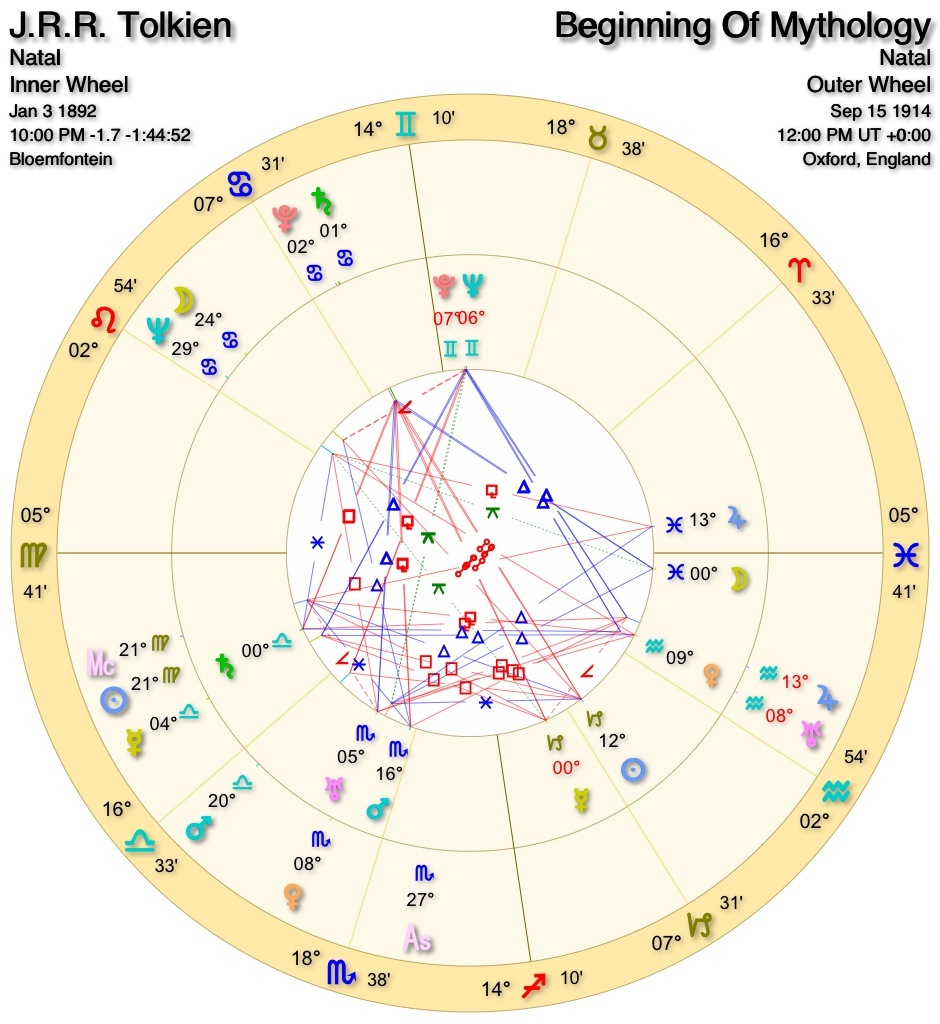

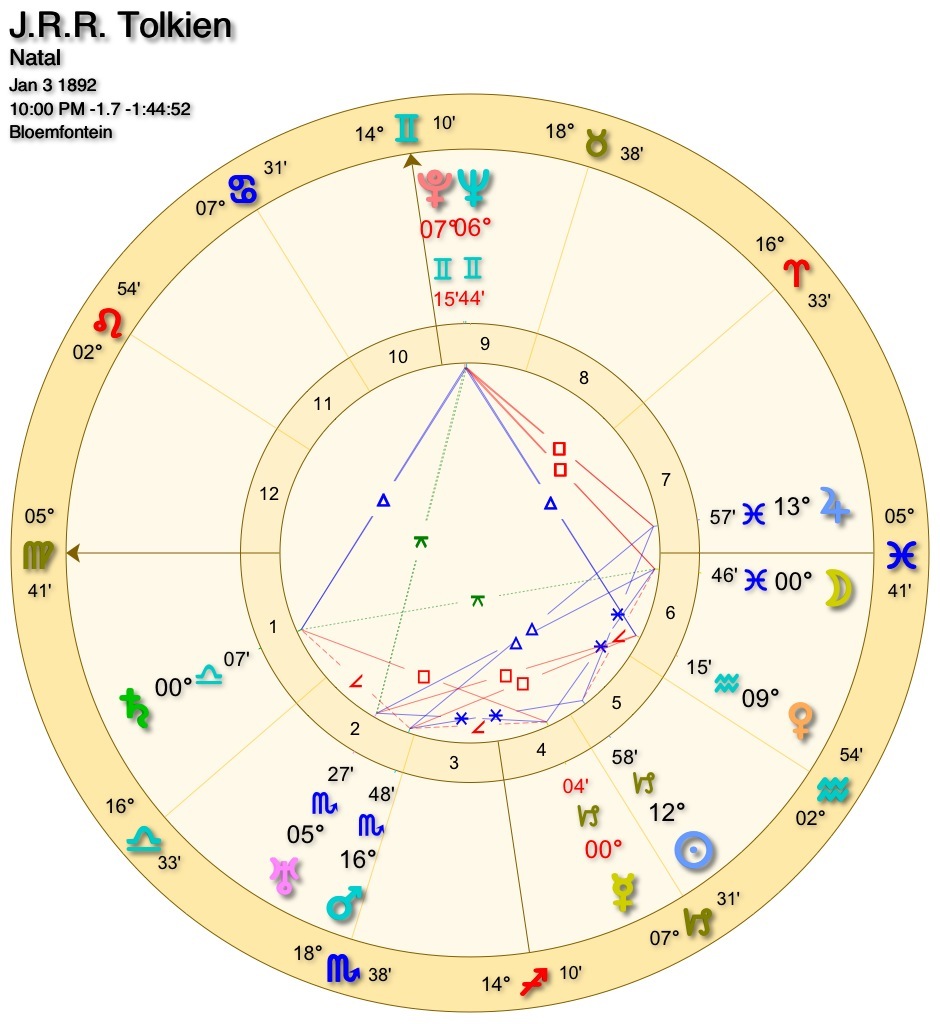

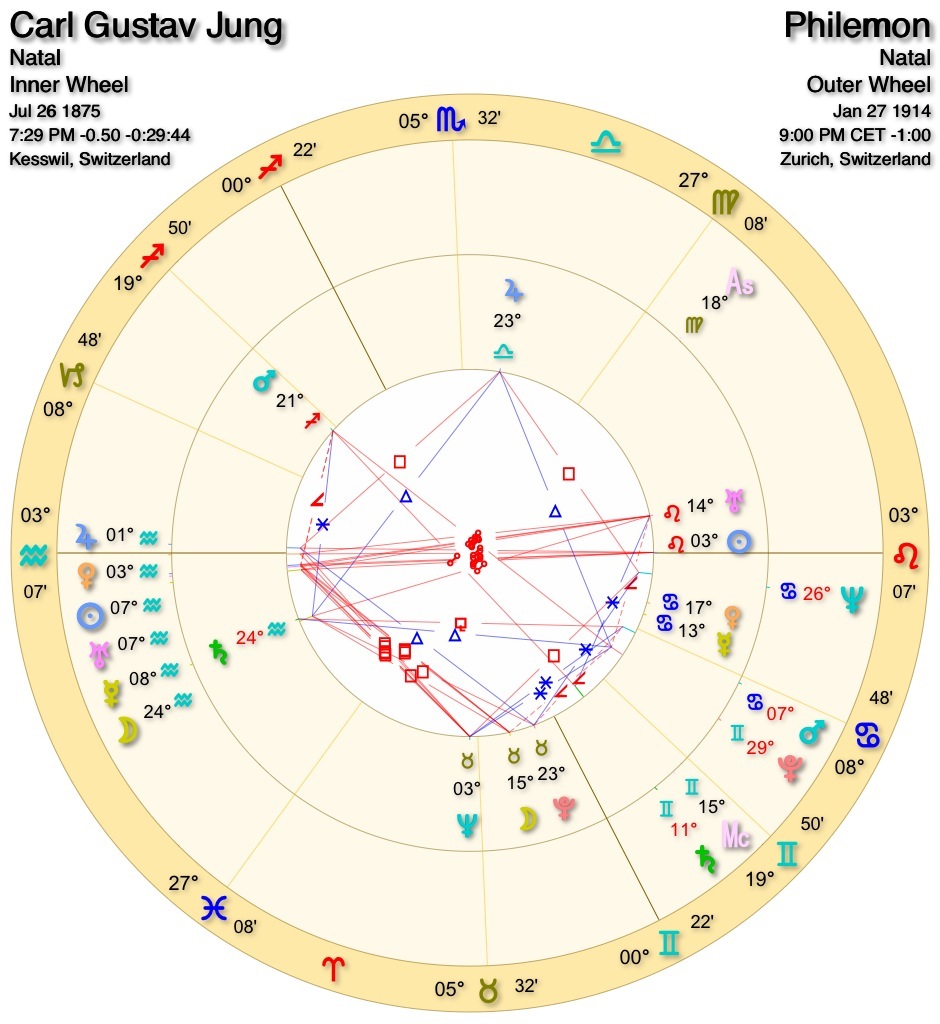
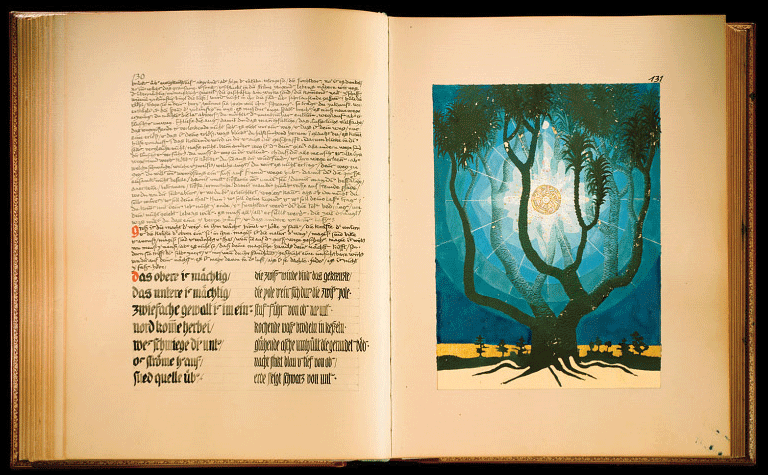
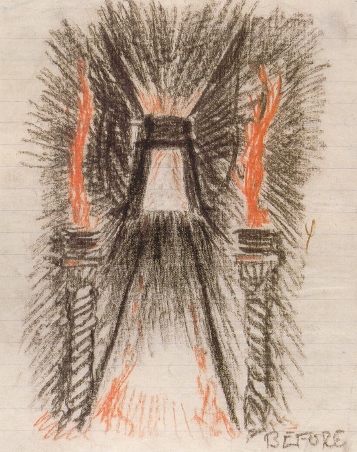


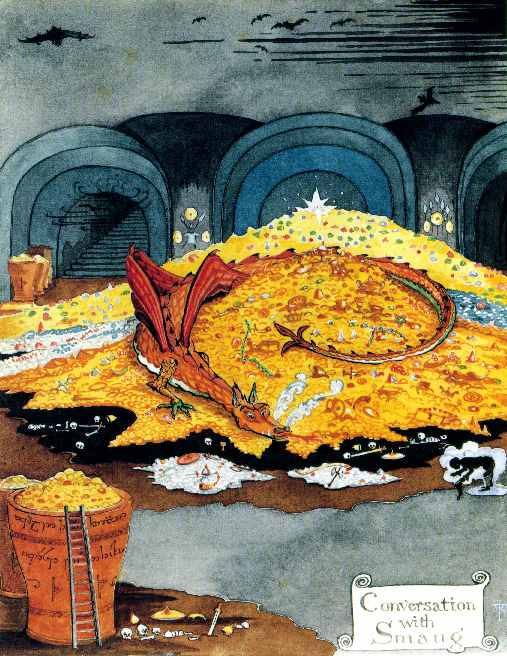





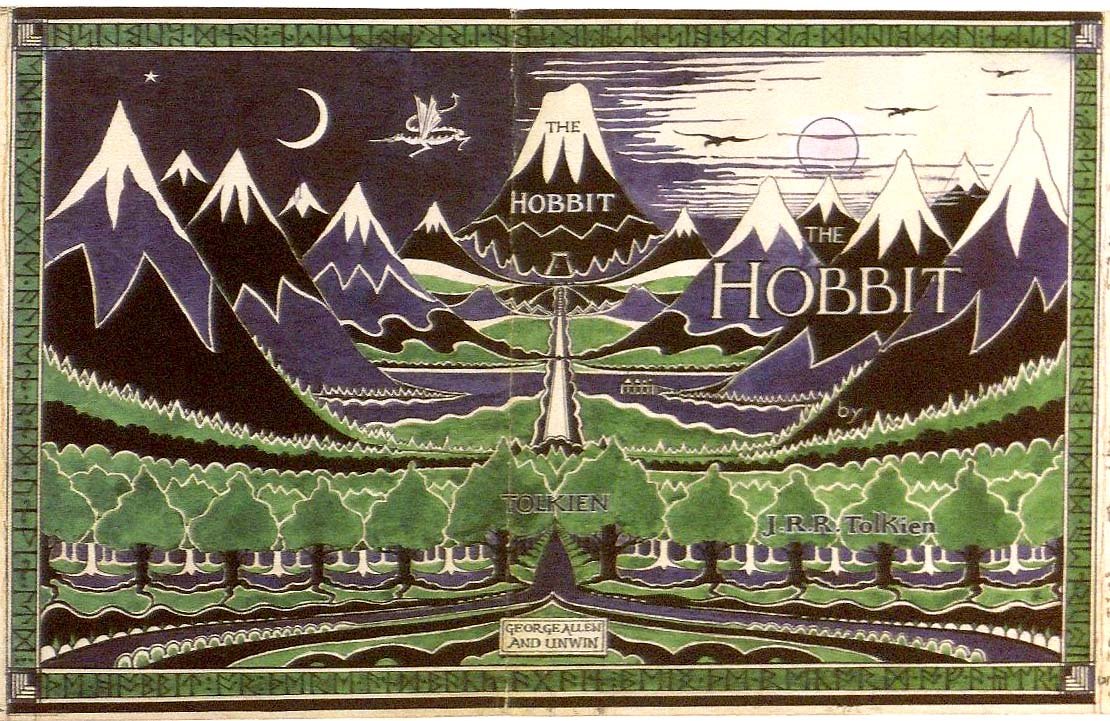


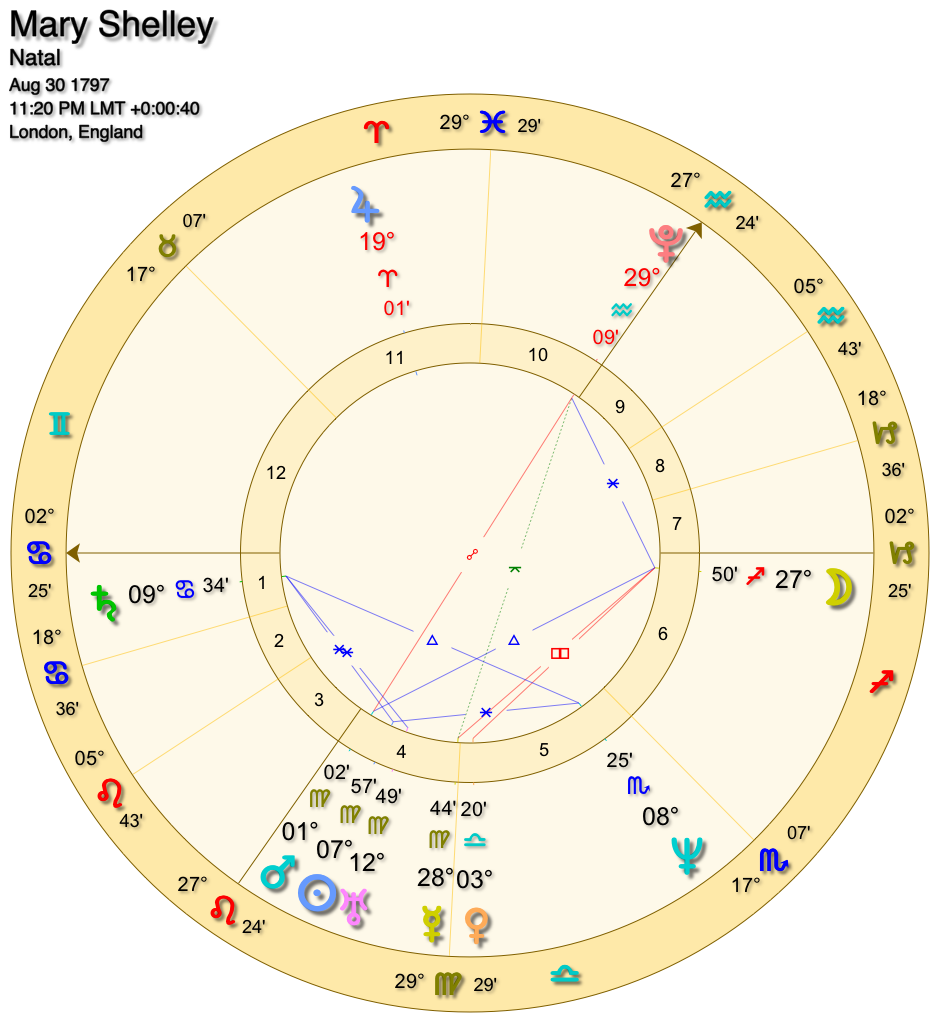
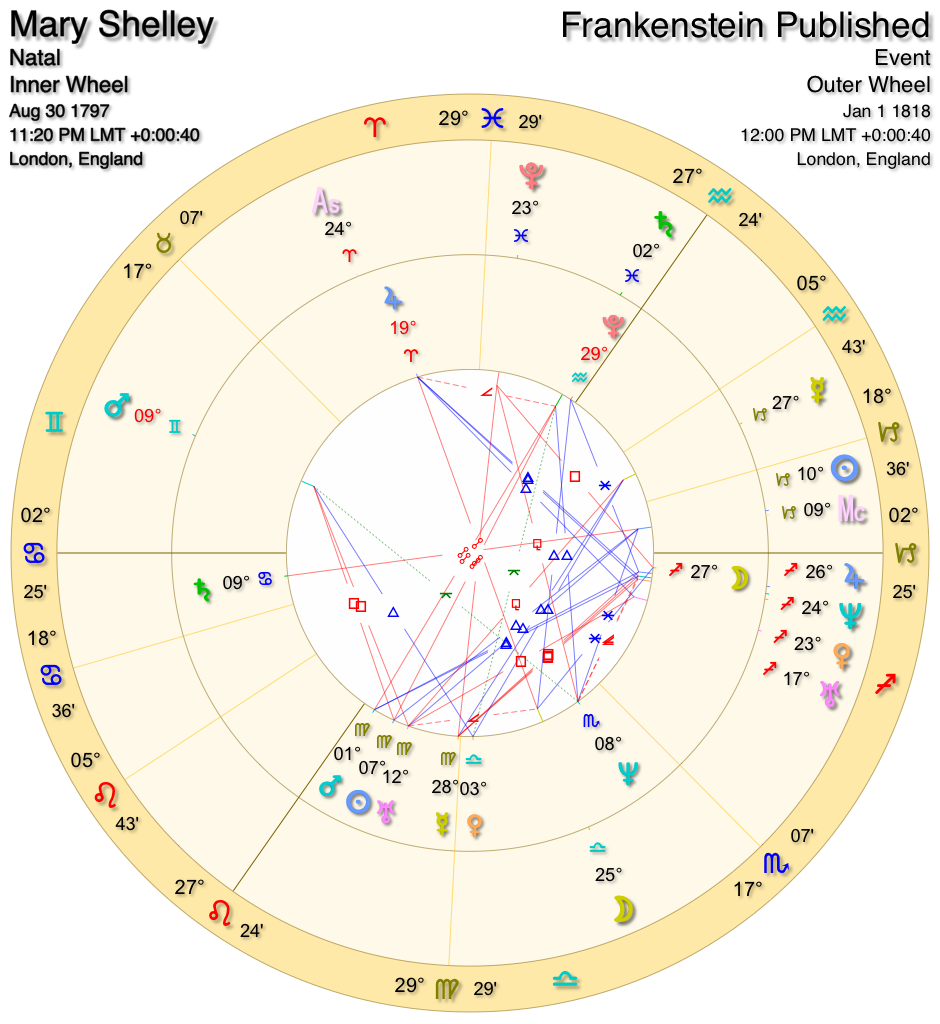


 Becca Tarnas