Strawberries & Cream: A Brief Play

Scene I

(A long shiny wooden table is set center stage with two large candelabras filled with lit candles. Everything in the room suggests wealth. The table is set with two small crystal bowls of strawberries cut up into cream and there is a tall glass of champagne at each place. A WOMAN sits on one end opposite from a MAN. They are both dressed formally in black and eating in silence.)

WOMAN: They’re the first strawberries of the season.

MAN: (Not really hearing her.) Mmm… that’s nice.

WOMAN: Six years… we’ve been doing this.

MAN: Hmm? Oh the strawberry thing? (With false enthusiasm.) Yeah, nothing like anniversary traditions.

WOMAN: (Beat) Why do you do that?

MAN: What do you mean?

WOMAN: Like just then! Why’d you have to write off what I said.

MAN: My god, what did I even say?

WOMAN: About our anniversary. You just, just, well it’s not what you said it’s the way you said it and ––

MAN: Why do women always say that?

WOMAN: See you’re doing it again! You just… dismiss me.

MAN: What–– You make it so hard for me to talk to you.

WOMAN: What?

MAN: Everything. Every little thing has to offend you.

(The WOMAN picks up her glass and takes a sip, then starts to cry.)

MAN: What’s the matter now? That’s your favorite champagne, I bought it especially for tonight.

WOMAN: You’re such a –– (Choked back by her tears.) It just reminds me that –– (Starts crying harder.)

(Long pause.)

WOMAN: (Controlling her tears.) It’s okay. I’ll be fine. It’s just, I can’t really take much more of this. (Pause) I had a dream last night. I woke up shaking. I’m actually surprised I didn’t wake you up.

MAN: I was… exhausted.

WOMAN: Doesn’t matter. (Beat) It’s hard to remember the beginning. Always is with dreams. But it was grey and foggy, I was young again, about sixteen or so I think. I looked… too beautiful really, but I knew it was me, yet it looked nothing like me at the same time. I just knew. I was in a forest; around me a hurricane was raging. It was dark, confusing, I couldn’t see. Suddenly this long hand, it–it had no fingernails, it was the size of me or bigger. It plucked me out of the forest and just threw me… away. Into nothing. (Pause, then starts again with difficulty.) I wasn’t anything anymore, just eyes––watching. Blackness was everywhere, but it was filled with stars. In the middle of it all was this wrinkled, hairless man, with… those hands. But he wasn’t a man. He was a demon. The devil. He was there in front of me, unimaginably huge. And he was plucking at this craggy little world which just floated in front of him. It wasn’t round. It was like a floating rock covered in little trees. That’s where I had been. And he had made that world-thing. As a toy for him to destroy. And his hands continued plucking at it… relentless, harsh. But then the world, it started to turn, and as it turned it just… left. It left him alone there in the blackness. And I saw it fade into the distance. It was free. Then these words were spoken, as if by some almighty voice: “It’s not round but it can still turn.”

MAN: Where are you going with this?

WOMAN: (Beat) I can’t do this any longer.

(Pause)

MAN: Oh. (Starts to cry.) Couldn’t we just…

WOMAN: No. Don’t you see? We’ve been over it so many times and… it’s just not going to work.

MAN: But… I love you.

WOMAN: I do too. But…

MAN: But what?

WOMAN: I have no power. Can’t you see that? We’re just… imbalanced.

MAN: So this ends because we don’t have balance?

WOMAN: I need… I need to have my own power first.

MAN: But… aren’t you happy?

WOMAN: No. (Beat) I thought it would work, but, last night, the dream… I’m shocked you didn’t wake up.

MAN: Over a dream you had? That’s why you’re leaving?

WOMAN: It left us! Don’t you see!? Last night it left us. I woke up covered in blood. Why didn’t you wake up?

MAN: (Starting to shake.) It… what?

WOMAN: I can’t try again. It’s too hard. (Pause) I want a baby so badly. I wanted our baby so badly. (Pause) And, and… you don’t. No, don’t argue. That’s why it won’t work.

MAN: The champagne… I didn’t even think. You… drank it…

(MAN comes over to WOMAN and holds her. They are both sobbing.)

WOMAN: I love you so much. I really do.

MAN: I know. Somehow that makes it harder.

(MAN and WOMAN hold each other for a long time crying and comforting each other for an uncomfortably long time. They make eye contact, then kiss, at first softly and then passionately. The WOMAN then breaks away and looks at the MAN with a deep sigh.)

WOMAN: I’m going to go now.

(WOMAN gets up to leave, is almost at the door when the MAN gets up and goes to her.)

MAN: Just one more.

(The look at each other as though about to kiss. Or not. Blackout..)


Scene 2

(A long table runs the length of the stage. It is covered in a long, white tablecloth which goes to the floor. The room around the table is dark. On the floor surrounding the entire table are hundreds of lit candles of different shapes and sizes. There is a large bowl of cream and an equally large bowl of strawberries which are right at the center. There is a bottle of champagne on the table and two empty glasses. Giggling quietly a WOMAN and MAN, who are both dressed in loose white linen clothes, climb up onto the table and crawl towards each other till they reach the center. They sit with the bowls in their laps and feed each other the strawberries with cream throughout the entire scene,)

WOMAN: They’re the first strawberries of the season.

MAN: (Speaking with his mouth full.) Mmm… that’s nice.

WOMAN: We should always do this.

MAN: Hmm? Oh the strawberry thing? Yeah, nothing like anniversary traditions.

WOMAN: We should make it an anniversary tradition!

(MAN pours two glasses of champagne and hands one to the WOMAN.)

WOMAN: Oh, no thanks.

MAN: What’s the matter? That’s your favorite champagne, I bought it especially for tonight.

WOMAN: I know, I’m just not… in the mood. Maybe… later?

MAN: Alright… (Looks at her for a long moment.)

WOMAN: I had a dream last night. It actually woke me up it was so real.

MAN: Yeah, I noticed you woke up. You didn’t seem upset or anything though, so I fell back asleep. I hope that was okay…?

WOMAN: Yeah, yeah, no of course it was.

MAN: (Stroking her hair.) Tell me about it.

WOMAN: It’s hard to remember the beginning. It always is with dreams. But it was grey and foggy, I was young again, about sixteen or so I think. I looked… too beautiful really, but I knew it was me, yet it looked nothing like me at the same time. I just knew.

MAN: Too beautiful? (Laughing) Huh, it couldn’t be too beautiful to be you. No one’s more beautiful than you.

WOMAN: Hmm… that’s nice to hear. Anyway, let me finish. I was in a forest and all around me a soft breeze was blowing. It was pale green, like in spring, and the light was coming through the leaves. I could see everything, every detail of every leaf. Suddenly this hand, bigger than me, came down and picked me up. I thought it would be terrifying, but I felt warm and safe and… enclosed. It held me so tenderly. All of a sudden I was pulled out of the forest and I was no longer myself. Just eyes watching. Blackness was everywhere, but it was filled with stars. In the middle of it all was this wrinkled old woman, with… those hands. But she wasn’t a woman. She was a god. The goddess. She was there in front of me, unimaginably huge. Floating in front of her was this perfect little world, a glowing egg covered in little trees. That’s where I had been. And she had made that world, as something for her to love. She held her hands around it, just barely touching it, and it turned in the warmth of her palms. And then she turned to me and the world left her hands and came toward me… and then, I don’t know. It just, filled me. The world was inside me.

(The MAN and WOMAN look at each other as though they are about the kiss. Then the WOMAN takes a cream coated strawberry and stuffs it into the MAN’s mouth and bursts out laughing.)

MAN: Where are you going with this?

WOMAN: Where do you think?

MAN: I… hmm.

WOMAN: Are you happy?

MAN: Right now? Of course. I have a beautiful wife, a––

WOMAN: No I mean, really happy. Deep down. Because I know we can’t… we don’t… have a lot. (She yanks her side of the table cloth to reveal the far end. The elegant table turns out to be a long chain of picnic tables all covered with one huge cloth.) You know.

MAN: That’s never bothered me. You know it’s never… why are you asking now?

WOMAN: Last night, the dream… (Beat) I always look forward to this time of year. When the world gets warm and safe again. Strawberry season. (She eats a particularly large strawberry.) Mmm. So juicy and sweet and… it’s worth the wait.

MAN: (Inwardly) Hmm…

WOMAN: You can’t just have them when you want. It has to be when they’re ready. That’s what makes them so worthwhile. (Beat) The time is ripe, I guess.

MAN: You mean…

(WOMAN nods with a twinkle in her eye, then throws her arms around the MAN and kisses him.)

MAN: Wow. Wow. I’m…. wow.

WOMAN: I know.

MAN: The champagne… I didn’t even think. You… didn’t drink it…

WOMAN: Mmmhhmmm.

MAN: I love you so much. I really do. It’s, well… I know it has bothered you sometimes but, well there are times when I would look at you and I would picture you pregnant. Glowing. And now… (MAN reaches out and puts his hand on WOMAN’s belly and rubs it softly. The both look at her belly for a long moment.)

WOMAN: So… let me ask again. Are you happy?

MAN: Are you kidding? Come here.

(MAN pulls woman toward him and they kiss with all the passion in their souls and then the WOMAN breaks away. She picks up the strawberry bowl and takes out the last strawberry and dips it in cream.)

WOMAN: Just one more. (The MAN and WOMAN share the strawberry, alternatively taking bites from it until it is gone.)

– End Scene –

Diner Booth: A Scene

(ANA and HENRY, in their late teens, are sitting on opposite sides of a booth table in a 1950’s-style diner which is filled with people, mostly families with children. The booth seats are deep cherry red. ANA is a young woman with full, red lips and long, sleek, dark hair which falls almost to her waist. She has a slender waist and full hips and breasts. She is entirely unaware of her own beauty. HENRY is small for his age and won’t get much bigger over his lifetime. He has bright, blond hair, an eager face and a twinkle in his light brown eyes.)

ANA: Wait, wait, pH stands for power of hydrogen? What. No way. That’s super cool. It sounds like intergalactic forces or something. Powers of hydrogen: the Almighty Ones. Buh-nuh-nuh-naaahhh. (Mockingly sings Beethoven.)

HENRY: I guess I never thought it was cool: power of hydrogen. (laughs) I’m such a nerd for knowing the def for that.

ANA: Nahh… well actually yeah, but you know all of us are nerds really. Anyway, we’re like the sexy nerds, you know? Who are all into LOTR and Han Solo and shit. Not those nerds who are, like, living under rocks eating pond scum right? We’re like, badass.

(HENRY and ANA both laugh.)

HENRY: So speaking of nerd-dom, I was talking with your grandma yesterday…

ANA: Whyyy?

HENRY: I, uh, needed some advice. Figured being an “elder one” and all she’d have some useful knowledgeables in her.

ANA: Yeah, you’re pretty nerdy asking my gran for life advice. So what was it?

HENRY: What?

ANA: Yoouuu knoooww.

HENRY: Umm…

ANA: Dude, just tell me what you asked her about. We’ve like, known each other forev’s so just spew it out already.

(During the following line ANA looks at HENRY with big eyes while sipping from a giant coffee cup.)

HENRY: Umm, ahh… huh, yeah it sounds – well we were talking about…um…huh. Oy okay – stop looking at me like that – uh, (with wavering voice) love?? – yeah, okay, umm…

(Very long pause filled with copious amounts of blushing.)

ANA: (Staring down into her cup.) Oh. (smiling mischieviously) Nerd.

(HENRY and ANA look at each other for a long moment, breathing heavily. “Hold Me” by Fleetwood Mac is playing on the jukebox. Suddenly HENRY gets up, moves over to ANA’s side of the bench. He never breaks eye contact. Then HENRY leans in and starts kissing ANA with the deepest passion of his soul. His hand moves up her thigh and she gasps loudly. Then, without removing their clothes at all, they begin to have passionate sex in the booth.)

ANA: Oh god…god, oh god!

(People in the diner start to stare and suddenly there is a general uproar as parents try to screen their children’s eyes.)

PARENTS: (overlapping)

Don’t look!

Come here!

Grab the coats! Now!

What a disgusting place! I’m never coming back!

(A five-year-old CHILD breaks free from his MOTHER’s grasp and runs towards HENRY and ANA, who are entirely oblivious to the entire scene around them. The CHILD kneels on the seat of the opposite booth and gazes at the couple.)

MOTHER: Come back here! What are you doing? Don’t look!

CHILD: But why not?

MOTHER: Because! It’s filthy!

CHILD: No. It isn’t. (smiles and returns to looking at the couple) It’s life!

(Blackout. Lights fade up and everything is set as it was at the opening of the scene with ANA and HENRY on opposite sides of the table.)

HENRY: Well, yeah. I’m a nerd, but I’ve known for, like, ages that you’re into me. You’re not that great at hiding it. Anyway, you’re a nerd toooo….

ANA: Okay. (pause) Yeah I do. (blushes deep crimson) But don’t look at me like that. OMG you’re totally having dirty thoughts right now! (giggles heartily)

HENRY: (taking ANA’s hand and smiling) Yeah?

Emma Rose: A Monologue

(EMMA ROSE is sitting in a rocking chair holding a cup of tea. The light catches the steam rising from the tea. Her granddaughter is sitting at her feet.)

EMMA ROSE: Yes… yes… oh yes. I know what it is you’re feeling. I know… I know it’s hard to believe I was once as young as you. But I was. Oh yes… I was. I even looked like you. It’s like you were my own daughter. My own daughter… (Pause) she doesn’t look like me, your mother that is. No, she looks like her father. She could always make me smile. She has his eyes… his eyes.

But yes, don’t let me get distracted. Yes, yes… oh yes, I’ve felt what you’re feeling. I’ve felt it. I was not much older than you are, just eighteen or so. Yes, I was eighteen, I remember. And he was perfect… unattainable. He made me so nervous my heart would quiver in my throat. Yet I didn’t know. Just his subtle hints… I always wore my hair up to keep it out of my eyes. It was long then, even longer than it is now – if you can believe that! And, one time I took it down, shook it all out. Just shook my mane of dark, dark hair. It was more wild and tangled than your hair is, not so sleek and beautiful. (She strokes her granddaughter’s hair.) He saw me take down the mane and he just glanced up casually once, and said, “Your hair looks pretty like that.” Pretty like that, that’s what he said. And then he just went back to what he was doing. He later told me that he once picked a huge bouquet of wild flowers, but let them die, all hidden away, because he couldn’t bring himself to give them to me. Hmm… he was sweet indeed.

You are such a blessing in my life. Such a woman… blooming, blooming right before my eyes. What a lucky young man this love of yours is. Does he know? (Her granddaughter shrugs her shoulders.) You don’t know? Oh he knows… oh yes, yes he knows. He’s a lucky one. (Laughing) Probably terrified. Indeed… a very lucky one. Your father was lucky too, lucky to be with my beautiful daughter. And she has… his eyes… (She trails off into silence.)

I’m sorry, look at me getting distracted now. Yes, we were out one night just talking. He and I. Talking about the things in life that you feel are so serious and important when you are young. And I remember the stars that night. I’ll never forget the stars. We were lying on our backs, buried in the damp grass, staring up at them. There was a whole world opening up above us that just went on and on and on… forever. It was so big and overwhelming that it made me feel safe. Safe in how small I was, safe in how unimportant I was. Yet, hmm… I felt honored. Honored to still be a part of it. And the stars kept winking to each other, winking like they knew what was about to happen, whispering amongst themselves. I stared up at that huge expanse and gave myself over to it. Suddenly I was brought back to earth. He had kissed my hand. So softly, so tenderly and with so much longing. He kissed my hand. I could see those stars reflected in his eyes. Deep, like a reflection in a still pool. He kissed me then. Full, young lips joining in trembling perfection.

I was doomed. From that moment on, I was his. I still am his… wherever he is now. Wherever he is… We woke up in that grassy field covered in dew and golden rays. Oh yes, yes… I am his. I always was, always will be. Of course I miss him. Wherever he is. He’s part of those stars now. He is up in that wide open space. No wonder it made me feel so safe that night. I’ll join him soon. Oh yes… He’s a lucky one, your young man. Oh yes. You’re a lucky one. Yes… we were the lucky ones.

Wyvelsfield

The day was grey and windy and drops of fog clung to the soft, dark curls surrounding the little girl’s face. She was holding a bouquet of golden daffodils in one clammy hand, while the other clung to the hand of her mother. Her mother’s hand was dry and cracked from washing dishes and cleaning house. The little girl bent down and laid the flowers at the base of a black marble tombstone set deep in the damp grass. Across the face of the stone were carved images that set the little girl’s imagination to work. On the left side of the stone was carved a forest of pines, while on the right was a magnificent castle perched upon a cliff. Between the images was the inscription:

Merk Malcolm 1914 – 1986

Doris Malcolm 1920 – 1990

Mr. Merwin Eldred Schlarbaum hated his Christian name. His father’s best friend protested the name and insisted the baby boy be nicknamed Merky. World War I was nearing its end by the time Merky was four years old, and his father chose to change the family name which tied them to the then-despised Germans. He shed the name of Schlarbaum, whose sound when spoken with a Canadian accent did not reflect its meaning “Tree of Paradise,” and instead adopted his mother’s maiden name, Malcolm.

By 1939 Merky, then known as Merk Malcolm, set out from his home in Campbellford, Canada and traveled with a friend to Europe. Upon reaching Scotland, the Second World War broke out and Merk was stranded for the time being. While using his engineering training as the manager for wartime projects, Merk chose to live in Wick, Caithness on the north-eastern tip of Scotland.

Wick was a tiny fishing town with its harbor open to the cold, blue waters of the North Sea. Thousands of fishing boats came in daily, bearing pounds upon pounds of fresh herring. The docks were steeped in the tangy scent of fish and the sky was blocked out by the swooping wings of gulls.

Mr. Malcolm, upon arriving, took to exploring the town, all four corners of which could be reached within an hour from any point. He stopped in front of a classy hotel and glanced up at the swinging metal sign. The letters, spelling “Station Hotel” stood out clear and gold on a crimson background. He stepped over the threshold and noticed he barely had to lift his foot, the wooden step was so worn by passing feet. Above the light-filled entrance was a glass portico with great metal arches. A chipper old man standing behind the counter greeted Mr. Malcolm with a Scottish accent thicker than pea soup. After paying at the counter Mr. Malcolm was shown to his room. The furniture had a refined but well-used look to its deep mahogany wood. He walked across the room to set his suitcase down by the roll-top desk. The brass plate on the desk said “Mackenzie’s Furnishings” in a curling script.

That night, as Mr. Malcolm lay between the flannel sheets, he realized he could not afford to stay in a hotel for an indefinite amount of time while the war raged on in Europe. The next morning he got up early and walked to the old stone church at the upper end of Wick. It stood overlooking the bridge which spanned the mossy green river that traveled out of the mouth of the harbor. Looking up, Mr. Malcolm saw the river wind its way up through thick, pink and green grasslands dotted with white sheep.

Mr. Malcolm walked into the holy stillness of the church. He had come here to find someone with whom he could stay, because he believed the most trustworthy people could be found through the church. Reverend Sinclair, also called the Reverend R. R., was standing at the back of the church with a handwritten sermon in his hand. Reverend Sinclair was known for his lengthy speeches, one of which was interrupted well before the end by a little girl yelling “Amen, Reverend Sinclair! Amen!” The slight breeze from the open church door ruffled the Reverend’s greying, patchy hair. He looked up when he heard firm footfalls on the cold stone aisle.

“My name is Merk Malcolm,” the young man said with his over-pronounced Canadian vowels. “I was wondering if you could possibly help me find a family to stay with in Wick. I’m working now as a project manager for the war effort.”

“Ach, I see,” the Reverend said, “Well, the Mackenzies are taking in officers at the moment.”

Mr. Malcolm smiled gratefully and nodded. Mackenzie, he thought. The name sounded familiar.

The following morning Mr. Malcolm could be seen trudging up the hill from the bridge carrying his one suitcase. The “Scottish mist” that had begun half an hour before had filled the collar of his coat with water and plastered his dark hair to his head. At the top of the hill the streets leveled out and he turned right onto Thurso Street. Glancing at the damp slip of paper in his hand, Mr. Malcolm double-checked that the address was number six. The house was called Wyvelsfield. 6 Thurso Street. Walking on the right side of the street under a row of beech trees he looked left until he saw the brass address glinting through the rain: 6 Thurso Street.

Mrs. Mackenzie, affectionately called Mrs. Mack, was just finishing her early morning porridge. She sat erect in her chair at the foot of the table with her red hair pulled back in a tight bun and her pale lips pursed. Her lack of working taste buds concealed from her the fact there was more salt in her porridge than porridge. A normal mouth would be turned inside-out from the taste, and children were known to bring their spoons near their mouths and then drop the porridge into a well-concealed napkin. But to Mrs. Mack the porridge tasted fine.

In an old Scottish saying, an Englishman was berating a Scot for eating oats, which the English found only fit to feed to their horses. The Scotsman replied airily, “That’s why the English are known for their horses, while the Scots are known for their men.”

Mrs. Mack was just finishing her tasteful porridge when a tall, dark-haired, handsome man walked in through her front gates. Oh, she thought to herself, it must be one of those young officers to live with us. He looks well enough, though I fear this may bring trouble. And she rose from her chair with a sigh.

At the heavy knock, Mrs. Mack opened the front door. She greeted her guest with warmth and made her introductions.

“Oh,” she said, “And I have a daughter who’s in the giggly stage.”

Mortified, the eavesdropping, nineteen-year-old Doris Mackenzie was determined to prove her mother wrong. Miss Mackenzie was not the type of girl who cared much for what people thought of her. She was rather mischievous and had been known to steal fishermen’s dinghies and to set dozens of barrels of fish rolling along the docks.

Composing herself at the top of the grand spiral staircase, Doris pinched her cheeks and straightened the fashionable dress which showed off her petite waist. She laid her hand on the polished wood banister, her hand sweating slightly. Setting her foot on the first green carpeted step, Doris began gliding down the staircase. She glanced once at the handsome stranger at the foot of the stairs and nearly blushed. His eyes were following her every movement. However, she kept her head held high and her eyes straight ahead.

Suddenly, three steps from the bottom the toe of Doris’ little black shoe caught on the carpet. Both of her feet flew out from under her and all of her five-foot-two frame went tumbling down the remaining stairs. She landed in a disgruntled heap at the stranger’s feet. With apparent perfect dignity Doris held up her hand from where she was crumpled on the floor and, with her nose in the air, said, “I’m Miss Mackenzie.”

Cupid’s bow twanged.

Standing by the tombstone on the cold, grey day I knew the story of how my grandparents had met. For years I made up fantastic stories about my grandmother who had once lived in a great castle up in Scotland. The spiral staircase to me was larger than Jacob’s Ladder, and I pictured my beautiful grandmother tumbling not down just the last three steps, but from the top of the stairs all the way to the bottom in flying somersaults. As I grew up I realized that while the fairy tales I had imagined for my family might not be quite factually true, I did come to recognize that the true love at the end of fairy tales did exist and endure between my grandparents.

The Scarlet Lady

The crimson mist a lady formed,
Who stepped out from the crescent moon,
And while my heart raged and stormed,
She turned away and left too soon.

I called to her in wretched sorrow,
And she turned and said to me:
“I’ll come back again tomorrow,
As always was and always will forever be.”

Scarlet tears consumed my sleep,
Each bloody pearl through darkness gleamed,
Splashing in a pool hid deep,
Where vaporous dreams upward streamed.

Tempting Fate: A Song of Experience

Round about the candle flame
Moths play their dangerous game.
Illuminating their dusty wings
The light tempts those flighty things.
Daringly one tests his fate,
But alas! It is too late!
The flame trapped her foolish prey,
Warning the rest to stay away.

Youth’s Sweet Romance: A Song of Innocence

As dawn breaks and lights the sky,
The trees, the brooks, and birds that fly,
I drink deeply from the world around
That’s filled with life, love and sound.
Everywhere adventures wait,
Where I can find the hidden gate
To unlock secrets of the world
That never yet have been unfurled.
Enchanted by youth’s sweet romance
Amongst woodland sprites I sing and dance.
Each living thing speaks to me,
From softest shoot to tallest tree.
Then twilight casts her spangled net
Around the blinding gold sunset.
She whispers that this day is done,
And bids farewell to the sun.
As sleep ushers me to bed
Sweet lullabies fill my head,
And I dream of time gone by,
Of trees, and brooks, and birds that fly.

Hîr I Chorvath: An Elvish Poem

Hîr I Chorvath

Sen sir am le im linnathon
Min gwanod o athra i aearon,
Uin rhovan dôr od Ennorath
Di ir silivren elenath,
Sin lach sui celair sui miriel
Thanant na i arod Gilthoniel.

I ambar ne apa i rima mornië
Mi raxalë ho i corma laurië,
Nertë nildor hehtae i lómë
Ar oantë i ambar apa undómë,
I perian oantië lá i hisië
Ar quentë ana Endórë namarië!

Translation
The Lord of the Rings

Upon this day I will sing to thee
One tale from across the great sea,
Of the wild land of Middle-Earth
Beneath the glittering host of stars,
Those flames as brilliant as jewels
Kindled by the royal Gilthoniel.

The world was on the edge of darkness
Endangered by a golden ring,
Nine friends forsook the night
And journeyed through the twilit world,
The halfling passed beyond the mists
And said farewell to Middle-Earth!

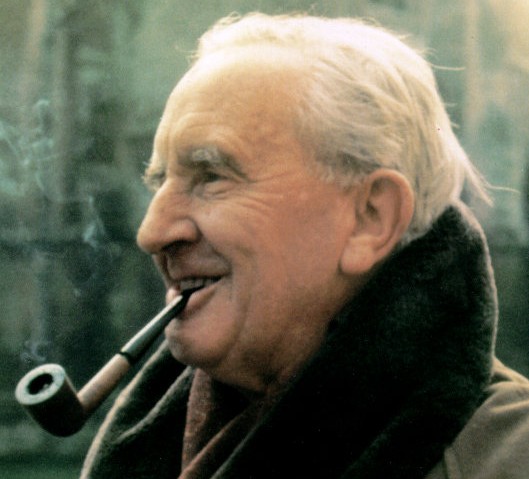
A Myth for Our Time: The Work of J.R.R. Tolkien

This was my first foray into the world of Tolkien studies, an essay I wrote at age 17 that captures my earliest scholarly perspectives on the tales of Middle-Earth and the man who brought them into written form. 

“All we have to decide is what to do with the time that is given us.”

J.R.R. Tolkien gave to our time a reenchanted image of our world in his mythological epic The Lord of the Rings. He lived through many deep experiences, losses, and challenges, and it was from this journey of life that the noble and timeless vision of the mythology of Middle-earth was born. The Lord of the Rings gives an enchanted view of our world in which the individual comes to possess the willpower to carry the weight of the world, enabling him or her to overcome the evils present in both the inner and outer journey.

John Ronald Reuel Tolkien was born January 3, 1892 in Bloemfontein, South Africa. He was born to British parents, Arthur Reuel Tolkien and Mabel Suffield. When Tolkien was only three years old he moved back to England with his mother and younger brother Hilary. The following year Arthur Tolkien died of a severe hemorrhage, leaving his family with very little money. For the following four years Tolkien and his family lived in a little home in the countryside of Sarehole. Later in life Tolkien said those early years in Sarehole were the most formative part of his life. It was there that his great affection for nature, especially trees, developed. “He reveled in his surroundings with a desperate enjoyment, perhaps sensing that one day this paradise would be lost.”

Tolkien’s connection with his mother was one of the strongest relationships he had in his lifetime. While they were living in Sarehole, Mabel Suffield chose to convert from her family’s faith of Unitarianism to Catholicism, against her family’s wishes. Tolkien saw how much her faith meant to her and how much she suffered for it. In part because of her, Tolkien’s faith became a central aspect of his character. Mabel Suffield educated her two sons at home before they attended grammar school. She taught Tolkien Latin, French, and German and encouraged him not only to learn languages but to love them. In the course of his life he learned nineteen languages and came to invent another fourteen while also making a career as a philologist. Language became the roots of his Middle-earth mythology.

In 1904 Mabel Suffield’s health began to deteriorate. She spent much of her time in bed but recovery soon proved to be impossible. On November 14, when Tolkien was twelve years old, his mother died, leaving her two sons as orphans. When she died Tolkien’s religious faith and his love of languages were solidified within him, and he devoted himself passionately to them. At this time Tolkien began to see the loss and tragedy life presents us with. In a scene in The Lord of the Rings one of Tolkien’s hero characters, Aragorn (also called Strider), begins to tell a tale of Middle-earth. “‘I will tell you the tale of Tinúviel,’ said Strider, ‘. . . It is a fair tale, though it is sad, as are all tales of Middle-earth, and yet it may lift up your hearts.’” The tales of Middle-earth carry the same emotions and themes that we experience in our own world today.

In the course of Tolkien’s school career he made three very close friends: Christopher Wiseman, Robert Quilter Gilson, and Geoffrey Bache Smith. They were the four members of the Tea Club, Barrovian Society, also called the T.C.B.S. Much later in his life Tolkien was part of a literary group who “with a blend of wit and humility” called themselves the Inklings. One member of the Inklings was Tolkien’s closest friend and colleague, C.S. Lewis. Both of these social groups established in Tolkien a deep sense of camaraderie and fellowship, a theme that is also carried throughout his mythology. In 1916 the four members of the T.C.B.S. joined the British forces in World War I. The horror of the trenches stayed with Tolkien his entire life. Two members of the T.C.B.S, Gilson and Smith, were killed in action. Before he died G.B. Smith sent Tolkien a letter saying,

Death can make us loathsome and helpless as individuals, but it cannot put an end to the immortal four! . . . May God bless you, my dear John Ronald, and may you say the things I have tried to say long after I am not there to say them, if such be my lot.
Yours ever,
G.B.S.

It was these words that set Tolkien to work creating a mythology for England. He felt that unlike other cultures, such as the Greek, Finnish, and Norse, the English did not have their own mythology. In Tolkien’s mind the Arthurian legends did not suffice, because they contained Christianity. The first idea for the mythology came from an Old English poem called Crist by Cynewulf. From two of the lines were born his first character and the name for the land of his creation.

Eala Earendel engla beorhtast
offer middangeard monnum sended.
Hail Earendel, brightest of angels,
Above Middle-earth sent unto men.

His first stories developed into what was much later published as The Silmarillion. They were tales about the creation of Middle-earth and the events that followed. Middle-earth was the same as our earth but set in a different time.

Meanwhile Tolkien’s external life continued and he married and had three sons and one daughter. His wife, Edith Bratt, was the source for the character of the Elven lady Lúthien Tinúviel. Their life together is reflected in two love stories set in Middle-earth: that of Beren and Lúthien, and that of Arwen and Aragorn. Today Edith and Tolkien are buried under the same tombstone bearing the unusual epigraph:

Edith Mary Tolkien, Lúthien, 1889–1971.
John Ronald Reuel Tolkien, Beren, 1892–1973.

Tolkien had a very deep connection to his wife, which he portrayed beautifully in Aragorn’s final farewell to Arwen in “The Tale of Aragorn and Arwen.” “In sorrow we must go, but not in despair. Behold! we are not bound for ever to the circles of the world, and beyond them is more than memory. Farewell!” Although a Christian, Tolkien was still open-minded to accept that neither he nor anyone else truly knew what followed death.

The brilliant storyteller in Tolkien came through in two very different forms. The first was the grand mythology set out in The Silmarillion with its high, eloquent language; the second was his love of creating fairy-tales and adventures to tell his children. One day while grading tests for one of his classes at Oxford, Tolkien was struck by an idea and wrote down the simple sentence, “In a hole in the ground there lived a hobbit.” Hobbit is a derivative of the Old English word hol-bytla meaning “hole-dweller.” Tolkien, however, didn’t figure out this meaning until long after his discovery of their existence in his imagination. Throughout the creation of Middle-earth Tolkien felt that rather than inventing the stories and characters he was discovering them. He felt that these tales were being channeled through him and that he was merely “sub-creating” their existence. (Sub-creation was a term Tolkien came up with to describe his feeling of discovering his stories and characters rather than inventing them.)

Hobbits are a little people of a land called the Shire located in the northwest of Middle-earth. “Hobbits are an unobtrusive but very ancient people” who “love peace and quiet and good tilled earth.” “They dressed in bright colours, being notably fond of yellow and green; but they seldom wore shoes, since their feet had tough leathery soles and were clad in a thick curling hair, much like the hair of their heads, which was commonly brown. . . . Their faces were as a rule good-natured rather than beautiful, broad, bright-eyed, red-cheeked, with mouths apt to laughter, and to eating and drinking.” The Shire is primarily based on Tolkien’s childhood home of Sarehole and the hobbits resemble the ordinary folk of the English countryside. Tolkien even considered himself to be a hobbit “in all but size” and there are remarkable similarities between himself and the hero of The Hobbit, Bilbo Baggins. The discovery of the good-natured, three-foot high, hairy-footed hobbits was the missing link to bring the rich mythology of The Silmarillion and the children’s fairy-tales together into one.

Tolkien set The Hobbit in the third age of Middle-earth, thousands of years after the events of The Silmarillion. The Hobbit tells of the adventures of the hobbit Bilbo Baggins who traveled with a company of thirteen dwarves and the wizard Gandalf to the Lonely Mountain of Erebor to regain the dwarves’ stolen treasure. Along the way Bilbo picks up a magic ring that makes its wearer invisible. He found the ring in a cave where its previous owner, the slimy creature Gollum, had accidentally dropped it. Unbeknownst to both Bilbo and Tolkien, this ring had more power than was first apparent.

The Hobbit was published in 1937 and was an unexpectedly huge success. Soon there was great public demand for more stories about hobbits. Tolkien set about writing a sequel the same year that The Hobbit was published, and the theme he chose to develop was that of this particular ring. Over the next twelve years, with unending encouragement from C.S. Lewis, Tolkien’s story became his life’s masterpiece, The Lord of the Rings.

In The Lord of the Rings, Bilbo’s little ring turns out to be the ruling Ring forged by the Dark Lord Sauron who plans to regain it and rule all of Middle-earth. The One Ring has the power to corrupt all that bear it. One who keeps this Ring of Power “does not die, but he does not grow or obtain more life, he merely continues, until at last every minute is a weariness.” It stretches the life already given to its bearer so that his life becomes a mere shadow of what it once was. It becomes the task of Bilbo’s young cousin Frodo Baggins to destroy the One Ring by throwing it into the volcanic Mount Doom in Sauron’s land of Mordor, the place where the Ring had been forged centuries before. Along the way he is followed by the creature Gollum who left his cave in search of his precious ring. The Ring is guarded by a fellowship of nine of the free peoples of Middle-earth: the four hobbits Frodo, Sam, Merry, and Pippin, Aragorn lord of the Dúnedain, Boromir captain of Gondor, Legolas the Elf of Mirkwood, Gimli the Dwarf of Erebor, and the wizard Gandalf the Grey. Throughout the story each member of the Fellowship of the Ring meets challenges both from the outside world and within himself. Each member must face his challenge by finding inside himself what he needs to overcome it.

The Lord of the Rings gives three profound gifts to our time. All three of these gifts reflect Tolkien’s ability to recognize the mythic, enchanted quality of life: first, the recognition that the individual may be called upon to carry the weight of the whole, to bear the fate of the world; second, the reenchantment of the natural world, the recognition of the soul of nature which is filled with deep meanings and purposes; and the recognition of the battle between good and evil both in the external world and within each individual person.

Although The Lord of the Rings has many heroes, Frodo is truly a hero for our time. He is a humble character; he is not born a hero but grows into one. At the Council of Elrond, where the fate of the Ring is decided, Frodo takes upon himself the laborious task of the Ring’s destruction. The nature of the task is so great that no one could possibly impose it upon another, and it is only by Frodo’s willingly choosing to bear it that Middle-earth could be saved. Furthermore, Tolkien portrays Frodo as a hero who depends on others throughout his journey, and willingly accepts that help. Although the Ring was primarily Frodo’s burden he could not have accomplished his task without the help and support of others: a true friend like Samwise Gamgee, a wise mentor like Gandalf, a steadfast group of comrades like the Fellowship. It was the loyalty and courage of Sam that allowed Frodo to see his task to the end.

Tolkien’s reenchantment of the world is most evident in his portrayal of nature. The love of nature that was formed in his youth literally comes alive in his creation of Ents. Ents are tree-herders who resemble talking, walking trees. As the Ent Treebeard says, they have a deep love of nature that a human is not capable of. When asked the question of whose side he is on in the conflict with Sauron he replies,

I am not altogether on anybody’s side because nobody is altogether on my side, if you understand me: nobody cares for the woods as I care for them, not even the Elves nowadays.

In Middle-earth, nature has its own soul and purposes; it does not need humanity to be more than it already is.

Tolkien recognised that the conflict of good and evil has existed in the world throughout all of time. In The Lord of the Rings there are two very strong examples of this conflict. In his lifetime Tolkien saw how the new technology of the modern world began to overpower and destroy the beautiful countryside which Tolkien so greatly revered. Tolkien saw Sauron’s Ring of Power as a machine, something that took away the free will of humanity. The battle for Middle-earth was to reinstate that free will in both humanity and in nature.

The other great conflict of good and evil is in the parallel stories of Frodo and Gollum. Frodo is the angelic hero who is barely eluding the grasp of the Ring’s evil power. Gollum, or Sméagol as he was once known, was a hobbit whose mind was poisoned by the Ring for five hundred years while it lay in his possession. In his loneliness and his struggle he began to speak to himself, creating two separate personalities: Sméagol, the naive hobbit, and Gollum, the slimy creature enslaved by the Ring. Both Frodo and Sméagol fight to overthrow the temptation of the Ring; Frodo so that he may destroy it, Sméagol so that he may be free of the hold that the Ring has on his mind. However, it is only through their joining together, a compromise and interaction between good and evil, that the destruction of the Ring can actually be achieved. The struggle, or battle, of life is to recognise and overcome this evil present not only in the external world but also, more importantly, within ourselves.

The profound message carried by The Lord of the Rings is that each individual person on this earth has a task that they must fulfill. The world will provide obstacles but in the end it will be those obstacles that make us strong enough to complete the task we have taken upon ourselves. The task Tolkien unconsciously took upon himself was to give this message to the world in the form of his book. The Lord of the Rings renews a timeless tale that has lived throughout history, the story of the heroic quest of the individual human being. The Lord of the Rings truly is a mythology for our time. It reminds us of what we are each capable of doing.

Works Cited

Carpenter, Humphrey. J.R.R. Tolkien: a biography. 2nd ed. New York: Houghton Mifflin Company, 2000.

Curry, Patrick. Defending Middle-Earth. 1st ed. Edinburgh, Scotland: Floris Books, 1997.

—. Telephone interview. 07 May 2005.

“J.R.R. Tolkien: Biographical Essay.” Concise Dictionary of British Literary Biography, Volume 6: Modern Writers 1914-1945 1991 (updated 04/07/05) Biography Resource Center. The Gale Group, Inc.. S.F. Waldorf High School Library. 13 Apr 2005 <http://galenet.galegroup.com/servlet/BioRC >.”J(ohn) R(onald) R(euel) Tolkien: Sidelights.” Contemporay Authors Online 2005 (updated 02/24/05) Biography Resource Center. The Gale Group, Inc.. S.F. Waldorf High School Library. 13 Apr 2005 < http://galenet.galegroup.com/servlet/BioRC >.

Noel, Ruth S. The Languages of Tolkien’s Middle-earth. 1st ed. Boston: Houghton Mifflin Company, 1974.

Murrel, Alex . “The Inklings.” New View Spring 2004: 24-30.

Tarnas, Richard. Personal interview. 24 May 2005.

Tolkien, J.R.R. The Hobbit. 1st ed. New York: Houghton Mifflin Company, 1996 (1937).

Tolkien, J.R.R. The Lord of the Rings. Vol. 1, The Fellowship of the Ring; Vol 2, The Two Towers; Vol. 3, The Return of the King. 2nd ed. New York: Houghton Mifflin Company, 1965/1966 (1954/1955).

Tolkien, J.R.R. The Silmarillion. 2nd ed. New York: Houghton Mifflin Company, 2001 (1977).

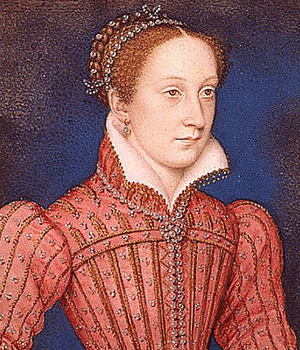
Mary, Queen of Scots

In the sixteenth century there was a schism
‘Twixt the English Church and French Catholicism.
The Scots were caught in between
Until there was born a courageous queen.
In Linlithgow Palace little Mary was born,
On December seventh in the dewy morn.
James the Fifth was her unfortunate father
Who found Mary’s birth quite a bother.
And so he died within the week,
And Mary was crowned before she could speak.
While Mary’s mother ruled Scotland’s throne,
Mary sailed away to France alone
To live with her young husband-to-be:
Prince Francis, the son of King Henri.
In France she learned her lessons well,
And all too soon rang the wedding bell.
One April day Mary wed Prince Francis,
They joint their lands with vows and a kiss.
But two years later their dream would end,
Leaving wounds no length of time could mend.
Queen Mary’s beloved Francis suddenly died,
So she sailed for Scotland with the outgoing tide.
Scotland was dreary and bleak to see,
And forebode of the difficult times to be.
The Catholic queen reigned in a Protestant land,
But she ruled it with a steady hand.
Mary’s cousin Elizabeth was a Protestant queen,
But the British Catholics were none too keen.
They doubted Elizabeth’s legitimacy,
To say nothing of her choice of celibacy.
They wanted Mary for Queen instead,
A fact Elizabeth came to dread.
But Mary stayed in her place,
And gave her cousin her desired space.
She strengthened her position and wed again,
Choosing one who seemed the choicest of men.
He was a member of her own family:
One Henry Stewart, the Lord of Darnley.
But he proved witless and unfit to be king,
And Mary regretted his wedding ring.
Mary had a friend named David Riccio
And Darnley thought he was her Romeo.
So Darnley committed the worst of crimes,
And had Riccio stabbed fifty-six times.
Though heartbroken Mary won her husband back
With something that would put any husband on track.
She gave birth to a beautiful son James,
And swore he was their son despite other claims.
Meanwhile Mary made another male friend,
One who would see to Lord Darnley’s end.
His name was James Hepburn, Lord of Bothwell,
Who decided it was time that Lord Darnley fell.
Darnley was at home in Kirk o’Field
When then and there his fate was sealed.
The house with great force did explode
And Darnley lay dead outside near the road.
However, Queen Mary was struck by no grief,
Indeed she found this to be a great relief.
But she then committed her worst mistake,
By marrying Bothwell, the treacherous snake.
There were many questions about Darnley’s death,
So Mary sought help from Queen Elizabeth.
But Elizabeth responded to this with guile,
By putting her nemesis on murder trial.
Though nothing could be proven either way,
Mary was condemned in England forever to stay.
From her beloved Scotland she was now banned
So for eighteen years her escape was planned.
In Fotheringhay Castle she spent her life,
And embroidered cloth during her time of strife.
Letters she wrote to a young Catholic friend,
But unbeknownst to her each letter she would send
Was read by others in service of the queen,
And all Mary’s schemes were uncovered and seen.
She was tried for plotting against Elizabeth,
And found guilty and sentenced to death.
Dressed in a gown of scarlet red,
She bowed for the executioner to sever her head.
But before he could do this terrible deed
The executioner for forgiveness did plead.
And as he swung and lowered his blade
Her eyes did dim and saw naught but shade.
To this day she hasn’t left our thoughts,
The courageous Mary, Queen of Scots.

Bibliography

Jutras, Marie. “Mary Queen of Scots.” The Catholic Encyclopedia. 2003. 04 May. 2005 <http://www.newadvent.org/cathen/09764a.htm&gt;.

“Mary.” Historic World Leaders. 1994 Biography Resource Center. The Gale Group. 02 May 2005 <http://galenet.galegroup.com/servlet/BioRC&gt;.

“Mary, Queen of Scots.” Encyclopedia of World Biography, 2nd ed. 17 Vols. 1998 Biography Resource Center. The Gale Group. 02 May 2005 <http://galenet.galegroup.com/servlet/BioRC&gt;.

“Mary, Queen of Scots.” U*X*L Biographies. 2003 Student Resource Center. The Gale Group. 04 May 2005 <http://galenet.galegroup.com/servlet/SRC>&gt;.