This semester I am undertaking an independent study in which I will be exploring The Red Book of Carl Gustav Jung and bringing it into dialogue with what J.R.R. Tolkien called The Red Book of Westmarch, the fictional narrativethat became the key books of his Middle-Earth legendarium, The Hobbit and The Lord of the Rings. Jung’s Red Book period began in 1913, the same year that Tolkien began his own practice of active imagination in his illustrated book entitled The Book of Ishness. Using additional material from both Jung and Tolkien, as well as contemporary secondary sources, in conjunction with some of the insight provided by archetypal astrology, I will explore the similarities (and significant differences) between what was emerging through both of these men’s creative imaginations.
I will be culminating the independent study with a paper that I will post on this website, and with a PCC Forum lecture that will be filmed and also posted. If anyone has source material or other recommendations for this project I would greatly appreciate the feedback!
Preliminary Bibliography
C.G. Jung – The Red Book
C.G. Jung – The Basic Writings of C.G. Jung
C.G. Jung – Memories, Dreams, Reflections
C.G. Jung, Meredith Sabini (ed.) – The Earth Has A Soul: The Nature Writings of C.G. Jung
J.R.R. Tolkien – The Lord of the Rings
J.R.R. Tolkien – The Hobbit
J.R.R. Tolkien – The Silmarillion
J.R.R. Tolkien – The Letters of J.R.R. Tolkien
J.R.R. Tolkien – The History of Middle-Earth
Humphrey Carpenter – J.R.R. Tolkien: A Biography
Wayne G. Hammond & Christina Scull (ed.) – J.R.R. Tolkien: Artist & Illustrator
Verlyn Flieger – A Question of Time: J.R.R. Tolkien’s Road to Faerie
Lance Owens – J.R.R. Tolkien: An Imaginative Life – A Series of Three Illustrated Lectures (Audio)
Great stories become symbols as they are encountered again and again by successive generations, as they are read in the context of currently unfolding lives. Stories become a part of the ecology in which they are told, participating in shaping the cultural landscape and being reshaped by it as well. Homer, Plato, Dante, Shakespeare—these are but a few of the authors whose stories have withstood the slow wearing and reshaping of the passing river of time; they are narratives that have become changing symbols for those who have taken them up in their own time. J.R.R. Tolkien’s Middle-Earth legendarium, principally his Lord of the Rings epic, has been called by several scholars a myth for our time, a symbol of the age in which we live. As one Tolkien scholar writes, The Lord of the Rings is a tale that “will bear the mind’s handling, and it is a book that acquires an individual patina in each mind that takes it up, like a much-caressed pocket stone or piece of wood.”[1] Such is the gift of a story written not as prescriptive allegory, but rather as what Tolkien preferred to see as “history, true or feigned, with its various applicability to the thought and experience of readers.”[2] It is the flexible applicability of Tolkien’s narrative that allows it to be adapted and molded according to the needs and desires of the generations encountering it, providing a symbolic foil to the world in which it is being retold.
Artwork by Christoffer Relander.
Tolkien began writing his mythology during a time of rapid transformation in Europe, as he witnessed increasing industrialization overwhelm the rural landscape of his native England. His stories carry much of the melancholy rendered by this loss of ecological beauty, and seem to plant seeds of warning for upcoming generations as more and more of the Earth’s landscapes are being turned to solely human uses. The ecological awareness at the heart of Tolkien’s world may contribute to its particular applicability to the current time period in which we face massive anthropogenic ecological destruction. Methods of engagement with the ecological crisis are innumerably diverse, a reflection of the broad scale of the problems with which the Earth community is challenged. Philosophical approaches to ecology and environmentalism have sought different means of engaging with the very concept of nature, as well as the dualisms created between human and nature, self and other, subject and object, that have contributed to making the Earth crisis what it is. Can Tolkien’s tales of Middle-Earth provide a symbolic mirror for some of these approaches, from ecofeminism, to dark ecology, to process ethics? By bringing such frameworks into dialogue with narrative, can new concepts be born through their interminglings and diversions?
This study of Middle-Earth as an ecological foil will go in several different directions, although they will all address overlapping issues related to how concepts of unity and difference play significant roles in the human relationship to the Earth. I will be using Tolkien’s narrative in two ways: on the one hand, by looking at it from the outside to see how it might change the engagement of the reader—as a participant in an imaginal world—with the primary world in which she lives; and on the other hand, by diving into the world itself and studying the characters directly as examples of individuals engaging in different ways with their own world. I will first explore the role art plays in shaping the human relationship with the Earth, seeing how art can both cultivate a sense of identity with the natural world, but also how it can give a clearer view of the diversity and inherent difference in that world. Crossing the threshold and entering into Middle-Earth itself we can continue exploring themes of identity and difference, remoteness and entanglement, duality and unity, by bringing such thinkers as Timothy Morton, Val Plumwood, Pierre Hadot, Slavov Zizek, and Alfred North Whitehead into dialogue with Tolkien’s work.
Imaginal worlds and the stories which take place within them can provide what Tolkien calls a “recovery,” a “regaining of a clear view.”[3] He goes on to elaborate what such a clear view can offer, saying:
I do not say “seeing things as they are” and involve myself with the philosophers, though I might venture to say “seeing things as we are (or were) meant to see them”—as things apart from ourselves. We need, in any case, to clean our windows; so that the things seen clearly may be freed from the drab blur of triteness or familiarity—from possessiveness.[4]
Although he mentions not wanting to involve himself with the philosophers, for the purpose of this essay I will be drawing Tolkien’s narratives into philosophical dialogue. The ecophenomenologist Neil Evernden offers a complementary, although somewhat reoriented, view to Tolkien’s on the role that art and the humanities can play in ecology: quoting Northrop Frye to make his point, Evernden says, “the goal of art is to ‘recapture, in full consciousness, that original lost sense of identity with our surroundings, where there is nothing outside the mind of man, or something identical with the mind of man.’”[5] Evernden’s perspective dissolves the boundary between the human and the natural world, whereas Tolkien’s sharpens awareness that there is a surrounding world that cannot be possessed by the human. Both perspectives, however, lead to a reorientation of values in which the natural world cannot become forgotten or taken for granted. They both call forth a sense of wonder.
The French philosopher Pierre Hadot points towards how art can create continuity between humanity and nature, offering another perspective for regaining the clear view of which Tolkien speaks:
If . . . people consider themselves a part of nature because art is already present in it, there will no longer be opposition between nature and art; instead, human art, especially in its aesthetic aspect, will be in a sense the prolongation of nature, and then there will no longer be any relation of dominance between nature and mankind.[6]
Art offers to the spectator the possibility of becoming a participant, to engage at a personal level with the subject as portrayed by the work of art. The human subject can no longer encounter the other in the art as solely objective for, as Evernden writes, “The artist makes the world personal—known, loved, feared, or whatever, but not neutral.”[7] For Tolkien, art is what gives to the creations of the imagination “the inner consistency of reality”[8] that allows both the designer and spectator to enter into the created world. We have the possibility of entering fully into a world such as Tolkien’s and seeing its applicability to our own world, which is what makes it such a potent symbol for our own actions.
Entering into Middle-Earth we find ourselves in the Shire, the quiet, sheltered landscape inhabited by Hobbits. The Shire is insolated from the outside world, its inhabitants peacefully oblivious to the wider world, its borders guarded unbeknownst to the Hobbits by human Rangers of the North. The Lord of the Rings can be seen as a literary example and metaphor of overcoming the dualism between self and other, human and nature, and subject and object. It tells the story of how four Hobbits leave their isolated world—and also world view—of the Shire to journey into the diverse landscapes of Middle-Earth and encounter the many peoples shaped by those lands. They realize they are but one small part of a larger, diverse ecology of beings. As Morton writes in his book Ecology Without Nature,
The strangeness of Middle-Earth, its permeation with others and their worlds, is summed up in the metaphor of the road, which becomes an emblem for narrative. The road comes right up to your front door. To step into it is to cross a threshold between inside and outside.[9]
Morton is quite critical of Tolkien, seeing Middle-Earth as an “elaborate attempt to craft a piece of kitsch,” a closed world where “however strange or threatening our journey, it will always be familiar” because “it has all been planned out in advance.”[10] This criticism is, in many ways, the exact opposite of what Tolkien describes the very aim of fantasy to be, to free things ‘from the drab blur of triteness or familiarity—from possessiveness.’ Is this an indication that Tolkien has failed in his project, or rather that Morton is misreading what it is that Tolkien is attempting to do? Morton begins his analysis of Middle-Earth by saying,
The Shire . . . depicts the world-bubble as an organic village. Tolkien narrates the victory of the suburbanite, the “little person,” embedded in a tamed yet natural-seeming environment. Nestled into the horizon as they are in their burrows, the wider world of global politics is blissfully unavailable to them.[11]
In many ways this is a true characterization of the Shire at the start of the tale. There is an idyllic pastoralism to the Shire that is cherished by many of Tolkien’s readers, but it is also a realm of sheltered innocence as Morton points out, a Paradise before the Fall. However, by substituting this image of the Shire for the whole of Middle-Earth, Morton misses an essential aspect of the narrative: the Hobbits must depart from the Shire and encounter the strangeness and diversity of the larger world. The Hobbits, who may start out as ‘little suburbanites,’ cannot accomplish the tasks asked of them without first being transformed through the suffering and awakening that comes from walking every step of their journey. To return to Morton’s quote about the Road, once the ‘threshold between inside and outside’ has been crossed, the traveler cannot return to his former innocence. It is a shift in world view. The Hobbits can never return to the solipsistic world that existed prior to that crossing. This is an essential move that is also being asked of the human species in our own time; to cross out of our anthropocentric world view to encounter the great and imperiled diversity of the wider world.
Artwork by Christoffer Relander.
While the Hobbits’ journey can serve as a metaphor for the journey the human species is being called to take—to awaken to the crisis at hand and leave our anthropocentric world view—The Lord of the Rings can be read symbolically from another perspective in which different characters represent alternative approaches to the natural world that have been taken by humanity over the course of history. These differing approaches have been laid out by Pierre Hadot in his “essay on the history of the idea of nature,” The Veil of Isis. Using mythic terms, these are what Hadot calls the Orphic and Promethean attitudes:
Orpheus thus penetrates the secrets of nature not through violence but through melody, rhythm, and harmony. Whereas the Promethean attitude is inspired by audacity, boundless curiosity, the will to power, and the search for utility, the Orphic attitude, by contrast, is inspired by respect in the face of mystery and disinterestedness.[12]
The three primary methods of the Promethean attitude, according to Hadot, are experimentation, mechanics, and magic, each of which seek to manipulate nature for some specific end. In Middle-Earth the Promethean approach is used by the Dark Lord Sauron, and later by the wizard Saruman, as they each seek to employ technology to gain power and dominion over others. Hadot writes of the Promethean attitude: “Man will seek, through technology, to affirm his power, domination, and rights over nature.”[13] As Treebeard says of Saruman, “He is plotting to become a Power. He has a mind of metal and wheels; and he does not care for growing things, except as far as they serve him for the moment.”[14] Saruman’s drive for power is a mere shadow and an echo of Sauron’s: the emblematic symbol of the power of technology in The Lord of the Rings is of course the One Ring itself, a device or machine that takes away the free will of those who use it.
Hadot’s consideration of magic as an aspect of the Promethean attitude is quite similar to Tolkien’s own views on magic, although this might not be expected with a first glance at his works. Tolkien differentiates between magic and enchantment, seeing magic as the technological manipulations of the Enemy, while enchantment is the exquisite creations of peoples such as the Elves. Tolkien writes in one of his letters that “the Elves are there (in my tales) to demonstrate the difference”[15] between magic and enchantment. He goes on to say, “Their ‘magic’ is Art, delivered from many of its human limitations: more effortless, more quick, more complete . . . . its object is Art not Power, sub-creation not domination and tyrannous re-forming of Creation.”[16] Elvish enchantment might be seen as an example of Hadot’s Orphic approach to nature, with its focus on poetry, music, art, holistic science, myth and contemplation.
The Orphic attitude holds the belief that “if nature has hidden certain things, then it had good reasons to hide them.”[17] It is an approach that seeks to come to understanding through contemplating the whole, without reducing it into simplistic parts. This is illustrated by the difference between the two Istari, or wizards, Gandalf the Grey and Saruman the White. In his bid for power, Saruman has renounced his rank as White Wizard rather to become Saruman of Many Colors. He mocks the symbol represented by his former color, proclaiming:
“White!” he sneered. “It serves as a beginning. White cloth may be dyed. The white page can be overwritten; and the white light can be broken.”
“In which case it is no longer white,” said [Gandalf]. “And he that breaks a thing to find out what it is has left the path of wisdom.”[18]
Saruman has moved from being one of the Wise, those who bring an Orphic approach to all they undertake, to a dark Promethean figure seeking domination, power, and control over others.
The attitudes Sauron and Saruman take towards the lands and peoples of Middle-Earth can be better understood through the ecofeminist Val Plumwood’s model of anthropocentrism, which she recognizes as the dominant human culture’s relationship with nature. Her language is particularly appropriate for mapping onto The Lord of the Rings because she refers to the dualism between One and Other as played out in this form of hegemonic centrism. In this symbolic mapping, the One represents the centralized power of the Lord of the One Ring, while the Other represents the diversity of the Free Peoples of Middle-Earth and their multiplicity of cultures and landscapes. Plumwood’s anthropocentric model demonstrates the ways in which the One approaches the Other, particularly through means of homogenization, backgrounding, incorporation or assimilation, and instrumentalism. A breakdown of these terms follows, each of which can be seen in the way Tolkien’s dark powers seek to dominate and control the peoples of Middle-Earth:
• Homogenization – “The model promotes insensitivity to the marvelous diversity of nature, since differences in nature are attended to only if they are likely to contribute in some obvious way to human welfare.”[19]
• Backgrounding – “Nature is represented as inessential and massively denied as the unconsidered background to technological society.”[20]
• Incorporation (Assimilation) – “The intricate order of nature is perceived as disorder, as unreason, to be replaced where possible by human order in development, an assimilating project of colonisation.”[21]
• Instrumentalism – “In anthropocentric culture, nature’s agency and independence of ends are denied, subsumed in or remade to coincide with human interests, which are thought to be the source of all value in the world. Mechanistic worldviews especially deny nature any form of agency of its own.”[22]
Sauron seeks to turn all of Middle-Earth to his own devices, by reducing the great diversity of the land’s peoples to mere tributes and instruments. The power of the One Ring is that it can bring all beings, even the land itself, under its dominion: “One Ring to rule them all and in the darkness bind them.”[23] Sauron’s darkness is homogenous, erasing all difference, backgrounding all who do not fit his plans, and incorporating and using as instruments those who do.
The key actions to the three great victories accomplished by the Free Peoples of Middle-Earth are carried out by characters or races that have been forgotten or backgrounded in just the way Plumwood describes: Sauron is overthrown by the actions of Frodo and Sam, two small Hobbits of a race he considered too unimportant to account for in his schemes; Saruman is defeated by the Ents whom he dismissed as mere myth; and the Witch-King of Angmar is overthrown by the shieldmaiden Eowyn, whose coming was concealed by the patriarchal language that referred to her entire race as Men—leaving the arrogant Lord of the Nazgûl to be defeated at the hands of a woman. As Elrond says at the Council held in Rivendell that decides the fate of the Ring, “This quest must be attempted by the weak with as much hope as the strong. Yet such is oft the course of deeds that move the wheels of the world: small hands do them because they must, while the eyes of the great are elsewhere.”[24]
There are, of course, flaws with Tolkien’s work that a perspective such as Plumwood’s would be quick to point out. For example, it is a largely androcentric work, with the majority of the characters being male. It also has a Eurocentric focus, as Middle-Earth was intended by Tolkien to be set in Europe, although in an imaginary time: “The theatre of my tale is this earth,” Tolkien wrote in one letter, “the one in which we now live, but the historical period is imaginary.”[25] Critics such as Morton point out that “For Tolkien, dwarves, elves, hobbits, and talking eagles are welcome others, but swarthy ‘southern’ or ‘eastern’ men are not.”[26] Although I do not want to discount these valid criticisms, I will point out some subtleties that emerge in the text that complexify Morton’s simple rendering of good and evil in Tolkien’s world.
For example, when Sam witnesses the violent death of a Southron man he finds himself contemplating what the character of this man might have been in life.
He was glad he could not see the dead face. He wondered what the man’s name was and where he came from; and if he was really evil of heart, or what lies or threats had led him on the long march from his home; and if he would not really rather have stayed there in peace.[27]
In this moment I believe Tolkien is asking the reader to contemplate the same: to not take the presentation of the other at face value, but rather to look deeper. He is bringing moral complexity into a story that has often been initially perceived to present a Manichean vision of evil and good. Often the struggle between good and evil takes place within a single person, as can be seen emblematically in Frodo and Sméagol’s internal struggles with their own potential for evil, and even Gandalf and Aragorn’s wrestling with the corrupting influence of power. “Nothing is evil in the beginning,” Elrond says. “Even Sauron was not so.”[28]
One’s actions, and not one’s inherent being, are what turn a person evil in Tolkien’s world. The process philosopher Alfred North Whitehead, writes on the nature of evil and its root in inhibiting, either through violence or neglect, the potential for beauty in the world. For Whitehead, the evil of violence “lies in the loss to the social environment.”[29] He also writes,
Evil in itself leads to the world losing forms of attainment in which that evil manifests itself . . . . Thus evil promotes its own elimination by destruction, or degradation, or by elevation. But in its own nature it is unstable.[30]
An example of this can be seen at times throughout The Lord of the Rings when the Orcs, acting as evil minions doing the bidding of Sauron or Saruman, turn on each other during a dispute and often end up killing one another in their anger—often eliminating a danger otherwise needing to be faced by the protagonists. As Brian Henning writes, “Whitehead’s insight is that violence and force tend to be self-defeating in that they undermine the very social structures that make them possible.”[31] Another case is Saruman, who cuts the trees of Fangorn to feed his fires, allowing him to raise an industrial army. Without doing this harm, which is what makes him evil to begin with, he would not have triggered the anger of the Ents, leading to his defeat. Finally, a more abstract illustration of how evil undermines itself can be seen in Sauron. Gandalf says of Sauron that “the only measure that he knows is desire, desire for power; and so he judges all hearts. Into his heart the thought will not enter that any will refuse it, that having the Ring we may seek to destroy it. If we seek this, we shall put him out of reckoning.”[32] Sauron’s desire for power, which is what initially corrupts him and turns him evil, is also that which is his undoing, for it blinds him to the moral will of others, resulting in his utter demise.
One must be careful of the way in which one relates to the actions of evil in the world. Creating a dualism between oneself and what one sees as evil can lead to what Hegel, from the perspective of Morton, called the Beautiful Soul. Morton writes, “The Beautiful Soul suffers from seeing reality as an evil thing ‘over yonder.’ Is this not precisely the attitude of many forms of environmentalism?”[33] He goes on to say,
It’s that the gaze that constitutes the world as a thing ‘over yonder,’ is evil as such. The environmental fundamentalism that sees the world as an essential, living Earth that must be saved from evil, viral humans is the very type of the Beautiful Soul’s evil gaze.[34]
The evil of the Beautiful Soul’s gaze is only evil when one remains at a remove from what one perceives as evil out in the world. So long as it remains a distant gaze, evil can flourish in the world. “How do we truly exit from the Beautiful Soul?” Morton asks. “By taking responsibility for our attitude, for our gaze. On the ground this looks like forgiveness. We are fully responsible for the present environmental catastrophe, simply because we are aware of it.”[35] The burden of the One Ring is that Frodo must take responsibility for it once he is aware that the world is imperiled by it. It is his task to take responsibility for the Ring, and the longer he is in possession of it the more he is corrupted by its power. “The only way is in and down. . .” as Morton says.[36] Frodo and Sam not only go down into the heart of Mordor, they also face the capacity for evil in themselves. Indeed, Frodo must take responsibility for his inability to destroy the Ring, but in doing so he also must forgive himself, for only in his failure was the task actually able to be accomplished.
Artwork by Christoffer Relander.
The approach of going ‘in and down’ is what Morton has called dark ecology. “Dark ecology is melancholic: melancholy is the Earth’s humour, and the residuum of our unbreakable psychic connection to our mother’s body, which stands metonymically for our connection with all life forms.”[37] There is a melancholy too that is inherent to the heart of The Lord of the Rings. With the destruction of the One Ring, the Three Rings of the Elves are also stripped of their power, and all that was wrought with them in symbiotic harmony with beauty of the Earth begins to fade and pass away. Interconnection is at the heart of this story, the power of good intrinsically interwoven and even dependent on the power of evil, and vice versa. Destroying the One Ring is choosing to lose the great beauty created by the Elves to allow the greater beauty of a free Middle-Earth to flourish. It is a moral decision according to Henning’s kalogenic ethics of creativity, but it is a tragic, a melancholic decision as well. The Lord of the Rings concludes with a sense of bittersweet mourning, the mourning of all that has passed, the mourning of the end of an age.
In reference to the ecological crisis, the philosopher Slavoj Zizek writes on what hope we have for the future:
We have to accept that, at the level of possibilities, our future is doomed, the catastrophe will take place, it is our destiny—and, then, on the background of this acceptance, we should mobilize ourselves to perform the act that will change destiny itself by inserting a new possibility into the past.[38]
In many ways the future of Middle-Earth is also doomed, poised on the edge of ruin. Late in the story Pippin asks Gandalf:
“Tell me,” he said, “is there any hope? For Frodo, I mean; or at least mostly for Frodo.”
Gandalf put his hand on Pippin’s head. “There never was much hope,” he answered. “Just a fool’s hope.”[39]
‘On the background of this acceptance,’ as Zizek has said, we must then make our decision, the melancholic choice that leads us ‘in and down’ into the darkness of the world, a darkness mirrored potentially in each of us as well, whose very success leads to mourning. When Frodo first learns that he is in possession of the One Ring, that it is his responsibility to face the darkness head on, he confides to Gandalf:
“I wish it need not have happened in my time,” said Frodo.
“So do I,” said Gandalf, “and so do all who come to see such times. But that is not for them to decide. All we have to decide is what to do with the time that is given us.”[40]
Works Cited
Evernden, Neil. “Beyond Ecology: Self, Place, and the Pathetic Fallacy.” The North American Review 263 (Winter 1978).
Hadot, Pierre. The Veil of Isis: An Essay on the History of the Idea of Nature. Translated by Michael Chase. Cambridge, MA: The Belknap Press of Harvard University Press, 2006.
Henning, Brian G. The Ethics of Creativity: Beauty, Morality, and Nature in a Processive Cosmos. Pittsburgh, PA: University of Pittsburg Press, 2005.
Morton, Timothy. Ecology Without Nature: Rethinking Environmental Aesthetics. Cambridge, MA: Harvard University Press, 2009.
–––––. “Thinking Ecology: The Mesh, the Strange Stranger, and the Beautiful Soul.” Collapse 6 (2010): 265-293.
Plumwood, Val. Environmental Culture: The Ecological Crisis of Reason. New York, NY: Routledge, 2002.
J.R.R. Tolkien. The Lord of the Rings. Boston, MA: Houghton Mifflin Company, 1994.
–––––. The Tolkien Reader. New York, NY: Ballantine Publishing Group, 1966.
Whitehead, Alfred North. Religion in the Making. Edited by Judith A. Jones. New York, NY: Fordham University Press, 1996.
Zizek, Slavoj. “Nature and Its Discontents.” SubStance 37:3 (2008): 37-72.
[1] Peter Beagle, “Tolkien’s Magic Ring,” in The Tolkien Reader (New York, NY: Ballantine Publishing Group, 1966), xii.
[2] J.R.R. Tolkien, Foreword to The Lord of the Rings (Boston, MA: Houghton Mifflin Company, 1994), 5.
[3] J.R.R. Tolkien, “On Fairy Stories,” in The Tolkien Reader (New York, NY: Ballantine Publishing Group, 1966), 77.
[5] Northrop Frye, qtd. in Neil Evernden, “Beyond Ecology: Self, Place, and the Pathetic Fallacy,” The North American Review 263 (Winter 1978): 99.
[6] Pierre Hadot, The Veil of Isis: An Essay on the History of the Idea of Nature, trans. Michael Chase (Cambridge, MA: The Belknap Press of Harvard University Press, 2006), 92.
[7] Evernden, “Beyond Ecology: Self, Place, and the Pathetic Fallacy,” 100.
[14] Tolkien, The Lord of the Rings: The Two Towers, II, iv, 76.
[15] J.R.R. Tolkien, The Letters of J.R.R. Tolkien, ed. Humphrey Carpenter, with Christopher Tolkien (New York, NY: Houghton Mifflin Company, 2000), 146.
[31] Brian G. Henning, The Ethics of Creativity: Beauty, Morality, and Nature in a Processive Cosmos (Pittsburgh, PA: University of Pittsburg Press, 2005), 114.
[32] Tolkien, The Lord of the Rings: The Fellowship of the Ring, II, ii, 283.
[33] Timothy Morton, “Thinking Ecology: The Mesh, the Strange Stranger, and the Beautiful Soul,” Collapse 6 (2010): 287-288.
[34] Morton, “Thinking Ecology: The Mesh, the Strange Stranger, and the Beautiful Soul,” 290.
As I climb higher up the gray switchback staircase of rickety wooden boards my body tenses with the increasing height, even as my mind knows I am safe, that the stairs beneath my feet will support me. Already present is that indescribable bodily sense, that physical intuition that seems only able to be captured wordlessly, by something as unarticulated as an ellipsis . . . I step out onto the gravel of the roof to be met by the sight of the flaming orb of the setting Sun. This closest of stars burns the clarity from the landscape, blurring the features of the horizon line being pulled toward it: hill, forest, and stretch of ocean I can only perceive in memory as the deepening gold of sunset shatters my sight into uncountable, undifferentiable monads of color.
Sitting on the wide ledge of the roof my body settles into an accustomed level of comfort at this new height. But if I lean closer to the edge, to glance below at the street, then this indescribable bodily sense flares up once again, a seeming leap of my heart into my throat that signifies danger or delight I cannot tell. Why is it that looking down four stories at unforgiving concrete gives the same bodily sensation as looking deeply into the eyes of one I love? Wherein lies the truth of this . . .
Looking away from the Sun I turn to my left to see the Moon seated aloft in a soft indigo sky. The reverberating green echo of the Sun’s shape slowly fades from my vision as the Moon’s gentler light fills my gaze instead. The relationship of these two celestial bodies feels familiar . . . and my body knows it before I do . . . Ah yes, I stood upon a mountain exactly a month ago today, positioned as a third body between these two heavenly beings, seeing them in this same triangular relationship once again. I feel this, sense this, intuit this, I . . . this, my body . . . this: this relationship, this interaction.
Whenever I behold a celestial body ablaze in the night sky it stops me in my tracks, without fail. My body is commanded to stop, to wonder, to worship these orbs. My breath catches. It feels not unlike falling in love . . . over and over and over, with each wandering star I witness. The same as looking down from some great height, but rather it is looking up . . . No it is looking out, a looking out into the depths of space. To behold the Sun, the Moon, a thousand stars is to look up, to look out, and to look down into the greatest depths all at once. No wonder we lose our balance, no wonder our bodies react, they catch us and remind us that gravity is real.
I have seen countless sunsets but no one is the same, no one is ever worth looking away from before it has made its perfected exit. I never say to myself, “Not this time, I have seen this before.” It now becomes impossible to look away as the ocean swallows the flaming disc of molten gold. In these final moments of a day I will never see again I feel my heart pulled, as though by an emotion-laden gravitational force, toward the Sun. My heart strains within my chest to follow the Sun beyond the crashing purple waves.
Wash over me, oh descending night . . . let me drown once more in your celestial waters.
Introduction: An Experiential Astrology
“The stars are like letters which inscribe themselves at every moment in the sky . . . . Everything in the world is full of signs. . . . All events are coordinated. . . . All things depend on each other; as has been said, ‘Everything breathes together.’” – Plotinus
Go outside on a clear night. Gaze up into the sky, let the points of light that have been traveling for minutes or millennia enter into you through your eyes. I ask not what do you see, but rather, what does it feel like? Your eyes are drawn to one particular body blazing like a white flame in the western sky. A wandering planet, visible at a different height above the horizon with each passing night—only to disappear into the overwhelming light of the Sun for an extended period of time, to once again be found shining in the indigo skies preceding dawn. Your body quivers in response to this gem-like orb, truly like a bright diamond set among a net of precious stones. Beauty. How can this not be an experience of Beauty, an archetypal vision burning forth in the physical realm? You watch Venus slowly sink beyond the blackened waves of the Earth’s greatest sea, a trail of Venus-shine tracing a path directly from the planet to where your feet stand on a grassy cliff’s edge. A geometrical relationship exists between your body and the body of Venus, but you also feel a psychic connection as well: beauty shines forth from this planet, a beauty which you cannot help but feel resonating internally as well. Distill all of this moment to its essence, to Beauty.
In the ancient world astronomy and astrology were a single science, to be practiced as a unified discipline of contemplating what Plato called the “moving image of eternity”[1] that is the night sky. With the rise of modernity, astronomy and astrology diverged, astronomy to become a science solely of mathematical physics and celestial mechanics, while astrology was relegated to the realm of superstition and pseudoscience. Contemporary research on astrology, however, has come to affirm “a highly significant––indeed a pervasive––correspondence between planetary movements and human affairs.”[2] This correspondence is perceptible in the position of the planets at the time of one’s birth, as well as in the transiting movement of the planets in relation to the birth chart throughout one’s life, and the continuously changing dynamics of the planets’ relational positions to each other. The correlated expression is of an archetypal nature: the character or energy of the planets is expressed in a multivalence of ways both by human individuals and in collective cultural and natural events.
An astrological chart is a two-dimensional representation of our three-dimensional solar system, shown from a geocentric perspective but using heliocentric calculations to predict the specific locations of the planets (Figure 1). Sometimes in the practice of astrology it can be easy to become absorbed in the planetary archetypes as symbols, as they are manifested in the human psyche. Just as astronomy has forgotten it was once completed by astrology, perhaps sometimes astrology too can forget to look back out into the starry sky to gain greater understanding, and not just to the multidimensional manifestations of the archetypes in human events. If phenomenology is meant to bring us, as Husserl said, “back to the things themselves,” perhaps a phenomenological approach to astrology may be in order, to experience at all levels the archetypal energies pulsating through all dimensions of the cosmos.
The Sun
Why is it we are so compelled to watch the sunset? On clear days the Sun is visible all through the daylight hours, yet it is usually only when the Sun is near the horizon at dusk and dawn that the desire to suspend whatever we might be doing simply to watch overcomes us. The Sun is most accessible to the naked eye at this time. The explosion of color—of rose, vermillion, gold, magenta, orange, crimson, indigo—as the sunlight passes through the greatest density of Earth’s atmosphere is like watching a cosmic painter improvise with an infinite watercolor set on living canvas. How could we look away?
The Sun in the birth chart represents the conscious self, what one identifies as, what we name ourselves, how we shine in the world, the will to be, to exist. The Sun illuminates, focuses, radiates, integrates. It is the autonomous self, the ego, the part of ourselves that says “I am.” When I gaze at the horizon illuminated by the setting Sun, the “I” that I call myself—the “I” whose personality is reflected in the position of the Sun in my birth chart, the location at which the actual Sun appeared to be from my situated position on a moving Earth—is gazing out at the Sun that contains all “I”s. Every birth chart contains a Sun, every person has a self whose personality is reflected in the planetary and zodiacal relationships to that Sun. Yet it is all the same Sun. Each one of us has a personal relationship to this celestial body that gives life to the Earth, gives movement to the solar system. When we look at the Sun, not only do we see our self reflected, we see all selves reflected back to us. No wonder it is so hard to look away.
Yet when the Sun sets the starry sky can begin to shine forth. When the self steps aside, all the other persons of our being are able to come forth and shine with their own archetypal colors.
The Moon
A few nights ago I was walking down a busy city street at night, cars passing back and forth, people hurrying in every direction, home from work, onto buses, into subway stations. Stepping around the corner of a tall building and looking up through the maze of power lines blocking a dark, almost star-less sky, I was struck by the sight of the Moon, barely a crescent of light showing on its face, yet in its darkness still visible all the way around. The dark orb appeared to be hanging so close to the Earth, a haunting reminder that not all the world is contained in the narrow field of our bustling urban lives. Yet I was amazed to see no one else stopped to stare at this fantastic apparition far more beautiful than any of the hurried activity occurring down at the street level.
The Moon astrologically represents our relational self, the emotions, feelings, the body. It is the mother-child relationship, that which cares and nurtures, and that which desires to be cared for and nurtured. The Moon is the matrix of being, the family, the home, the past, our most intimate selves. It is what our conscious self is unconscious of, sometimes invisible in its intimacy. We can become so accustomed to seeing the Moon night after night, or as a pale sphere in the daytime sky, that we forget its presence if we are too wrapped up in the overly focused narrowness of our ego-driven lives. It does not demand attention. Yet the Moon is always present, the closest celestial body to Earth, affecting the ebb and flow of the ocean tides, mirroring the ebb and flow of our changing emotions and bodily sensations.
From Earth we always see the same face of the Moon; the Moon’s rotation on its axis and its orbit about the Earth take the same amount of time. This physical characteristic gives the impression that the Moon does not rotate at all, which contributed to the long-held belief that the Earth was the stationary center of the cosmos. The maternal nature of the Lunar archetype seems to be symbolically expressed in this physical positioning; the Moon cradling the young human species in an Earth-centered universe for far longer than if the Moon had rotated on its axis.
Sun Trine Moon
I am standing on the precipice of a mountain gazing westward, into the molten fire of the setting Sun. One hundred and twenty degrees to my left, an angle my body can hold within itself as I gaze in both directions, the waxing Moon rises over the further arches of a vermillion and rose stained ridge. I can feel the relationship of Sun and Moon within my body, somehow feeling my heart as the third point in this harmonious triangle. “We grasp external space through our bodily situation,”[3] Maurice Merleau-Ponty writes. Standing between rising Moon and setting Sun I know their relationship because my body is in relationship to each of them. “We also find” Merleau-Ponty continues, “that spatial forms or distances are not so much relations between different points in objective space as they are relations between these points and a central perspective—our body.”[4]
I am a full participant in this moment. My body is in relationship with these two powerful celestial bodies that light up our world, that pull all of the existence I know forward along its spiraling path. “For us the body is much more than an instrument or a means; it is our expression in the world, the visible form of our intentions,” the phenomenologist says.[5] This seems to hold true not only for my own body, but each body I am able to witness: the flaming Sun, the pregnant Moon, blazing Venus as it becomes visible in the cooling hues of the sky, the point of light that is Saturn that appears not long after Venus makes her debut, and the solidity of the Earth beneath my feet. Each are bodies giving visible form to their intentions.
I turn to my companions standing next to me and say, “This is a transit. Can you feel it?
Jupiter
A couple years ago I was out walking through Golden Gate Park in the later evening. In the darkness of the park I saw through a gap in the trees the shining, soft orange light of Jupiter. It was the only light in the sky, dazzling between dappled purple clouds. I left the path to stand in the darkness of the trees, to focus all my attention upon this planetary body, this planetary being.
As I gazed with openness and curiosity upon Jupiter it appeared to grow brighter, and I almost felt as though a communion was arising between us. As dark clouds passed over the planet it still managed to shine through radiantly. I was suddenly reminded of the moment in J.R.R. Tolkien’s The Return of the King when Sam looks up at the smog covering the desolation of Mordor:
There, peeping among the cloud-wrack above a dark tor high up in the mountains, Sam saw a white star twinkle for a while. The beauty of it smote his heart, as he looked up out of the forsaken land, and hope returned to him. For like a shaft, clear and cold, the thought pierced him that in the end the Shadow was only a small and passing thing: there was light and high beauty for ever beyond its reach[6]
It suddenly dawned on me that part of the archetypal nature of Jupiter is Hope. I had the sense I was looking directly at the Divine and feeling Hope, an uplifting and elevation of spirit, a buoyancy and joy I could not explain. The Shadow of our times, the great devastation of our Earth, will also pass in the end. There is always Hope.
Encountering The Archetypes
Sometimes the planets want to speak to us. This is the only way I can describe what such a connection feels like. Once, in a meditative state, I closed my eyes and gazed upward towards the heavens and could feel that all the planets were so excited I finally was listening that they each were telling me who they are all at once. It was an overwhelming deluge of colors, emotions, images, sensations, processes; it was far too much to take in. I begged them, please come one at a time.
One by one, beginning with the Sun, each planet introduced itself, revealing how their multidimensional and multivalent appearances in the incarnated realm were really all unified into single archetypes in the transcendent realm. With each planet I encountered qualities I had learned of before, and yet other qualities which were new to me. The Sun, radiant presence, gold, singularity of vision, shone through me, through everything; nothing else existed in that light. The Moon, cradling and being cradled, softness, a silver sheen of lavender comfort, holding in warmth, fullness and settled contentment. Mercury, a quickening pace as my thoughts raced to catch up, a rapid quill spelling, articulating, word, glance, taste, touch, sound, senses singing. Venus, a verdant green of flowering beauty, vines growing in curls that turn into exquisite art, the silver sparkling of dew under leaves, mirroring a reciprocity of love and heart-warming presence, the shiver of pleasure and desire. Mars, a flaming red heat burning through me with energy, action, anger, force, violence, blood, rushing in a hiss of fiery passion. Jupiter, uplifting to a panoramic sweep of glory and triumph, images of great civilizations flourishing in their crowning moments, a spiraling climb to the grand arches of the Kingdom of Heaven, laughing, just laughing, releasing into giggles, soft joy, lips kissed by a smile.
The smile faded into a serious fixed gaze as Saturn entered my field, making me sit straighter, feeling the structural strength of my bones, my skeleton, holding me erect and steady, the stability of age-old institutions weathering through time, weathered away by time—Time who eats his children—feeling my body slowly decay in death, yet somehow feeling reassured by this, again and again in repetition, that all things must come to an end, and with that final acceptance at last can come wisdom.
Lightning quick Uranus burst through, not settling into a single color or image, always overturning, breaking out, breaking through, a pace impossible to follow as sparks of genius flew off of every new idea to explode in firecrackers opening up ever unexplored future horizons.
All dissolved, and no sense of myself remained as the oceanic azure oneness of Neptune washed over all that had come before, containing everything in its synchronous holism, a peaceful oblivion of floating in a flowing celestial realm of watery image, ethereal spirit, imaginal soul, transcending all boundaries.
And with a rendering tear the ocean ripped apart as a volcanic chasm, Pluto, gaped open swallowing all in titanic destruction, a violence so deep it was beyond fear, rather a pulsing of life impulse to survive or perish, pushed and pressured by the unbounded force of desire, teeth, torn flesh, corpses, pushing through the excrement, massive desolation laying waste, decomposing, turning over, evolving through pain, passing through the white hot burning fire and from the dead ashes reborn . . .
Then white light. All the colors melted together, every image unified. Only light.
Such an encounter with the archetypes I felt at every level of my being. It is like hearing the story of the entire world all at once. It is a distillation of everything into the passing of but a few breaths, a bracketing of everything, to be able to fully experience everything. An archetype is a phenomenological reduction of experience, a reduction that distills being down to its essence. Return to the things themselves. Look to the night sky, the planets want to tell you who they are—who you are.
When the starry night passes, so comes the dawn. The self is reborn from the multitudinous matrix of being. Yet as day shines forth, one can still feel the stars radiating behind the blue sky.
Works Cited
Merleau-Ponty, Maurice. The Primacy of Perception. Edited by James M. Edie. Evanston, IL: Northwestern University Press, 1964.
Plato. Plato: Complete Works. Edited by John M. Cooper. Indianapolis, IN: Hackett, 1997.
Tarnas, Richard. Cosmos and Psyche: Intimations of a New World View. New York, NY: Viking Penguin, 2006.
Tolkien, J.R.R. The Lord of the Rings, New York, NY: Houghton Mifflin Company, 1954.
[1] Plato, Timaeus, trans. Donald J. Zeyl, in Plato: Complete Works, ed. John M. Cooper (Indianapolis, IN: Hackett, 1997), 1241, 37d.
[2] Richard Tarnas, Cosmos and Psyche: Intimations of a New World View, (New York, NY: Viking Penguin, 2006), 68-69.
[3] Maurice Merleau-Ponty, The Primacy of Perception, ed. James M. Edie (Evanston, IL: Northwestern University Press, 1964), 5.
As the final part of the Integrative Seminar, the capstone course of the Philosophy, Cosmology, and Consciousness master’s program, I gave this presentation as part of a day-long seminar with twelve of my fellow graduates in May 2013. The accompanying paper can be found here, and a shorter introduction is available here.
“The imagination is a tree. It has the integrative virtues of a tree. It is root and boughs. It lives between earth and sky. It lives in the earth and in the wind. The imagined tree becomes imperceptibly the cosmological tree, the tree which epitomizes the universe, which makes a universe…” – Gaston Bachelard[1]
Imagine a stream, choked, murky gray, oiled surface, sunken deep below the watermark-stained banks. Feel deep within your soul the hopelessness of this place, the deadening of your senses to the despair of the river. Allow your imagination to fill with the river’s pain. Now, slowly, begin to imagine those waters rising, gradually at first, then more and more quickly, flowing first as a muddy trickle, widening into an onrushing stream. Bulbous plants begin to flourish along the banks, setting roots into the silted bottom. Filth becomes food, the waters begin to run clear. Light, once again, sparkles on the rippling surface. Fish return. What has allowed such a transition to occur? A re-imagining of purpose.
The imagination plays many roles in our practice of ecology upon this exquisite, blue and green celestial gem we have named Earth. As our planet suffers the ravaging destruction of industrialization and the consumptive growth of human greed, humanity is beginning to re-imagine its purpose in relationship to the Earth. The imagination is a multifaceted gift to ecology, one that can connect us to both our past and future, that can connect us with spiritual strength and moral empathy, that allows us to see our human role in an enchanted cosmos. The imagination is the eye of the soul, a bridge between the rational mind and the physical world, the opening of a realm in which the true beauty of the anima mundi can be revealed. Aspects of what could be called “imaginal ecology” can be glimpsed throughout the work of Joanna Macy, Thomas Berry, Brian Swimme, Mary Evelyn Tucker, Christopher Bache, James Hillman, Theodore Roszak, David Abram, and many other thinkers; it resounds in the poetry and philosophy of the Romantics, Transcendentalists and German Idealists. Imaginal ecology flourishes in the articulations of the enchanted realm of Faërie penned by J.R.R. Tolkien, and other fiction writers whose work reveals the enchantment of the realm in which we live.
The moral imagination of which Macy speaks can allow us to situate ourselves in the experience of other beings, whether ancestors of our past, or plants and animals, ecosystems of our current Earth, even beings of the future. Through imaginal practice we can hear the needs of others and recognize them as our own. Macy writes, “The imagination needs to be schooled in order to experience our inter-existence with all beings in the web of life.”[2] We can gain spiritual and psychic courage by seeing with the imagination’s eye into our potentially dire future. The work of Bache allows one to envision such a future while learning to cultivate the spiritual center needed to stay grounded in such an unstable time. The grief and despair work of both Macy and Bache lay a solid foundation in reality that can act as the fertile ground from which creative solutions can sprout and flourish.
Imagination can carry us back through time to the flaring forth of our cosmos, and as we experience the unfolding of our universe our own role as human beings becomes clearer. As Swimme and Tucker write, “Every time we are drawn to look up into the night sky and reflect on the awesome beauty of the universe, we are actually the universe reflecting upon itself.”[3] Such a realization can reorient our actions into a more harmonious relationship to the Earth as we recognize that we also are the Earth in relationship to ourselves.
Because we are the cosmos in human form, the pain of the world is expressing itself through our human pains, through our pathologies and diseases. The work of ecopsychology practiced by Hillman, Roszak and others, which itself could be seen as a form of imaginal ecology, seeks to engage in the healing of the soul of the world, the anima mundi.
Abram suggests that the imagination exists not only in the human but in the Earth and the cosmos itself. The imagination of the Earth is diverse, and varies from region to region like the landscape, affording various insights and ideas that differ by location. Abram writes,
There are insights we come upon only at the edge of the sea, and others we glimpse only in the craggy heights. Some prickly notions are endemic to deserts, while other thoughts, too slippery to grasp, are met mostly in swamps. Many nomad thoughts migrate between different realms, shifting their habits to fit the terrain, orienting themselves by the wind and the stars.[4]
Our ability to create and sustain our existence, to imagine the future, is wholly dependent on this creativity gifted by the Earth.
The creative works of many authors and artists can serve ecology by offering a “recovery,” as Tolkien writes, giving us the opportunity of “regaining a clear view”[5] of the enchantment inherent to the world in which we live. They offer a view of a fantasy realm, which Tolkien calls Faërie, crafted out of the materials of our everyday world, just as the painter’s or sculptor’s materials are drawn also from nature.[6] Yet fantasy allows us to see these primary ingredients in a new way, once again marveling at the wonders of our own world.[7] Tolkien shows the overlap between our world and Faërie when he writes,
Faërie contains many things besides elves and fays, and besides dwarfs, witches, trolls, giants, or dragons: it holds the seas, the sun, the moon, the sky; and the earth, and all things that are in it: tree and bird, water and stone, wine and bread, and ourselves, mortal men, when we are enchanted.[8] (Emphasis added.)
Faërie could then be seen as the real cosmos but without the human, or rather, without the disenchanted human. Fantasy—expressed through any art form, from literature, to painting, to sculpture—allows us to look again at our own world with new eyes, for as Hillman writes, “We pay respect to it simply by looking again, re-specting, that second look with the eye of the heart.”[9] The role the imagination can play in ecology is to unlock the doorway to this realm, our own cosmos, and re-enter as re-enchanted human beings, reflecting on themselves in the form of the universe.
Bibliography
Abram, David. Becoming Animal: An Earthly Cosmology. New York, NY: Pantheon Books. 2010.
Bache, Christopher M. Dark Night, Early Dawn: Steps to a Deep Ecology of Mind. Albany, NY: State University of New York Press. 2000.
Bachelard, Gaston. On Poetic Imagination and Reverie. Putnam, CT: Spring Publications, Inc. 2005.
Berry, Thomas. Evening Thoughts: Reflecting on Earth as Sacred Community. San Francisco, CA: Sierra Club Books. 2006.
–––––. The Dream of the Earth. San Francisco, CA: Sierra Club Books. 1988.
–––––. The Great Work: Our Way Into the Future. New York, NY: Three Rivers Press. 1999.
–––––. The Sacred Universe: Earth, Spirituality, and Religion in the Twenty-First Century. New York, NY: Columbia University Press. 2009.
Hillman, James. The Thought of the Heart and the Soul of the World. Putnam, CT: Spring Publications, Inc. 2007.
Macy, Joanna. World As Lover, World As Self: Courage for Global Justice and Ecological Renewal. Berkeley, CA: Parallax Press, 2007.
Roszak, Theodore, Mary E. Gomes, and Allen D. Kanner, ed. Ecopsychology: Restoring the Earth, Healing the Mind. San Francisco, CA: Sierra Club Books. 1995.
Swimme, Brian and Mary Evelyn Tucker. Journey of the Universe. New Haven, CT: Yale University Press, 2011.
Swimme, Brian and Thomas Berry. The Universe Story. New York, NY: HarperCollins Publishers. 1994.
Tolkien, J.R.R. The Tolkien Reader. New York, NY: Ballantine Publishing Group. 1966.
[1] Gaston Bachelard, On Poetic Imagination and Reverie (Putnam, CT: Spring Publications, Inc, 2005), 85.
[2] Joanna Macy, World As Lover, World As Self: Courage for Global Justice and Ecological Renewal (Berkeley, CA: Parallax Press, 2007), 112.
[3] Brian Swimme and Mary Evelyn Tucker, Journey of the Universe (New Haven, CT: Yale University Press, 2011), 2.
[4] David Abram, Becoming Animal: An Earthly Cosmology (New York, NY: Pantheon Books, 2010), 118.
[5] J.R.R. Tolkien, “On Fairy Stories,” in The Tolkien Reader (New York, NY: Ballantine Publishing Group, 1966), 77.
What does it mean to be a monster in a Whiteheadian universe? A world in which “the holy idea of process”[1] pervades, and all beings are defined in relationship to each other. A world in which God is unconscious and yet able to see all Time and Space, who gives limit and also meaning through infinite patience, a God who may indeed even be a dragon. “Seek out gold and sit on it.”[2] Infinitely patient, eternally growing with the accumulation of the experience of all lowly creatures, God becomes a creature himself bound within the immanent sphere of Time. How does one define oneself in such a world? How to know thyself when there is “No thread, no frailest hair between myself and the universal clutter”[3]?
Beowulf is a poetic elegy of heroism, written by an unknown Anglo-Saxon imagination, which we have inherited from Europe’s Dark Ages. “Not that one age is darker than another,”[4] as a post-modern dragon proclaims. The novelist John Gardner has taken this Medieval text and offered it from a new perspective: the man-eating monster Grendel, whom the hero Beowulf defeats in his first battle, tells us his own story of how he came to be who he is. Gardner’s tale is woven of the post-modern philosophies existentialism and nihilism, framing Grendel’s solipsistic view of a disenchanted, mechanistic universe devoid of all meaning. Yet the narrative is also richly saturated with the thought, and even direct quotations of, the process philosopher Alfred North Whitehead, whose voice speaks through a worm from the ancient world, as well as an old priest enraptured with his musings on God, but also through each scene of the story’s unfolding.
It may be that Gardner was able to write Grendel’s tale through a Whiteheadian lens because something of Whitehead’s thought was already present in the original poem of Beowulf, although written some ten to thirteen centuries before Whitehead was ever born. Through Grendel one can begin to see glimpses in Beowulf of prehension and concrescence captured in narrative form, long before they were ever named as philosophical concepts. This study of ancient myth, imaginative poetry, and process philosophy is an exploration in which cause and effect are not dependent upon time, in which the hero’s final defeat can illustrate concrescence, Whitehead’s prehension can illuminate Grendel’s monstrosity, and Gardner’s dragon can give metaphor to the contemporary practice of creating concepts without images, and the dangerous bridges we may walk to understand them.
Grendel woke up in a mechanistic universe, to paraphrase John McDermott.[5] He contemplates the indifference of his world, the “cold mechanics of the stars.”[6] All things are inanimate to him, religion is lunatic, he is vastly alone, isolated. “Space hurls outward, falconswift, mounting like an irreversible injustice, a final disease.”[7] Yet, like so many “terrified by the eternal silence of these infinite spaces,”[8] Grendel seeks out meaning, even as he denies its existence: “Stars, spattered out through lifeless night from end to end, like jewels scattered in a dead king’s grave, tease, torment my wits toward meaningful patterns that do not exist.”[9]
It is as this post-modern “meaning-seeking speck of dust”[10] that Grendel has his first crisis of meaning, in which he sees the living values of what he thought of as the inanimate world. While trapped painfully between two trees, Grendel searches the landscape in vain for his mother, and the objects of the world each present themselves to him.
I twisted around as far as I could, hunting wildly for her shape on the cliffs, but there was nothing, or rather, there was everything but my mother. Thing after thing tried, cynical and cruel, to foist itself off as my mama’s shape… each thing trying to detach itself, lift itself out of the general meaningless scramble of objects, but falling back, melting to the blank, infuriating clutter of not-my-mother…. I seemed to see the whole universe, even the sun and sky, leaping forward, then sinking away again, decomposing.[11]
Grendel is having a cruel experience of the full presence of everything, a multiplicity of what Whitehead calls prehensions, in which everything is always present in, and creating the relational essence of, all other things. Whitehead writes,
The actual world is a manifold of prehensions; and a ‘prehension’ is a ‘prehensive occasion;’ and a prehensive occasion is the most concrete finite entity, conceived as what it is in itself and for itself, and not as from its aspect in the essence of another such occasion.[12]
Each entity in Grendel’s experience is actively putting itself forward; the objects and Grendel prehend each other, yet Grendel also prehends the absence of his mother—her very absence is a real entity that is defining the essence of each object in Grendel’s experience. “Every occasion is a synthesis of being and not-being.”[13] “Being,” in this case, refers to Grendel’s prehensions of all that is physically present, whereas “not-being” refers to his prehensions of what is only conceptually there as a desirable possibility—his mother.
In the trauma and pain of being caught in the tree, believing he is dying, Grendel is having an enchanted experience of the world that immensely contradicts his belief in a meaningless, inanimate universe. He has lost the ability for negative prehension, the “definite exclusion of that item from positive contribution to the subject’s own real internal constitution.”[14] He cannot filter out any presence; it is utterly overwhelming, this interconnection of all things.
At last Grendel is rescued, hours later, by his mother. As he lies safe within his subterranean cave he contemplates his experience and can only conclude that it was entirely projection: “‘The world resists me and I resist the world’ I said. “That’s all there is. The mountains are what I define them as….The world is all pointless accident… I exist, nothing else.’”[15] Grendel refuses to be changed by his experience. Yet, as he thinks on himself thinking, he comes to a realization: “I observe myself observing what I observe. It startles me. ‘Then I am not that which observes!’ I am lack. Alack! No thread, no frailest hair between myself and the universal clutter!”[16] The interconnectivity that is his essence, without which he is lack, sinks in. He experiences a reversal of Descartes’ Cogito ergo sum. I think therefore I am not. Grendel only exists in relation to the entirety of the universal clutter. Who then is he to be?
It is in this state of existential isolation that Grendel first encounters the Shaper. The Shaper is the name Grendel uses to refer to an old minstrel who has come to entertain the thanes of King Hrothgar beneath the golden eaves of Heorot. The Shaper cannot be allegorically exhausted in Gardner’s rendering. On one level the Shaper is clearly the forgotten Beowulf poet himself. His first lines are explicitly the opening lines of the Medieval poem, translated into English:
Hwæt! We Gar-Dena in gear-dagum, þeod-cyninga, þrym gefrunon, hu ða æþelingas ellen fremedon.[17]
Lo, we have heard the honor of the Speardanes,
nation-kings, in days now gone,
how those battle-lords brought themselves glory.[18]
This puts the Shaper simultaneously inside and outside Grendel’s story. He is composing the tale, yet is also a character within it. Yet Grendel outlives him, so the Shaper writing the entirety of the Beowulf poem is an impossibility, as that poem carries on long past Grendel’s own death. The timing of their deaths contradict each other.
Grendel’s desire to find meaning is met by the song of the Shaper, images woven on the weft of his harp strings. “Even to me,” Grendel says, “incredibly, he had made it all seem true and very fine.”[19] He hears the roaring applause, following the song, of “men gone mad on art.”[20]
What was he? The man had changed the world, had torn up the past by its thick, gnarled roots and had transmuted it, and they, who knew the truth, remembered it his way—and so did I.[21]
The Shaper has the ability to create and reshape history with the power of his poetic imagination. J.R.R. Tolkien, arguably the greatest advocate for Beowulf as a work of creative imagination, perceives this ability of the Beowulf poet to make art appear as history. Beowulf was long studied as no more than a historical document, of little artistic or literary significance, until Tolkien shone a new light on its virtues. “The illusion of historical truth and perspective, that has made Beowulf seem such an attractive quarry,” Tolkien writes, “is largely a product of art.”[22] Tolkien tends to use the term art in a highly specific way: Art is what gives an “inner consistency of reality”[23] to a creation of the imagination. Art is what makes the imaginal real, and what gives the Shaper his great powers.
The Shaper of Gardner’s tale has more roles to play than one in Gardner’s Whiteheadian universe, and he may be no mere mortal poet. His ability to reshape history, to imbue it with beauty and meaning, thus inspiring Hrothgar’s people to lead better lives, bears strong resemblance to what Whitehead calls the “consequent nature of God.” Whitehead writes,
God’s role… lies in the patient operation of the overpowering rationality of his conceptual harmonization. He does not create the world, he saves it: or, more accurately, he is the poet of the world, with tender patience leading it by his vision of truth, beauty, and goodness.[24]
This characteristic of the Shaper is what so enchants Grendel, what draws him in with a desire to participate in the poetic image the Shaper weaves. “He takes what he finds,” Grendel says, “And by changing men’s minds he makes the best of it.”[25]
Finally, it is through Whiteheadian scholar Isabelle Stengers’ reading of Grendel that yet another role of the Shaper is revealed: the Shaper may be Whitehead himself in his mode of creating philosophical thought. Stengers writes that Whitehead “conceived philosophical thought as the Shaper himself conceives of history—as fabulation—and who has succeeded in making converge what should have diverged.”[26] Whitehead creates concepts as the Shaper sings his heroic tales: “Whitehead fabricates, composes, constructs—deliberately, technically, artificially—a universe whose facticity and fictional character cannot be denounced, because they are obvious.”[27] The only character in Grendel who can denounce the Shaper is the dragon. He says, “That’s where the Shaper saves them. Provides an illusion of reality—puts together all their facts with a gluey whine of connectedness. Mere tripe, believe me.”[28] The dragon can make such assured insults because he is granted a greater perspective on all existence; yet he too is limited, for he cannot see his own nature, a topic to which we will return.
Grendel is born into the body of a monster, cursed to be misunderstood in his actions at first sight. Thus he truly becomes a monster, choosing to murder viciously and devour crudely, only after this definition has been projected by others upon him. He sees himself as lack ever since he experienced the world as “not-my-mother,” a lack which awaits definition in relationship to others. But his grotesque physical form can only offer him one relationship. Eavesdropping at Hrothgar’s hall, Grendel hears the Shaper tell of the world’s creation by the greatest of gods, followed by a tale of two brothers: one killed the other, splitting the world into dark and light, and God cursed the murderer. As he listens Grendel realizes he is one of the accursed, doomed to darkness. Throughout Beowulf Grendel is often referred to as of Cain’s descent, an indication of the strange mix of early Christianity and northern mythologies that ignited the poet’s imagination.
And from Cain there sprang,
misbegotten spirits, among them Grendel,
the banished and accursed.[29]
Grendel is enchanted by the Shaper’s words. He believes his tales, even as he wishes for them to be untrue. In a fit of religious conversion Grendel rushes down to Heorot calling “Mercy! Peace!”[30] His presence incites fear in Hrothgar’s thanes and they attack the crying beast they believe to be threatening them. Grendel flees. He is saddled with Cain’s guilt before ever committing Cain’s crime. It is this burden that draws him to the dragon.
Premonitions of the dragon’s presence resound throughout the chapters of Grendel that lead up to the dragon’s introduction; whispers of “something deeper, an impression from another mind, some live thing old and terrible.”[31] Grendel begins to sense the dragon more and more as he sinks further into his own darkness and cravings for violence. “I could feel it all around me,” Grendel recalls, “that invisible presence, chilly as the first intimation of death, the dusty unblinking eyes of a thousand snakes.”[32] Grendel’s prehensions of the dragon seem to shift from non-being ever more toward being until finally he stands within the dragon’s presence. Yet it is never made clear if he ever encounters the dragon in the flesh, or whether the dragon always remains a conceptual prehension. Grendel sits in silence feeling an unknown presence. Then, he says, “I made my mind a blank and fell, sank away like a stone through earth and sea, toward the dragon.”[33]
“I know everything, you see,” the old voice wheedled. “The beginning, the present, the end. Everything. You now, you see the past and the present, like other low creatures: no higher faculties than memory and perception.” He stretched his mouth in a kind of smile, no trace of pleasure in it. But dragons, my boy, have a whole different kind of mind. “We see from the mountaintop: all time, all space. We see in one instant the passionate vision and the blowout. Not that we cause things to fail, you understand…. Dragons don’t mess with your piddling free will.”[34]
“Dragons, real dragons,” Tolkien writes, “are actually rare.”[35] The presence of the dragon in both Grendel and Beowulf is “richer in significance than his barrow is in gold.”[36] Gardner’s dragon hurls philosophy at Grendel with the ferocity of his fiery breath, and Grendel leaves more than a little singed by perplexity. The dragon’s mountaintop view of the universe—all time, all space in one instant—is a view, at least in Whitehead’s cosmology, only God can have. Like Whitehead’s God, the dragon can only know the universe, not alter its outcome. Whitehead’s God can know all the possibilities of the future, but it is the actual occasions themselves that determine the outcome. Creativity thus reigns supreme. “My knowledge of the future does not cause the future,” the dragon says. “It merely sees it, exactly as creatures at your low level recall things past.”[37]
Whitehead’s God, like the dragon, is a creature himself, a creation of ultimate creativity, just as the dragon is a creation of the creative imagination, “incarnate in time, walking in heroic history, and treading the named lands of the North.”[38] There are interesting parallels here with the gods of Norse mythology that was a deep wellspring of inspiration for the Beowulf poet. “In Norse, at any rate, the gods are within Time, doomed with their allies to death.”[39] Gardner’s dragon, like the Norse gods, knows he will eventually die. “A certain man will absurdly kill me.”[40] The man he refers to is, of course, Beowulf, although his name is never once mentioned in the entirety of Grendel. “A terrible pity—loss of a remarkable form of life. Conservationists will howl,”[41] he says with bitter irony. Perhaps it is here that fiction and philosophy diverge, for no such fate seems to await Whitehead’s God, unless we take a deep plunge into Nietzschean post-modern despair.
The dragon and God’s apparent omniscience brings to light the question of fate within Beowulf and Grendel’s stories. God can see all possibilities but not determine the outcome; the dragon seems to be able to see a single outcome but not have the ability to alter it—even his own actions always unfold according to what he has seen. If the dragon is indeed God he seems not to be aware of it, making him unconscious of his full omniscience. Fate certainly plays a prominent role within Beowulf, as we hear of how “one man lay down to his rest, already marked for death;”[42] that “doom abided”[43] in the high, golden gables of Heorot that someday they would burn; or finally, that Beowulf’s “fate hovered near, unknowable but certain”[44] as he went to face the dragon and his own demise.
Sceolde læn-daga æþeling ær-god ende gebidan, worulde lifes, ond se wyrm somod, þeah ðe hord-welan heolde lange.
After many trials,
he was destined to face the end of his days
in this mortal world; as was the dragon,
for all his long leasehold on the treasure.[45]
The role of fate in Beowulf is a clear sign of what has shifted in our philosophies since the Middle Ages, and what differentiates the Anglo-Saxon poem from Grendel. We have, in many ways, been released from a world in which “the Lord was weaving a victory on His war-loom”[46] into one where God can behold each possible string of the warp and weft but it is up to the tapestry to move the shuttle.
Gardner’s dragon explodes in a tirade against humanity’s inability to create a comprehensive philosophy when it becomes clear his words are not having the desired effect upon Grendel.
“Man” …He snorted fire. “They only think they think. No total vision, total system, merely schemes with a vague family resemblance, no more identity than bridges and, say, spiderwebs. But they rush across chasms on spiderwebs, and sometimes they make it, and that, they think, settles that!”[47]
In the “leap of imagination”[48] it takes to create truly new concepts sometimes one must run forth blindly, balanced on a spider’s thread over a bottomless chasm mired in fog. No images on which to grasp hold. Such is the adventure Stengers embarks on when she undertakes to “think with Whitehead.” In her introduction she warns:
It is a strange tongue that will gradually be elaborated here, a language that challenges all clear distinctions between description and tale-spinning, and induces a singular experience of disorientation in the heart of the most familiar experiences.[49]
Yet the work Whitehead, Stengers, and other process philosophers have taken on is to move away from what the dragon derides: “Simple facts in isolation, and facts to connect—ands and buts—are the sine qua non of all their glorious achievement.”[50] He goes on, succinctly summarizing Whitehead’s project in two simple sentences: “But there are no such facts. Connectedness is the essence of everything.”[51]
Connectedness is the essence of everything. Grendel experienced just this as he searched the landscape of “not-my-mother” and instead encountered the universe rushing in at him with organic attention. But it is more than he can handle. It is more than most mortal beings can handle. The dragon knows this when he says, using direct quotes from Whitehead’s Modes of Thought,
Listen. Listen closely! An angry man does not usually shake his fist at the universe in general. He makes a selection and knocks his neighbor down. A piece of rock, on the other hand, impartially attracts the universe according to the law of gravitation. You grant there’s a difference?[52]
This form of selection is how we handle prehension without being overwhelmed as Grendel was when his ability for negative prehension dissipated. Furthermore, it is the method Grendel chooses from then on so that he can maintain the isolated boundaries of his mechanistic, meaningless world view. He chooses to direct his anger at the universe by brutally murdering and devouring the men of Hrothgar’s kingdom.
Connectedness is the essence of everything. As prehension is defined by Whitehead, nothing has any independent existence. All things “are only entities as within the totality; you cannot extract them from their environment without destruction of their very essence.”[53] If this is the case, by their very existence Grendel needs the humans to be who he is, and the humans need him. But they also are defined by the actions and existence of all the past; Grendel carries Cain’s guilt and the humans can only define him as such. “This unity of a prehension,” writes Whitehead, “defines itself as a here and now, and the things so gathered into the grasped unity have essential reference to other places and other times.”[54] The other places and times in which creatures like Grendel have acted violently toward human beings now weighs on Grendel’s own life, as the dragon mercilessly points out to him.
“Ah Grendel!” he said. He seemed that instant almost to rise to pity. “You improve them, my boy! Can’t you see that yourself? …You drive them to poetry, science, religion, all that makes them what they are for as long as they last. You are, so to speak, the brute existent by which they learn to define themselves.”[55]
The unity of prehension seems to have two important effects in this case. In some strange way the deep interconnectedness of everything begins to bear the weight of fate. Grendel cannot escape who he is meant to be in relation to all others. But prehension holds another effect: if the monster is not monstrous without humans, and humans are not human without the monster, their essence is not only defined against the other but as the other. Thus to reject the monster is also to be the monster. There is a monster inside each of us.
Whether or not we wish to interpret the dragon or the Shaper as aspects of Whitehead’s God, we are given a much more direct glimpse of his God in Grendel’s encounter with the old priest Ork. In Beowulf the God of Christian monotheism is unknown to the Danes, although he does seem to be known to Beowulf, who is a Geat, a foreigner.
Metod hie ne cuþon, dæda Demend, ne wiston hie Drihten God, ne hie huru heofena Helm herian ne cuþon, wuldres Waldend.
The Almighty Judge
of good deeds and bad, the Lord God,
Head of the Heavens and High King of the World,
was unknown to them.[56]
The God we meet in Ork’s spiritual revelation is, as Stengers points out, first God as principle of limitation from Science and the Modern World, followed by the God of infinite patience in Process and Reality.[57] “The King of the Gods is not concrete, but He is the ground for concrete actuality,”[58] Ork whispers in a trembling fit. “He is the eternal urge of desire establishing the purposes of all creatures. He is an infinite patience, a tender care that nothing in the universe be vain.”[59] Grendel watches in wonder as the priest sobs in the snow, overcome by his vision, by his realization of the nature of God. Whitehead writes, “The power of God is the worship He inspires.”[60] The worship to which Ork is inspired baffles Grendel because he has never encountered a being worthy of such worship. The dragon inspired terror, anger; the Shaper inspired enchantment, confusion, but neither inspired worship. The dragon and the Shaper do not hold the power that the priest, and before him Whitehead, feels emanating from the King of Gods.
“The ultimate evil is that Time is perpetual perishing, and being actual involves elimination,”[61] Ork cries forth. The encounter with death is a strong theme that courses through Beowulf, and subsequently Grendel.
Ure æghwylc sceal ende gebidan worolde lifes; wyrce se þe mote domes ær deaþe.
For every one of us, living in this world
means waiting for our end. Let whoever can
win glory before death.[62]
Tolkien describes poignantly the experiences of heroes as they live their lives fighting the long defeat against darkness: “…as in a little circle of light about their halls, men with courage as their stay went forward to that battle with the hostile world and the offspring of the dark which ends for all, even the kings and champions, in defeat.”[63] Perpetual perishing may indeed be the ultimate evil, but it is inevitable. In that inevitability, perhaps, is where the beauty and meaning lies. Every actual occasion, in its process of concrescence, becomes in relation to all other actual occasions. So too the hero becomes a hero in relationship to all the surrounding darkness. When concrescence is complete the actual occasion perishes into objective immortality, and thus participates in the concrescence of all other actual occasions. In his final defeat the hero too perishes, but he also perishes into immortality, the immortality born by the glory he has won. Thus God takes care that nothing in the universe is done in vain.
But what, then, of Grendel? He does not seek to win glory, to attain any form of immortality. What can be the meaning of the actions of one who still sees no meaning in the universe in which he lives? His entire journey has not changed him—he was born into the post-modern, encountered the enchanted pagan-Christianity of the Shaper, the undetermined fatalism of the dragon, the painful onslaught of interconnection between himself and all that was not-his-mother—yet by story’s end he is unchanged, a psychopath to experience. In his fatal encounter with Beowulf he recognizes the dragon within Beowulf, sees flames slip from the corners of his mouth, fiery wings ignite behind him. The words of the dragon are whispering through Beowulf, whether in reality or in Grendel’s hallucinating imagination it matters not, for they are all one: Beowulf, the dragon, Grendel. Each is not without the others.
Yet as Grendel escapes Beowulf’s grasp, leaving his arm and life force behind him, he reverts to his sense of meaningless once again, for the final time. He knows he has encountered another world view, the Whiteheadian philosopher embodied in Beowulf as well, and believes he understands him. “Understand his lunatic theory of matter and mind, the chilly intellect, the hot imagination, blocks and builder, reality as stress.”[64] Yet he defines himself to the last in opposition to this.
“It was an accident,” I bellow back. I will cling to what is true. “Blind, mindless, mechanical. Mere logic of chance.”[65]
He cannot change. He does not evolve through any process. This is not why he must die; death is the inevitable, the meaningful, the beautiful. He cannot change. That is what makes him a monster. And the potential to be that monster resides in each of us.
“Poor Grendel’s had an accident,” I whisper. “So may you all.”[66]
Bibliography
Gardner, John. Grendel. New York, NY: Vintage Books, 1989.
Heaney, Seamus, trans. Beowulf. New York, NY: W.W. Norton & Company, 2000.
Stengers, Isabelle. Thinking With Whitehead: A Free and Wild Creation of Concepts. Translated by Michael Chase. Cambridge, MA: Harvard University Press, 2011.
Tarnas, Richard. The Passion of the Western Mind: Understanding the Ideas That Have Shaped Our World View. New York, NY: The Random House Publishing Group. 1991.
Tolkien, J.R.R. The Monsters and the Critics. Edited by Christopher Tolkien. London, England: HarperCollins Publishers, 2006.
–––––. The Tolkien Reader. New York, NY: Ballantine Publishing Group. 1966.
Whitehead, Alfred North. Process and Reality. New York, NY: The Free Press, 1985.
–––––. Science and the Modern World. New York, NY: The Free Press, 1967.
[1] John Gardner, Grendel (New York, NY: Vintage Books, 1989), 159.
[5] John J. McDermott, qtd. in Richard Tarnas, The Passion of the Western Mind: Understanding the Ideas That Have Shaped Our World View (New York, NY: The Random House Publishing Group, 1991), 417.
[10] Richard Tarnas, “A Brief History of Western Thought,” course taught at the California Institute of Integral Studies, San Francisco, CA, October 5, 2012.
[26] Isabelle Stengers, Thinking With Whitehead: A Free and Wild Creation of Concepts, trans. Michael Chase (Cambridge, MA: Harvard University Press, 2011), 503-504.
I never imagined that I would know what it was like to be in a car for 1,095 miles straight, but now that I do I hope not to have to experience it again. Perhaps it was the two full days rest in Aspen, or just a strong desire to be back in our own home by the Bay nestled beneath our blanket of fog, but come Wednesday morning Matt and I decided to drive all the way home in one long shift. Or rather, we decided to keep the option open, in case we arrived at the campground in Austin, Nevada with enough energy and daylight hours to keep going to the coast.
The two whole days in Aspen were worth the trip itself, even if we hadn’t had all the other adventures and wonderful encounters along the way. There is something about Aspen that makes one feel as though one has stepped into a painting, like the moment Robin Williams arrives in heaven in the film What Dreams May Come. Everything is too perfect, each blade of grass arranged in just such a way as to set off the seemingly carefully placed rocks beneath the snowy white trunks of the aspen trees. The towering mountains with their rouge and evergreen flanks are dwarfed only by the vast sky, with its many hued cloud formations sculpted by a divine breath. We went on a brief hike the first day there, noticing the lupines and wild geraniums peering out among the grasses. Like the rest of the country, Aspen has also suffered drought this summer, which could be seen in the reddish dust that is usually moist soil. The wildflowers too were sparse this year; normally the mountains are garlanded in purple and yellow blossoms all throughout June and July.
The town of Aspen is as picturesque as the wild scenery, with quaint little houses surrounded by blossoming flower gardens, and old brick buildings with former store names carved into the very stonework overhanging the doors. The streets are all named after the miners who first settled the area. The design of the town reflects the natural surroundings, bringing aspen trees onto many of the sidewalks, even allowing them to grow through the center of the architecture in some cases. Strips of grass and fountains border the cobblestone streets, and narrow streams meander between the grassy banks and laugh their way over smooth river stones arranged beneath the clear ripples.
Photo by Becca Tarnas
On our second day in Aspen we attended a concert put on by the American Academy of Conducting at Aspen. The orchestra, which gives young conductors the opportunity to learn their craft with the help of a full orchestra at their disposal, played three symphonies over the course of the afternoon, beginning with Haydn’s Symphony No. 85 in D major, written in 1786. This was followed by Mozart’s Violin Concerto No. 4 in D major, written in 1775 when Mozart was only nineteen years old. The solo violinist for this piece, Hannah Tarley, has been playing since she was two years old, and was the youngest violinist to lead the San Francisco Youth Symphony on tour. She played, to say the least, exquisitely. After an intermission, the final symphony of the day was Shostakovich’s Symphony No. 9 in E-flat major, written in 1945; however, we only heard the ending of this piece because we chose to take a stroll through the gardens of the Aspen Institute while the afternoon sun was still warm.
Photo by Becca Tarnas
It was with some reluctance that we packed up the car for the last time and bid adieu to Aspen and its fluttering silver-green leaves and crystal streams. We headed west toward Glendale where we went back onto I-70. The mountainsides turned a sunburnt red, and each peak looked like a scalp with thinning tree hair that had spent too much time exposed to the sunlight. As we passed Mount Sopris I was already beginning to observe the much drier climate. A magpie, with its black and white wings, soared over the road. As we passed through Glendale I noticed a crew of carrion birds circling ominously over the town.
As the mountains around us became more angular and treeless, we listened to a debate between Richard Dawkins and the Archbishop of Canterbury. I was amazed to hear the sense of wonder in Dawkins’ voice as he described the unfolding of the universe and how it could give rise to “apparently purposeful” beings such as ourselves, that give the cosmos the “illusion of design.” This dialogue accompanied us for more than half of the day’s journey because occasionally it would cut out and we would switch to music, then try again an hour or two later. Because of this, the debate seemed to set the tone for much of the ride, giving rise to many exciting discussions between Matt and myself, including one regarding the language and cultures of animals, and whether or not they can be understood from a human perspective; if they cannot, as far as I see it, that is not proof that animals or even plants, cells, or minerals, do not have the same capacity for language, culture or spirituality that we do. It may, at this point, just not be able to be translated into something humanity can comprehend.
Photo by Becca Tarnas
Our road followed the Colorado River for some time, and I marveled how this one river had been able to overcome these mountains surrounding us, carving such wonders as the Grand Canyon, and yet it could not—as of yet—overcome humanity, who has dammed it and siphoned off its waters until barely a trickle remains to empty into the Sea of Cortez. Eventually we left the Colorado River behind, and passed through Rabbit Valley and a park offering a Trail Through Time walk. As we crossed the border into Utah a signpost stood by the road warning of eagles on the highway, definitely the strangest of the many animal warning signs we saw over the rest of the day: moose, deer, cows, and hikers all had their own specific warning signs in different mountain areas.
The buttes and plateaus shifted into greener mountains and short trees as we entered Fishlake National Forest. To the side of the road I saw several cows and calves among the greenery, and past them a wood and metal fence climbing at nearly a 90° angle up a mountainside. Imagine the determination of the rancher who had put up that fencing, not wanting to lose a single acre of his property no matter how steep the terrain.
Mysterious train tunnels once again bored through the mountainsides as we neared Salina, Utah. Past the town flat green fields unfolded for several miles, dotted with horses along a placid blue lakeshore. Eventually we left I-70 and began the long journey upon the loneliest road in the West, US 50. Barely a car passed us. The fences by the roadside were constructed with rough-hewn branches, making the era we traveled through ambiguous. A neat little farm stood by the road named Duckworth Dairy. Eventually we entered the town of Delta, Utah, where a tiny wooden shack was featured in the central square: the very first house ever built in Delta. The house was smaller than a modest bedroom.
Outside Delta we passed a tree completely ornamented with dozens upon dozens of pairs of shoes. I once heard that a pair of shoes tossed over a power line means “I love you.” If that is the case this is the most loved tree I had ever seen, even if not a single leaf graced its branches.
Photo by Becca Tarnas
Highway 50 went on straight for seemingly endless hours, with only an occasional crossroad going just as eternally straight in the opposite direction. We saw hardly anyone. We crossed over a snow white salt plain, passed Death Canyon, and entered into a new set of mountains. At some point we crossed into Nevada but it was hard to tell where. Our road less traveled was not busy enough to bother marking the state border. The landscape of Nevada seemed to be a repeating pattern of flat plain followed by a mountain ridge, then flat plain, mountain ridge, flat plain, mountain ridge. It was difficult to keep track, except by the changing names of the different national parks: Great Basin National Park, Humboldt State Park. A ranch in one of the mountain ranges had an entrance gate made entirely of bleached white antlers. Not long after we glimpsed a fence decorated in deer antlers. The deer population in that area must be abundant indeed.
The largest town we saw on 50 was Ely, which boasted six churches on a sign at its entrance. From the size of the town there must be one church for every family. Some time after we had left Ely we came to the next largest town along the highway, Austin, where we had intended to camp. At this point it was only 5:30 pm, and with barely a consultation Matt and I decided we wanted to continue all the way home to San Francisco. So with 702 miles already under our belts we left Austen behind to complete the next 391 miles to the end of the continent.
The light slowly grew dimmer and fantastic sunset colors streaked the sky. Since we were driving westward the twilight seemed prolonged for many hours. We passed Sand Mountain, a large sand dune set back from the road, glowing white against the dark backdrop of the distant mountains. The last of the light began to fade as we left Carson City, and the last sight I saw before nightfall was a sign for the Old Pony Express trail. Then, in the still darkness, we entered California and began to climb into the Sierra Nevada Mountains. Immediately I wished we were passing through here in daylight, and I longed to see the trees, lakes, and mountains that were now shrouded in darkness.
Photo by Becca Tarnas
The backroad route we had inadvertently chosen to take provided a stressful 70 miles of watching for deer potentially leaping into the road. In total we saw five deer, two coyotes, and a bobcat. The bobcat, standing directly in the center of the road, seemed not in the least disturbed by our car, and gently pawed its way off the road at its own sweet pace. When we passed where it had exited moments later, it was already swallowed up in the camouflaged gloom of the forest.
The last couple hours of the ride were the most difficult of the entire trip. Both Matt and I were questioning our decision to go 1,100 miles in one day. But somehow, close to 1:00 am, we arrived on our own familiar street, where parking is still familiarly difficult, and at last were able to be home.
So in total, after 110 hours of driving, 6,700 miles, 20 states, one province, dozens of family members and friends, and not a single argument, Matt and I ended our rather epic journey. As for the next one, who can say?
Roads go ever ever on, Over rock and under tree, By caves where never sun has shone, By streams that never find the sea; Over snow by winter sown, And through the merry flowers of June, Over grass and over stone, And under mountains in the moon.
Roads go ever ever on Under cloud and under star, Yet feet that wandering have gone Turn at last to home afar. Eyes that fire and sword have seen And horror in the halls of stone Look at last on meadows green And trees and hills they long have known. Photo by Becca Tarnas
This is the first day of a long-awaited journey, one that is two years in planning, and will at last be embarked upon. Two people, a Ford Focus, 18 days, and 6,000 miles (at least!) This morning Matt and I depart upon our cross-country road trip from San Francisco, California to Bennington, Vermont and back. The purpose? To retrieve my belongings that have been languishing peacefully in my dear uncle and aunt’s basement. The true purpose? To have an adventure, a real one, by driving deep into the heart of the American continent, and emerging on the other side to inhale the breeze on the Atlantic coast.
The first leg of the journey may indeed be the longest, as we leave the Bay Area and head east, aiming to arrive in Wendover, Utah by late evening. We will be camping out for our first two nights, before meeting up with family and friends for the remaining overnights of the trip. Our initial plan had been to drive through Colorado, but the wildfires blazing throughout the state have influenced us to reroute north. I am curious if we will see smoke along the way, or if we will be fully out of range. Climate change is indeed doing its damage, from the fires in the West, to the tornadoes in the Midwest and the East, and the 118° temperatures in Kansas. We will be experiencing the rapid changing of our planet first-hand on these travels.
Our planned route for the journey after Utah is to camp again in Cheyenne, Wyoming, then stay with my fraternal family in Kansas City, Kansas, Matt’s family in Cincinnati, Ohio, my paternal family in West Bloomfield, Michigan, before arriving in Bennington, Vermont to stay with more family and pack up my belongings. From the Green Mountain State we’ll drive to the Pioneer Valley, Massachusetts, where I went to school at Mount Holyoke College, and we’ll stay with friends in the area. Our next destination is New York City to stay with another friend, and then we’ll turn our eyes homeward once more. Another pass through Cincinnati and Kansas city, and then a stay with Matt’s aunt in Aspen, Colorado if the pass there is unobstructed by wildfire. If it is, my desire is to turn southwards and see some desert-land before we cruise back into the chilly humidity of our fog-bound San Francisco home.
We are outfitted for the trip with few items of clothing, but a multitude of entertainment: dozens of podcasts of This American Life, Fresh Air, Wait Wait Don’t Tell Me, as well as an obscure Tolkien podcast entitled An Unexpected Podcast. We will also have the treat to listen to Matthew Stelzner’s archetypal astrology podcast Correlations to help us stay attuned to the outer planets as we travel across the surface of our own home planet. Finally, we have the rare privilege of listening to a large collection of audio tapes I salvaged out of my father’s studio: lectures by Joseph Campbell, Rupert Sheldrake, Terrence McKenna, Bruno Barnhart, Robert McDermott, and several others. And lastly, if we can listen to the stereo no more, Matt will have his books on Schelling for his Ph.D. comprehensive exam, and I will have a few books of my own: The Road to Middle Earth by Tom Shippey, On The Road by Jack Kerouac, Spell of the Sensuous by David Abram, and, if a copy stumbles into my hand soon, The Cosmic Game by Stan Grof.
May the stars smile down upon us as we begin this journey, may the unexpected adventures be merry, and the expected ones all the sweeter for occurring,may the road be swift and safe, and may the landscapes be the deep pool from which I’ll fill the cup of my imagination. To quote a great traveller in the wilds of the imaginary, let me conclude:
The Road goes ever on and on Down from the door where it began. Now far ahead the Road has gone, And I must follow, if I can, Pursuing it with eager feet, Until it joins some larger way Where many paths and errands meet. And whither then? I cannot say.

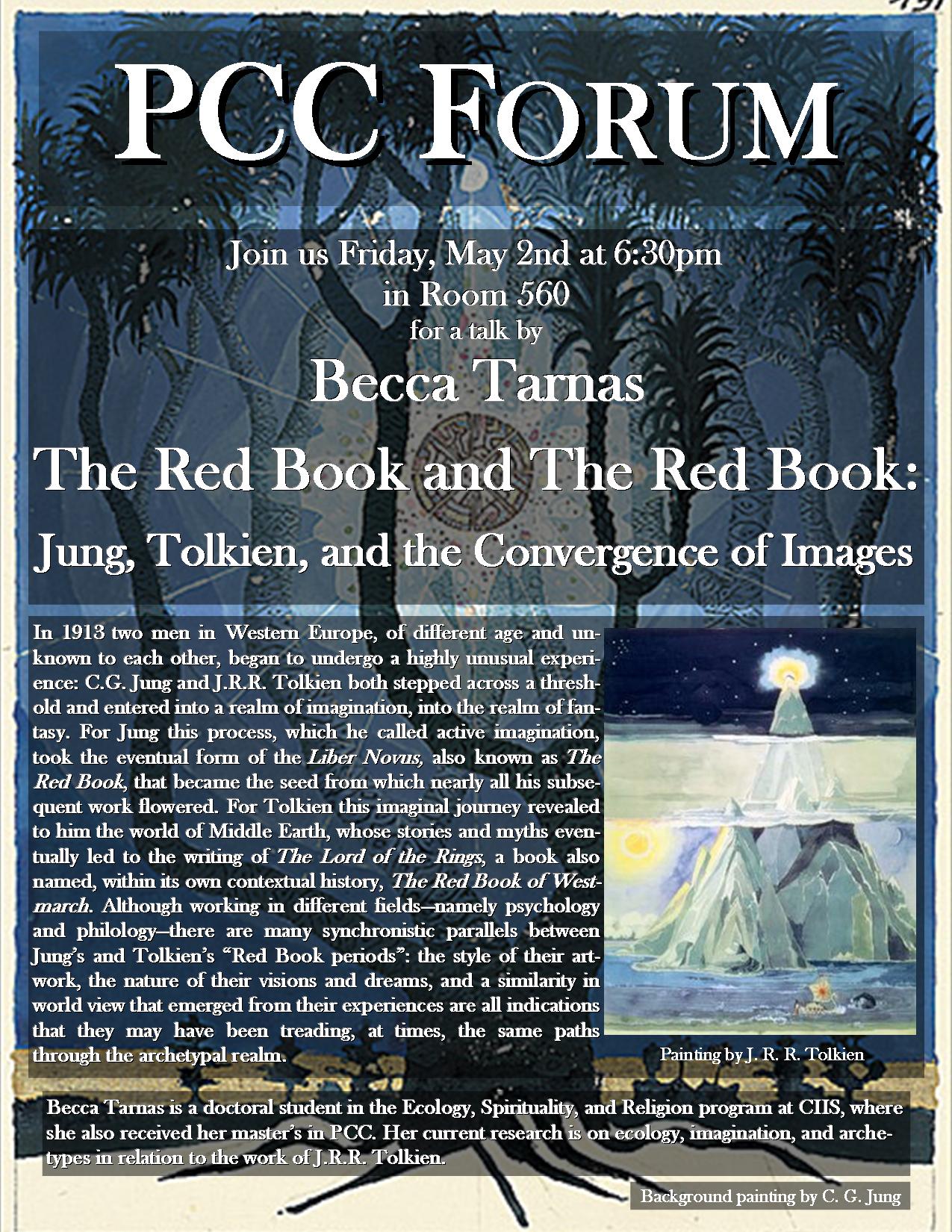


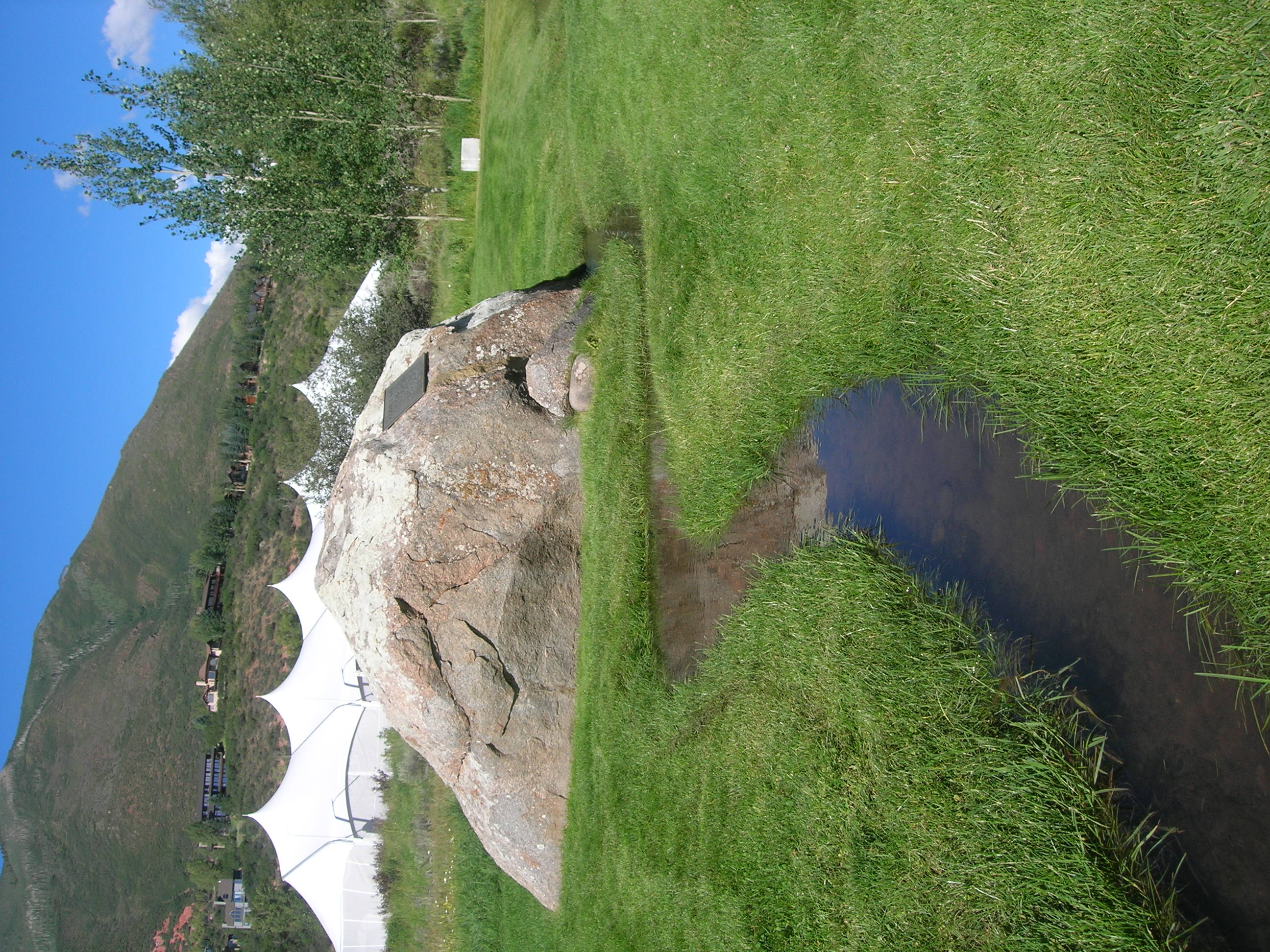


 The largest town we saw on 50 was Ely, which boasted six churches on a sign at its entrance. From the size of the town there must be one church for every family. Some time after we had left Ely we came to the next largest town along the highway, Austin, where we had intended to camp. At this point it was only 5:30 pm, and with barely a consultation Matt and I decided we wanted to continue all the way home to San Francisco. So with 702 miles already under our belts we left Austen behind to complete the next 391 miles to the end of the continent.


 The first leg of the journey may indeed be the longest, as we leave the Bay Area and head east, aiming to arrive in Wendover, Utah by late evening. We will be camping out for our first two nights, before meeting up with family and friends for the remaining overnights of the trip. Our initial plan had been to drive through Colorado, but the wildfires blazing throughout the state have influenced us to reroute north. I am curious if we will see smoke along the way, or if we will be fully out of range. Climate change is indeed doing its damage, from the fires in the West, to the tornadoes in the Midwest and the East, and the 118° temperatures in Kansas. We will be experiencing the rapid changing of our planet first-hand on these travels.
 Becca Tarnas